


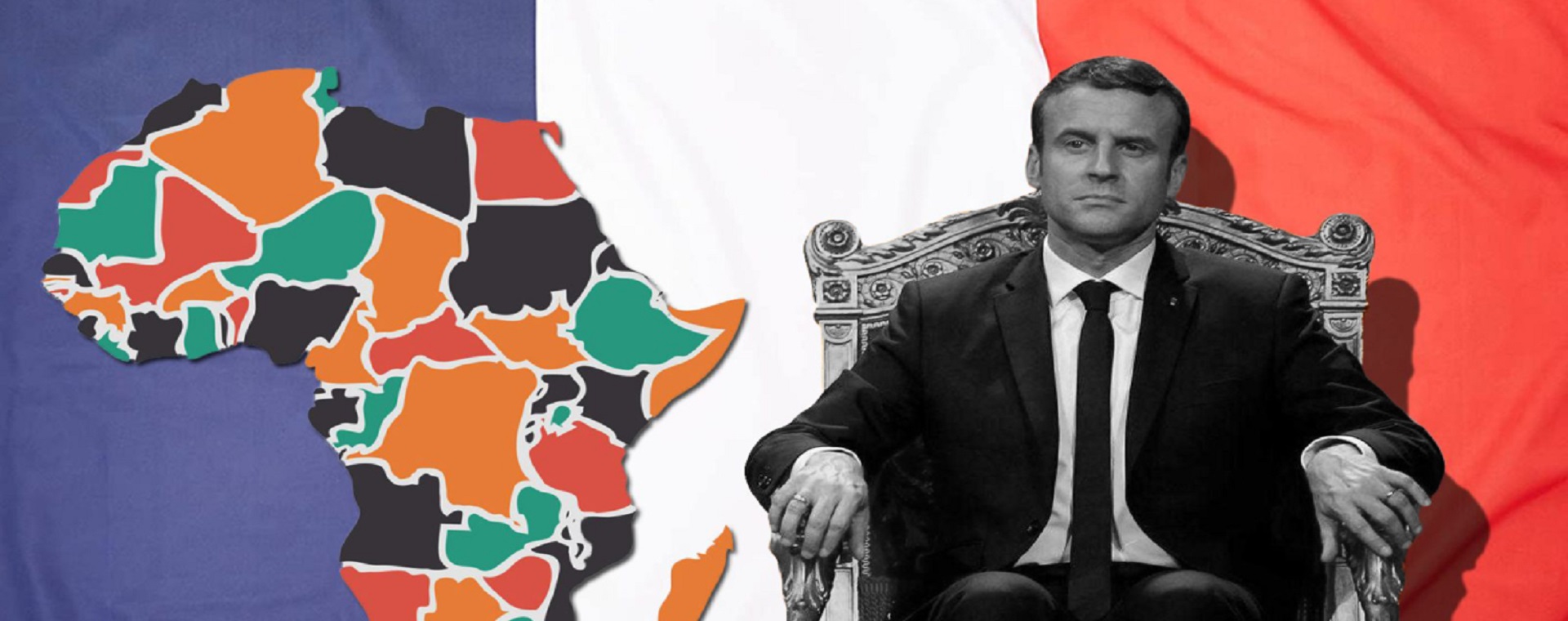
How much military influence does France have left in Africa?
In recent years, France, once considered the undeclared master of the African continent and the primary controller of its destinies, has been rapidly losing its military bases and political influence on the continent, or "Francophone Africa." From Mali, Niger and Burkina Faso to Chad and now Senegal, French influence is collapsing and troops are being withdrawn one by one towards Paris. From Mali, Niger and Burkina Faso to Chad and now Senegal, French influence is collapsing and troops are withdrawing back to Paris, with the governments of these countries requesting the termination of any military or defense cooperation agreements with France, the old colonialist.
Over the past few days, Chad and Senegal decided to end the defense agreements that bind them to Paris since the end of the colonial era, so that French forces will begin withdrawing, vacating bases and lowering flags December 20, 2024. On Friday, hundreds of French soldiers took off from N'Djamena military airport in Chad on an Airbus plane towards France, days after the departure of French fighter jets that had been stationed in the country for decades.
Chad was a pivotal point in French military operations in Africa, as it was the last staging point for French forces in the Sahel region after their withdrawal from Mali, Burkina Faso and Niger between 2022 and 2023. How did France reach this critical moment? How did its influence, which extended for decades after the nominal independence of African countries, collapse? What remains today of France's military presence on the continent?
France's Colonial Legacy in Africa
Since France ended its direct occupation of African countries in the 1960s, the continent has remained the center of its strategic attention. Through numerous defense agreements, economic cooperation, and military bases, Paris has succeeded in ensuring its indirect control over many African countries, especially in the Sahel region. Since the independence of African countries in 1960, France has intervened in the continent militarily more than thirty times and has built a number of military bases.
By the 1970s, France had a tangled system of military bases stretching from Dakar in Senegal to Djibouti. These bases were not only to protect French interests, but to ensure the survival of allied regimes. In return, France received exclusive deals to exploit natural resources such as uranium from Niger, oil from Gabon, and many others.
But this influence, which seemed stable for decades, was fragile. The peoples who had succumbed to economic and political domination began to ask questions: France became a symbol of colonial hegemony that was no longer acceptable to African peoples and governments. In recent years, protests have taken place in the capitals of many African countries demanding an end to French political and economic influence. In recent years, the capitals of many African countries have witnessed demonstrations demanding an end to French political and economic influence, the departure of foreign troops and the dismantling of military bases.
In recent years, military coups in Mali, Niger, and Burkina Faso have been accompanied by open public opposition to the French presence, as well as desires on the part of the juntas themselves to remove the French military presence.
At the same time, African countries have been forming partnerships with other diverse players instead of France, such as Russia, Turkey, China, India, and the UAE, moving away from the historical ties that once bound them to colonial France.
Accordingly, under Macron, France has seen its influence in French Africa significantly diminish, weakening Macron's efforts to maintain France's relevance in the African geopolitical landscape.
Despite intensive military operations such as Barkhane, France has not been able to eradicate "terrorism". In fact, attacks by militant groups have increased, weakening confidence in Paris' effectiveness as a security ally.
From Niger to Cameroon, France has been repeatedly accused of exploiting natural resources without providing real returns to the local population. These policies have been dubbed "Francafrique," a symbol of economic exploitation and political control. A new generation of African leaders and people began to reject the legacy of French colonialism. This nationalist spirit has fueled a desire to sever ties with the old colonizer and reshape the future.
1- Mali. The starting point for French withdrawal
In 2013, France launched Operation Serval to combat armed groups in northern Mali. At first, Malians welcomed the French troops as "liberators," but these sentiments soon turned into hostility. The security situation deteriorated dramatically, and Paris was accused of stealing resources and supporting unpopular regimes and dictatorial governments on the continent.
In May 2014, Tuareg and Arab rebel groups regained control of new areas of the country such as Kidal after clashes in which the Malian army suffered a major defeat. In August, France replaced Operation Serval with Operation Barkhane, which involves 3,000 French troops in the Sahel.
In May-June 2015, a peace agreement was signed in Algiers between the Malian government and former Tuareg rebels, but its implementation remained difficult, with Mali accusing France of security failures and of aiding and abetting the rebels. Since then, the violence has spread to the south and then to neighboring Burkina Faso and Niger.
By May 2022, after two military coups, Mali's transitional government announced that it was time to end the relationship with Paris. The ruling junta in Bamako asked French troops to leave, preferring to deal with new powers such as Russia's Wagner Group.
2. Central African Republic
At the end of 2022, France withdrew its last soldiers from the Central African State, and the French General Staff said in a statement at the time that on December 15, 2024, the last French soldier within the logistical mission in the Central African Republic left on a military plane bound for Paris, because the mission of the French forces there "no longer has any practical justification."
France has suspended its military cooperation with Central Africa following enhanced military cooperation between Bangui and Moscow. In June 2024, the CAR government announced that Russia had helped the country regain 90 percent of its territory that had been in the hands of armed groups.
3. The Torch travels to Burkina Faso
No sooner had Paris absorbed the shock of the withdrawal from Mali and Central Africa than Burkina Faso was next. In January 2023, as popular protests escalated, the interim government demanded that French troops leave the country.
The reasons that pushed France out of Mali were repeated in Burkina Faso, and the scene was similar: burning French flags, raising Russian flags in the streets, and demands for complete freedom from French influence.
4. Niger Knockout
In July 2024, after another military coup, Niger announced the termination of its military agreement with France. This decision shocked Paris, especially since Niger was considered a cornerstone of France's security strategy.
Thanks to the uranium it extracts from Niger (covering 35 percent of its needs), Niger has a strategic importance for Paris that is not matched by any other country in the Sahel. The latter relies on uranium to operate its nuclear plants, which generate 70 percent of its electricity, according to French media.
Niger was the center of operations for French forces in the Sahel after they were expelled from Mali and Burkina Faso, and had a large military base in the capital Niamey. This French military base plays the most prominent role in the fight against terrorism in the Sahel, as well as monitoring the waves of irregular African migration to Europe, and is also the center of NATO operations in the region.
5. Chad, Gabon and Senegal: The end of France's strategic bases
In late 2024, Chad, Gabon, and Senegal joined the African countries that have largely ended the presence of French bases on the continent. The loss of Chad is particularly significant for Paris.
For decades, Chad was a cornerstone of French military strategy in Africa, enabling it to project power in Libya, Central Africa, and the Sahel. Senegal's decision to terminate its agreements is equally symbolic, ending a presence that dates back to the 1960s.
What's left for France in Africa now?
By 2024, France's military presence in Africa has shrunk significantly. The most prominent remaining bases include:
The French base in Djibouti: Djibouti remains the last French military base on the African continent, a strategic base oriented towards the Indo-Pacific region. France permanently deploys 1,500 troops to serve the naval and air base, near the Bab-el-Mandeb Strait, through which 15 percent of the world's shipping traffic passes.
Military presence at the Abidjan base in Ivory Coast: Although the base remains, its future is threatened as popular opposition grows and French troops and missions are downsized.
Military presence at the Libreville base in Gabon: The last of France's bases in West Africa, but also facing increasing pressure to close. The philosophy of the French presence in Ivory Coast and Gabon is to first share military sites and then place them under the full authority of the host countries. Instead of large bases, there will be inter-force liaison units, comprising only about 100 military personnel, tasked with hosting temporary units that change in size according to training and operations.

The Iraqi Institute for Dialogue, the logistical sponsor of the Baghdad International Book Fair, opens its own pavilion at the fair

The Iraqi Institute for Dialogue publishes "The Diplomatic Portfolio" by Dr. Karrar Al-Badiri
Official agreement between Iraqi Institute for Dialogue and the Iraqi Media Network to sponsor The Seventh Annual International Conference of “Baghdad Dialogue” 2025
Invitation to the 79th issue of Dialogue of Thought
Prime Minister: The path of development will make Iraq a regional political and economic powerhouse
Seventh Baghdad International Dialogue Conference Call for Papers
Praise for the Baghdad International Dialogue: Strengthening Iraq's pivotal role and a meeting point for visions
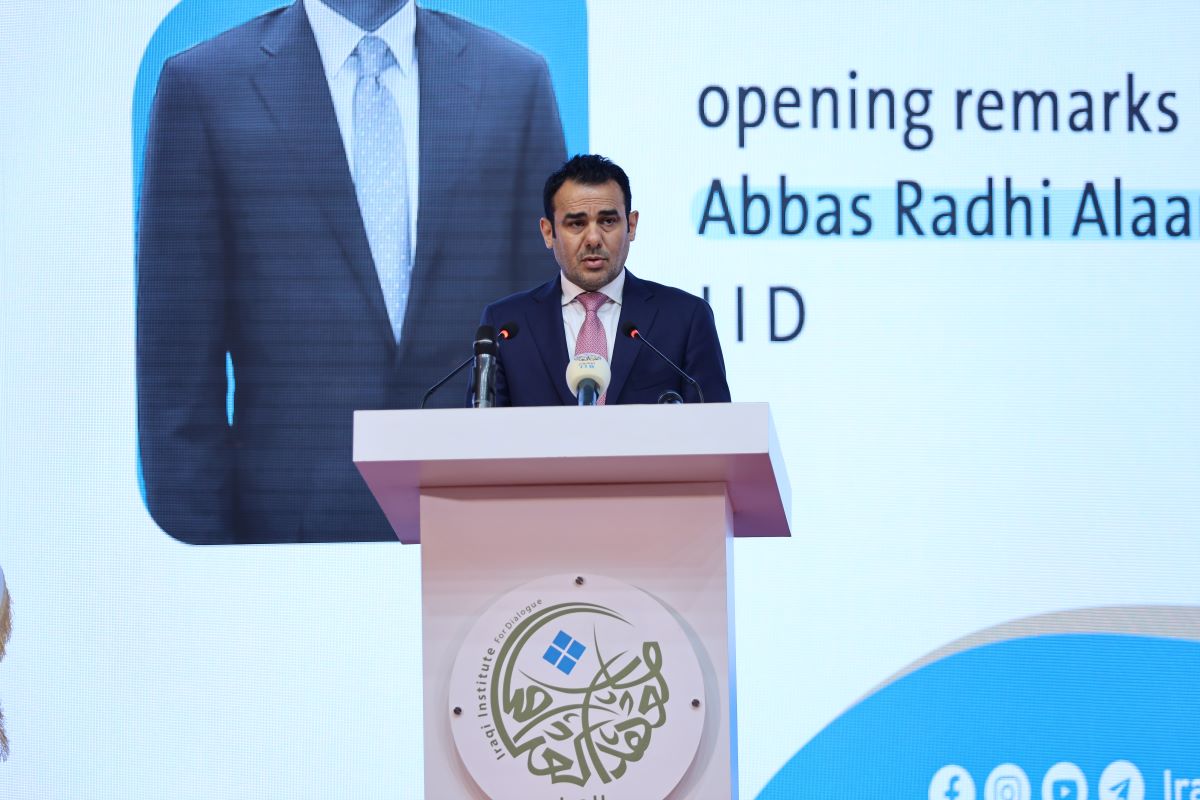
Comments