


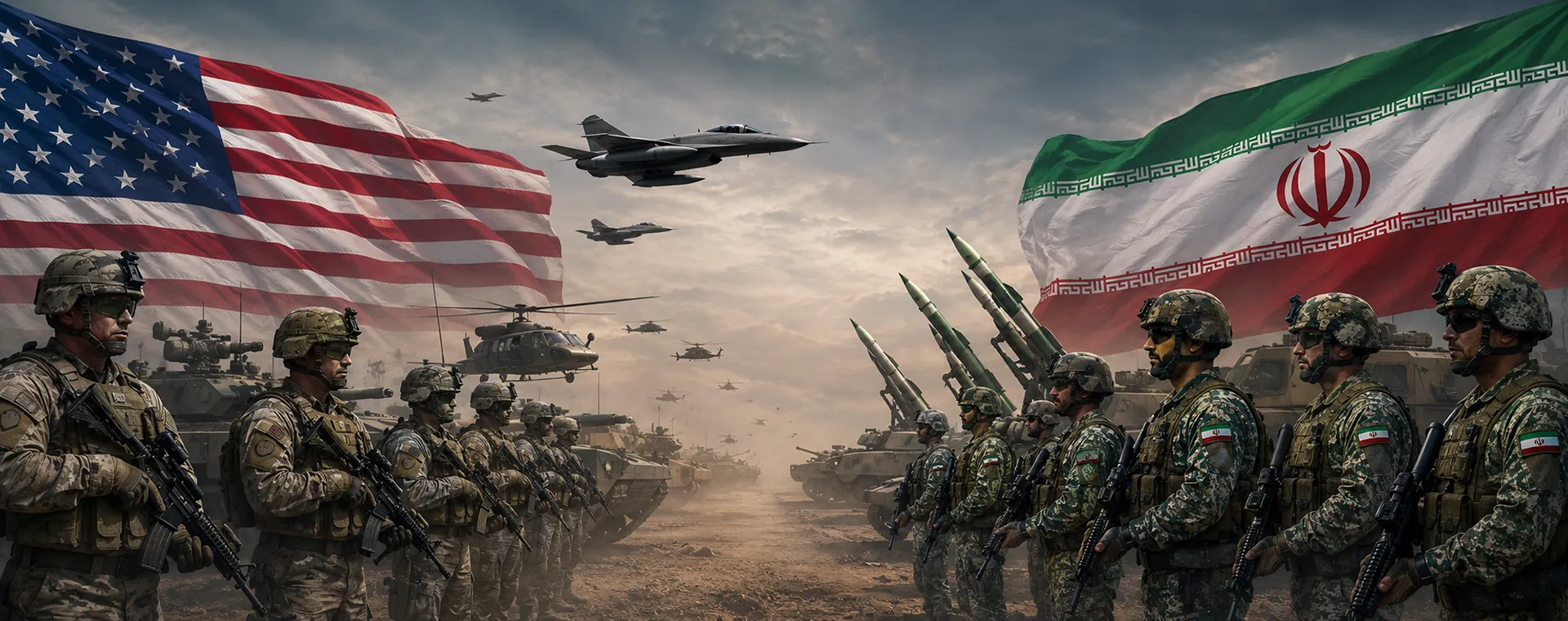
The region awaits the outcome of the confrontation between Iran and the United States
The rapid developments in recent days indicate that the political and security equations in the region are more than ever linked to the outcome of the confrontation between the Islamic Republic of Iran, the United States of America and the Zionist entity.
"In Lebanon, Iraq, and Yemen, each actor faces its own issues and crises, but in all of these countries a common question arises: how will this confrontation end?" And what impact will their findings have on the future of the region and its security arrangements?
In Lebanon, the government, having chosen the path of direct negotiations with the Zionist entity, is facing a state of frustration and political blockage. "Beirut had hoped that accepting direct negotiations would lead to a cessation of hostilities, the withdrawal of occupation forces from southern Lebanon, and the restoration of the state's sovereignty over its territory, but the eighth round of negotiations, held in October in Florida, ended without an effective agreement, and the implementation of the agreement's framework did not go beyond the initial pilot zones."
The Zionist entity continues to refuse a full withdrawal, while its violations of Lebanon's sovereignty continue. And so the Lebanese government finds itself in a difficult position, having chosen a path that has not yet brought the country any tangible gains, and continuing it without results that can be presented to the public opinion would put the credibility of the political government on the line.
This experience brings back an important question: can negotiations, without power elements and without changing the calculations of the counterparty, guarantee the rights and sovereignty of a State?
Also in Iraq, the government of Ali al-Zaidi is still caught between American pressure and the need to preserve national interests and the country's sovereignty. Washington wants to limit Iranian influence and the influence of resistance forces, and to close land routes, while the Baghdad government cannot ignore Iraq's security, political, and economic considerations, nor its historical relations with its eastern neighbor.
Making decisions under these circumstances is not easy, and the outcome of the war could affect the size of external pressure and the Iraqi government's ability to maneuver politically.
In Yemen, military operations continue. "Saudi Arabia continues its airstrikes, and in response Yemeni forces are targeting targets including oil installations and airports." The repercussions of the confrontations on this front are not limited to the direct military aspects, but extend to affect energy security and maritime traffic in the Red Sea and the Bab al-Mandab Strait. Riyadh is well aware that the fate of this front cannot be separated from the wider developments of the war.
Within the Zionist entity as well, the political crisis continues. After Netanyahu failed to secure a parliamentary majority, Gadi tasked Eisenkot with forming the government. And the proposal to form a national unity government with Netanyahu has not yet resulted in any agreement, while political differences remain.
On the other hand, the file of the President of the Republic's refusal to grant amnesty to Netanyahu, as well as the continued indecisiveness of his judicial case.
Under these circumstances, Netanyahu continues to remain in power and at the helm of the military establishment, until a new government is formed. And this transition is particularly sensitive in light of internal disagreements and the continuation of the war, which raises the question of whether or not he will resort to escalating military tension to change his political circumstances.
The meeting and the recent security talks between him and Eisenkot reveal that the Iranian file remains at the heart of Tel Aviv's political and security calculations. Meanwhile, the head of the Mossad went to Washington to consult with the head of the Central Intelligence Agency (CIA).
But the centerpiece of developments remains the confrontation between Iran and the United States. Donald Trump has spoken in recent statements about the U.S. victory, but he has stressed that the war is not over and that Washington does not see the need for a deal. He even threatened that he could target Iran's energy infrastructure, bridges, and industries if he decided to escalate military operations.
The remarks come as Trump has previously spoken of a request by some Arab countries to avoid expanding the scope of attacks. These contradictions reveal differences and divergent calculations within Washington about how to end the war and the costs of continuing it.
In this context, J.D. Vance, the U.S. vice president, has sent a negotiating letter to Tehran, and Secretary of State Marco Rubio opposes the continuation of the war, while Secretary of War Pete Hegseth faces the risk of impeachment and removal from office.
In contrast, the Iranian position has entered a new phase. The Iranian leadership's directive to end "no war, no peace" indicates that Tehran no longer accepts the current state of uncertainty and deadlock.
Iran has declared its readiness to negotiate on the basis of mutual respect, guaranteeing its national rights and interests, without accepting pressures and threats.
At the same time, Iran's military message has become clearer than before, that any resumption of an attack would be met with an Iranian response that would not be limited to the geographical scope of the Middle East.
Iranian officials have warned that if U.S. bases in European countries or other regions are used to launch attacks on Iran, those bases will also be included in the goals of mutual retaliation. Achieving this scenario would seriously expand the geographical scope of the war.
And Trump now faces several tough choices: to keep up economic pressure and maintain a state of attrition, to return to military operations, or to move toward an agreement that would necessarily have to recognize the new realities and Iran’s rights.
These calculations are influenced by several factors, including the U.S. election, fears of a widening war, the positions of major powers, and developments on regional fronts.
And in return, Netanyahu is seeking to exploit the current uncertainty to push Washington toward a decision that may serve his political survival, but the entire region, and even beyond, will bear the costs and repercussions.
The region is awaiting the outcome of this confrontation. "Lebanon, Iraq, and Yemen, while each preoccupied with its own issues, will be affected by the outcome of the confrontation between Iran, the United States, and the Zionist entity."
The issue is not only about deciding the fate of a military conflict, but also about forming new security arrangements and positioning regional powers in future equations.
Hence, any miscalculations in Washington and Tel Aviv could lead to a crisis whose repercussions go beyond the borders of the region, and also affect international and global equations.

The Iraqi Institute for Dialogue, the logistical sponsor of the Baghdad International Book Fair, opens its own pavilion at the fair
Official agreement between Iraqi Institute for Dialogue and the Iraqi Media Network to sponsor The Seventh Annual International Conference of “Baghdad Dialogue” 2025

The Iraqi Institute for Dialogue publishes "The Diplomatic Portfolio" by Dr. Karrar Al-Badiri

Invitation to the 79th issue of Dialogue of Thought
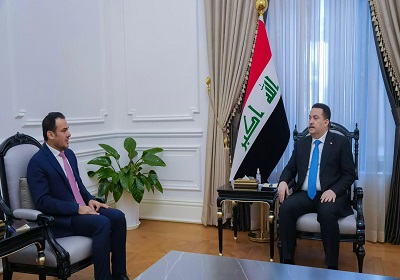
Prime Minister: The path of development will make Iraq a regional political and economic powerhouse
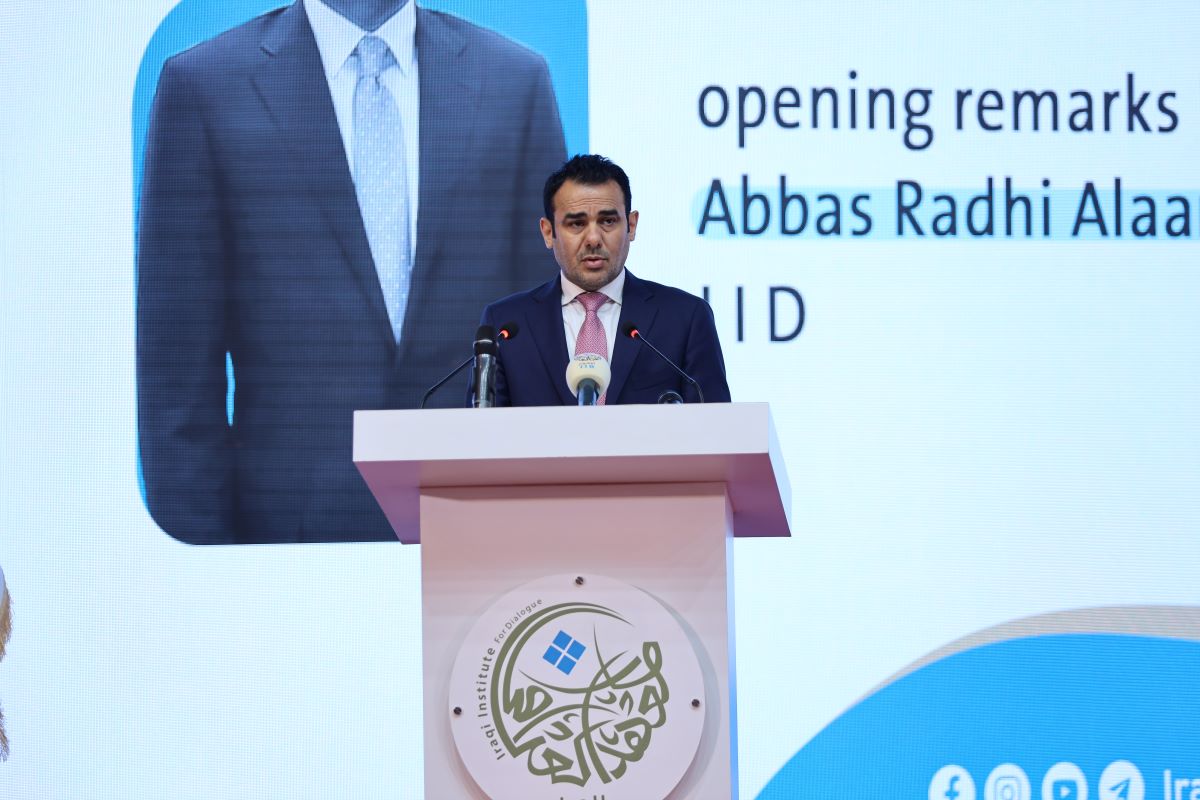
Speech of the Director of the Iraqi Institute for Dialog at the Sixth Baghdad International Dialog Conference
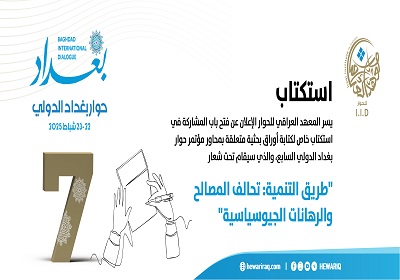
Seventh Baghdad International Dialogue Conference Call for Papers

Comments