


Schengen and the Re-engineering of the International System: Has Peace Become a Privilege of Major Powers?
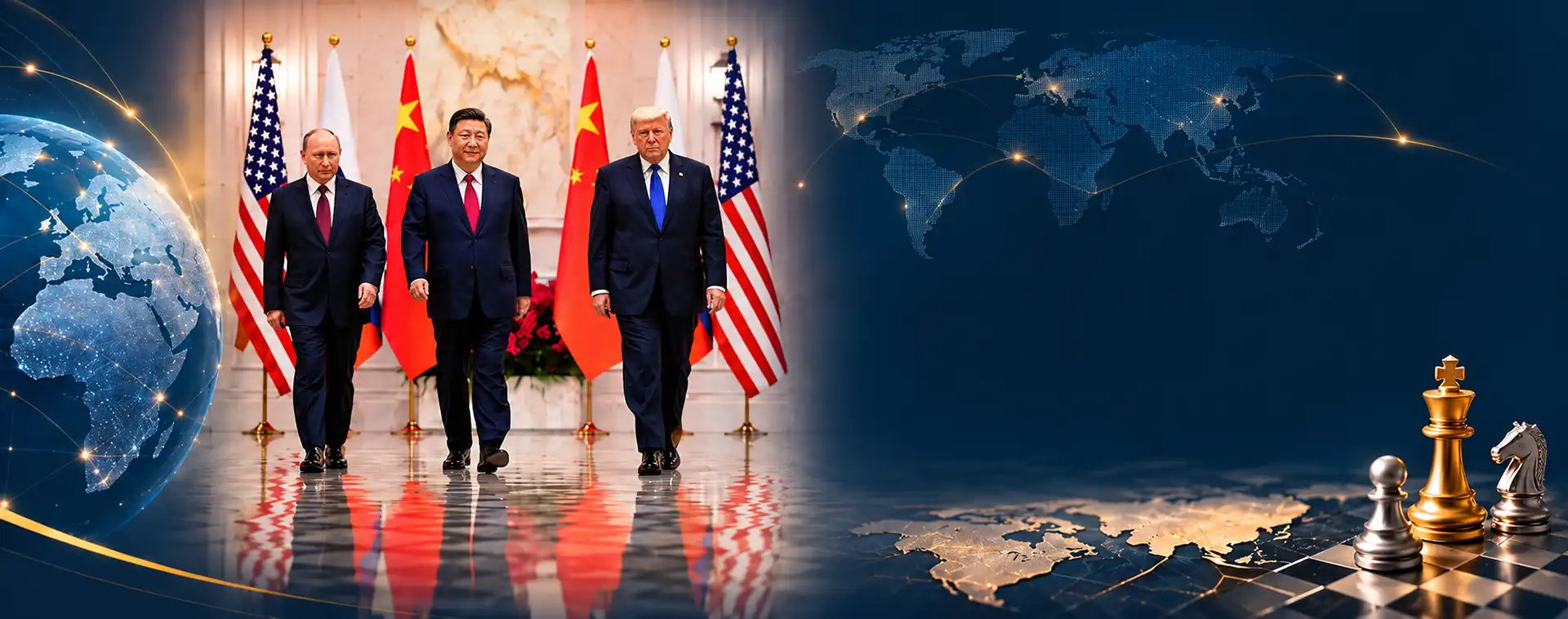
The strategic importance of the Russia-US-China trilateral summit in Shenzhen lies not only in the meeting of the leaders of the major nuclear powers, but also in its implications for the nature of the transformations taking place in the international system. The meeting of Donald Trump, Vladimir Putin and Xi Jinping under the title "Peace Declaration" raises a question that goes beyond the limits of traditional diplomacy: Are we in front of a real will to rebuild international stability, or an attempt to reorganize conflicts in a way that preserves the interests of the major powers and controls the limits of their competition?
The summit came in a highly complex international context, in which the Ukrainian war coincides with the US-Israeli confrontation with Iran, the turmoil in energy markets and the Strait of Hormuz, as well as the escalation of US-Chinese competition, and the end of the New START nuclear treaty without an alternative. Each party has its own accounts; Washington seeks to establish the image of a leader capable of making settlements, and Moscow wants to break its isolation and regain its position as a partner in international decision-making, while Beijing seeks to establish its image as a responsible power and a pole capable of balancing American influence. Thus, the combination of these wills does not imply a congruence of interests, but rather reveals a temporary intersection in the need to manage risk.
On the nuclear issue, the leaders reaffirmed the principle of the 1985 Reagan-Gorbachev summit that nuclear war cannot be won and should not be fought. However, this emphasis, while important, was not accompanied by numbers, timetables or control and verification mechanisms. The disparity between the U.S. and Russian arsenals on the one hand, and China's growing arsenal on the other, makes building a trilateral agreement extremely complicated. And so the commitment remained within the limits of the political declaration, without living up to enforceable legal guarantees. The irony is that the most powerful forces with the tools to destroy global security still have a monopoly on determining the conditions for its protection.
The pledge to reform the United Nations reveals a structural contradiction in the international system. The three States, permanent members of the Security Council, called for enhancing the effectiveness of the international Organization, but they did not provide a clear vision to address its imbalances in structure, in particular the veto and the disparity in international representation. The crisis is not about weak institutions alone, but about the unjust distribution of power within them. There can be no talk of real reform as long as the powers with the privileges are not prepared to review the foundations that those privileges confer.
In the energy sphere, the agreement to stabilize supplies and increase the production of oil derivatives reflects a realization that energy has become a central element in the equations of national security and geopolitical influence. The Strait of Hormuz crisis has shown how closely the global economy is linked to military and political transitions. However, the absence of quantitative commitments and operational mechanisms makes this understanding more of a reassuring message to markets than an integrated strategic agreement.
The position on the ICC is of particular legal importance, with leaders stressing the need to respect the immunities of State officials and not abuse international jurisdiction. This position intersects with the interests of the three parties, in light of the differences related to the prosecution of the Russian president, the investigations related to Israel, and China's non-accession to the Rome Statute. But the problem goes beyond political interests to the relationship between state sovereignty and the principle of international criminal accountability.
Sovereignty should not be transformed into absolute impunity, and the international judiciary must exercise its jurisdiction in accordance with clear legal guarantees. The risk is that protecting sovereignty will become a means of diminishing accountability and weakening international justice.
But the highlight of the summit is what was missing from its announcement. The statement did not directly address the Ukrainian war or the confrontation with Iran, despite their centrality in international security equations. This absence reflects the limits of understanding between the three powers; Agreeing to prevent escalation does not mean agreeing on the causes of conflicts or the terms of their settlement. The major powers can agree on preventing a nuclear explosion, but they are still unable to overcome their conflicts of interest in the files of influence, security and alliances.
And from the perspective of international relations theories, the summit reflects the logic of political realism in the return of negotiation between the centers of power, and reveals, according to institutional liberalism, the continued need for international institutions despite their inability to exceed national interests, while its constructive dimension appears in the leaders' attempt to produce a new political image of themselves as stabilizers. But multipolarity does not necessarily mean a more just system; There may be multiple centers of power without wider participation in decision-making.
The Schengen summit does not yet establish a new international peace so much as it expresses a common will to control conflicts and prevent them from becoming an existential threat to the interests of the major powers. Here the difference between peace as a system based on justice and respect for international law emerges, and peace as a temporary equilibrium imposed by the calculations of power.
Perhaps the deeper question the summit poses is not whether the three leaders have agreed on peace, but who has the right to define it and set its terms? Is the world heading towards a more pluralistic international system, or towards a new form of monopoly of international decision-making in which the major powers share crisis management, while the less powerful remain outside the sphere of influence?
The real test for Schengen will be not the eloquence of its statements, but the ability of its parties to convert understandings into commitments, and to move from crisis management to addressing its causes. The world needs not only major powers that agree on how to manage conflicts, but an international system that prevents the monopoly of peace and the monopoly of power.

The Iraqi Institute for Dialogue, the logistical sponsor of the Baghdad International Book Fair, opens its own pavilion at the fair
Official agreement between Iraqi Institute for Dialogue and the Iraqi Media Network to sponsor The Seventh Annual International Conference of “Baghdad Dialogue” 2025
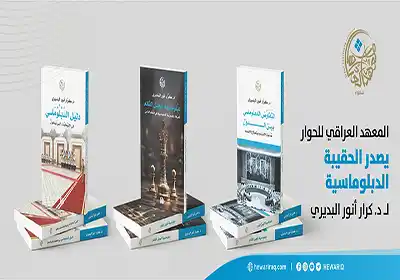
The Iraqi Institute for Dialogue publishes "The Diplomatic Portfolio" by Dr. Karrar Al-Badiri

Invitation to the 79th issue of Dialogue of Thought
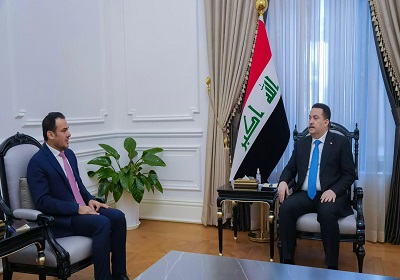
Prime Minister: The path of development will make Iraq a regional political and economic powerhouse
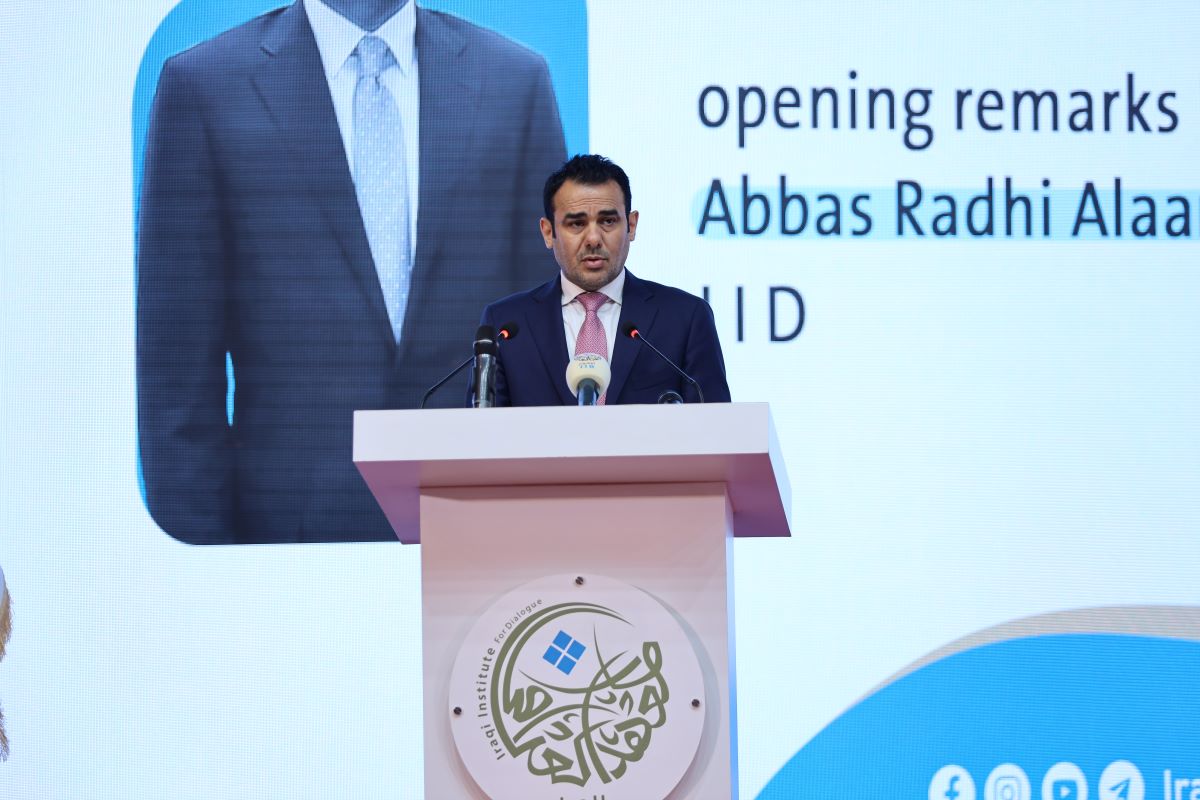
Speech of the Director of the Iraqi Institute for Dialog at the Sixth Baghdad International Dialog Conference
Seventh Baghdad International Dialogue Conference Call for Papers
Comments