


Military confrontation between Israel and Iran: consequences and solutions
In my opinion, Iran wanted this operation (the honest promise) to send a message to Washington and Tel Aviv that "stop the attack on Iran, otherwise we will carry out the next operation on a larger scale and more seriously, and we will not inform you in advance."
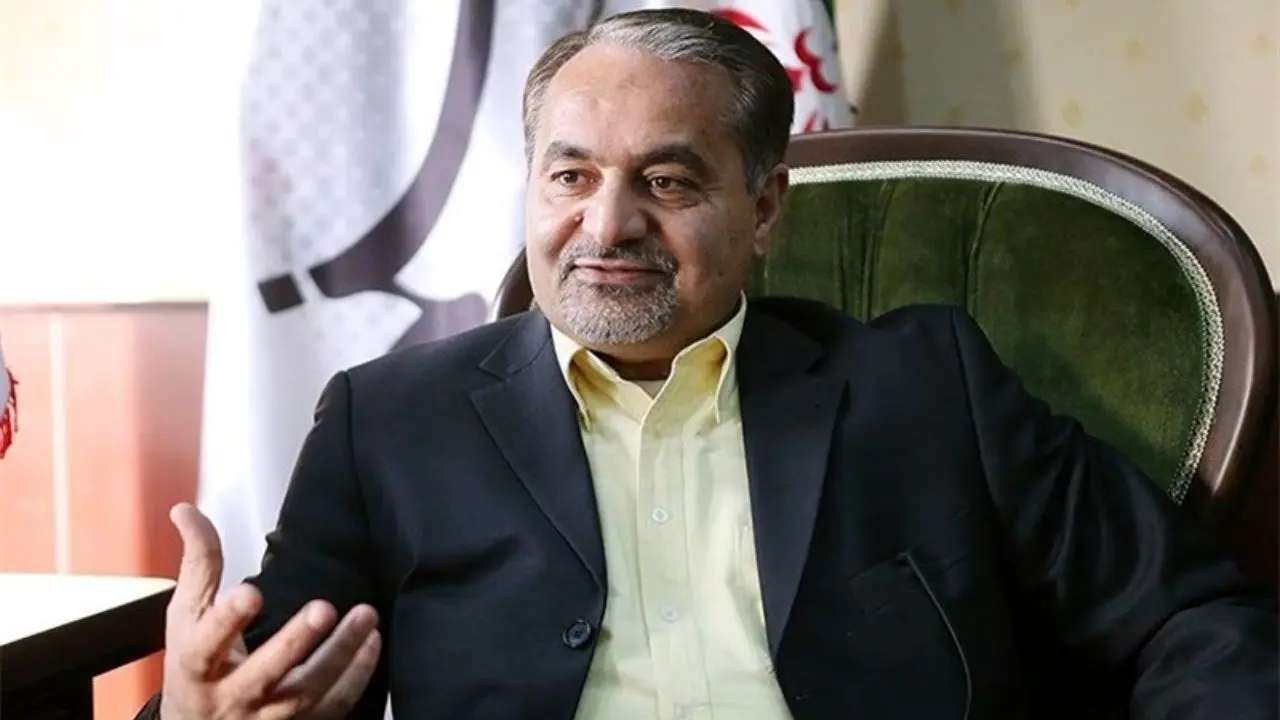
Mr. Hossein Mousavian, an Iranian diplomat and international affairs analyst, wrote an article in the American magazine "Middle East Policy Council", and the website of the Iraqi Institute for Dialog publishes the text of the article translated from Farsi.
And on April 13, 2024, Iran directly targeted Israel with hundreds of drones and missiles, and this attack was the largest and most important military attack on Israel after the 1967 Arab-Israeli war, and the largest drone attack in history, whose consequences could change future equations in the Middle East.
Below I mention six important findings:
1- Following the Israeli military attack on the Iranian Consulate General in Damascus, seven senior Iranian military advisers were martyred, and in fact, Israel crossed the Iranian "red line", and by attacking Iranian diplomatic facilities, Israel violated the most famous agreements of international law and violated Iran's sovereignty, but the world powers, permanent members of the United Nations Security Council, refused and announced their condemnation of this act.
And so Iran launched a military attack on Israel in response. Iran declared that the measure was a "response" to the principle of "legitimate defense" in accordance with Article 51 of the UN Charter. Western powers immediately condemned the Iranian move. Iran stated that if the UN Security Council condemns the Israeli military attack, there may be no need for Iran to take countermeasures, and therefore, the double and discriminatory standards of the UN Security Council could disturb world peace and security.
2- US and Israeli officials stated that the Iranian attack was more extensive than they had imagined, this point is true. But the fact is that Iran's response was not just to the Israeli attack on the Consulate General in Syria. In the past fifteen years, Israel has assassinated dozens of Iranian nuclear scientists and military leaders inside and outside Iran, and has carried out numerous cyber attacks and sabotage against Iranian nuclear and military facilities. And Iran has shown patience and restraint in the past. In a miscalculation, Israel viewed this seizure as a sign of Iran's "weakness" and continued its attacks, but the Israeli attack on the Iranian diplomatic center created the conditions for Tehran to respond to all previous Israeli attacks in one attack.
3- US President Biden announced that the United States will not participate in the event of another military attack by Israel on Iran. And this is a right decision and it came at the right time because if Israel attacks Iran again, this time Iran will attack Israel on a broader level without prior notice. And if America intervenes, Iran and all the jihadist groups in the region, such as the Lebanese Hezbollah, the Houthis in Yemen, and the Iraqi Popular Mobilization Forces, will also enter the battle, and in addition to participating in the attack on Israel, they will attack America and its military bases in the region, which is the worst possible scenario, that is, a "bigger war" will occur.
4- In the past years, and in many articles and interviews, I have repeatedly said that a military attack on Iran is the only factor that can push Iran's current peaceful program towards a nuclear bomb, and therefore, from this standpoint, President Biden's decision not to participate in the attack on Iran is a wise decision.
5- John Bolton, former US National Security Advisor, suggested that Israel attack Iran's nuclear facilities, and stressed that Iran only understands the language of force. Lack of proper understanding, misconceptions and miscalculations are the main cause of wars and crises in the past few decades. John Bolton’s thinking is also the thinking that some powerful American politicians support and support American “interference.” The fact is that America's main strategy after the 1979 Islamic Revolution in Iran was based on “sanctions and pressure” and “regime change.”
As a result of this policy and mindset, Iran's relations with America, the West, and Israel are now in the most hostile state possible.
In 2007, she was accused of working against Iran's national security and spying for foreign policy opponents of Ahmadinejad's conservative government. But over the past 15 years, I have tried in my writings and articles to help bring about the right mutual understanding between America and Iran, because I believe that the two countries, despite many differences, have common interests and must finally reach peace through diplomacy.
In this regard, I have repeatedly made it clear to the Americans that Iran has a history and civilization that stretches back several thousand years. Regardless of whether the king or clerics rule their country, they will not fall under the weight of “power and insult”.
And now, Washington and Tel Aviv should consider the fact that Iran, under the most severe sanctions, pressure and the most difficult economic conditions over the past 40 years, has responded to Israeli attacks in a way that no one imagined. And while Arab states have not dared to throw a cartridge at Israel in the past few decades, Iran has responded to the Israeli military offensive with hundreds of missiles and drones.
6- It is expected that after the latest incident, the West and Israel will try to downplay the military importance of the Iranian operation, and some in Iran will exaggerate this. But the fact is that the Revolutionary Guard informed the world of the start of joint operations against Israel, hours before the arrival of missiles and drones in Israel.
From my point of view, on the one hand, Tehran launched a large amount of missiles and drones, and on the other hand, it gave notice before that to give an opportunity to America and Israel to prevent missiles and drones from reaching as large a range as possible, because Iran did not want this response, which would lead to a catastrophe that would turn into a large-scale war. In my opinion, Iran wanted this operation to send a message to Washington and Tel Aviv: "Stop the attack on Iran, otherwise we will carry out the next operation on a larger scale and with greater seriousness, and we will not inform you in advance."
7- The final point is that the "sanctions, pressure and destruction" policies that the West has pursued against Iran led by the United States in the past few decades have created a "resistance front" in countries such as Yemen, Iraq, Syria and Lebanon. And in West Asia, all armed with thousands of missiles and drones. On the other hand, it has created a kind of alliance between Iran and the powers of the Eastern Bloc, especially China and Russia, whose common interests are the destruction of America in the Middle East region.
Pacifying the West Asian crisis requires more creative approaches and more initiatives by global regional powers, particularly America. Adopting their irresponsible and unbalanced policies can destabilize the West Asian region for a long time and make its crises more complex.
Peace and stability in West Asia requires five basic steps:
First, Israel should accept a stable ceasefire in Gaza as soon as possible, open the way for international humanitarian aid to Gaza, and respect UN Security Council resolutions on the formation of two Palestinian-Israeli governments.
Second: The initiative of the world powers to achieve a permanent ceasefire between Israel and Iran.
Third, dialog between Iran and the United States to revive the JCPOA and resolve regional disputes.
Fourth, the establishment of a system of collective security and cooperation in the Gulf to end protracted Arab-Persian tensions.
Fifth: Implementing the United Nations resolutions on the elimination of weapons of mass destruction in the Middle East.

The Iraqi Institute for Dialogue, the logistical sponsor of the Baghdad International Book Fair, opens its own pavilion at the fair
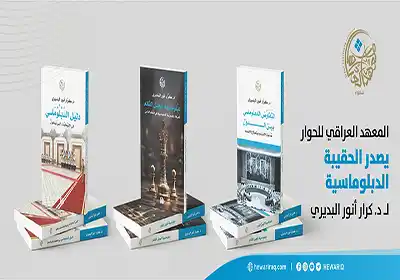
The Iraqi Institute for Dialogue publishes "The Diplomatic Portfolio" by Dr. Karrar Al-Badiri
Official agreement between Iraqi Institute for Dialogue and the Iraqi Media Network to sponsor The Seventh Annual International Conference of “Baghdad Dialogue” 2025
Invitation to the 79th issue of Dialogue of Thought
Prime Minister: The path of development will make Iraq a regional political and economic powerhouse
Seventh Baghdad International Dialogue Conference Call for Papers
Praise for the Baghdad International Dialogue: Strengthening Iraq's pivotal role and a meeting point for visions
Comments