


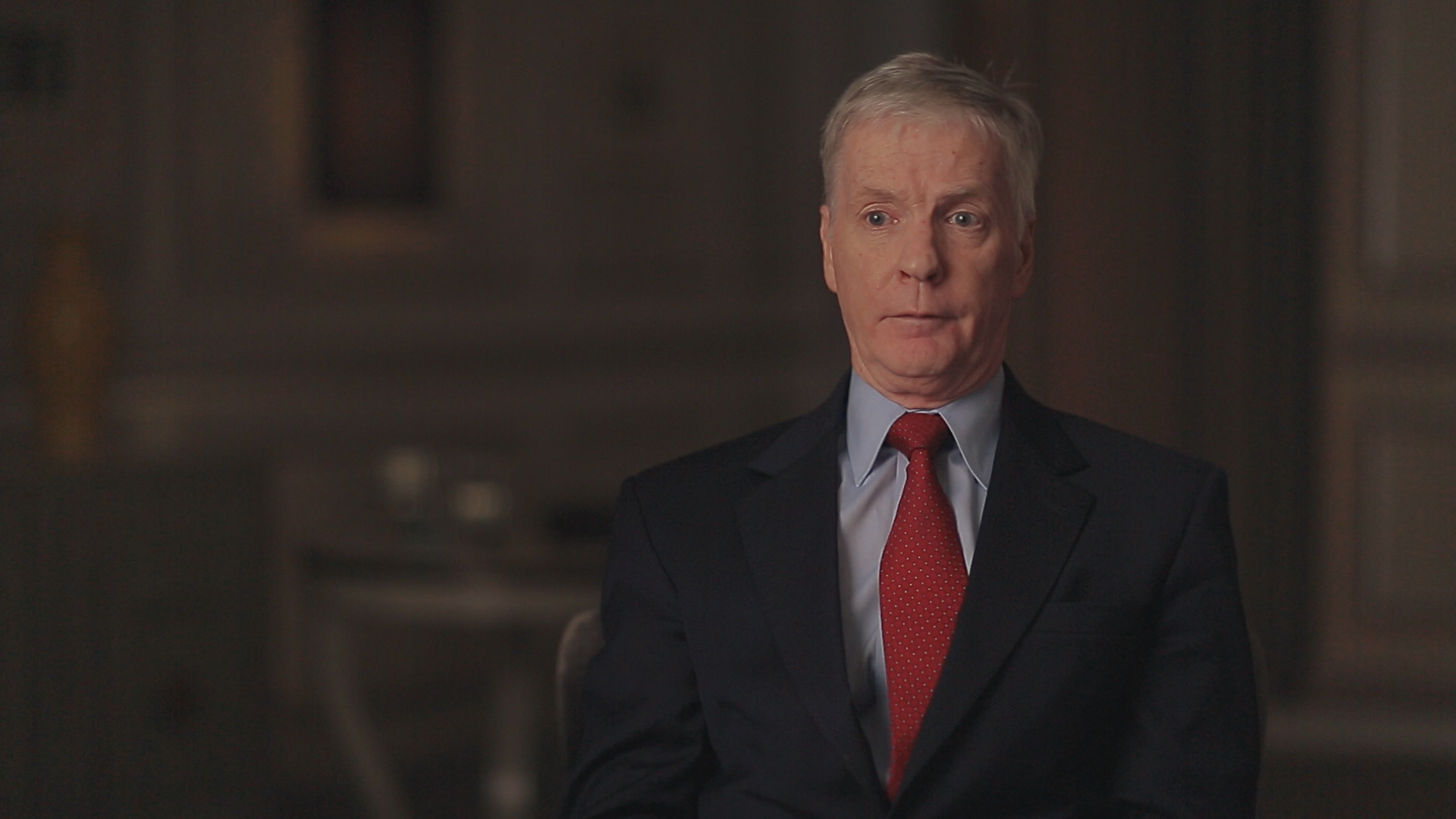
After his participation in the Baghdad International Dialog Conference, former US Ambassador Ryan Crocker writes his perceptions of Baghdad
After his participation in the fifth edition of the Baghdad International Conference held by the Iraqi Institute for Dialog on March 19, 2023, former US Ambassador to Iraq, Ryan Crocker, wrote his perceptions of Baghdad.
Below is the text of the article written by American diplomat Ryan Crocker
Over the weekend, Ryan Crocker drove to a Syrian restaurant in Baghdad. This simple activity gives us a glimpse of the profound changes the Middle East has undergone since serving as the United States ambassador to Iraq in 2007-2009. After two decades of devastating violence since the United States and its allies occupied the country, ending a quarter-century of dictatorial Iraqi President Saddam Hussein's rule in 2003, the Iraqi capital has experienced relative peace over the past few months.
“There is life in this city again,” says Crocker. “It's a dusty, ininteresting place like it used to be but it's vibrant. One can sense the vitality of the place.
At the same time, the restaurant's owners were among the seven million refugees, according to UN estimates, who have left Syria since the civil war there began in 2011 and the Islamic State's exploitation of the instability and sectarian conflict fueled by the US intervention for control of large swathes of Iraq and Syria.
Crocker was in Baghdad for a conference to coincide with the 20th anniversary of the American occupation of Iraq that unleashed a series of events that reshaped the region, for better or worse. Ryan Crocker, a native of Spokane Valley, Washington, who returned to his home city after four decades in the Foreign Service and was awarded the Presidential Medal of Freedom, shared his reflections on the lessons of the Iraq war and what the future holds for the country.
"There is a presumption among war critics that if the United States hadn't occupied Iraq, everything would have been fine," Crocker said. “And that's not true.”
After serving as U.S. ambassador to Lebanon, Kuwait and Syria, Crocker returned to the State Department to serve as Under Secretary of State for Near Eastern Affairs just weeks before 9/11. In March 2003, Crocker was in Ankara, after trying and failing to persuade the Turkish government to allow the U.S. military to land in Turkish ports, a move that would have allowed military operations to march toward Baghdad from two directions and put the capital in the pincers of the U.S. military.
As Crocker was about to return to Washington, he watched President George W. Bush announce the start of the invasion on television.
"I know very clearly that the military operation will be restricted due to the absence of the northern front, there will be no pliers encircling the capital."
But before U.S. and allied forces arrived in Baghdad, Iraqi soldiers burned their uniforms, hid their weapons and evaporated in the countryside.
The United States exacerbated this problem by solving the Iraqi army after taking control of the capital and establishing an interim government, setting the stage for the emergence of the insurgency that has been fighting the United States and its allies for years.
Since the occupation until August 2021, violence has claimed the lives of about 4,600 American soldiers, more than 3,600 contractors and civilian employees working in the Ministry of Defense, more than 45,000 Iraqi soldiers and policemen, and about 200,000 Iraqi civilians, according to data from the Brown University Project on the Costs of War. Taking into account the cost of caring for veterans, the cost of the wars the United States fought in the period following 9/11 was about $8 trillion, the Brown University project estimates.
Former President Barack Obama, who campaigned on a promise to remove U.S. troops from Iraq, ended combat operations in the country in 2010. Today, there are still about 2,500 U.S. military personnel in Iraq who have a limited role in providing training and advice to the Iraqi military. A limited number of U.S. special forces continue to operate in the country, but the Defense Department does not disclose their numbers.
The Senate is expected to pass a resolution this week that would overturn the mandate Congress enacted in 2003, a symbolic move that is unlikely to affect ongoing military operations in Iraq, Crocker said. When we ask Iraqi officials what they think of the congressional decision to end this mandate, they seem indifferent.
And around the world, the question is, what is the mandate for the use of force? Crocker says. "This veto will not affect the part of our forces deployed here. And for the small number of special forces, I have been informed that this decision will not affect the way they operate."
The conference, held in Baghdad, was sponsored by the new Iraqi Prime Minister, Mohammed Shia Al-Sudani, who has been in office since last October. While critics have warned that Sudan is a close ally of Iran, Crocker says the conference has shown positive signs about the path the new Iraqi leader appears to be taking.
Unlike previous prime ministers who left Iraq for the diaspora, the Sudanese spent almost his entire life in the country. This could help the Sudanese fight rampant corruption that is hindering the development process in Iraq, Crocker says, adding that corruption is "not their fault"
When a foreign army intervenes, removes a government and its institutions, and can be another type of government, you will have people governing without institutions and a broad absence and acceptability of the rule of law, Crocker adds. "In such an environment, you put money in dark rooms for 24 hours, and the result will be high-powered corruption."
Crocker, who left to serve as U.S. ambassador to Afghanistan in 2011 and 2012, says that while Iraq is very different from the Central Asian nation that the U.S. occupied in 2001, both countries have been similarly plagued by corruption.
"Ultimately, only those two countries and those who govern them can reform them," Crocker said. "This is one of many things that cannot be fixed from the outside."
Attending the conference, which Krore says included academics and investors from the United States and was absent from the conference by representatives from Russia and Iran, made him feel reassured about the ability of Iraqis to develop and maintain their democracy. One of the most promising developments in the country is that militia leaders whose forces have protracted the war have now chosen to lay down their arms and become politicians, wielding their influence through state institutions rather than through violence.
In reviewing the two decades since the war began, Crocker says he still doesn't know if invading Iraq was the right decision. The Bush administration justified the invasion by claiming that Saddam Hussein had a stockpile of weapons of mass destruction – a performance that a 2004 Senate report found was based on faulty intelligence – but that Crocker argues that the true basis of the war is more complex.
"I was against the invasion because I knew we were going to get stuck there and I had no idea what we were going to do and I didn't have any better plans in that regard," Crocker said.
After coming to power in 1979, Saddam occupied Iran, starting a bloody war that stretched until 1988. Shortly thereafter, he occupied Kuwait in 1990, triggering the Gulf War and imposing international sanctions on Iraq. By 2002, this sanctions regime was collapsing and Saddam was “getting out of the cage.
And I couldn't say, "Let's do something else that will ease Saddam's threat without going to a war that would have lasted 20 years."
While he does not categorize himself as an optimist, Crocker says he is encouraged by what he has seen in Iraq and the region, including the Abraham peace accords and the return of diplomatic relations between Israel and three Arab countries. But the Iraq war should teach the United States an important lesson.
"Be careful what you get yourself into," Crocker says. “A massive military action aimed at overthrowing and occupying a country’s government is an unimaginably large event and will have repercussions that will last for years.”
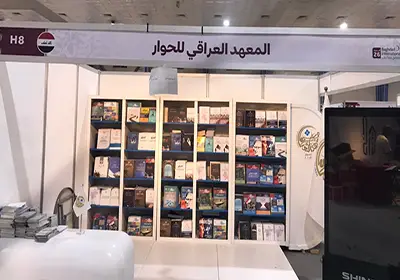
The Iraqi Institute for Dialogue, the logistical sponsor of the Baghdad International Book Fair, opens its own pavilion at the fair
Official agreement between Iraqi Institute for Dialogue and the Iraqi Media Network to sponsor The Seventh Annual International Conference of “Baghdad Dialogue” 2025
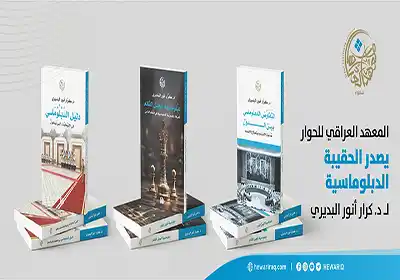
The Iraqi Institute for Dialogue publishes "The Diplomatic Portfolio" by Dr. Karrar Al-Badiri
Invitation to the 79th issue of Dialogue of Thought
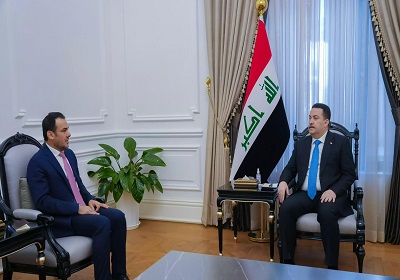
Prime Minister: The path of development will make Iraq a regional political and economic powerhouse
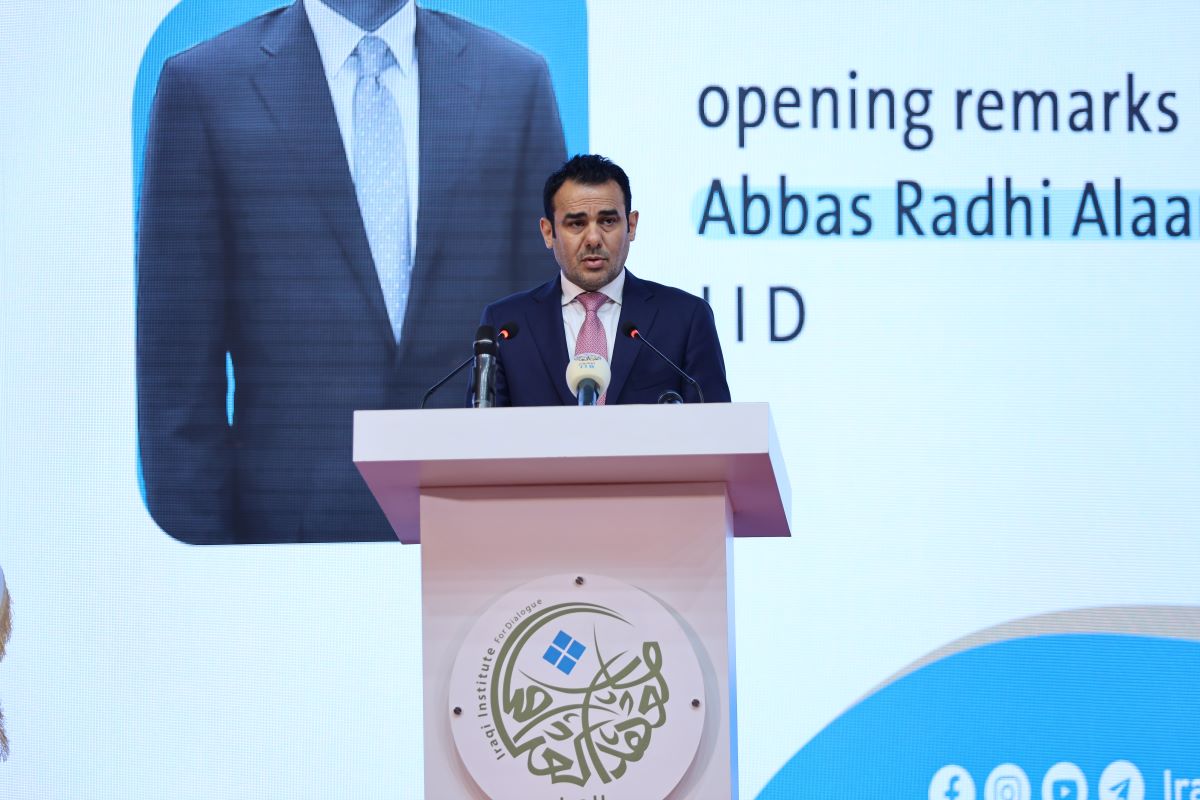
Speech of the Director of the Iraqi Institute for Dialog at the Sixth Baghdad International Dialog Conference
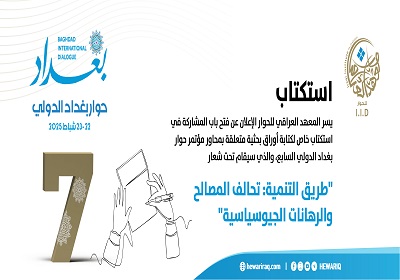
Seventh Baghdad International Dialogue Conference Call for Papers
Comments