


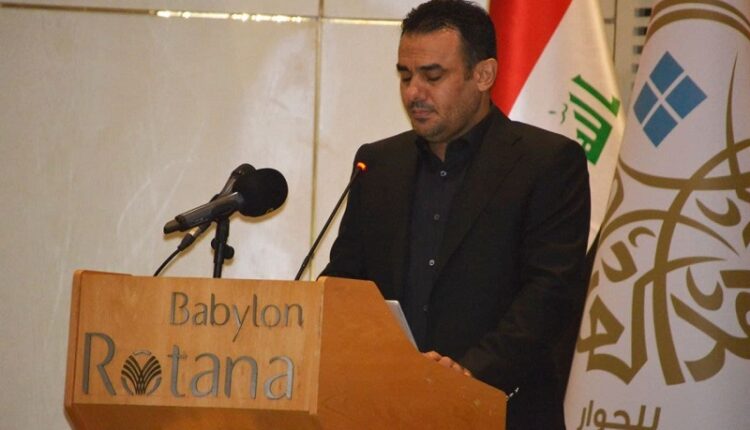
Opening Speech of the Fourth Baghdad International Dialog Conference
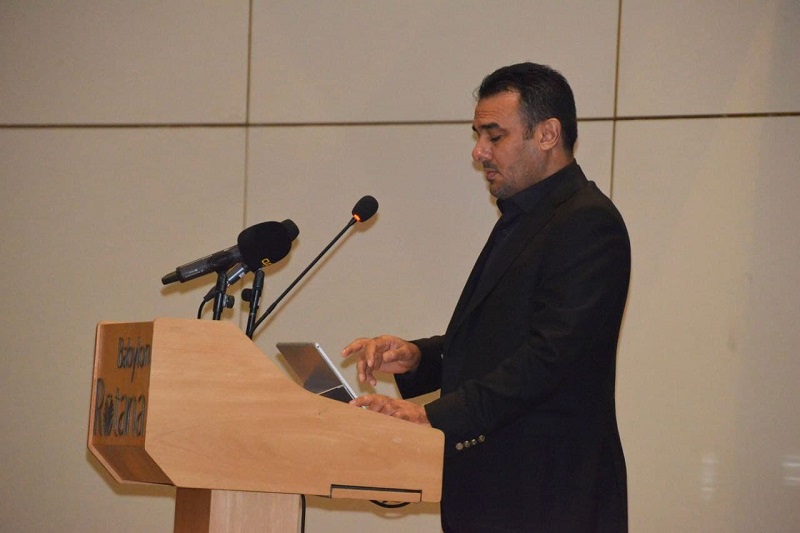
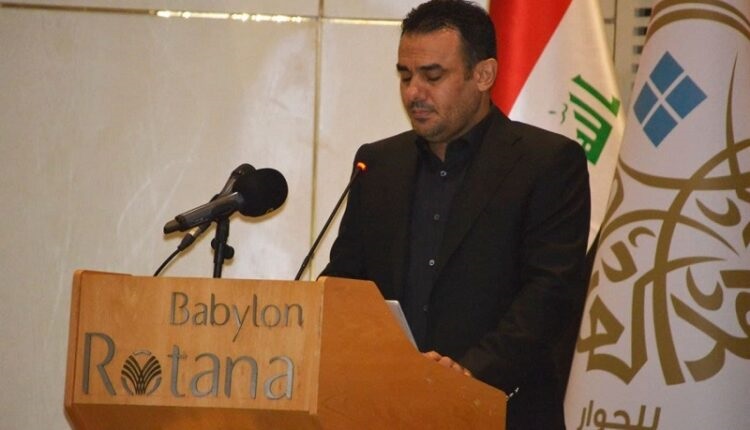
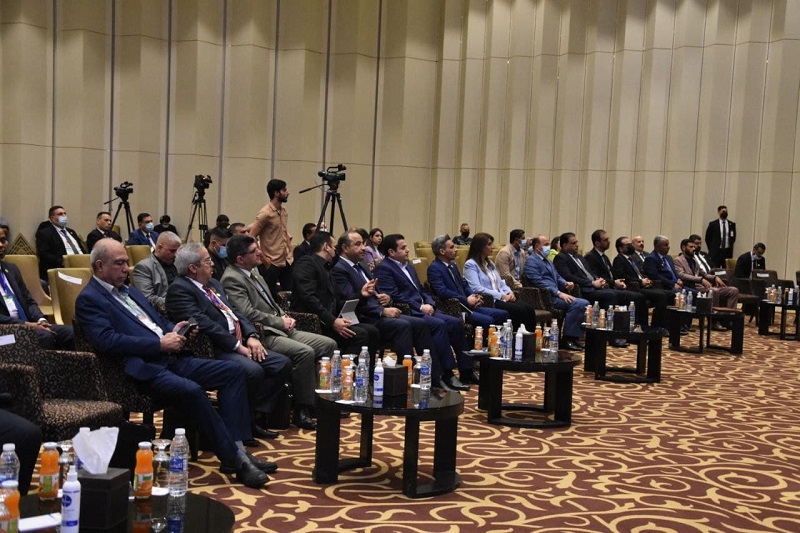
The 4th Baghdad International Dialog Conference kicked off with an opening speech by Mr. Abbas Radhi Al-Ameri, Director of the Iraqi Institute for Dialog and Executive Director of the Baghdad Dialog Conference.
How does Iraq become a regional and international actor?
It's very sad to mourn, but it's destiny ..
To describe your country, your homeland, your paradise as a country (fragile) or (weak) or (failed) is very sad ... but the reality, my friends ... there are international standards that countries that want to escape from the darkness of fragility and weakness and failure ... with great regret entered Iraq levels of this weakness differently and disparate, but it remained - as a country - described by a high amount. Regional policies and the logic of interaction between the main powers in it have made Iraq a region that is struggling for its influence, so that it is difficult for Iraq to overcome the contradiction of values between its neighboring countries, and it is difficult for it to be a field of settlement in light of the intensification of the zero equation that governs the intentions of neighboring countries.
The important thing here is not to cry on the ruins and lament the luck, because we, as an elite, are now able to influence the inputs. Rather, the Iraqi elite enjoys a historical opportunity to transform Iraq into an active country internally and externally, in harmony with its international environment and interacting with it. And this requires that the elite adopt the logic of employing opportunities or manufacturing them in a turbulent environment that requires thinking in a way that takes Iraq out of the entrenched paths of thinking imposed by the nature of the inputs for the emergence of the political system after 2003 and moving towards the logic of thinking by highlighting new inputs based on strengthening the image of Iraq as having an important position that was able to overcome the challenges that accompanied its existence and survival.
The Iraqi Institute for Dialog has been working for a whole year on writing a comprehensive strategy to transform Iraq into an effective state and get out of the dilemma of failure, weakness and fragility that was drawn by foreign policies and still stay up nights and spend money to achieve it since the independence of Iraq and the establishment of the Iraqi Kingdom and to this day. The conflict of interests, which is an inherent feature in the regional environment that surrounds Iraq, aims to continue the fragility of the Iraqi state to have greater opportunities to invest its interests and enhance its ability to continue in the value conflicts that are based mainly in the formation of its presence as countries in the region, and then the transformation of Iraq into an effective state will significantly affect the continuation of its presence as political regimes ruling in the countries of this region, Iraq historically has not been able to achieve sustainable stability as witnessed by the countries of the region.
Declassified documents in the United States revealed that 14 Arab, regional and international intelligence institutions are working to ensure that Iraq is neither a stable economic market nor a positive security environment, for several reasons that these countries consider to be in their national interest. The basis for interpreting regional strategies is the extent to which regional countries are able to attract opportunities instead, because turning Iraq into an economically or security attractive country will contribute to losing a competitive advantage associated with the fragility of Iraq as a country.
The Curse of Oil and Maritime Location
Iraq is characterized by important features that make it the focus of attention of countries with major security strategies in the region, foremost among them the great powers. However, the countries with which the sons of this land share blood, religion, language, brotherhood, and fate, as the intelligence services of these countries worked hard to break every positive step taken by Iraq so that Iraq would not be an international port or an international oil market or an important part of the Silk Road, especially through its sea port and dry channels that connect it to Europe.
The importance of Iraq is coupled with its geopolitical advantages, which make it the focus of attention of major countries, but the equation of power in the region is based on the fact that any effectiveness of an Iraqi role loses its regional neighbor its competitive advantage, and this makes these countries look for ways through which the value of these advantages can be weakened through strategic projects that establish new advantages acquired by these countries and deprive Iraq of the possibility of employing its capabilities, which makes Iraq in the perpetuity of fragility and inability to employ its geopolitical advantages in this field.
What is a failed state?
The state becomes a failure if it loses its authority and its ability to effectively control its territory, and when it is unable to exercise its legitimate right to (monopolize the use of violence) in its territory. And they are fragile and vulnerable when they lose their legitimacy in making and implementing public decisions, and also when they are unable to provide reasonable public services or fail to interact with other countries as an active member of the international community.
In a 2014 report by Foreign Policy magazine, in collaboration with the Fund for Peace, Iraq ranked 13th, using 12 key criteria; To measure the most vulnerable countries in the world and measure the extent of their failure.
And among the most important of these indicators came the political indicators represented in the loss of legitimacy of the state due to the corruption of the ruling elite, the absence of transparency and accountability, and the lack of confidence in official institutions, in addition to the lack of fair application of the rule of law, the spread of human rights violations, the loss of security and the possibility of a civil war. The economic indicators are the absence of sustainable economic development among the disparate groups, and the decline of major indicators such as national income, the trade balance and the exchange rate of the national currency. Social indicators have focused on the escalation of demographic pressures and the negative and random movement of individuals and refugees.
The research on the restructuring of political, economic and social inputs that govern the logic of the state's performance is an important criterion in the process of Iraq's transition from a fragile state to an active state, as well as the recalculation of opportunities that can be employed or manufactured in the regional and international environment. The advantages that Iraq possesses make it eligible to perform this role, with the need for experts and the Iraqi elite to adopt this goal as a path for decision-maker performance.
The fourth Baghdad International Dialog is a forum for the political elite who believe that Iraq's effectiveness lies in employing its resources and re-evaluating the logic of interactions in the regional environment. Strategic calculations scientifically and practically dictate that Iraq is a country with an important strategic weight that cannot be marginalized at any level of interaction in its external environment.
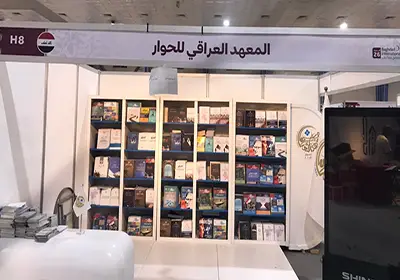
The Iraqi Institute for Dialogue, the logistical sponsor of the Baghdad International Book Fair, opens its own pavilion at the fair
Official agreement between Iraqi Institute for Dialogue and the Iraqi Media Network to sponsor The Seventh Annual International Conference of “Baghdad Dialogue” 2025
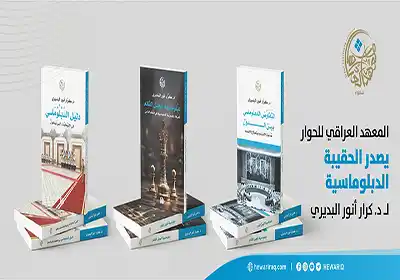
The Iraqi Institute for Dialogue publishes "The Diplomatic Portfolio" by Dr. Karrar Al-Badiri
Invitation to the 79th issue of Dialogue of Thought
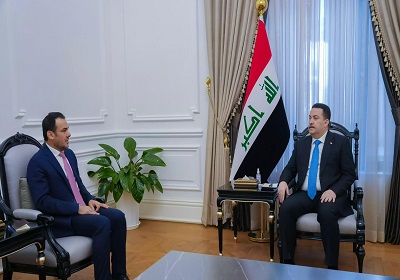
Prime Minister: The path of development will make Iraq a regional political and economic powerhouse
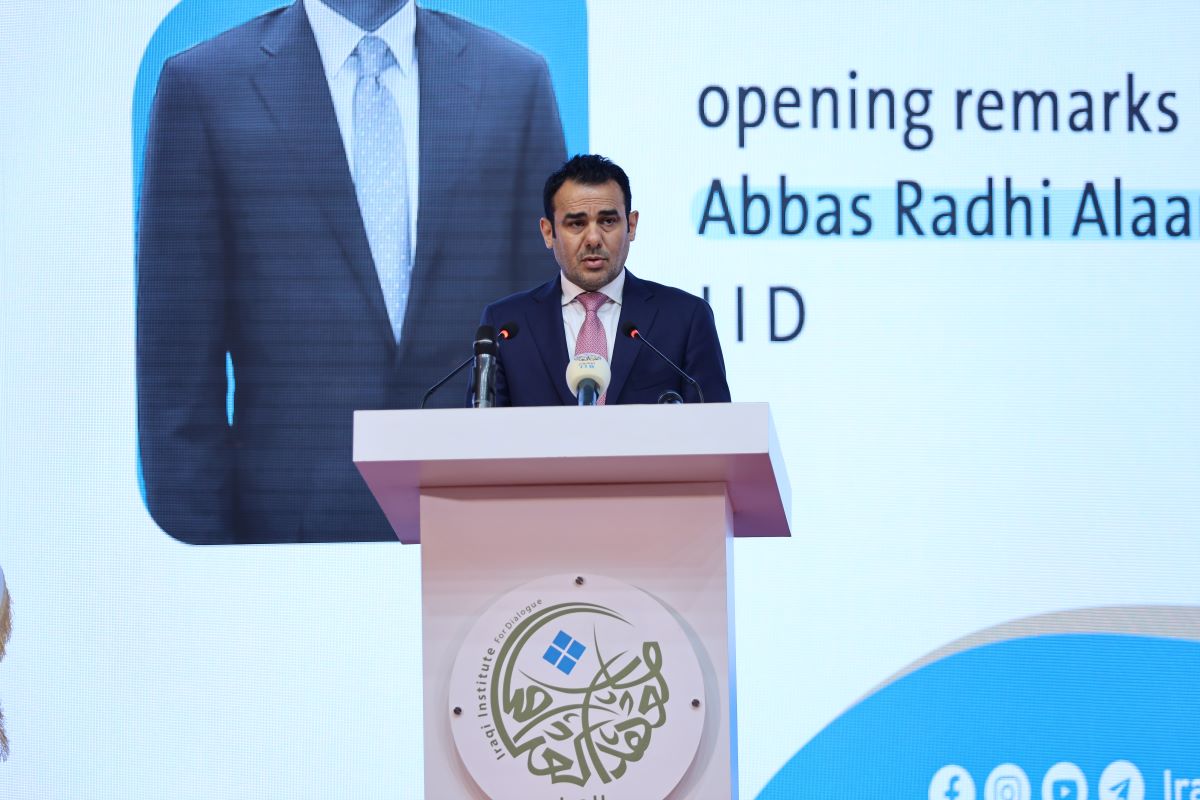
Speech of the Director of the Iraqi Institute for Dialog at the Sixth Baghdad International Dialog Conference
Seventh Baghdad International Dialogue Conference Call for Papers
Comments