


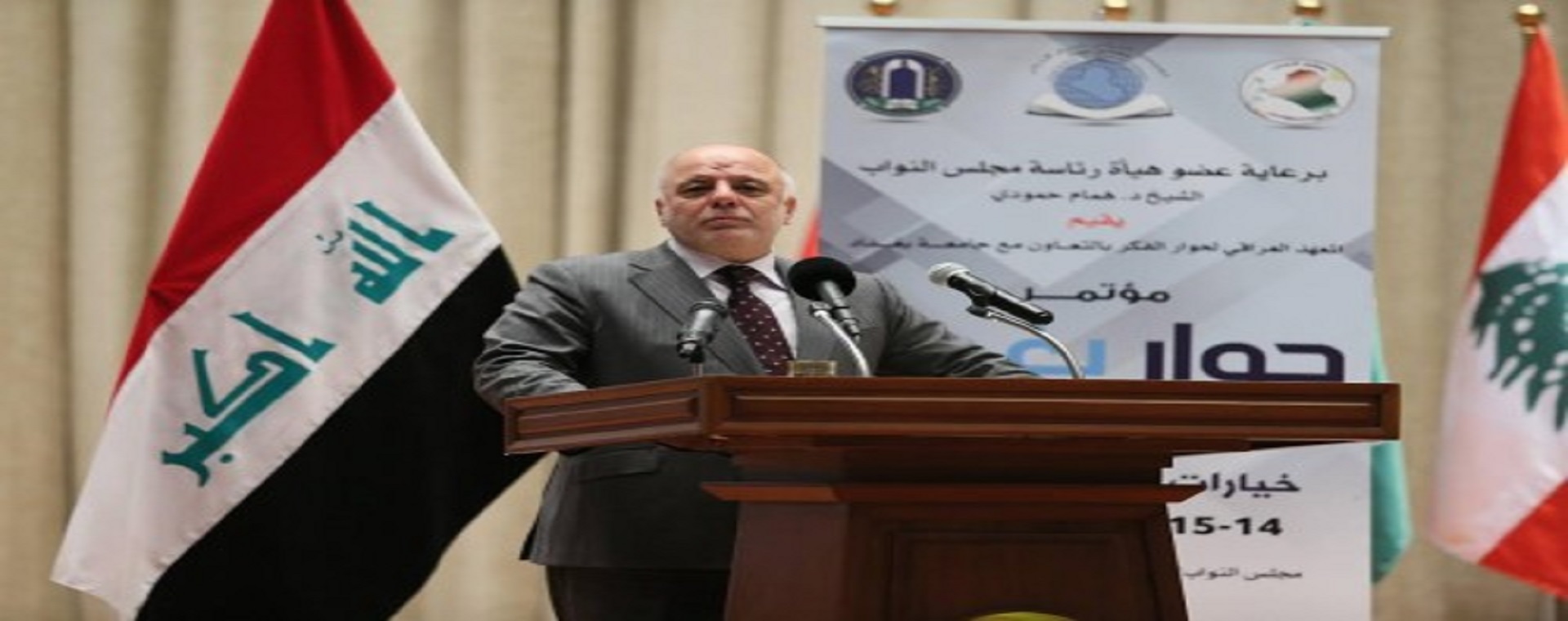
Baghdad Dialog Conference: Abadi’s vision for a post-ISIS Iraq
The Baghdad International Dialog Conference, which was held in the Iraqi capital on Saturday under the slogan (Post-Liberation Options), was held by the Iraqi Institute for Thought Dialog in cooperation with the House of Representatives and the University of Baghdad, in the presence of the President of the Republic of Iraq, Fouad Masum, and the participation of media and parliamentary delegations from various countries, including Iran, Lebanon, Egypt, Syria, Kuwait, Jordan, and Turkey, as well as a crowd of diplomats and academics to discuss how to deal with issues and benefit from experiences for the post-expulsion of ISIS and takfiris from Iraq.
And during the conference, Iraqi Prime Minister Haider al-Abadi stressed that the victories against the gangs of "Daash" were achieved by the unity of Iraqis and their steadfastness and the great sacrifices of the people of Iraq, expressing his surprise at the fear of the post-Daash stage. And he said, "When we started forming the government more than two years ago, we put at the forefront of our government program to restore and liberate our lands and cities, and to cleanse Iraq of the terrorist gang "Daesh", and we considered this goal a strategic priority for the work of the government, and we prepared a plan to confront and eliminate terrorism, and we are now closer to achieving this goal, and all cities will return to the homeland very soon."
And Abadi added that he has seven visions that shape the features of post-ISIS Iraq, the first of which is to restore stability to the liberated areas, return the displaced and compensate those affected within a humanitarian plan. And on the second vision, Abadi said that it is centered on "respect for the other and peaceful coexistence with all partners in the homeland different religious, sectarian and intellectual and respect for their sanctities and the protection of minorities and the sanctity of places of worship for all religions and sects and this represents a basis for community reconciliation."
And he pointed out that "the third point is not to allow the return of cases and abnormal manifestations that were prevalent in Iraq in the period before the occupation of the cities by ISIS, which is the state of incitement, tension and sectarian and national entrenchment at the expense of the supreme interests of the country, and this contributed to enabling ISIS to overthrow the cities and provinces"
He stressed "commitment to the discourse that enshrines the spirit of citizenship and urges unity and cooperation and not to allow the organization and any terrorist and criminal organization to return again and cover it in the liberated cities or allow the growth of new terrorist cells."
And he added: "As for the fourth point, it is the importance of establishing good-neighborly relations based on common interests with neighboring countries and the region, and working with our national will and our independent Iraqi decision and not depending on our will and positions abroad regarding our issues and our national interest."
And Abadi stressed on "limiting weapons to the state and the abolition of armed manifestations once and for all, and respect for the provisions of the judiciary and the rule of law in all parts of the state and society represent the fifth point in our vision for the post-liberation and victory"
And he continued that “the sixth point is to continue with all strength and determination and cooperation of everyone to fight corruption in all its forms and manifestations because it is the largest incubator of terrorism and crime.”
He pointed out that "the seventh point is to keep state institutions and departments away from political interference, quotas and non-monopolization of positions of responsibility and public functions, in order to achieve justice and equal opportunities and rely on competent and specialized elements capable of running the work independently and professionally." And vowed to "restructure the security institution away from corruption," stressing that "corruption in the military institution is the most prominent cause of previous security collapses in Iraq. And stressed "the need to launch a random campaign on corruption in the military institution to avoid further security collapses," noting that "the government has developed a plan to eliminate the corrupt in all state institutions."
This vision, if allowed to be implemented, is capable of rebuilding Iraq in all fields, Iraq, which, due to the policies of previous Iraqi governments, has reached the ranks of a failed state. But the question arises in this context, does Abadi's vision face challenges in implementing it? Especially if we know. The political settlement project in Iraq has entered the cycle of intense competition between the largest Iraqi Shiite political currents, which have been subjecting various issues and topics to the measure of profit and loss in the game of capturing power and obtaining the largest amount of its profits. In particular, the team of Nouri al-Maliki, the former prime minister of Iraq, is trying to take advantage of the change in the Shiite political map after the emergence of the Popular Mobilization and the consolidation of its military and political presence, which will pave the way for the rise of the emirs of his militias to direct rule. They are keen to present their leader as a "hawk" of hawks to counter attempts to "reintegrate terrorists, Baathists and Saddamists into political life under the title of reconciliation and political settlement", which is part of his slogans that he has always used to arouse enthusiasm in the Shiite street, whose daily living and security concerns distracted him from paying attention to such slogans. By the logic of narrow calculations, Maliki will not allow Abadi's vision to be realized. There are those who believe that he is thinking of revenge against the Shiite political class, which deprived him of his third term and continues to stand in the way of his return to power. He is against any real change desired, both internally and externally. The first level is to keep Iraq from its dark tunnel and consolidate sectarian policies in Iraq. This is contrary to Abadi's vision, but on the external level he is against any Iraqi-Arab rapprochement, except if this rapprochement has a sectarian flavor, and the evidence of this is a few days ago The "Law" bloc, led by Vice President Nouri al-Maliki, launched a violent attack on the government of Haider al-Abadi for issuing a decision to exempt Jordanian goods coming to Iraq from customs duties and continuing to sell Iraqi oil to Jordan at reduced prices.
And Mowaffak al-Rubaie, a member of the State of Law coalition, said that "the decision to exempt a country like Jordan from customs duties for its exports to the Iraqi market, is wrong, because Jordan is still home to the family of former President Saddam Hussein." And he added, in a statement, "Exempting Jordanian exports to Iraq from customs, is a wrong policy in the midst of the financial crisis that Iraq is going through, and Iraqis who suffer from the two things of gain and who work on contracts are the first of these funds, especially since Jordan still receives our oil at reduced prices and is also still home to Saddam's family and his followers and the takfiris in Al-Qaeda and the State Organization," according to the statement.
Firdous al-Awadi, a lawmaker representing the State of Law coalition, criticized the exemption of Jordanian exports to Iraq from customs, describing it as "a big mistake", describing Jordan as "the biggest hotbed for Saddam's family and sons, and the largest source of "takfiris". And she considered that "the government and the Jordanian people were never friends with the Iraqi people," according to her.
And said in its statement, "The agreement of the Iraqi government with its Jordanian counterpart to exempt Jordanian exports to Iraq from customs, is a big mistake at a time when oil prices are falling, and Iraq's attempts to compensate and look for other revenues that help the Iraqi treasury."
She pointed out that "the land of Jordan is the largest hotbed for the family and sons of Saddam, and the largest source of takfiris and terrorists for Iraq."
And she wondered, "After all these reasons and provocative Jordanian premises, is it worth giving the concession from Iraq and its government exempts its exports from taxes and sells oil to it at reduced prices."
And called on Awadi, to "present the issue of exempting Jordan from customs duties for its goods to parliament so that the voice of the people has the final say in it," noting that "some of the decisions taken by the government, towards some countries where weakness, these decisions are not subject to accurate political assessments, such as the issue of exempting Jordan from customs duties, as well as the lack of Iraq to a timetable for the exit of Turkish forces from Iraq during the recent visit of the Prime Minister of Turkey."
And she explained, "What is happening is that the Iraqi government deals with great generosity in exchange for a small but non-existent tender, the first and most deserving of which was the Iraqi people, who are taxed generously, and this gives the impression that the Iraqi government and its institutions specialized in these courtesies are dealing with great personal shame to satisfy their guests in a way that completely intersects with the political literature and the common interests of countries." Observers of the Iraqi issue indicate that the Law Bloc is trying to exploit any positions of the Abadi government, including relations with other countries, to launch attacks and criticism of its policy, in order to weaken it and show it as a government that does not improve the management of the country.
Since Abadi's ascension to the leadership of the executive authority in Iraq, his predecessor, Nouri al-Maliki, has been exerting pressure on him using his influence in the state and his position at the head of the General Secretariat of the Dawa Party and at the leadership of the State of Law Coalition, revealing ambitions to restore the position of prime minister, who sees himself more worthy of Abadi than the lowest rank in the party. And insiders behind the scenes of Shiite parties in Iraq say that Nouri al-Maliki is betting on the weakness of his successor Haider al-Abadi and on his inability to compete in the next stage. Therefore, Iraq is about to hold parliamentary elections in 2018, which may be of exceptional importance, given that they will arrange the affairs of governance in the country during a new stage that is hoped to be more stable than before.
Iraqi Studies Unit - Rawabet Center for Research and Strategic Studies

The Iraqi Institute for Dialogue, the logistical sponsor of the Baghdad International Book Fair, opens its own pavilion at the fair
Official agreement between Iraqi Institute for Dialogue and the Iraqi Media Network to sponsor The Seventh Annual International Conference of “Baghdad Dialogue” 2025
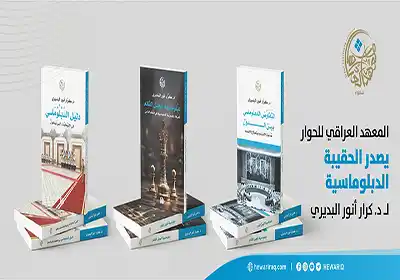
The Iraqi Institute for Dialogue publishes "The Diplomatic Portfolio" by Dr. Karrar Al-Badiri
Invitation to the 79th issue of Dialogue of Thought
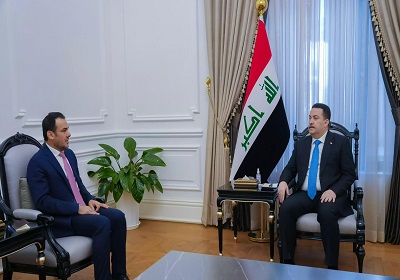
Prime Minister: The path of development will make Iraq a regional political and economic powerhouse
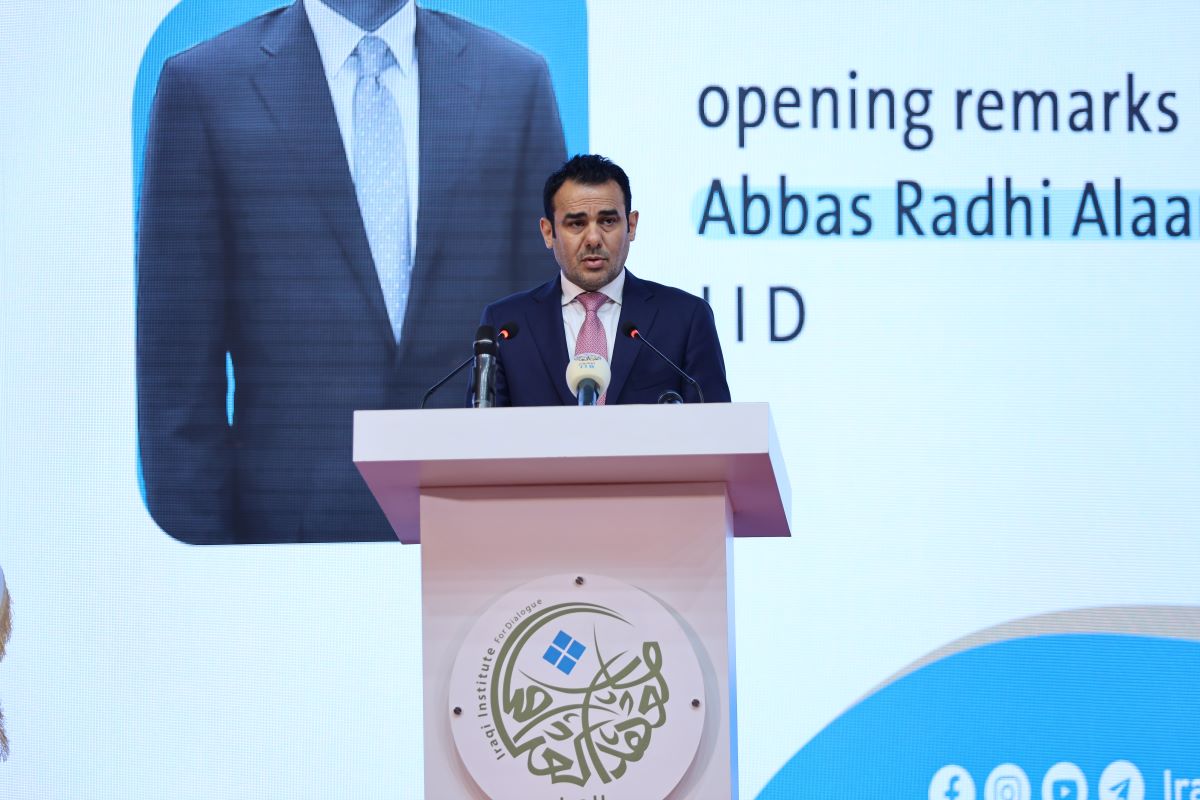
Speech of the Director of the Iraqi Institute for Dialog at the Sixth Baghdad International Dialog Conference
Seventh Baghdad International Dialogue Conference Call for Papers
Comments