


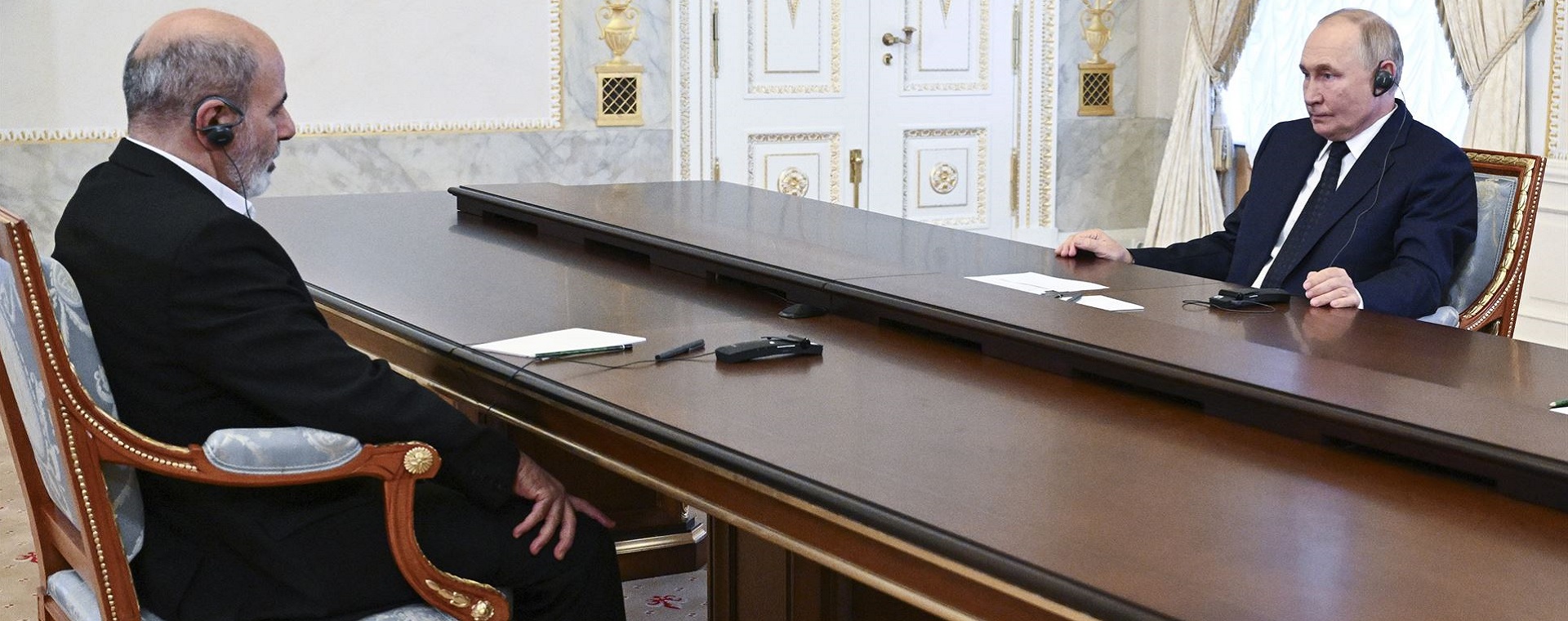
Pavel Aksenov is the BBC's defense correspondent for Russia
What Russia wants from the Israeli-Iranian escalation: Chaos is good and war is bad
Military and technical cooperation between Tehran and Moscow is linked to the war in Ukraine that began in 2022 with the Russian attack, as well as to Iran's attacks on Israel, which may turn into a full-scale war in the future.
And Iran has already given drones to Russia and the Russian military is using them to attack Ukraine, in addition, Iran has sent other smaller shipments to Russia, according to Western claims, while Tehran denies this is true.
But this military and technical cooperation could be raised to even higher levels, for example, Russia could sell some Su-35 (Flanker) fighter jets to Iran.
The aircraft was originally manufactured for sale in Egypt, but this deal never materialized, and Iran has expressed interest in buying these fighters.
If Iran receives these fighters, air operations against Iran will face more problems. Currently, the Iranian Air Force has only a few dozen warplanes, mostly older Russian and American models that survived the pre-1979 revolution era.
And in the spring of 2023, Iranian radio, citing an unnamed member of Iran's delegation to the United Nations, reported that the deal had been concluded, but since then no report of the delivery of these aircraft to Iran has been published.
Currently, there are more than 20 of this type of fighter aircraft parked at the airport of the Komsomolsk-on aircraft factory, and these fighters can be seen on Google maps.
And Russia can also provide Iran with air defense systems such as the Pantsir-S1 short-range missile system. These systems protect long-range defense systems and other vital targets from Israeli missile attacks.
And according to classified U.S. intelligence documents, the Wagner Group, a Russian militant group, had a plan in 2023 to transfer that system to Hezbollah or Iran.
And John Kirby, a spokesman for the US National Security Council at the time, announced that in the event of such a measure, the United States is ready to apply "counterterrorism sanctions against Russian individuals and institutions."
On the other hand, Iran may be able to send short-range tactical operational or ballistic missiles to Russia, and the addition of such missiles to the Russian military arsenal will have a significant impact on the current situation of the war in Ukraine.
And in the event of a war with Israel, Iran, which is about 1,000 kilometers from this country, will need medium-range missiles. On the other hand, Russia needs tactical or short-range missiles with a range of less than 500 kilometers, so the transfer of such equipment to Russia will not affect Iran's ability to attack Israel.
And this issue is so serious that it has caused further diplomatic tensions between Moscow and Washington. And in early September, US President Joe Biden considered allowing Ukraine to use US missiles against targets on Russian soil.
At the time, the United States, France, Germany and Britain formally accused Iran of supplying Russia with ballistic missiles. According to reports published in the media, these missiles have already reached Russia.
And although Kiev did not get permission to use Western weapons to attack targets inside Russian territory, Moscow also refused to use Iranian missiles in Ukraine.
Iran has officially denied sending these missiles to Russia.
And the possibility of selling fighter jets and ballistic missiles is the biggest arms deal leaked to the media but remains uncertain.
But the likelihood of such equations shows the high potential for military and technical cooperation between Iran and Russia, which affects the conditions of the region.
But this cooperation affects Israel's interests, and while Russia's relations with Israel are not as dark and tense as its relations with other Western countries, they are also nowhere near.
So far, Israel has not delivered lethal weapons to Ukraine, at least publicly, despite repeated requests from Ukrainian authorities.
Ukraine is particularly interested in effective Israeli air defense systems, such as Iron Dome.
And while it seems unlikely that Israel will take these systems from its active military forces and send them to Ukraine, these systems are also produced for export, and there are currently two units of them in America, which may be sent to Ukraine if Israel agrees.
So far, Israel has not provided significant military aid to Ukraine, and has only cooperated in sending humanitarian aid.
And in February 2023, Israeli Prime Minister Benjamin Netanyahu said he might consider providing military assistance to Ukraine, but he did not elaborate on the type of assistance and so far no decision has been made in this regard.
And relations between Israel and Russia have become even more complicated due to the simultaneous activities of the air forces of both countries in Syria.
Their planes often fly close to each other, and they must coordinate constantly to avoid incidents such as the downing of a Russian spy plane in 2018.
In that incident, although Syrian air defenses mistakenly shot down the aircraft, Russia claimed that Israeli fighters were nearby and were the main target of Syrian air defenses.
International relations in the Middle East are so complex and intertwined that any major intervention could lead to a series of problems with other countries.
In any case, it seems that Moscow and Tehran have tried to negotiate all the details before any escalation of the conflict in the region.
On September 30, Russian Prime Minister Mikhail Mishustin visited Tehran. According to the Russian newspaper "Vedomosti", the purpose of this trip is to study the full scope of cooperation between Russia and Iran, and its particular focus was on joint mega-projects in the fields of transport, energy, industry and agriculture.
It remains unclear whether the trip will involve the sharing of military technology.
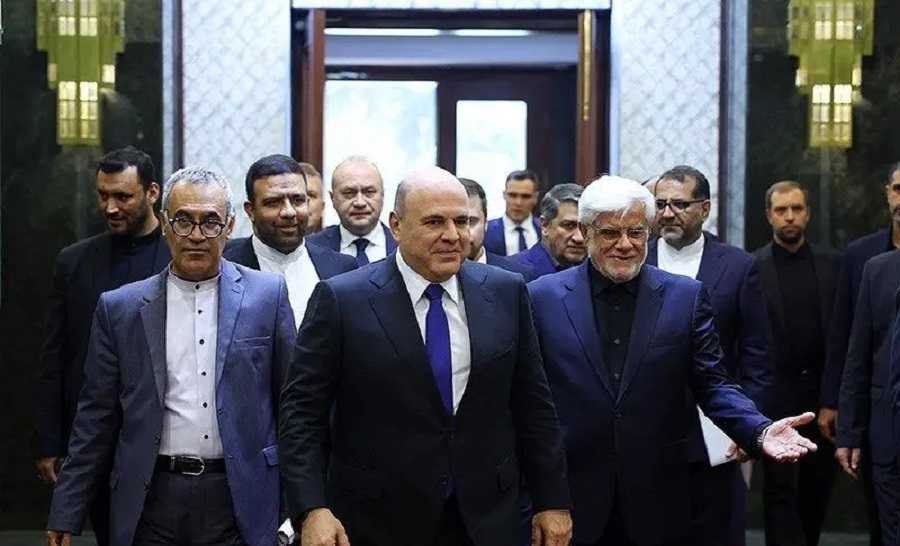 Iranian Vice President Mohammad Reza Aref and Russian Prime Minister during his recent visit to Tehran
Chaos is good and war is bad
For Russia, the expanding war between Israel and its neighbors is also strategically difficult, analysts say.
Russian foreign policy under President Vladimir Putin has revolved around a “multipolar world,” an alternative to the US-led world order.
And with the prospect of a direct confrontation between Israel and Iran growing, and the war expanding decisively in Lebanon as well, what does this latest crisis mean for Russia’s interests as a global power?
And Alexei Malinin, founder of the Center for International Interaction and Cooperation and a member of the DeGuria think tank, told Al Jazeera: “The ongoing escalation of the Arab-Israeli conflict is of great concern to Russia,” referring to Russia’s repeated calls for a diplomatic solution.
And yet, these efforts are constantly met with opposition, which is reflected in the desire of the United States to support Israel in almost any situation, especially militarily. This support, which is later used to turn Lebanon into a battlefield, cancels all statements about the US desire to ensure peace in this region."
In contrast to the unwavering support the US and its allies give Israel, the Russian Foreign Ministry condemned the entry of Israeli forces into Lebanon, and urged Israel to withdraw the soldiers.
Earlier, Russia also condemned the killing of Hezbollah leader Sayyed Hassan Nasrallah, saying Israel "bears full responsibility for the subsequent escalation."
But as the conflict spreads, especially to Iran, Russia's goals are not based solely on broader foreign policy principles, analysts point out.
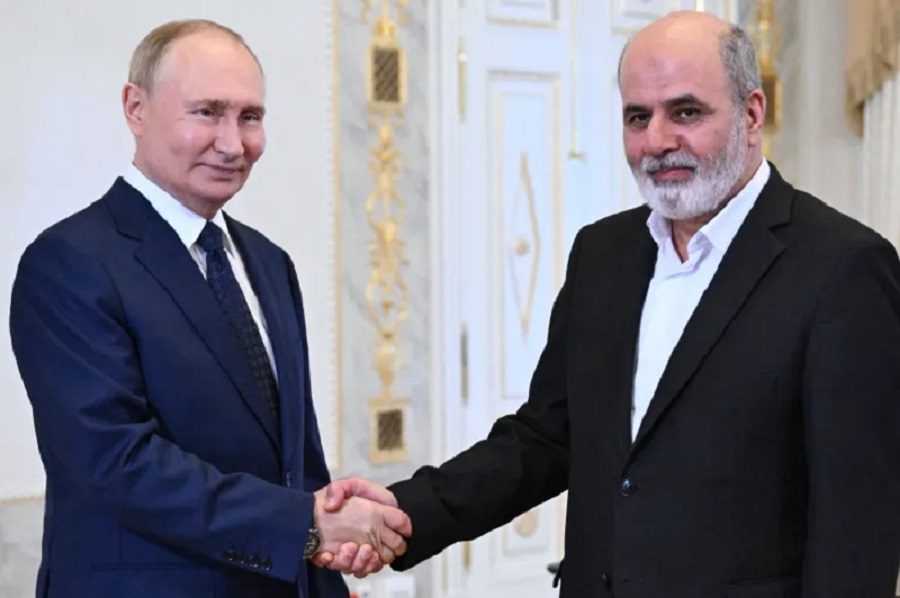 Russian President Vladimir Putin and Ali Akbar Ahmadinejad, Secretary of Iran's Supreme National Security Council
"Falling into Iran's Ark"
Russia received significant Iranian assistance for its invasion of Ukraine, linking it to Tehran's interests in the region.
"Russia has been cooperating closely with Iran for the past two and a half years, but exclusively in the military sphere," said Ruslan Suleimanov, an independent Russian Middle East specialist based in Baku, Azerbaijan.
And Iranian weapons are in great demand, the demand has never been so great, and Russia has become dependent on Iranian weapons.”
Soleimanov said that Iranian military trainers are now visiting Russia and helping to build a factory to produce Shahed drones inside Russia.
"As a result, Russia is forced to support Iran's allies in the Middle East such as the Hezbollah movement," Suleimanov said.
And while Malinin blames Washington for thwarting peacemaking efforts, according to Suleimanov, Moscow’s policies in the region are a direct result of “falling into Iran’s orbit.”
She welcomes chaos, but she doesn't want war
And yet, Malinin and Suleimanov agree that Russia does not want another war, and Suleimanov said, “Moscow is not interested in a huge firestorm.”
And we saw this last April, when it seemed that Iran and Israel were already engaged in a major war, Russia did not stand unequivocally by Iran.”
And Russia has urged Iran and Israel to show restraint, Suleimanov said, referring to tensions that erupted after Israel struck the Iranian consulate in Damascus in April, killing top Iranian military leaders, and Iran responded by firing missiles at Israel for the first time ever.
And at the same time, Suleimanov added that “Russia is benefiting from the chaos in the Middle East.”
And at the same time, the Kremlin does not want to see another major war.
Russia and Iran share a mutual hostility with the United States. They also share a common ally, Syrian President Bashar al-Assad, who intervened during his country's civil war.
Russian warplanes have bombed rebel-held cities, while Hezbollah has fought fiercely on the ground, and Russia has strategic interests in Syria, including military bases as well as oil and gas deposits.
And to defuse tensions with Israel, Moscow has used its influence with Tehran to persuade Hezbollah to withdraw from the Syrian-Israeli border.
Levina, a Russian researcher based in Beirut, said there was a view among observers that there was an implicit understanding between Israel and Russia on Syria.
She pointed to Israel's reluctance to supply military equipment to Ukraine in its war against Russia, and said that when Israel strikes Hezbollah positions in southern Syria - where Moscow's forces are located - "Russia does nothing, just leaves them."
"As for Lebanon, Russia's interests are somewhat limited." During the Soviet era, Lebanese students, especially members of the Communist Party, were invited to attend Patrice Lumumba University in Moscow - and there is still some sympathy for modern Russia, exemplified by Putin billboards sometimes displayed in Shia and Orthodox Christian areas.
"The Soviet Union was very active with the communist parties here and they had common interests," Levina said, including on Palestine and the Armenians living in Lebanon.
She said Russia's relations with Lebanon today are not extensive - and when it comes to Hezbollah, they have long been complex.
During the Lebanese Civil War, which lasted between 1975 and 1990, Hezbollah was said to have taken three Soviet diplomats hostage as a way of pressuring Moscow to use its influence over Syria to stop bombing sites in Tripoli. After executing one of the hostages, the Soviet intelligence service reportedly responded by kidnapping and castrating a relative of a Hezbollah leader and handing him over.
The rest of the hostages were quickly released. This account has not been officially verified by Hezbollah or the Kremlin.
The actual allies remain particularly unclose, and tensions have been reported over Hezbollah's continued presence in Syria.
On Thursday, a Russian emergency plane evacuated 60 family members of diplomatic staff from Lebanon, but more than 3,000 Russian citizens remain in the country.
The same aircraft also delivered 33 tons of humanitarian aid, including food, medical supplies and power generators. Other evacuations may follow.
On the other hand, Livina hopes that Hezbollah will block Israeli progress. "It was very disturbing of course, but the ground invasion was good news, and I dare say it was good news because this is the third time Israel has made this mistake," she said, referring to Israel's invasion and occupation of Lebanon in 1982, and the war in 2006.
The Iraqi Institute for Dialogue, the logistical sponsor of the Baghdad International Book Fair, opens its own pavilion at the fair
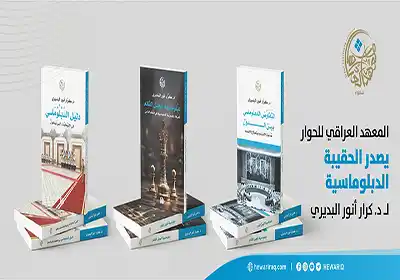
The Iraqi Institute for Dialogue publishes "The Diplomatic Portfolio" by Dr. Karrar Al-Badiri
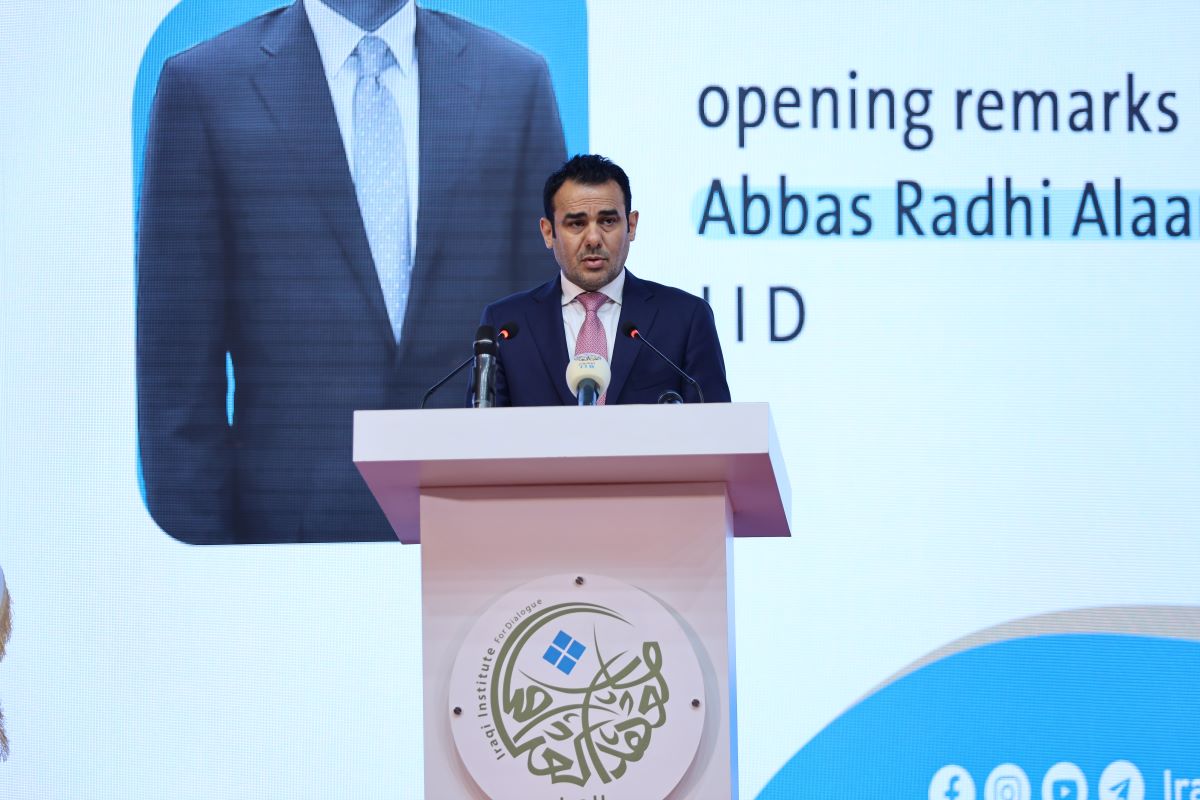
Official agreement between Iraqi Institute for Dialogue and the Iraqi Media Network to sponsor The Seventh Annual International Conference of “Baghdad Dialogue” 2025
Invitation to the 79th issue of Dialogue of Thought
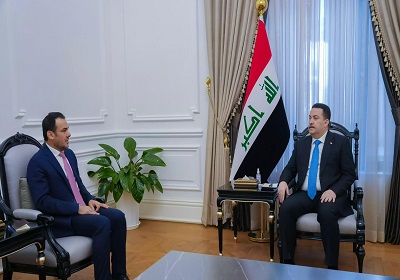
Prime Minister: The path of development will make Iraq a regional political and economic powerhouse
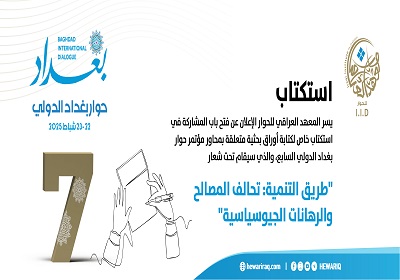
Seventh Baghdad International Dialogue Conference Call for Papers
Praise for the Baghdad International Dialogue: Strengthening Iraq's pivotal role and a meeting point for visions
Comments