

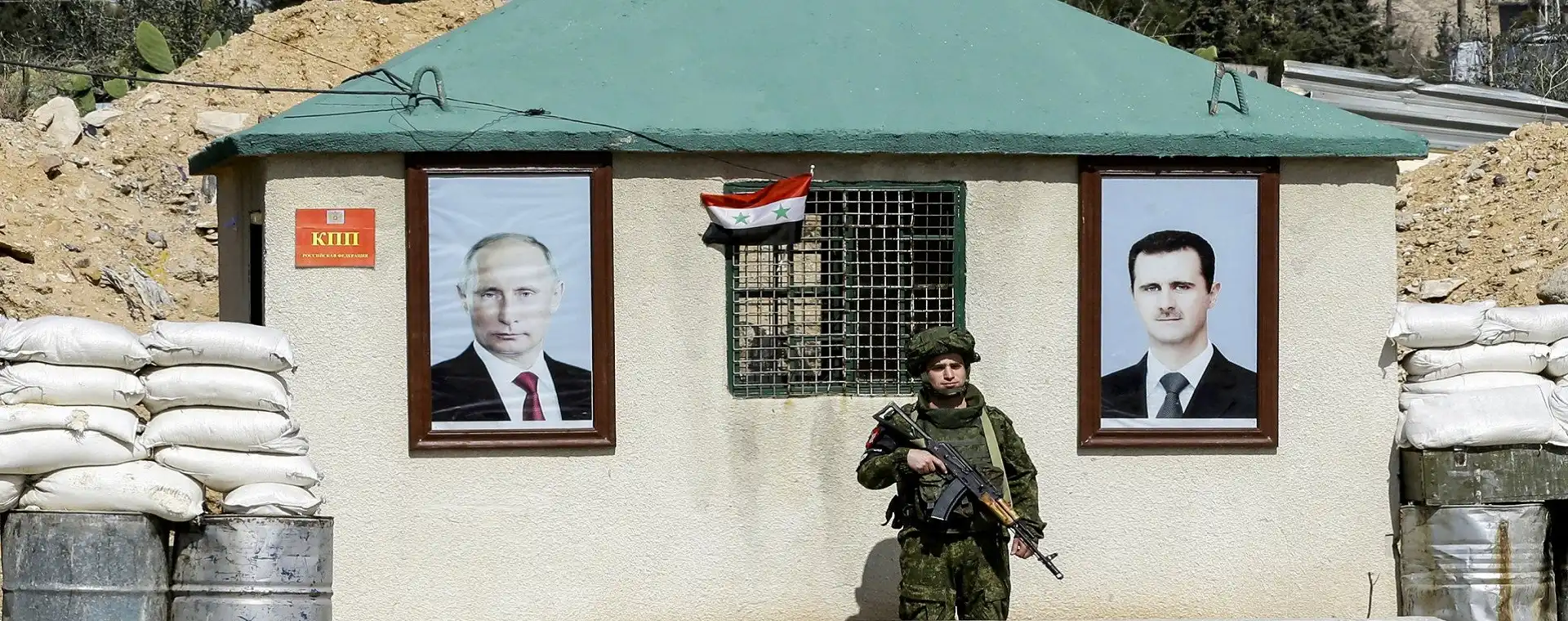
Will Russia lose its military bases in Syria?
Russian President Vladimir Putin was a staunch supporter of then-Syrian President Bashar al-Assad long before the Syrian civil war began in 2011.
Since September 2015, a large Russian military force has been deployed in Syria to help the Syrian regime defend against advancing rebel forces.
The two largest Russian military bases in Syria are the Tartus naval base and Hmeimim air base, located about 20 kilometers southeast of Latakia.
Now that Assad has fled Syria and his government has fallen, Russian media is full of speculation about the fate of the expensive military equipment, ships, vehicles and some 7,500 personnel.
Although estimates vary as to the exact number of personnel and equipment remaining, the reality is that Russia is facing a dilemma. What to do with these critical assets in fast and unpredictable situations and how to protect them.
In 2017, Moscow and Damascus signed an agreement allowing Russia to use the Tartus and Hmeimim bases for 49 years until 2066. But it is now difficult to predict whether these bases will remain under Russian control or not.
The Russian leadership has indicated that it does not intend to continue using these two bases.
Russian presidential spokesman Dmitry Peskov said Monday that Moscow will negotiate with the new government in Damascus over the fate of Russian bases in Syria.
According to Peskov's statement, it appears that the Russian leadership has not yet decided on the future of the Tartus and Latakia bases, and may be preparing for the evacuation of Russian troops.
Evacuation plans
In addition to 7,500 personnel, the Russian military includes a large amount of weapons and military equipment, mainly stationed at the Hmeimim air base.
This equipment includes armored vehicles, air defense missile systems, engineering equipment and other resources. If the evacuation begins, it is likely to be pretty straightforward.
In recent years, there have been reports that Russia's military presence in Syria has included heavy battle tanks. These tanks need to be transported by An-124, one of the largest aircraft in the world, across the runway of Hmeimim Airport.
If Russia begins an immediate evacuation of its military personnel from Hmeimim, it will likely require hundreds of flights of An-124 and IL-76 aircraft in a very short period of time.
Meanwhile, the maritime route through the Tartus naval base does not look easy. Although ships can carry large amounts of cargo and personnel, they cannot enter the Black Sea via Turkey's Bosphorus and Dardanelles.
After Russia's large-scale attack on Ukraine, Turkey closed the straits to Russian and Ukrainian warships based on the Montreux Convention.
The closure means that even if Russia could mobilize ships to evacuate its personnel from Tartus, they would have to make the long journey through the Mediterranean, the Strait of Gibraltar, around Europe, and then either to the Baltic Sea or northern ports via the Norwegian Sea. It passes through the Barents (a branch of the Arctic Ocean).
If Russia decides to withdraw its troops from Syria, the process will be costly and extensive.
What would the loss of Syrian bases mean for Russia?
The military bases in Syria were not only vital for Russia to prop up the Assad regime. They ensured Russia's military presence in the Middle East and facilitated the transportation of people and goods to Africa, where Russia has made significant gains in recent years.
The Russian government insists that the Tartus facility cannot be considered a full-fledged base, and that it is merely a ship maintenance station. In fact, this base ensured Russia's naval presence in the Mediterranean, although it was much smaller compared to the U.S. Sixth Fleet.
The Hmeimim airbase is particularly important because it serves as a major logistics center for all African projects, including Russia's Wagner Group.
If Russia can negotiate with the new Syrian government to retain the bases, the deal is likely to take a very different shape.
Bashar al-Assad's government has relied heavily on Russia and its military presence in Syria. Now Moscow has to come up with another proposal to win Damascus over. Putin saw sending thousands of troops to help Assad in 2015 as a way to bolster Russia's status as a global power.
Russia's presence in the Middle East was Putin's first major challenge to the West and its hegemony outside the former Soviet Union's sphere of influence.
At one point, Russia's mission in Syria seemed successful. But now, Russia's military and diplomatic achievements during its years of presence in Syria are being called into question.
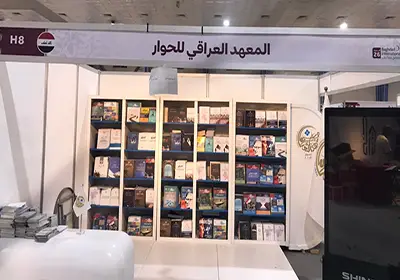
The Iraqi Institute for Dialogue, the logistical sponsor of the Baghdad International Book Fair, opens its own pavilion at the fair
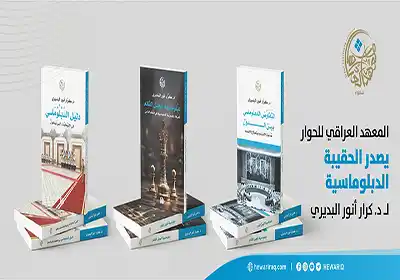
The Iraqi Institute for Dialogue publishes "The Diplomatic Portfolio" by Dr. Karrar Al-Badiri
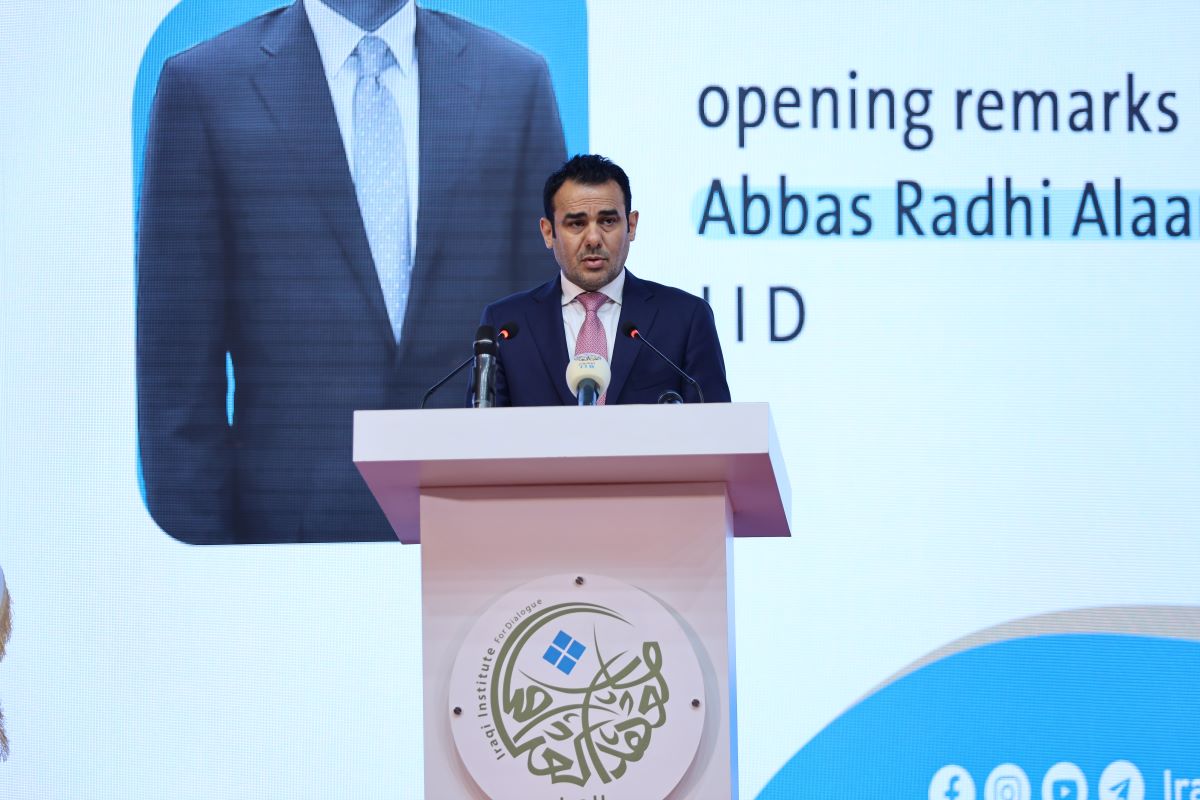
Official agreement between Iraqi Institute for Dialogue and the Iraqi Media Network to sponsor The Seventh Annual International Conference of “Baghdad Dialogue” 2025
Invitation to the 79th issue of Dialogue of Thought
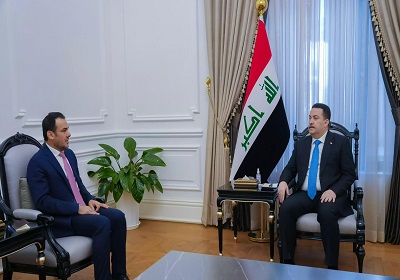
Prime Minister: The path of development will make Iraq a regional political and economic powerhouse
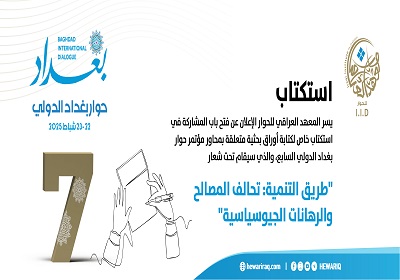
Seventh Baghdad International Dialogue Conference Call for Papers
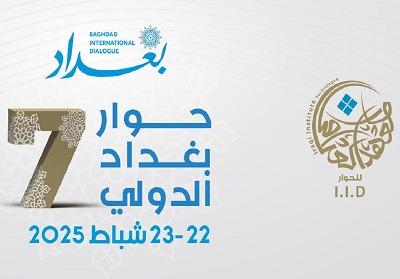
Praise for the Baghdad International Dialogue: Strengthening Iraq's pivotal role and a meeting point for visions
Comments