



The article highlights the stark contrast between the declared moral discourse of British foreign policy and its actual practices, calling for a serious review of policies to ensure that they are consistent with humanitarian and ethical principles.
"The Duality of British Foreign Policy: Slogans and Reality"
Martin Shipton, a British writer and journalist known for his work in political journalism, published an article in which he harshly criticized British foreign policies that contradict ethical principles, leaving a negative impact not only on the reputation of the government but on British society as a whole.
In an article published on nation.cymru, Shipton discusses the moral drift of British foreign policy, pointing out the discrepancy between promises of justice and respect for human rights and actual practices.
He highlights decisions such as allowing the return of dictator Pinochet to Chile, the disastrous invasion of Iraq, and continued support for Israel despite its oppressive policies towards the Palestinians, calling for a serious review of these policies to restore the moral dimension of British policy in the international arena.
Moral Foreign Policy: Unfulfilled Promises
In 1997, then-Foreign Secretary Robin Cook announced his intention to introduce a "moral dimension" to UK foreign policy, focusing on human rights and the environment. However, these promises did not translate into concrete policies.
The case of Pinochet: A missed opportunity for justice
In 1998, former Chilean dictator Augusto Pinochet was arrested in London on charges of atrocities. Despite hopes for justice, he was allowed to return to Chile under the pretext of his deteriorating health, raising doubts about the seriousness of Britain's commitment to ethical standards in its foreign policy.
Invasion of Iraq: Disastrous decision
In 2003, Britain joined the United States in invading Iraq, a decision the article describes as "disastrous," destabilizing the Middle East and causing countless deaths, as well as a refugee crisis that affected European politics.
Collusion with Israel: Unconditional support
The article refers to Britain's continued supply of arms to Israel, despite what he describes as "genocide" in Gaza and ongoing attacks on Palestinian villages in the West Bank. The author highlights his personal experiences visiting Jerusalem, Bethlehem and Hebron, where he witnessed the harassment and attacks on Palestinians by Israeli settlers.
Worsening conditions in Gaza: Systematic destruction
The article describes the dire living conditions in Gaza's refugee camps, noting the destruction of universities and infrastructure as a result of constant bombardment, depriving young people of educational opportunities and increasing their suffering.
The rise of extremism: The inevitable result of repressive policies
The author attributes the emergence of militant movements like Hamas to Israel's intransigence and the failure of Western powers, especially the United States, to use economic pressure to achieve concessions. He points out that the current Israeli government is the most extreme since the establishment of the state in 1948, with some of its ministers describing Palestinians as "animals."
Double standards: Accusations of anti-Semitism to silence criticism
The article concludes by noting that Israel operates as a racist state and apartheid regime, and benefits from a powerful lobby that silences criticism with false accusations of anti-Semitism, complicating efforts to achieve justice and peace in the region.
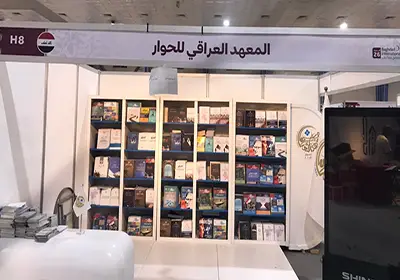
The Iraqi Institute for Dialogue, the logistical sponsor of the Baghdad International Book Fair, opens its own pavilion at the fair
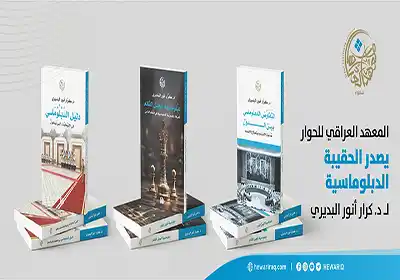
The Iraqi Institute for Dialogue publishes "The Diplomatic Portfolio" by Dr. Karrar Al-Badiri
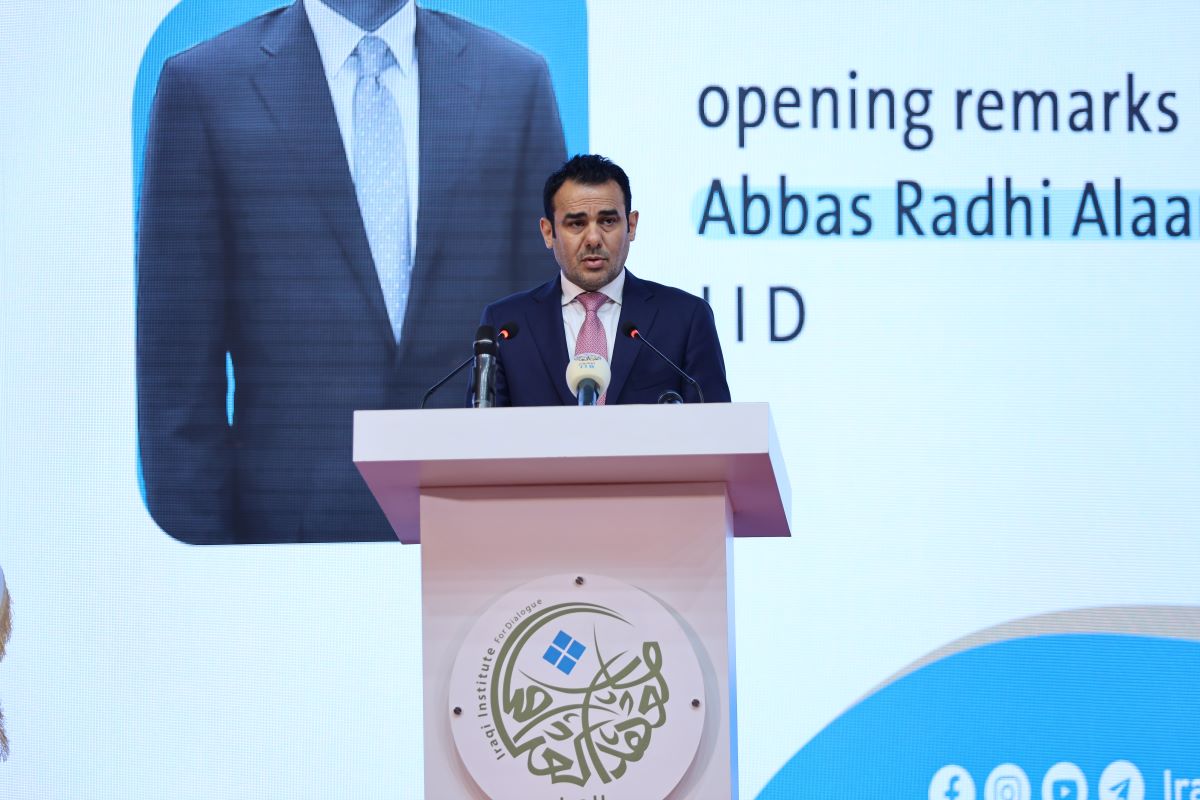
Official agreement between Iraqi Institute for Dialogue and the Iraqi Media Network to sponsor The Seventh Annual International Conference of “Baghdad Dialogue” 2025
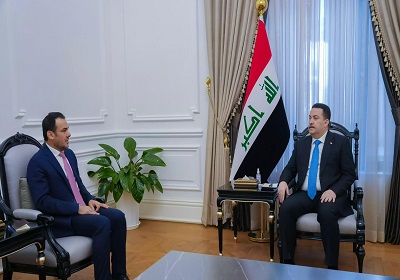
Prime Minister: The path of development will make Iraq a regional political and economic powerhouse
Invitation to the 79th issue of Dialogue of Thought
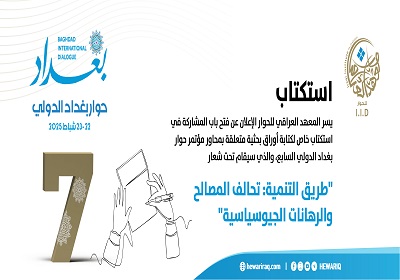
Seventh Baghdad International Dialogue Conference Call for Papers
Praise for the Baghdad International Dialogue: Strengthening Iraq's pivotal role and a meeting point for visions
Comments