


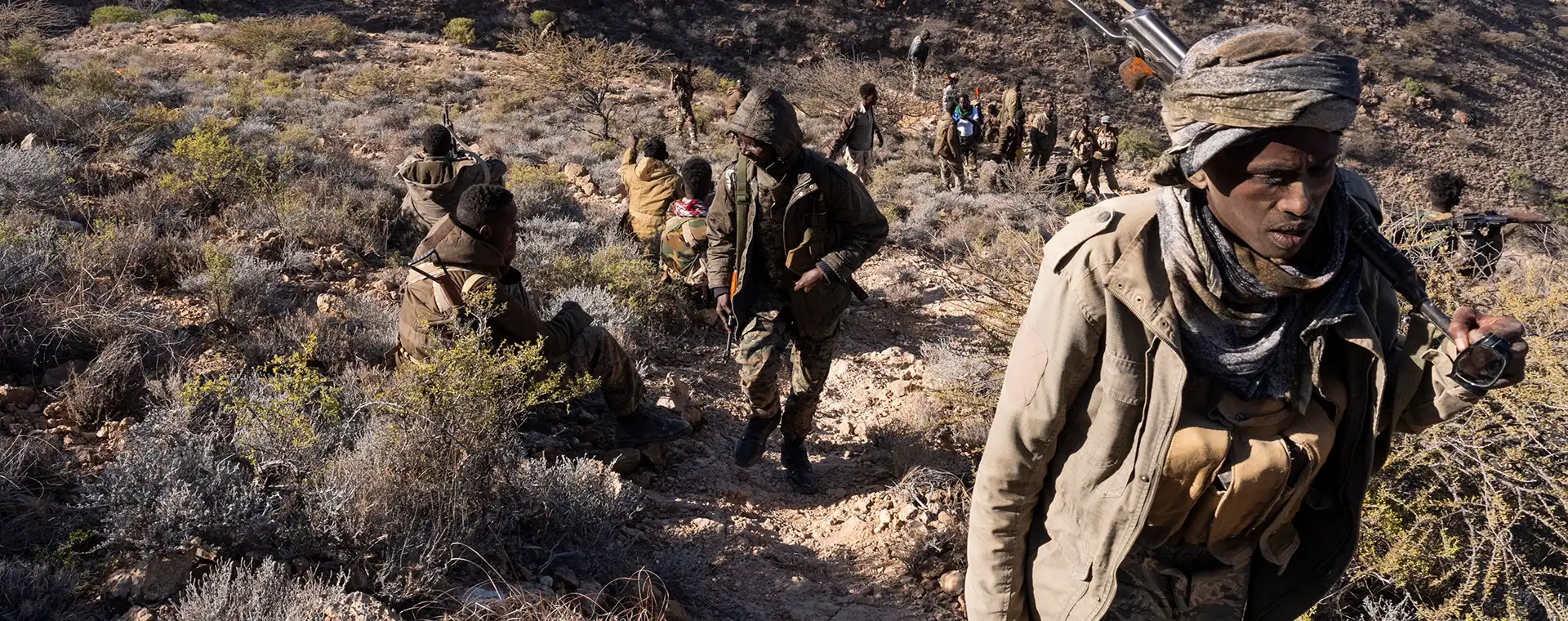
ISIS Expands in the Horn of Africa Are counter-terrorism efforts failing?
The Washington Post reports that ISIS is expanding its activity in Somalia's Puntland region, raising fears of growing influence in the increasingly volatile East African region.
While security efforts in Somalia have focused on fighting al-Qaeda-linked al-Shabaab, ISIS has taken advantage of this preoccupation to strengthen its presence in the rugged mountainous regions of Puntland province, where hundreds of armed fighters are stationed.
According to security officials, the organization relies on extortion and the smuggling of weapons and drugs for its funding, exploiting strategic sea lanes in the Horn of Africa, which enhances its ability to carry out terrorist attacks inside and outside Somalia.
In recent months, ISIS has claimed several assassinations and bombings targeting government officials and prominent figures, which has raised international concern about the escalating threat of terrorism in the region.
International concern and moves to counter it
The Somali government, with the support of US and African Union forces, is trying to contain the ISIS threat in Puntland, but the region's difficult geography makes it difficult to fully eradicate the extremist group.
Is Puntland becoming a new springboard for ISIS in Africa? This question is of concern to regional and international governments, given the group's growing capabilities and the complexity of the security landscape in Somalia.
Forces from the semi-autonomous Puntland region in northeastern Somalia have launched a major offensive against the Islamic State (IS) in the region. According to local officials, the forces have been able to retake large swathes of territory that had been under the group's control in recent weeks.
The Islamic State in Somalia began its activities on October 22, 2015, when former al-Shabaab jihadist Abdul Qadir Mumin pledged allegiance to Abu Bakr al-Baghdadi, establishing what is known as the "Islamic State in Somalia."
In a related context, IS reportedly launched attacks on military bases in Puntland using car and motorcycle bombs, in an attempt to regain lost territory.
These developments come amid escalating local and international efforts to eradicate the organization's influence in the region, as US forces launched airstrikes targeting prominent IS leaders in the Gulis Mountains, killing a number of them.
These operations are part of ongoing efforts to enhance security and stability in Puntland and other parts of Somalia, and reduce the threats of extremist organizations seeking to expand their influence in the Horn of Africa.
According to the U.S. Africa Command (AFRICOM), the Somali branch has become the Islamic State's new operational and funding center. Local officials estimate the number of its fighters to be around 1,000. A large number of foreign fighters have flocked to Somalia, creating a powerful force that now threatens Western targets. The organization in Somalia has also become a major source of funding for other IS branches around the world, which have killed thousands of people, including U.S. soldiers, according to UN reports.
A battle without international support
The burden of confronting this growing threat falls on the forces of Puntland, a semi-autonomous and impoverished region in one of the world's weakest countries. Puntland soldiers are fighting an ongoing and protracted battle with major international ramifications, but they are doing so without Western support.
More than a month into Puntland's largest military offensive against ISIS, officials there say they have retaken about 50 ISIS positions and small bases and killed more than 150 fighters, most of them foreigners. But their losses are mounting, and officials fear how long they can keep fighting.
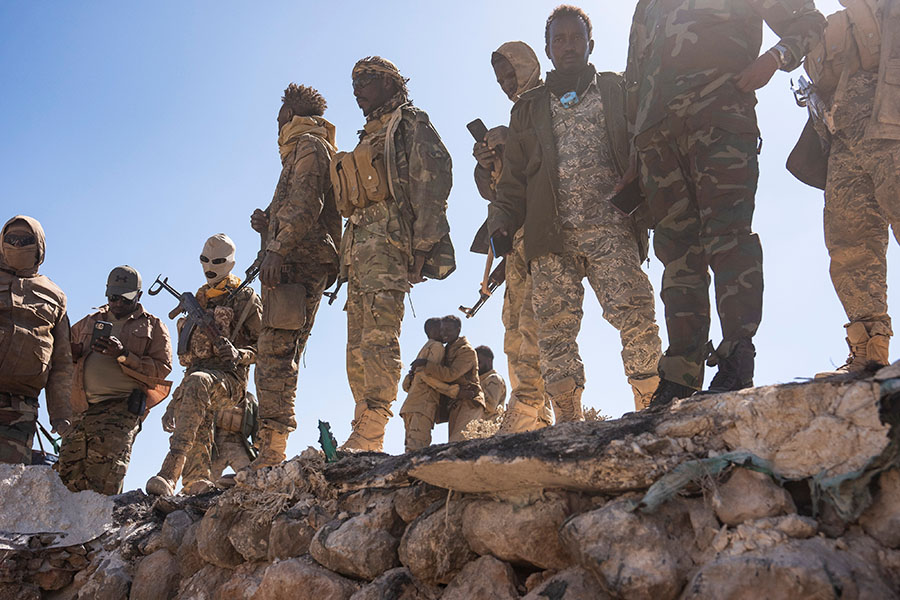
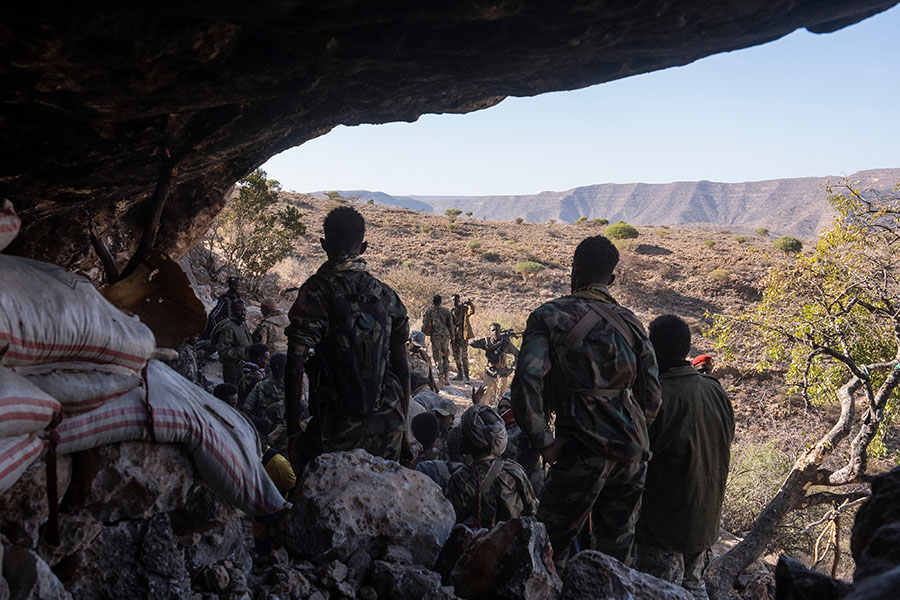
Washington Post reporters visited the expanding battlefield in Puntland, including recently discovered IS caves, interviewed captured defectors who said they were forced to join the group, spoke with Somali and U.S. officials and reviewed evidence collected from confiscated phones and drones.
Reorganizing after the collapse of the "caliphate"
The investigation reveals how IS has been able to regroup in this region over the past decade after losing its self-proclaimed "caliphate" in the Middle East.
On Feb. 1, U.S. President Donald Trump ordered the first airstrike of his presidency against senior Islamic State leaders in northern Somalia. According to a US intelligence official, speaking on condition of anonymity, the strike targeted a cell responsible for planning external attacks, including against US interests and its allies.
Abdulqader Momen's emergence as the organization's global leader
The Islamic State (IS) in Somalia split from al-Shabaab in 2015 and is led by its secretive, henna-bearded leader, Abdulkadir Mumin, who is now considered by the United States to be the "global caliph" of IS. Unlike al-Shabaab, the group did not focus on controlling territory within Somalia, but rather had greater ambitions, establishing a center of international terrorism in the Maskad Mountains at the furthest point of the Horn of Africa.
The Somali branch initially received funding from Iraq and Syria, but soon established its own sources of funding, making millions of dollars a year by extorting local businesses and burning the property of those who refused to pay.
Global Finance Network
Al-Karrar, the Islamic State's regional financial office in Somalia, has established a center that pumps money to fighters in multiple regions, including Turkey and South Africa, according to U.S. officials and U.N. investigators.
In January 2023, U.S. Special Forces killed prominent IS financier Bilal al-Sudani in a raid on a cave complex in northern Somalia. Al-Sudani had sent money to the Khorasan branch, which was responsible for the 2021 Kabul airport bombing that killed 13 U.S. soldiers and at least 170 Afghans.
Deadly new tactics
The organization has used sophisticated tactics, including suicide drones, long-range snipers and bombs. Last year, IS fighters defeated al-Shabaab after a bloody battle that lasted more than a year, expanding their control in Puntland.
But the new military offensive, which had been in the works for several months and was launched on January 2, was delayed by Puntland's attempts to gain international support, including from the United States. But political change in Washington hampered negotiations, and the Trump administration froze funding for overseas operations, complicating matters further.
Foreign fighters and complex recruitment methods
Puntland prisons hold more than a dozen men who say they were tricked into joining the Islamic State. Some of their accounts have been dubious, such as a Yemeni man arrested while trying to blow up a checkpoint in the coastal town of Bosaso.
Investigations reveal that the foreign fighters came from several countries, including Morocco, Tunisia, Saudi Arabia and Ethiopia, and traveled through several countries before arriving in Somalia.
A battle in the mountains - and new evidence
During a reporter's tour with Puntland forces of recently recaptured positions, what appeared to be a manufacturing workshop inside a mountain cave, with tools and car parts scattered in several rooms carved into the mountain, reinforced with tires and cement. Specially constructed roads were also discovered to access ISIS bases, a testament to the level of organization the group has reached.
At the headquarters, officers displayed confiscated cell phones, some of which showed massive financial transactions amounting to $180,000 and international calls that included numbers in the United States and Mongolia.
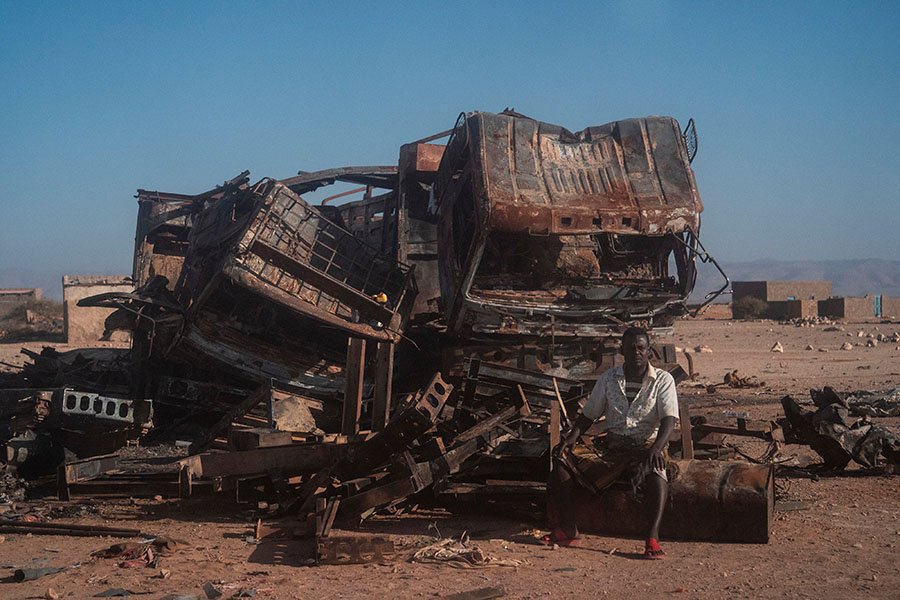
A battle without allies
Senior officers in Puntland say they are exhausted in the fight against IS, with the Minister of Internal Security even lecturing himself at the Forward Operating Base, but he emphasizes that international support is essential.
Although Puntland does not want foreign troops on the ground, they need equipment such as drone jammers, explosive detectors, and night vision devices, as explained by General Abdirahman Mohamed Jama, commander of Puntland's naval police forces.
"We are fighting a global war alone," said President Said Abdullahi Dini, noting that the Somali government is not providing any support to his forces.
Battle escalation
As the fighting enters bloodier phases, Puntland's forces face formidable challenges, with ISIS launching suicide attacks targeting government forces and limited airstrikes from the UAE. The battle continues, amid appeals for international support to counter the cross-border threat.

The Iraqi Institute for Dialogue, the logistical sponsor of the Baghdad International Book Fair, opens its own pavilion at the fair
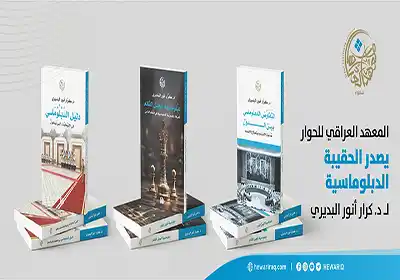
The Iraqi Institute for Dialogue publishes "The Diplomatic Portfolio" by Dr. Karrar Al-Badiri
Official agreement between Iraqi Institute for Dialogue and the Iraqi Media Network to sponsor The Seventh Annual International Conference of “Baghdad Dialogue” 2025
Invitation to the 79th issue of Dialogue of Thought
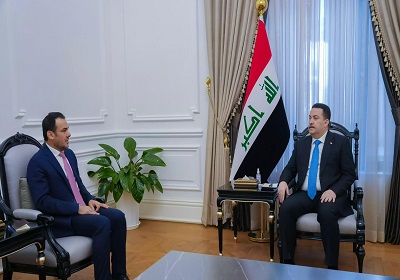
Prime Minister: The path of development will make Iraq a regional political and economic powerhouse
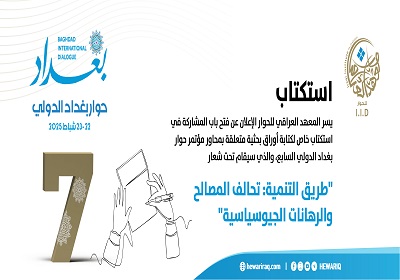
Seventh Baghdad International Dialogue Conference Call for Papers
Praise for the Baghdad International Dialogue: Strengthening Iraq's pivotal role and a meeting point for visions
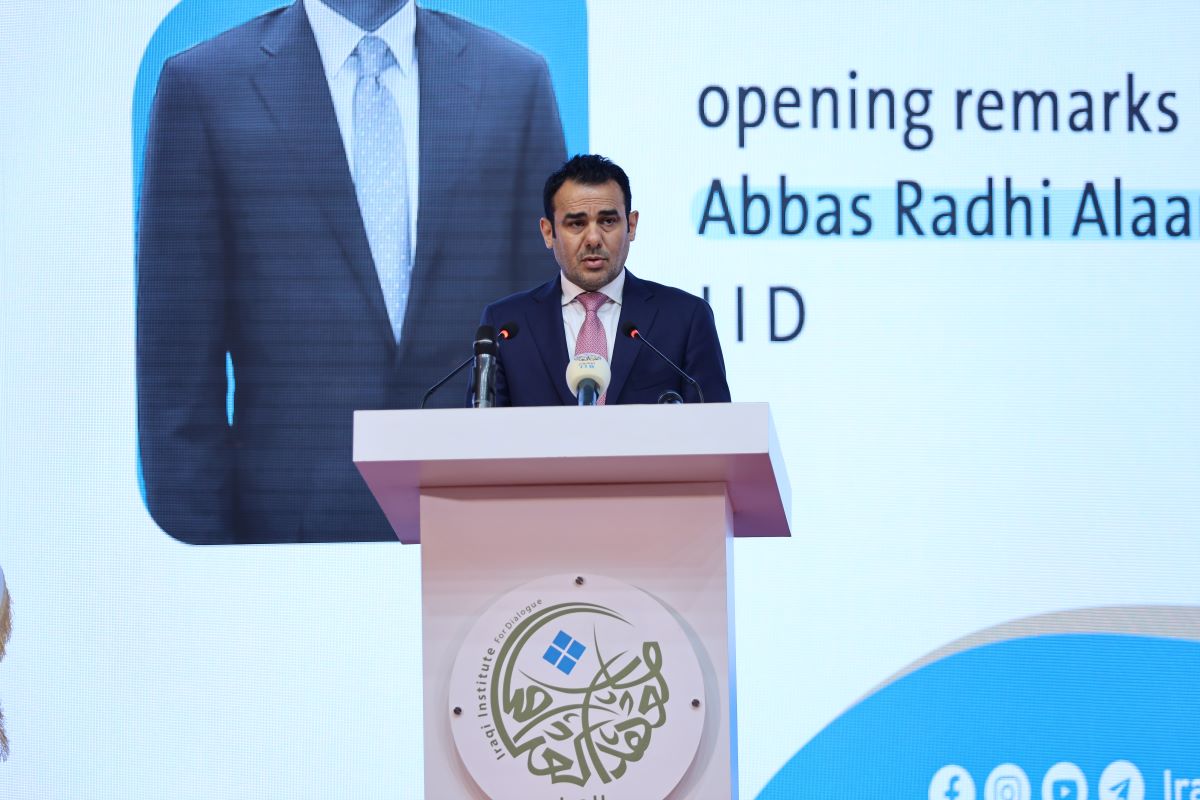
Comments