


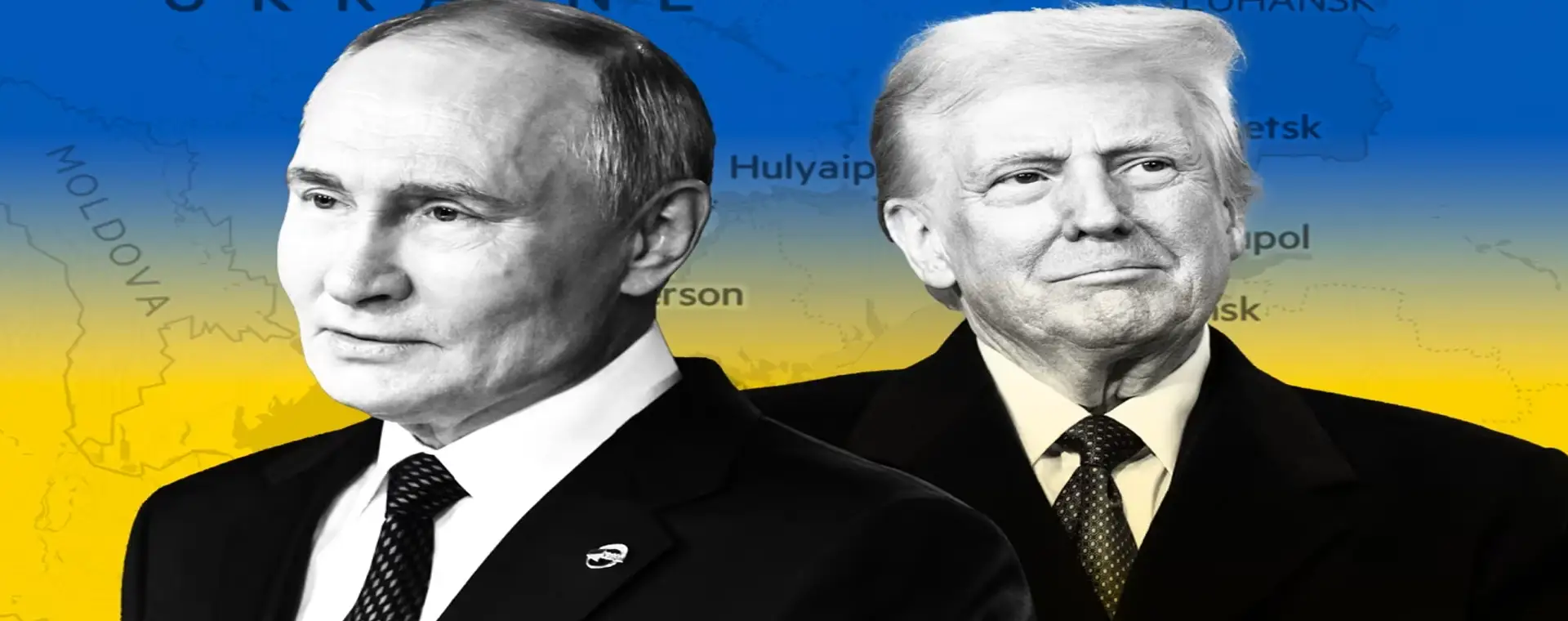
U.S.-Russian rapprochement A strategic gain for China?
The Diplomat considered that the "potential" rapprochement between the U.S. president and his Russian counterpart would be beneficial for China.
She said the Trump administration has spoken publicly that one of the reasons it is trying to rebuild good relations with Russia is to gain leverage over the so-called "reverse Kissinger or reverse Nixon."
Beijing's quiet or "indifferent" reactions to Trump's gestures of reconciliation with Putin to Trump's gestures of reconciliation with Putin may confirm that whatever the U.S. intentions, the outcome of the Russia-U.S. dialog will be beneficial to China.
"The opposite of Kissinger"
The idea of "reversing Kissinger" is based on the false assumption that the US can (to some extent) replicate its moves in the 1960s and 1970s, when Washington worked with Beijing to isolate Moscow, according to the magazine, which emphasized that China realizes that the idea is not possible at the moment given the strong relationship between China and Russia.
According to the magazine, Sino-Russian bilateral relations are based on the ideological cornerstone of anti-American and anti-Western sentiment and the desire for regime preservation in China and Russia.
If a full "Kissinger reversal" is not possible, as U.S. Secretary of State Marco Rubio admitted in an interview with Breitbart, the question is whether a partial "Kissinger reversal" can succeed and what results it might bring for Russia, the United States, and China; in other words, what can Putin get from the United States and what can he give?
Either way, there is not much, but the US seems to have something to offer, as it can lift sanctions on Russia, which could improve the economic situation and reduce Putin's political isolation, according to the magazine, which noted that Trump's idea to repair relations with Russia may give Putin more room to maneuver to become less dependent on China.
But it seems unlikely that Putin would offer the U.S. anything substantial on China, even in a partial "Kissinger reversal," it would be risky for Putin to bet on the U.S. Especially since both China and Russia are very keen to avoid the danger of two fronts, so Putin would not risk seriously damaging his relationship with Xi, and given Trump's unpredictability, Putin is unlikely to trust the U.S. president.
Tactical gain
Reducing Russia's dependence on China may actually serve to strengthen their relationship. Russia's over-reliance on China is not a comfortable position for Putin, which is perhaps why the Russian president took aggressive actions towards Ukraine and the West immediately after his face-to-face meetings with Xi in 2022 and 2023 - he wanted to show his own agenda and independence from China, the magazine said.
Indeed, any "leverage" Putin may gain from increased engagement with the U.S. would only be a tactical and short-term gain for Trump, not a strategic and profound move by Putin to distance himself from China, and this may be beneficial to Xi Jinping as it creates the illusion that the Sino-Russian alliance is weakening.
In other words, Russia and China may be playing this game together as a kind of cognitive warfare, with the two countries playing "bad cop" and "good cop" (respectively), especially since Russia's invasion of Ukraine, according to the report.
A New European Approach
Another piece of good news for China is the fact that the rapprochement between Russia and the United States has already seriously undermined transatlantic relations, thus pushing one of the main and long-term goals of Beijing's approach to Europe.
"The Chinese narrative about Europe, especially Central Europe, is that the continent is completely subservient to the United States and that European or EU policies are entirely dependent on orders from Washington.
There is a notion floating around in many European capitals that given Trump's apparent willingness to abandon Europe and end the transatlantic alliance, it is time to soften the EU's policy toward China.
There is also a belief that if the US decides to support Russia during the ongoing war in Ukraine or after the conflict is frozen, China can play a role as a stabilizing force in Europe, according to the magazine.
All of these arguments are clearly in China's favor, and although Beijing has no intention of changing its policy, it may be seen differently in Europe, from a challenge or even a threat to a stabilizing force, which is a huge win for China.

The Iraqi Institute for Dialogue, the logistical sponsor of the Baghdad International Book Fair, opens its own pavilion at the fair
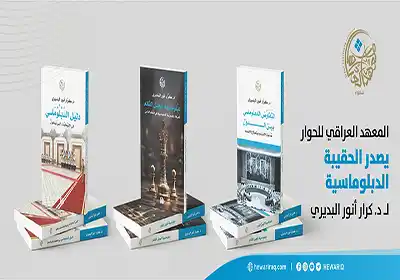
The Iraqi Institute for Dialogue publishes "The Diplomatic Portfolio" by Dr. Karrar Al-Badiri
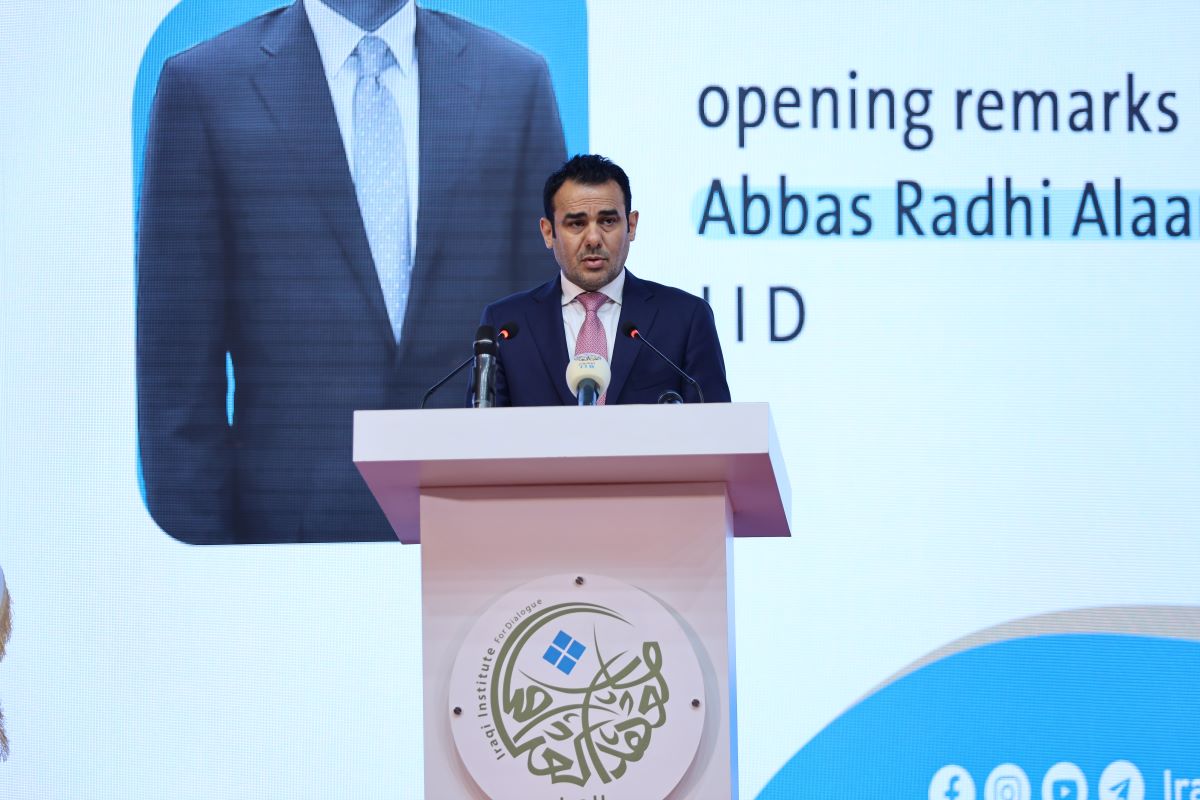
Official agreement between Iraqi Institute for Dialogue and the Iraqi Media Network to sponsor The Seventh Annual International Conference of “Baghdad Dialogue” 2025

Invitation to the 79th issue of Dialogue of Thought
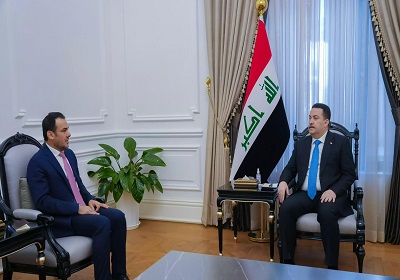
Prime Minister: The path of development will make Iraq a regional political and economic powerhouse
Seventh Baghdad International Dialogue Conference Call for Papers
Praise for the Baghdad International Dialogue: Strengthening Iraq's pivotal role and a meeting point for visions
Comments