


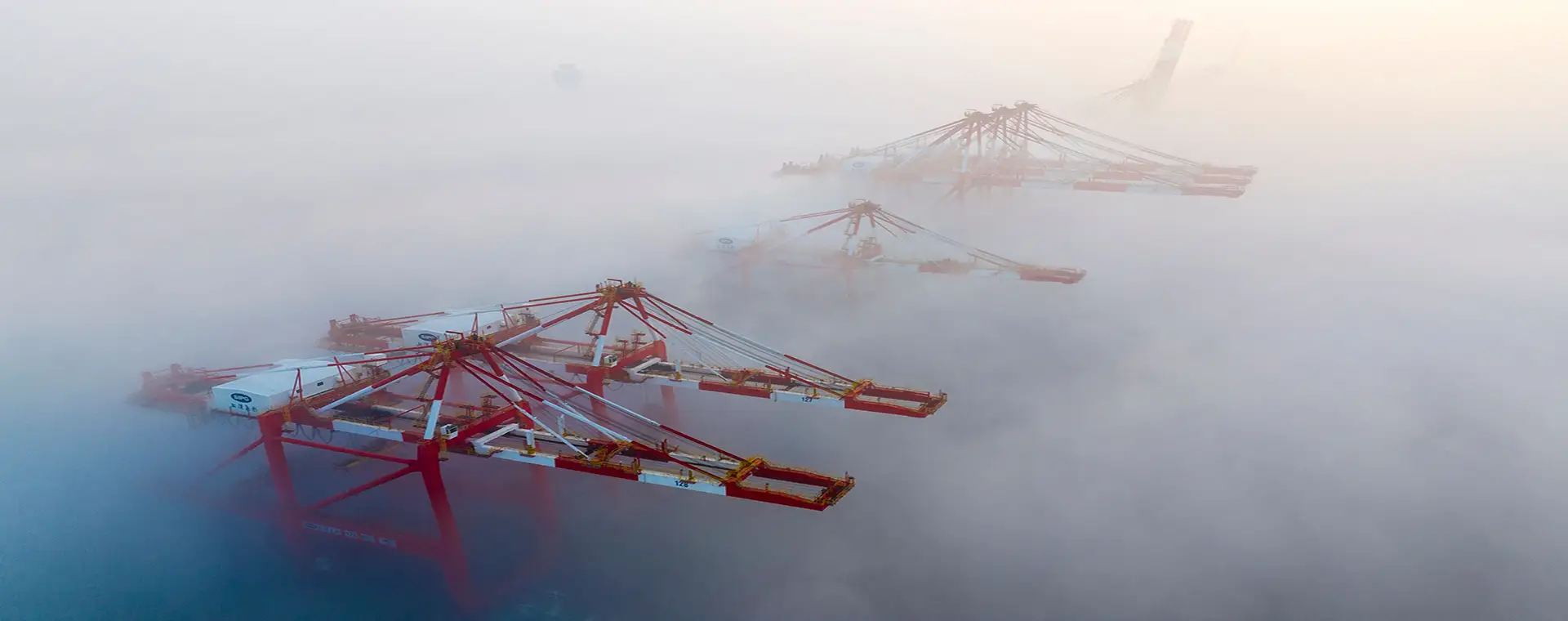
Major shifts in the global economy: Are the rules of the game changing?
The early months of 2025 have seen geopolitical volatility, looming trade wars, and increased strategic competition around advanced technologies such as artificial intelligence. With the Trump administration set to unveil its agenda on tariffs in early April, and governments increasingly focused on "economic security," Australia's business leaders are facing a more complex and volatile global economic environment.
The United States Studies Center (USSC) is launching a new Dialogues on Economic Security series that explores key policy debates and challenges at the intersection of national security and the economy.
Details of dialogs
The Dialogues are one-day, invitation-only events organized according to Chatham House rules, with senior representatives from government, business, academia, think tanks, and civil society (Track 1.5 model). The U.S. Study Center is working closely with Australian government departments to design three Dialogues in 2025.
Aligning Security and Economic Interests in the Age of Artificial Intelligence - May 7, 2025 (Fullerton Hotel, Sydney)
Tools and rules: A New Era of Economic Diplomacy - August 29 (Fullerton Hotel, Sydney)
Building supply chain resilience in critical metals: The Way Forward - November 2025 (date and venue to be announced)
Dialogue 1: Unifying Security and Economic Interests in the Age of AI
Rapid advances in AI technologies pose complex challenges for legislators, regulators, and business leaders, impacting national security, economic performance, and social welfare. Governments are developing strategies to capitalize on the benefits of AI while managing its risks through public investments, as well as new governance and regulatory frameworks. Balancing public trust and safety with national security and economic goals is one of the biggest challenges given the rapid and opaque evolution of AI and its profound effects on society.
The dialogue will address major national challenges arising from AI developments, with a focus on national capacity development, regulation and governance, and international cooperation in addressing common challenges.
Dialogue 2: Tools and Rules: A new era of economic diplomacy
The end of the Cold War saw increasing global economic integration, but this integration has shifted to a new era characterized by geopolitical turmoil, renewed economic nationalism, and a diminished role for multilateral institutions such as the World Trade Organization (WTO). The use of economic and financial instruments (such as tariffs, industrial policies, sanctions, and export controls) to achieve a wide range of political objectives has risen sharply in the past decade.
The forces driving this new era of economic diplomacy, the direction of U.S.-China economic relations, the effectiveness of various economic and trade instruments, and the challenges facing the multilateral trading system in the face of rising economic nationalism will be discussed.
Dialogue 3: Building supply chain resilience in critical minerals: The way forward
Critical minerals are essential for national security, economic security, and clean energy transition. Currently, China dominates the global processing capacity for these metals, controlling about 90% of rare earth metals and more than half of the processing capacity for cobalt, nickel, and lithium.
Several initiatives have been launched with the aim of increasing the diversity of sources of supply. These initiatives include the US-led Minerals Security Partnership, which was launched in June 2022 and aims to promote responsible growth in the critical minerals sector with high environmental, social and governance standards. This panel will assess local and international efforts to diversify and strengthen supply chains in critical minerals, highlighting key trends and identifying policy gaps and collective action barriers that still need to be addressed.
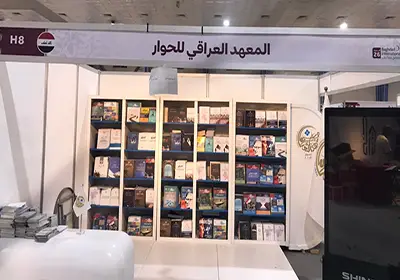
The Iraqi Institute for Dialogue, the logistical sponsor of the Baghdad International Book Fair, opens its own pavilion at the fair
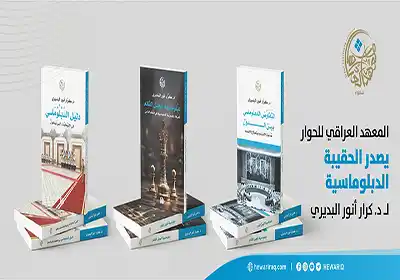
The Iraqi Institute for Dialogue publishes "The Diplomatic Portfolio" by Dr. Karrar Al-Badiri
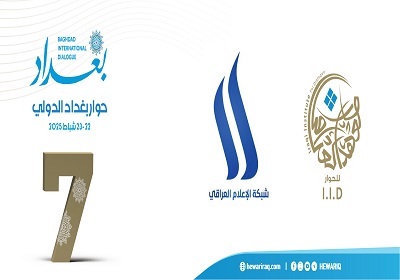
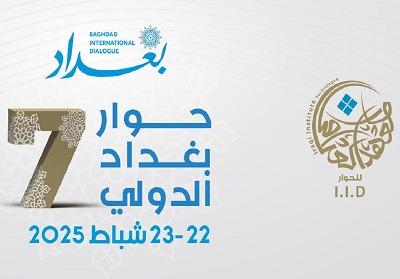
Official agreement between Iraqi Institute for Dialogue and the Iraqi Media Network to sponsor The Seventh Annual International Conference of “Baghdad Dialogue” 2025
Invitation to the 79th issue of Dialogue of Thought
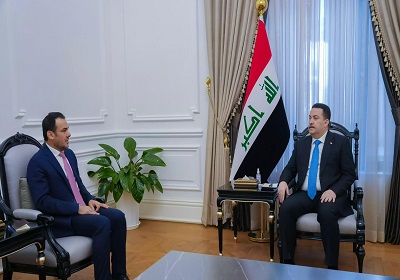
Prime Minister: The path of development will make Iraq a regional political and economic powerhouse
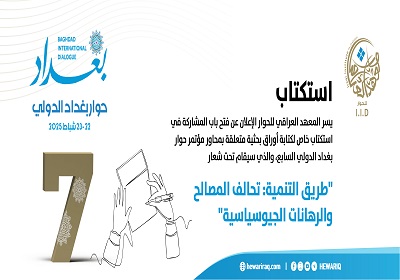
Seventh Baghdad International Dialogue Conference Call for Papers
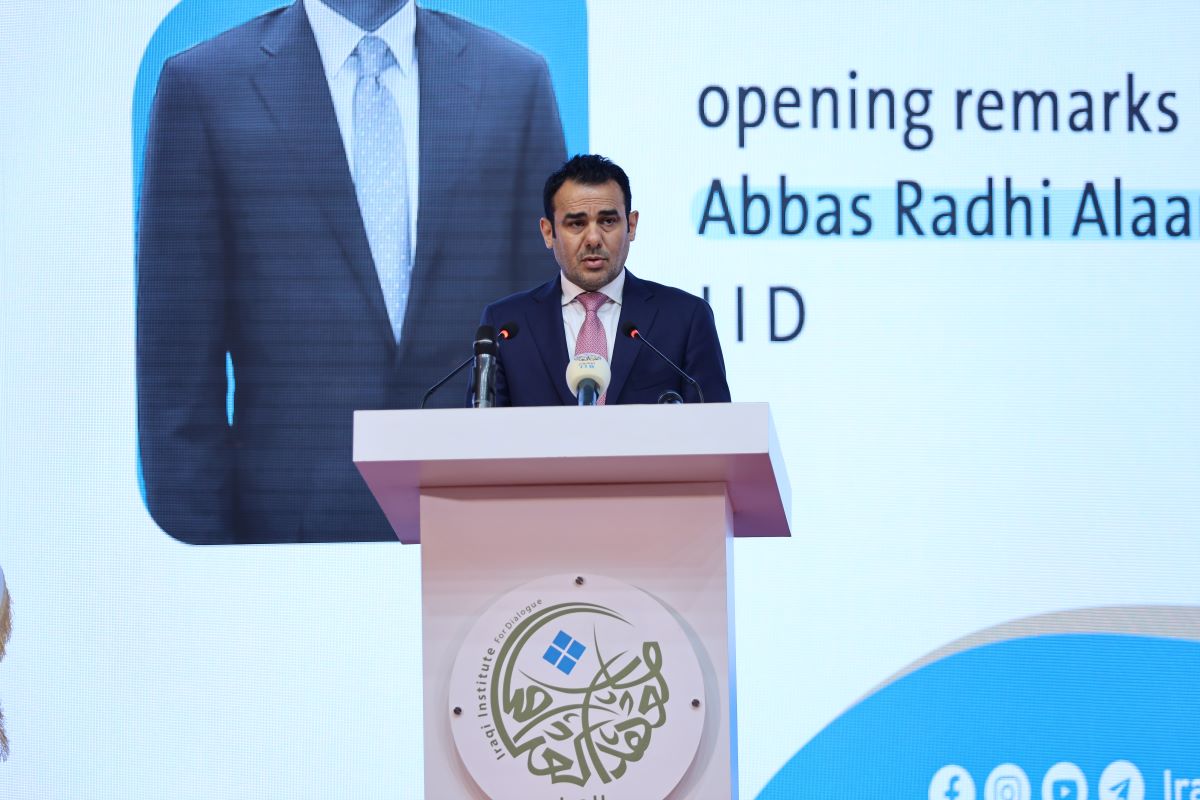
Speech of the Director of the Iraqi Institute for Dialog at the Sixth Baghdad International Dialog Conference
Comments