

Baghdad again: Iraq balances on a tightrope
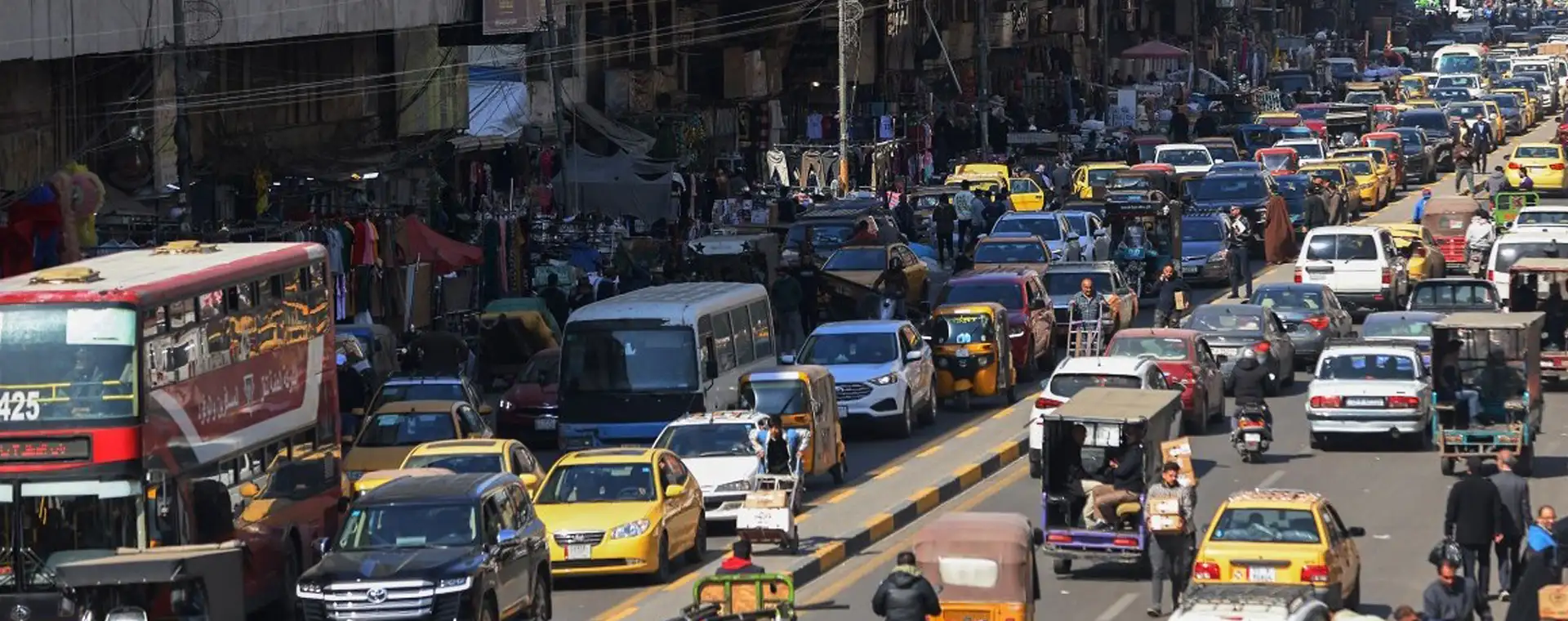
I hadn't been to Baghdad in years, but the city looked very different to me. The concrete walls, sandbags, and military convoys that once defined the city have been replaced by the sounds of chaotic civic life, small business activity, and struggling government capacity - a mix reminiscent of other Arab capitals, at least outside the Gulf. Traffic jams, crowded markets, and busy sandwich shops before Ramadan painted a picture of resilience, of normalcy returning to a city that had endured decades of war and hardship.
I was in Baghdad in late February for a conference on Iraq's regional role (Baghdad International Dialogue VII) organized by the Iraqi Institute for Dialogue, where we had the opportunity to meet with senior leaders and decision-makers. Iraq has come a long way since the fall of Saddam Hussein and the battle against ISIS. The state has regained its footing, the system of political participation has proven resilient, and the economy is moving forward. However, deep challenges remain - sectarian divisions persist, corruption is widespread, and the Popular Mobilization Forces (PMFs), which were formed to fight ISIS.
Economic aspirations versus harsh realities
The Iraqi government is promoting ambitious economic projects, including the "Development Road Project," a massive overland trade corridor connecting the Gulf to Turkey and Europe. In cooperation with the UAE, Qatar, and Turkey, Iraq hopes to become a vital center for international trade.
But the project is still in the planning stages and will take many years to complete. In the meantime, Iraq is overly dependent on oil revenues, and the country is facing severe electricity shortages, high unemployment, and environmental degradation, which is weighing down progress. Prime Minister Mohammed al-Sudani has made some progress, but Iraq's political system, full of competing interests, is slowing down serious reforms. Elections in October are expected to reshape the political landscape once again.
Iraq: Regional mediator or battleground?
The prime minister has defended Iraq as a diplomatic bridge in a turbulent region. Baghdad has hosted several rounds of talks between Saudi Arabia and Iran and has repeatedly offered to mediate between the United States and Iran. In May, Baghdad will host the Arab League summit, cementing its role as a regional convener. So far, Iraq has built pragmatic relationships with Turkey, Iran, and its Arab neighbors while carefully balancing U.S. and Iranian interests. But tensions in the region are rising.
In particular, the "power shift in Syria" after the collapse of Bashar al-Assad's regime in December has begun to send ripples through Iraq. While there was no great love for the Assad regime in Iraq, it was at least predictable and aligned with Iran. The new Syrian leadership under interim president Ahmad al-Sharaa - who had fought alongside al-Qaeda in Iraq - is causing concern in Baghdad.
Iraq is also concerned that "turmoil in neighboring Syria" could give ISIS a chance to re-emerge and redirect its power to Iraq. Baghdad has been cautious with Damascus, sending intelligence officials to the Syrian capital and inviting its foreign minister to Baghdad. But whether the new Syrian president will attend the Arab League summit in May remains uncertain.
In the capital of the Kurdistan Regional Government (KRG), Erbil, concern was particularly high about the fate of Syrian Kurds between the rising power of Turkey after its ally, Hayat Tahrir al-Sham (HTS), took control of Damascus, and the re-election of Donald Trump, who boasts good relations with the Turkish president and will likely seek to withdraw US troops from northeast Syria.
In January, former KRG president Masoud Barzani met with SDF commander Mazloum Abdi in Erbil to help him find a solution for the threatened Syrian Kurds. The framework agreement between the SDF and the new authorities in Damascus, announced a few days ago, sets a promising path for the integration of Syrian Kurds and the SDF into emerging Syrian institutions, which is welcome news in Erbil.
For its part, Iraq must manage the risks of a long and unpredictable transition in Syria not only through political and diplomatic engagement, but also by strengthening its surveillance and controls on the 600-kilometer common border between the two countries.
Managing the Relationship with the United States
The US resumption of its "maximum pressure" campaign against Iran is another headache for Baghdad. The Trump administration is taking a hard line, deciding not to renew Iraq's exemption to import Iranian electricity. While Iranian electricity accounts for only 4 percent of Iraq's consumption, any reduction in supply during the hot summer months could lead to widespread blackouts and spark public unrest. Even more worrisome is Iraq's dependence on Iranian gas, which fuels about a third of Iraq's power plants. While Baghdad is ramping up domestic production and seeking alternatives, solutions are elusive, leaving the country vulnerable as the sweltering summer approaches and elections in October.
On the other hand, Baghdad has begun to reconsider the US pressure to withdraw US troops from the country by the fall. The risk of turmoil and the return of ISIS due to the new Syria is prompting even factions close to Iran to reconsider the September 2025 date that was set as part of the agreement between Baghdad and Washington.
The United States is also putting pressure on Iraq to limit the Popular Mobilization Forces (PMF), whose effects go beyond security. Some Iraqi politicians support bringing these forces more strictly under state control, fearing that Iraq could turn into a Hezbollah-like situation where it becomes embroiled in Israeli-Iranian conflicts.
However, the PMF has many political allies in the government and parliament. In January, Sudan's prime minister visited Tehran to discuss developments in Syria and find out Iran's position on the PMF and the U.S. military presence. While Iranian President Masoud Bazeshkian seemed receptive, Supreme Leader Ayatollah Ali Khamenei took a hard line, stating that the presence of U.S. troops is "illegal and against the interests of the people and the government," and that the PMF is "a crucial element of power in Iraq and more efforts should be made to preserve and strengthen it." The PMF is "a crucial element of power in Iraq and more efforts should be made to preserve and strengthen it.
Iraq's Fragile Balance
On my brief visit to the Iraqi capital, it was encouraging to see Iraqis of all stripes enjoying the return of normalcy to their ancient city. But it was also clear that Iraq is in a very difficult situation. It is striving for stability and economic recovery, but it faces increasing regional and international pressures. From an unpredictable Syria to an escalating confrontation between the United States and Iran, Iraq must carefully navigate its alliances to avoid being drawn into a new cycle of conflict. With an energy crisis looming this summer and elections on the horizon in the fall, the coming months will be challenging. The United States has an interest in staying in close contact with leaders in Baghdad and Erbil to support the temporary stability and progress being made in the country, while managing the risks Iraq faces from an unstable regional environment and escalating U.S.-Iranian confrontation.
Paul Salem is president and executive director of the Middle East Institute
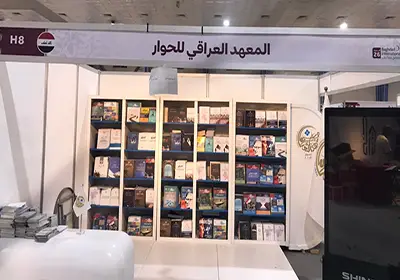
The Iraqi Institute for Dialogue, the logistical sponsor of the Baghdad International Book Fair, opens its own pavilion at the fair
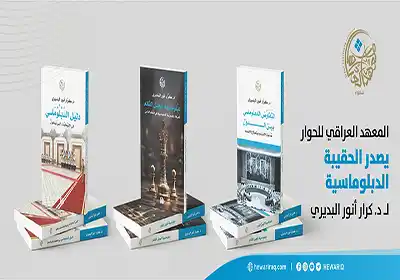
The Iraqi Institute for Dialogue publishes "The Diplomatic Portfolio" by Dr. Karrar Al-Badiri
Official agreement between Iraqi Institute for Dialogue and the Iraqi Media Network to sponsor The Seventh Annual International Conference of “Baghdad Dialogue” 2025
Invitation to the 79th issue of Dialogue of Thought
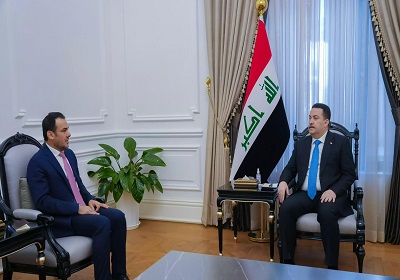
Prime Minister: The path of development will make Iraq a regional political and economic powerhouse
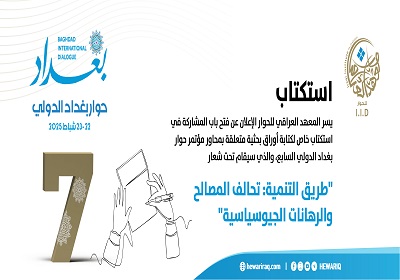
Seventh Baghdad International Dialogue Conference Call for Papers
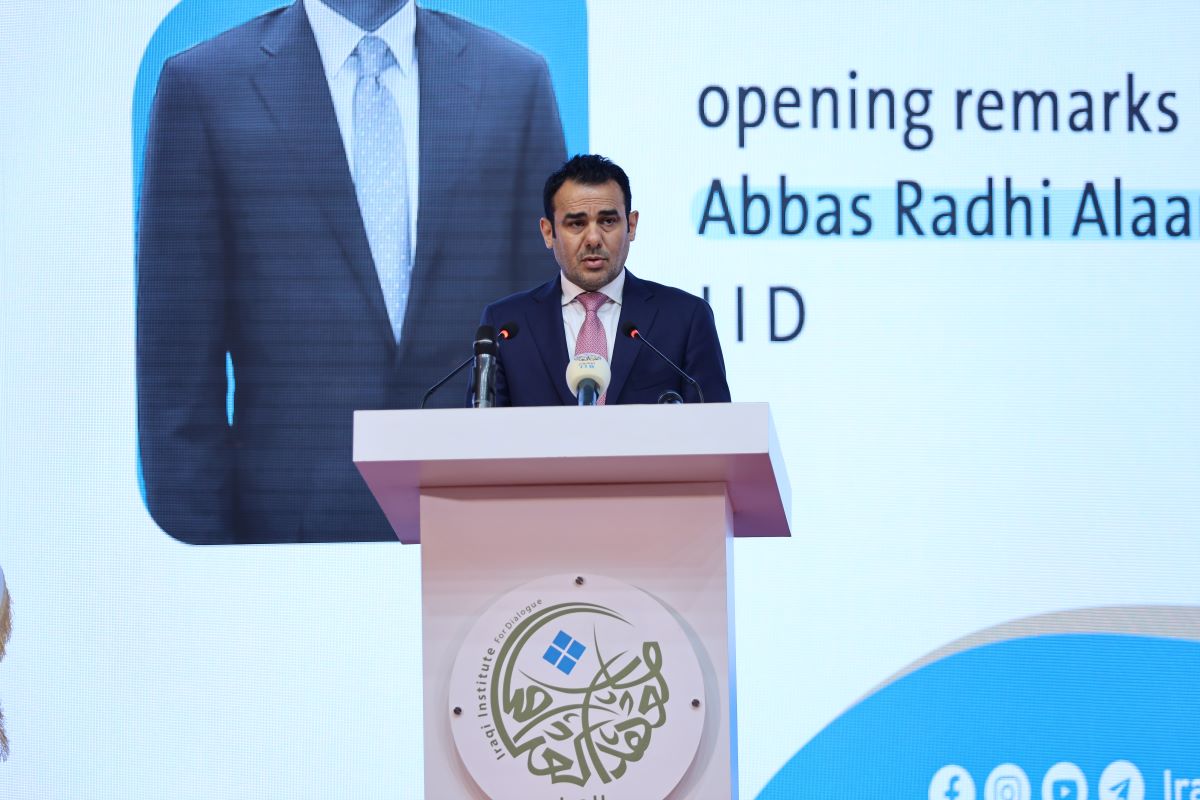
Speech of the Director of the Iraqi Institute for Dialog at the Sixth Baghdad International Dialog Conference
Comments