


Is Gulf investment returning to Lebanon?
The Lebanese arena is witnessing signs of a potential Gulf economic movement, amid reports of renewed Saudi and Emirati interest in reinvesting in Lebanon amid Hezbollah's declining influence and changing regional political equations.
Gulf countries, particularly Saudi Arabia and the UAE, have invested heavily in Lebanon over the past decades, including in the infrastructure, real estate, and banking sectors. However, this support has declined significantly as Hezbollah's influence and association with Iran, a prominent regional rival, has increased.
With what is now being described as a decline in Hezbollah's hegemony, some Gulf voices have started talking about a "new opportunity" for an economic return to Lebanon. Media outlets quoted a senior Emirati official as saying that his country is "ready to return as an economic partner if Lebanon is freed from Hezbollah and Iran's hegemony."
Saudi Arabia announced in early 2025 that it was considering resuming humanitarian aid to Lebanon, on the condition that the Lebanese government take concrete steps to limit Hezbollah's influence in state institutions.
Existing challenges
Despite the cautious optimism, the challenges remain significant. Lebanon has been suffering from a severe economic crisis since 2019, with the collapse of the local currency, high inflation rates, and a lack of trust in official institutions, especially in light of the continued prevalence of corruption.
There are signs of renewed interest. Arab diplomats in the Persian Gulf have expressed optimism in private conversations that reducing Iran's influence in Lebanon could pave the way for a return of Arab investment. A senior Emirati official, speaking on condition of anonymity, said: "If Lebanon can free itself from the hegemony of Hezbollah and Iran, we are ready to work again as an economic partner."
Observers believe that Gulf countries will not make a large-scale investment without real guarantees that Hezbollah or its allies will not benefit from these funds. "The Gulf states want clear assurances that their money will not be used politically or security-wise," said a Beirut-based political analyst.
Qatar steps in
In contrast to the cautious stances of Riyadh and Abu Dhabi, Qatar adopts a more open stance toward Beirut and seeks to strengthen its presence through direct aid and reconstruction projects, taking advantage of its good relationship with various Lebanese parties, including Hezbollah. This divergence may open the door to Gulf-to-Gulf competition within the Lebanese arena.
A chance to save the Lebanese economy
Lebanon's economy, which has been struggling for years, could benefit greatly from the return of Gulf investments, especially in sectors such as tourism, real estate, and energy. However, this remains conditional on radical reforms that include fighting corruption, reforming the banking system, and ensuring transparency in the management of funds.
The international community, led by the IMF, is demanding urgent reforms as a condition for any financial support package, making a reduction in Hezbollah's influence a positive political signal that could help boost international confidence in Lebanon.
🔗 Source: Stimson Center
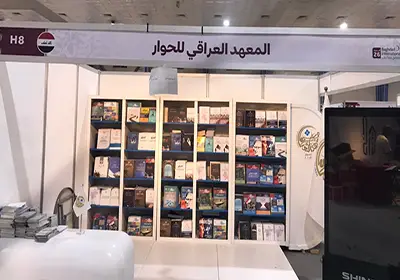
The Iraqi Institute for Dialogue, the logistical sponsor of the Baghdad International Book Fair, opens its own pavilion at the fair
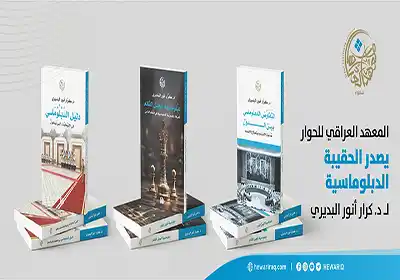
The Iraqi Institute for Dialogue publishes "The Diplomatic Portfolio" by Dr. Karrar Al-Badiri
Official agreement between Iraqi Institute for Dialogue and the Iraqi Media Network to sponsor The Seventh Annual International Conference of “Baghdad Dialogue” 2025
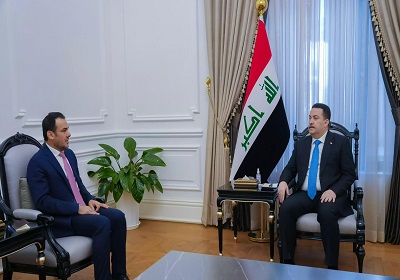
Prime Minister: The path of development will make Iraq a regional political and economic powerhouse
Invitation to the 79th issue of Dialogue of Thought
Seventh Baghdad International Dialogue Conference Call for Papers
Praise for the Baghdad International Dialogue: Strengthening Iraq's pivotal role and a meeting point for visions
Comments