


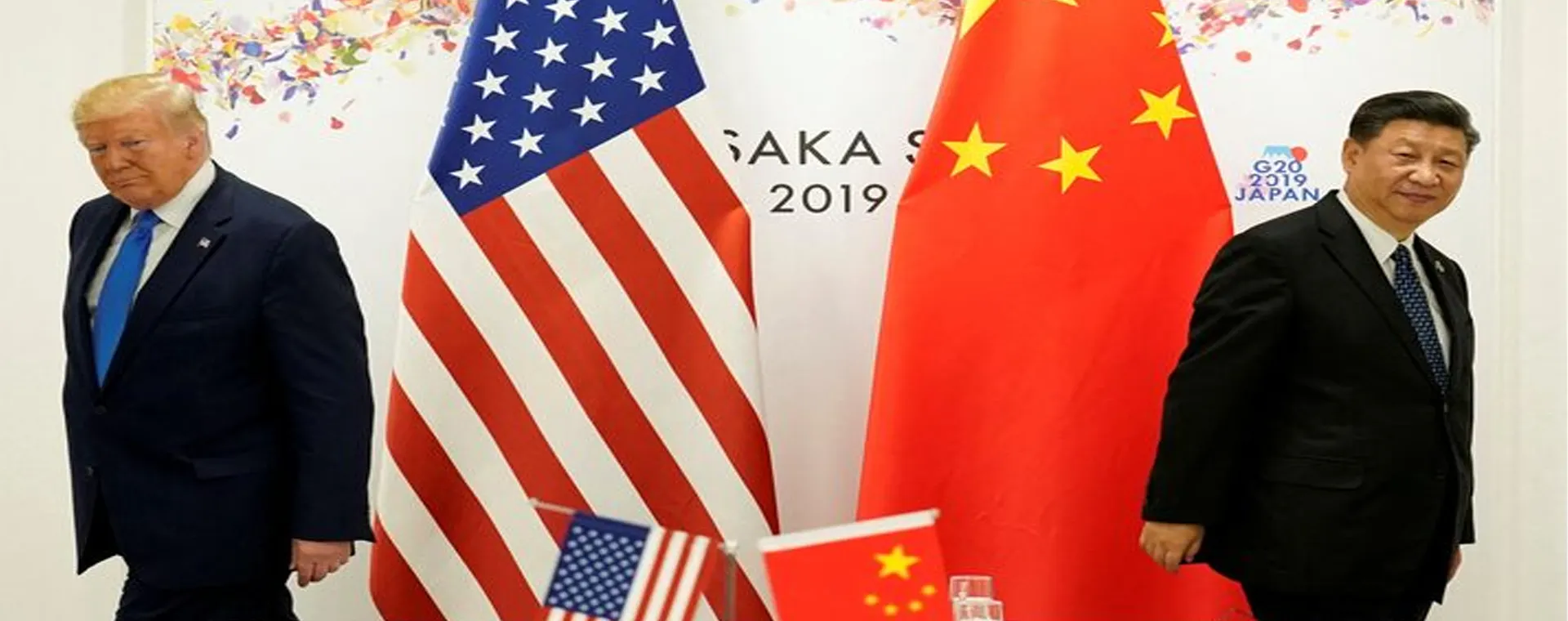
Was China the real target of Trump's trade wars from the start?
Despite escalating trade tensions between the United States and China, U.S. President Donald Trump continues to describe his Chinese counterpart Xi Jinping as "smart," a paradox that reflects the complexity of the relationship between the world's two largest economic powers.
In a remarkable development on April 12, 2025, the Trump administration announced the exemption of some electronic devices such as mobile phones and computers from the 125% tariffs on Chinese imports, raising questions again about Trump's true goals in this trade war.
From a Global Threat to a Focus on China
Trump's plan to expand tariffs began with general duties on imports from dozens of countries, including traditional U.S. allies. But just hours after it went into effect on April 9, Trump announced a 90-day suspension of most of these tariffs, with the exception of China.
Interestingly, this trend has led analysts to believe that China was, from the beginning, the real target of Trump's trade actions, despite the initial rhetoric being broad and inclusive.
An unprecedented escalation in the trade war
Trump, who returned to the White House in January, has cracked down on trading partners, accusing them of exploiting the US market. On April 2, he imposed sweeping tariffs that triggered a crash in financial markets and fears of a global trade war.
However, the White House later clarified that the move was intended to force subsequent bilateral negotiations. Indeed, the tariffs were suspended for most countries, with the exception of China, whose goods were subject to tariffs of up to 145%.
US Treasury Secretary Scott Besant commented: "China is the source of our major trade issues," noting that the measures are aimed at "bringing Beijing to the negotiating table."
China's reaction: "We won't back down"
China did not delay in responding, imposing 125% countervailing duties on US goods, with an effective date of April 12. China's Ministry of Commerce called these policies a "meaningless numbers game," emphasizing that it will not remain silent in the face of any unilateral actions.
In a symbolic sign of defiance, Chinese Foreign Ministry spokeswoman Mao Ning posted a historic video clip of former Chinese leader Mao Zedong from the Korean War, in which he emphasizes: "No matter how long the war lasts, we will not surrender."
Can China survive?
Despite the escalation, data suggests that China has reduced its reliance on the US market. Fiona Cincotta, a market analyst, explained that China's exports to the US fell from 26% of total exports in Trump's first term to about 13% currently, which shows Beijing's advance preparation.
David Rennie, editor of The Economist, noted that China has been preparing for this scenario for years, building a more balanced economy that is less dependent on exports, especially to the United States.
New Alliances... and a coming diplomatic threat
In response to these policies, China is trying to strengthen its trade relations with new players. On April 11, President Xi Jinping called on Europe to unite against "US unilateral blackmail" in his meeting with Spanish Prime Minister Pedro Sanchez.
Xi also plans to visit Vietnam, Malaysia and Cambodia, while the Chinese premier has been in contact with European Union officials to establish a "free and fair" global trading system, he said.
But this trend is not without risks. Analysts have warned that the influx of Chinese exports to alternative markets could cause economic damage to recipient countries, which could turn into a diplomatic crisis for China itself.
China's interior is not immune to pressure
Despite optimistic rhetoric, China's economy is suffering internally from sluggish demand and stagflation. According to official data, the Consumer Price Index (CPI) fell for the second consecutive month.
As the price of US goods rises due to the tariffs, Chinese consumers are turning to domestic alternatives. But according to analysts, domestic markets alone will not be enough to offset the growing economic pressures.
Trump vs. the Dragon
Graham Allison, an American political science professor who recently visited China, said Beijing is preparing for a protracted confrontation, recognizing that the trade war is damaging to both sides, but believes it can outlast Washington.
Conclusion:
It is clear that China has not just been a secondary target in Trump's trade wars; it may have been the central target from the beginning. As the mutual escalation continues, the world seems to be entering a new chapter of fierce economic competition, where there is no clear winner and the losses are likely to expand globally.

The Iraqi Institute for Dialogue, the logistical sponsor of the Baghdad International Book Fair, opens its own pavilion at the fair

The Iraqi Institute for Dialogue publishes "The Diplomatic Portfolio" by Dr. Karrar Al-Badiri
Official agreement between Iraqi Institute for Dialogue and the Iraqi Media Network to sponsor The Seventh Annual International Conference of “Baghdad Dialogue” 2025
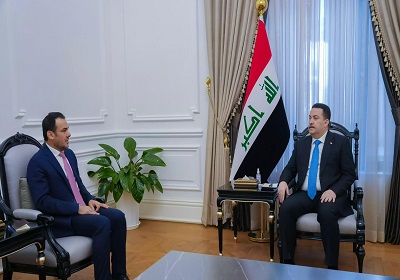
Prime Minister: The path of development will make Iraq a regional political and economic powerhouse

Invitation to the 79th issue of Dialogue of Thought
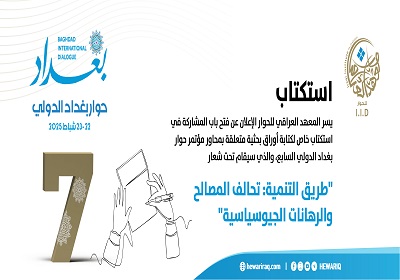
Seventh Baghdad International Dialogue Conference Call for Papers

Praise for the Baghdad International Dialogue: Strengthening Iraq's pivotal role and a meeting point for visions
Comments