



The impasse in U.S.-African relations and its repercussions
Bilateral relations between the United States and South Africa have been in a state of crisis for several years, which has intensified with the arrival of the new Trump administration. This tension is a critical turning point not only for relations between Washington and Pretoria, but its potential impact extends to the U.S. relationship with the entire African continent, especially the Horn and Southern African regions.
In this report, we review the roots of the tension in relations between the two countries, analyze the main differences in foreign policy, examine the pivotal role AGOA plays in trade relations, and look ahead to the future of the bilateral relationship and its regional ramifications.
Relationships that have been complicated for decades
U.S.-South African relations have been chronically complicated since the apartheid era, when Washington adopted a policy of "constructive engagement" in an attempt to balance pressure on the apartheid regime with countering Soviet influence. The black majority in South Africa saw this approach as a failure to support human rights.
With the end of apartheid, the relationship has fluctuated between cooperation and tension. Tensions were exacerbated by the designation of the ANC, the current ruling party, as a terrorist group during the Cold War, and Nelson Mandela's continued inclusion on the US terrorist watch list until 2008, which is memorable for many South Africans.
AGOA is a cornerstone of trade relations
The African Growth and Opportunity Initiative (AGOA), launched in 2000 under President George H.W. Bush, is one of the most important frameworks for economic cooperation between Washington and African countries. South Africa has benefited economically, but disagreements over intellectual property rights, market access, and trade practices remain.
But what threatens South Africa's membership in the initiative is its affiliation with the BRICS alliance, which includes Russia and China and adopts a different discourse from the US-led international order. As the Trump administration returns to power, expectations are growing that the future of AGOA will be reconsidered, and South Africa is likely to be excluded from an extension because of these geopolitical trends.
Fundamental differences in foreign policy
Differences between the two countries have worsened over the past two years, against the backdrop of South Africa's positions on a number of international issues, mainly:
South Africa's support for Russia after the invasion of Ukraine, and unconfirmed accusations of supplying it with weapons.
filed a genocide case against Israel with the International Court of Justice in 2024, prompting angry bipartisan reactions in the U.S. Congress.
Tensions increased with the Trump administration's decision in February 2025 to cut aid to South Africa and create a special asylum program for white farmers (Afrikaners), while passing controversial laws regarding land ownership in South Africa.
The tension reached a formal diplomatic level when US Secretary of State Marco Rubio walked out of the G20 ministerial meeting, accusing South Africa of being "anti-American," despite being this year's host country.
Possible future scenarios
Against this backdrop, there are two possible paths for relations between the two countries:
First: Continued deterioration and separation
The current escalation could reduce trade, freeze diplomatic dialogue, and hinder cooperation on regional security and counterterrorism, threatening U.S. influence in the south of the continent and fostering alternative South African alliances with China and Russia.
II: Reconciliation and Reconciliation
Although this scenario is difficult, it is still possible. This requires addressing fundamental differences, especially on foreign policy issues, and reaching a consensus on common interests, which could have a positive impact on trade, diplomatic and security cooperation on the continent.
The strategic importance of South Africa
South Africa is a strategic partner of the United States in many areas:
A major source of rare metals needed for U.S. high-tech industries.
An active diplomatic force in the African Union and an important pivot in development and peace efforts.
A potential partner in regional security management and peacekeeping missions in the Southern African region.
Translated by the Iraqi Institute for Dialogue - Foreign Policy Research Institute

The Iraqi Institute for Dialogue, the logistical sponsor of the Baghdad International Book Fair, opens its own pavilion at the fair

The Iraqi Institute for Dialogue publishes "The Diplomatic Portfolio" by Dr. Karrar Al-Badiri
Official agreement between Iraqi Institute for Dialogue and the Iraqi Media Network to sponsor The Seventh Annual International Conference of “Baghdad Dialogue” 2025

Invitation to the 79th issue of Dialogue of Thought
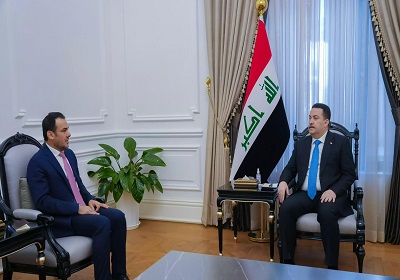
Prime Minister: The path of development will make Iraq a regional political and economic powerhouse
Seventh Baghdad International Dialogue Conference Call for Papers
Praise for the Baghdad International Dialogue: Strengthening Iraq's pivotal role and a meeting point for visions
Comments