



Jordan bans the Brotherhood: The end of the containment strategy and the beginning of the security confrontation
Ahmed Shaarawi, a research analyst at the Foundation for Defense of Democracies (FDD), argues that the Jordanian government's recent decision to ban the Muslim Brotherhood marks a strategic turning point in the state's relationship with the group, which has been considered part of the Jordanian political scene for decades.
In his article, Shaarawi said that Jordanian Interior Minister Mazen al-Faraya explicitly declared: "The Muslim Brotherhood and all its activities are banned." The researcher described this as a collapse of the "containment" strategy that Amman adopted over many years in dealing with the Brotherhood, especially after their rejection of the peace agreement with Israel in 1994 and their escalation during the events of the Arab Spring.
According to the report, which was based on official security sources, the Jordanian General Intelligence Department uncovered a terrorist cell linked to the Brotherhood that was planning to target sensitive sites inside Jordan using rockets and drones. Sixteen operatives were arrested, including members who confessed to being directly affiliated with the Brotherhood and receiving financial support from leaders in Lebanon.
Investigations revealed direct funding of $20,000 from one of the group's leaders in Lebanon to support the manufacture of rockets, Shaarawi said, while one cell member admitted he was responsible for recruiting members of the group into the ranks of new recruits.
The paradox of legal prohibition and political presence
The ban does not yet include the group's political arm, the Islamic Action Front (IAF), which had won 31 seats in the 2024 parliamentary elections, more than any other party. However, the IAF's relationship with the Muslim Brotherhood runs deep in terms of funding, leadership, and organizational structure.
He warned that this paradox could weaken the Front's electoral base and possibly lead to a ban in the future, unless a separate judicial decision is issued by the IEC.
Warning against escalation: Security cooperation is a necessity
To conclude his analysis, Shaarawy called on the United States to strengthen intelligence cooperation between Jordan, the Gulf states, and Israel to prevent the group from repositioning in a more radical underground form, similar to what happened in Egypt during the 1990s, when the ban led to a wave of terrorist operations.
The group's continued existence under a political umbrella, despite its involvement in terrorist activities, poses a serious threat to regional security and calls for greater coordination in security policies among allies, he added.
For his part, the secretary general of the Islamic Action Front, Wael al-Sakka, confirmed that the front is an independent political party, explaining that it "has no relationship with any other organizational body," adding, "We always declare our commitment to the system, the law and the provisions of the constitution."
In 2020, the Jordanian Supreme Court dissolved the Muslim Brotherhood for failing to regularize its legal status. However, the group continued its political and other activities, and the IAF participated in last year's parliamentary elections, winning 31 out of 138 seats.
The Muslim Brotherhood was founded in Egypt nearly 100 years ago and has local branches around the world. The group is banned in Egypt and many Arab countries, where it is seen as a threat by governments that want to establish a state ruled by Islamic law.
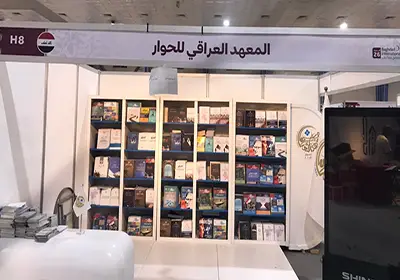
The Iraqi Institute for Dialogue, the logistical sponsor of the Baghdad International Book Fair, opens its own pavilion at the fair
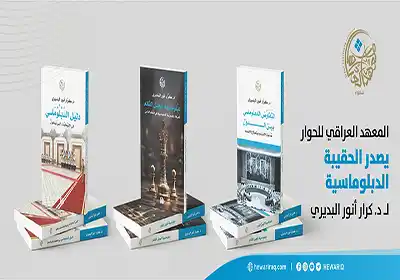
The Iraqi Institute for Dialogue publishes "The Diplomatic Portfolio" by Dr. Karrar Al-Badiri
Official agreement between Iraqi Institute for Dialogue and the Iraqi Media Network to sponsor The Seventh Annual International Conference of “Baghdad Dialogue” 2025
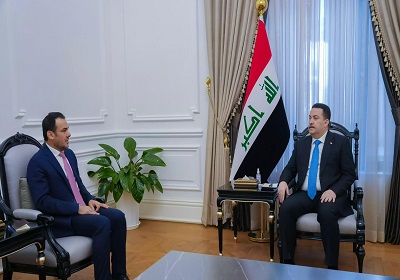
Prime Minister: The path of development will make Iraq a regional political and economic powerhouse
Invitation to the 79th issue of Dialogue of Thought
Seventh Baghdad International Dialogue Conference Call for Papers
Praise for the Baghdad International Dialogue: Strengthening Iraq's pivotal role and a meeting point for visions
Comments