



By Dr. Mohammad Akram Zahir - Political Science Specialist and Faculty Member at the University of Okara, Pakistan
Strategic Independence or Global Retreat? The Future of the U.S. Role
American unilateralism emerged as a defining characteristic of US foreign policy, especially after the end of the Cold War, as Washington increasingly sought to pursue its strategic interests away from international consensus or multilateral institutions.
This approach has manifested itself in numerous military, political and economic decisions that have emphasized the primacy of U.S. national interests over global cooperation.
Unilateralism peaked during the presidency of George W. Bush, especially after the 9/11 attacks, when the US adopted a proactive defense strategy, bypassing international forums such as the United Nations to justify military interventions, most notably the 2003 invasion of Iraq.
Proponents of unilateralism within the US administration defended this approach by arguing that America's unprecedented military and economic power imposes on it a unique responsibility to lead global affairs and shape the international system. They argued that the inefficiency of multilateral institutions and the political compromises they impose may hinder swift and decisive action, especially in the face of terrorism and rogue states.
Critics of unilateralism have argued that it undermines international norms, marginalizes global institutions, and creates resentment and instability, especially in the Global South.
Unilateralism was not limited to the military sphere, but extended to economic and environmental policies. For example, the U.S. withdrawal from the Kyoto Protocol on climate change in 2001 showed Washington's reluctance to commit to undertakings that are detrimental to its national economy. The Trump administration's decision to withdraw from the Paris Climate Agreement in 2017 reinforced the impression of America's abandonment of collective global efforts.
Economically, the US imposed tariffs and trade restrictions without international consultation, especially during its trade war with China, reflecting the prioritization of national economic interests over global economic stability. While these actions have sometimes yielded short-term strategic gains, they have jeopardized the United States' international legitimacy and negatively affected its relations with its traditional allies.
Despite this assertive approach, US unilateralism has faced structural and normative constraints. International law, global public opinion, and the rise of multipolarity have challenged the continuity of unilateral policies. As emerging powers such as China, Russia, and regional blocs in Asia, Africa, and Latin America have risen in influence, the United States has found it increasingly difficult to act without consequences or opposition.
Moreover, the costs of unilateralism-military, economic, and diplomatic-have often proved unsustainable. The protracted wars in Iraq and Afghanistan have drained U.S. resources and exposed the limits of its ability to impose its influence without broad international support. Unilateralist policies have also strained Washington's relations with its key allies in Europe and Asia, prompting some of them to reconsider their strategic alliances and work to strengthen their regional independence.
The repercussions of US unilateralism have gone beyond immediate geopolitical calculations, challenging the basic principles of the liberal international order based on multilateralism, international laws and shared sovereignty. As the US continues to act outside these frameworks, questions have arisen about the future of global governance and the credibility of international institutions.
While some international actors sought to fill the vacuum left by the decline of the US role, others feared that it would lead to strategic uncertainty and competitive chaos. US unilateralism has also affected global perceptions of democracy and human rights. Actions that appeared selfish or contradictory to democratic values weakened the moral authority of the United States and provided authoritarian regimes with excuses to justify their unilateral actions.
However, U.S. unilateralism has not always been a static approach; it has changed with changing political leadership, global conditions, and evolving strategic priorities. For example, President Obama adopted a different approach, emphasizing diplomacy, alliances, and soft power, compared to his predecessor's unilateralist approach. However, some elements of unilateralism persisted even in those periods, reflecting the perennial struggle in U.S. foreign policy between exceptionalism and international engagement.
In conclusion, while unilateralism has enabled the United States to impose its influence globally, it has also exposed the contradictions and limitations of power when exercised without legitimacy or broader cooperation. As the global landscape continues to change, the future of U.S. unilateralism remains in question, calling for a careful rebalancing between protecting national interests and fulfilling international responsibilities.

The Iraqi Institute for Dialogue, the logistical sponsor of the Baghdad International Book Fair, opens its own pavilion at the fair

The Iraqi Institute for Dialogue publishes "The Diplomatic Portfolio" by Dr. Karrar Al-Badiri
Official agreement between Iraqi Institute for Dialogue and the Iraqi Media Network to sponsor The Seventh Annual International Conference of “Baghdad Dialogue” 2025

Invitation to the 79th issue of Dialogue of Thought
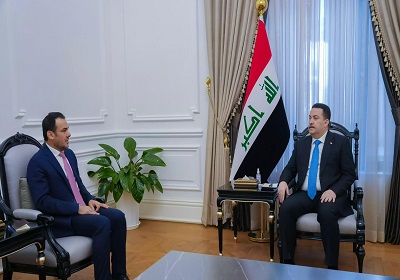
Prime Minister: The path of development will make Iraq a regional political and economic powerhouse
Seventh Baghdad International Dialogue Conference Call for Papers

Praise for the Baghdad International Dialogue: Strengthening Iraq's pivotal role and a meeting point for visions
Comments