



By John Spencer William Collins – Institute for National Security Studies (INSS)
Israel boosts U.S. military with innovative technologies
After the 1973 D-Day War, the U.S. Department of Defense conducted an extensive assessment of the conflict, commissioning at least 37 separate studies, including a secret seven-volume report on weapons systems. U.S. military personnel walked the battlefields alongside the Israeli commanders who fought the battle, analyzing the strategies and techniques that enabled Israel to triumph against harsh conditions.
The lessons learned from Israel's successes on the battlefield profoundly shaped American military doctrine, directly influencing the development of the AirLand Battle doctrine and the Big Five weapon systems - Apache helicopters, Bradley fighting vehicles, Patriot missile systems, Abrams tanks, and Black Hawk helicopters.
These developments, along with new operational approaches that emphasize speed, firepower, and joint force coordination, have redefined modern warfare.
Since then, the U.S. military's ongoing interaction with Israeli defense innovations has continued to influence the U.S. military's combat strategies and systems. From tank protection systems to AI-powered warfare solutions, Israeli defense companies and research institutions have provided cutting-edge innovations that have found their way into the U.S. military. Many of these technologies were born out of Israel's unique security challenges and its need for rapid innovation in urban and asymmetric warfare. The U.S. military has relied on and integrated many of Israel's systems into combat operations in Iraq and Afghanistan and into numerous counterterrorism operations in various parts of the world.
The Israeli emergency bandage: A lifesaver on the battlefield
While Israeli innovations have shaped military doctrine and force structure, they have also had a direct impact on individual soldiers, as seen in medical advances on the battlefield. The Emergency Bandage-a simple but highly effective bleeding control bandage developed by an Israeli military doctor-has saved many American lives. First introduced in the 1990s, the bandage features a built-in compression mechanism that allows soldiers to treat severe wounds using one hand.
The emergency bandage was adopted by the U.S. military in the early 2000s, especially as injuries in Iraq and Afghanistan from improvised explosive devices (IEDs) and small arms fire increased. It is now part of the personal medical equipment of U.S. soldiers, special operations forces, and emergency workers.
Armored bulldozers: A critical tool in urban warfare
The IDF's adaptation of the D9 bulldozer into an armored combat vehicle was a battlefield-tested model that directly influenced U.S. operations in Iraq. In 2003, US forces purchased 14 D9 armored bulldozers from Israel, developed by the Israeli Military Engineering Unit, for use in combat zones such as Iraq.
Although it remains uncertain where these units will be deployed in Iraq, their acquisition reflects the growing recognition of Israeli expertise in modifying heavy equipment for urban warfare.
Some reports indicate that D9 armored bulldozers were used in the Second Battle of Fallujah, equipped with Israeli-designed armor kits that enabled U.S. forces to breach barriers, demolish fortified positions, and reduce the risk to deployed troops.
In Israeli service, the D9 was used extensively in Gaza, where it was used to remove booby-trapped buildings, discover tunnel openings, and breach barriers under fire-often in the face of threats from IEDs and anti-tank missiles To further protect operators and to ensure the platform's utility in urban environments, Israel developed a remote version of the bulldozer.
This unmanned version allows troops to perform critical combat engineering tasks in high-risk areas without exposing soldiers to direct fire, demonstrating how the D9 continues to evolve as a life-saving tool on the modern battlefield.
Active Protection Systems: Trophy's impact on the battlefield
Israel's advances in force protection have had a dramatic effect in increasing the survival of armor platforms in battle. One of Israel's most notable contributions to tank warfare is the Trofei Active Protection System (APS). Developed by Rafael Advanced Defense Systems, Trovi provides provides a multi-layered defense against anti-tank guided missiles and rocket-propelled grenades (RPGs), automatically detecting, tracking, and intercepting threats before they reach the vehicle. It was first tested on the battlefield by the Israel Defense Forces in 2011, and quickly proved its effectiveness in combat situations.
One of the biggest challenges in urban warfare is the vital need for mobile protected firepower - tanks and armored vehicles must operate in dense environments where threats lurk behind every corner and from window to window. Traditionally, urban battles exposed these vehicles to anti-tank artillery attacks from concealed positions in buildings, alleys, underground networks, and elevated points such as upper floors and roofs - highlighting the multi-dimensional threat posed by the urban battlefield. Trophy revolutionized urban warfare by reducing this vulnerability, allowing tanks to maneuver through the maze of dense urban combat with a significant increase in survivability. The system's ability to neutralize anti-tank missiles before they impacted restored the utility of heavy armor in close combat, a vital capability that modern armies, including the U.S. Army, have sought to preserve.
Countering Improvised Explosive Devices (IEDs)
During the Iraq War, improvised explosive devices (IEDs) caused the most casualties among U.S. troops. These IEDs were so devastating that General John Abizaid, commander of U.S. Central Command, requested that these threats be addressed in a Manhattan Project-like manner in 2004. One of the first places the U.S. turned to for help was Israel. For years, Israel had faced IED threats from Hamas, Hezbollah, and other terrorist organizations, and had more capability than the U.S. in this area.
Israel shared these technologies with the United States, providing it with vehicle-mounted microwaves such as the Dragon Spike and Dragon Spike II for testing in Iraq and at Yuma Air Force Base in Arizona. These devices were not a panacea for IEDs, but they helped kick-start the U.S. counter-IED effort.
Military dogs: K9 troops
Israel's combat experience in dense urban areas shaped the evolution of its specialized use of dogs, and these operational lessons have increasingly influenced U.S. military practices.
The IDF's Oketz unit began refining off-leash dog tactics, as trainers used radios to give commands to dogs operating out of sight in the 1990s, when conditions were too dangerous or complex for trainers to directly accompany the dogs. In response, Okitz developed techniques to train dogs to work autonomously - entering buildings, tunnels, or corridors that may be filled with traps to detect and neutralize threats without direct supervision from the handler.
During operations in Iraq and Afghanistan, the U.S. military began adopting the same tactics, sending dogs to explore confined spaces and minimize risks to personnel. The Israeli military's successes in using dogs to locate tunnel openings, detonate booby traps, and even engage with combatants have contributed to the U.S. military's appreciation of the life-saving capability of military dogs in high-risk environments. Joint experience-sharing exercises, particularly between U.S. special operations forces and their Israeli counterparts, have also strengthened this relationship, as IDF doctrine and battlefield experiences have helped improve how U.S. trainers prepare for modern urban combat.

The Iraqi Institute for Dialogue, the logistical sponsor of the Baghdad International Book Fair, opens its own pavilion at the fair
Official agreement between Iraqi Institute for Dialogue and the Iraqi Media Network to sponsor The Seventh Annual International Conference of “Baghdad Dialogue” 2025
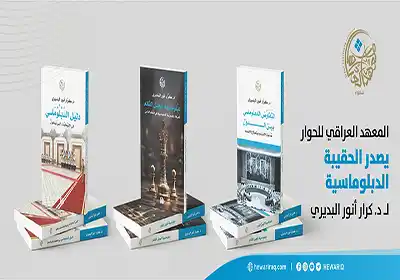
The Iraqi Institute for Dialogue publishes "The Diplomatic Portfolio" by Dr. Karrar Al-Badiri
Invitation to the 79th issue of Dialogue of Thought
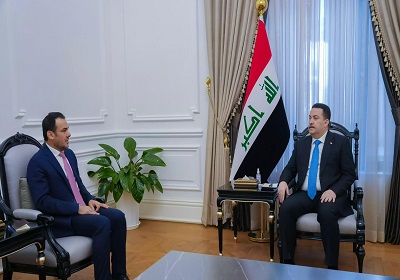
Prime Minister: The path of development will make Iraq a regional political and economic powerhouse
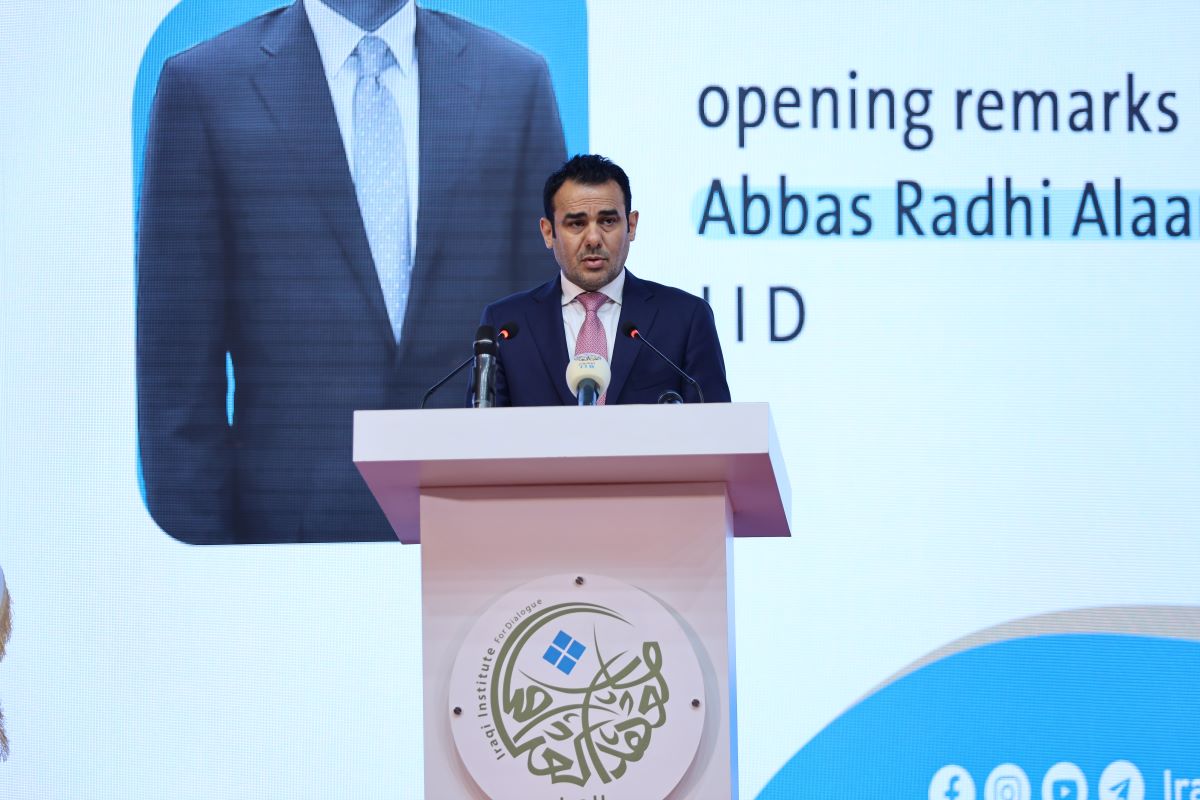
Speech of the Director of the Iraqi Institute for Dialog at the Sixth Baghdad International Dialog Conference
Seventh Baghdad International Dialogue Conference Call for Papers
Comments