

Written by Victor Gaitan
The Pope's foreign policy
After the death of Pope Francis on April 21, much of the world's attention focused on his personality: His humility, his humor, his straightforward management style. But all of that will go to the grave. The Argentine pope's contributions to Vatican diplomacy will remain a lasting legacy.
Francis has charted a diplomatic course independent of Western capitals, elevated Catholic leaders in countries not previously part of the Church's administration, and refined a diplomatic style that combines pragmatism with ambition.
Through those efforts, Francis rebuilt relationships that had deteriorated under his successors, and left behind a strong diplomatic network with a global reach. His successor must now capitalize on the great love Pope Francis has garnered to advance the Church's priorities of mercy, justice, and peace. The tools to conduct meaningful and global papal diplomacy are ready. The question is whether the next pope will have the ability to make the most of this powerful hand.
Worldview
Pope Francis' longest trip was a 12-day trip through Indonesia, Papua New Guinea, East Timor and Singapore last September, which was typical of many of his diplomatic priorities. One of his goals was to improve relations between the Catholic Church and the Muslim world, especially with followers of Sunni Islam.
Relations were at their lowest point under his successor, Pope Benedict XVI. In 2006, Benedict gave a speech that many Muslims considered offensive to the Prophet Muhammad. In 2011, Ahmed al-Tayeb, Grand Imam of Al-Azhar, severed ties with the Vatican over Benedict's remarks after a terrorist attack in Egypt. Francis was able to repair relations with El-Tayeb and build a fruitful friendship.
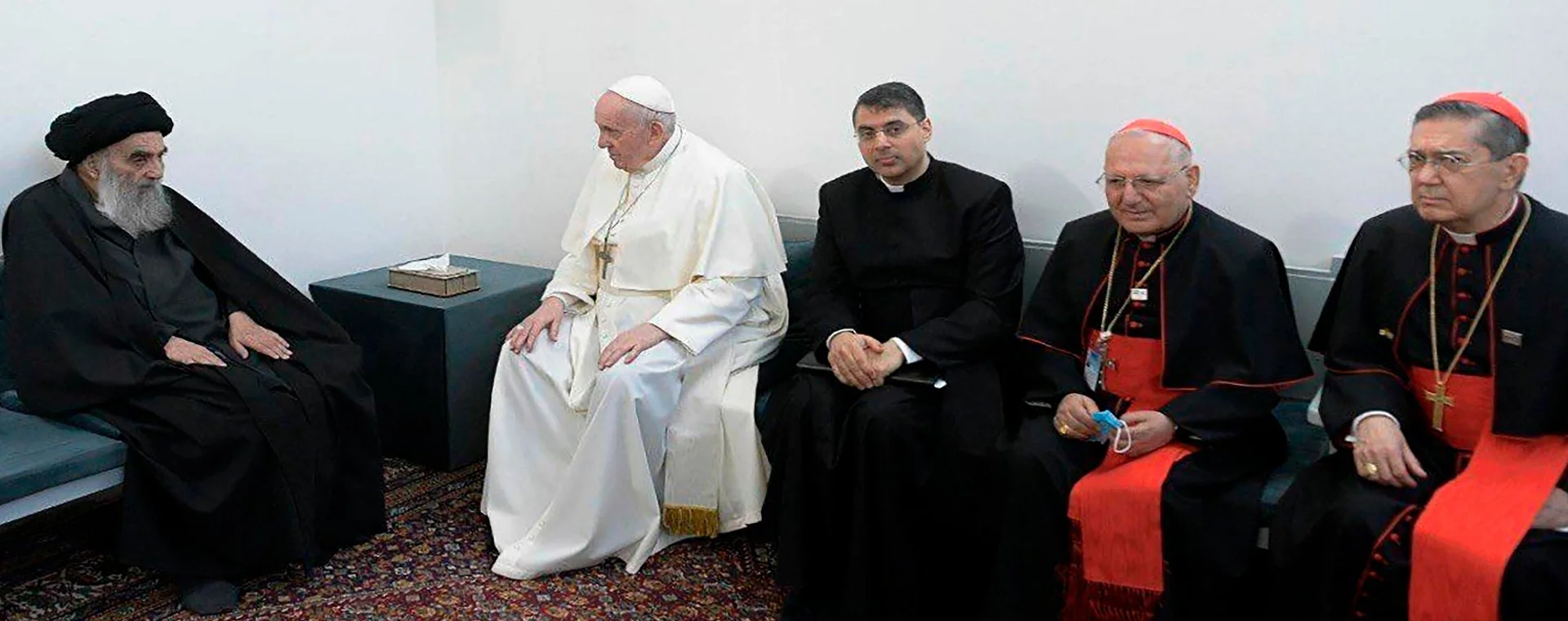
In 2019, the two leaders met in Abu Dhabi to sign a historic joint agreement against religious extremism during another historic visit - it was the Pope's first visit to the Arabian Peninsula.
Francis' visit to Indonesia, the most populous Muslim country, was an affirmation of his commitment to interfaith cooperation. He attended a meeting with other religious leaders at Jakarta's Istiqlal Mosque, the largest mosque in Southeast Asia, and expressed admiration for Indonesia's healthy approach to religious coexistence. The symbolic link between the mosque and a Catholic cathedral was via an underground tunnel.
Francis also called for the Catholic Church to be less institutionalized and more evangelizing, directing its attention to the poorer parts of the global community. He appointed men from countries with little or no representation in church leadership to the College of Cardinals, which will choose his successor. Among his appointments, cardinals have been appointed to 25 countries that had no Catholic representation before, including Papua New Guinea, Singapore and East Timor. Every pope has used cardinals as messengers, but no pope has planted their papacy in as many places as Francis has.
Multipolar Vision
Francis presented his vision of the globalized world not as a sphere, but as multifaceted bodies, a metaphor that he said "expresses how to create unity while preserving the identities of peoples, people and cultures." For example, he appreciated Singapore's determination to stay out of geopolitical power struggles and embrace multipolarity. During his pontificate, the Vatican itself made a concerted effort to transcend geopolitical divisions and paid particular diplomatic attention to China. Before Francis, mutual suspicion had overshadowed attempts to resolve long-standing differences between Beijing and the Vatican. But when China's new leader was chosen on his first day in office, the pope wrote a personal congratulatory letter to Xi Jinping. Xi responded cordially, surprising some Vatican staff.
Francis has loved China all his life. As secretary of state, he chose Pedro Parolin, the cardinal who led the Vatican's negotiations with Beijing between 2005 and 2009 (and is now a leading candidate to succeed Francis). A year after taking office, Francis told the Italian newspaper Corriere della Sera that the Vatican was "close to China" and that diplomats maintained relations on both sides. Those ties were vital to resolving a crucial dispute over the appointment of bishops: For decades, Beijing had insisted on selecting Chinese bishops itself, rejecting Catholic religious doctrine that gives that right to the pope. After four years of quiet negotiations, in 2018 the Vatican and the Chinese government reached an interim agreement allowing for joint appointments of bishops. The agreement has been renewed three times, and 11 new bishops have been approved under its terms.
Two popes before him had tried and failed to find a way to work with Beijing, but Francis was particularly persistent, directing his diplomats to keep talking to their Chinese counterparts even when they faced setbacks. In previous negotiations, unilateral decisions in Beijing led to the collapse of discussions. But under Francis, the Vatican did not back down, and eventually achieved a breakthrough.
Pope Francis' diplomacy is relevant again
The rapprochement between the Vatican and China was on display at a conference in Rome last year, which marked the centenary of the papal envoy, Cardinal Celso Costantini, forming an official synod of church leaders in mainland China that led to the appointment of six local Chinese bishops.
Foreign missionaries had led the Church in China before the Synod that rejected the practice in 1924. Among the participants at last year's Rome conference was the Bishop of Shanghai, Joseph Xin Bin, who gave a speech in Chinese explaining that Beijing does not wish to change the Catholic faith but expects Chinese Catholics to defend local culture and values.
Interestingly, Xin Bin was transferred to Shanghai from another diocese by the Chinese government without the Vatican's approval. This move could have killed the agreement signed in 2018, but Francis decided to accept him and even welcomed him to join the high-level political discussions in Rome.
Pope Francis' diplomacy: Washington's opponent
Pope Francis' diplomacy in China has been widely criticized, especially by the first Trump administration. U.S. Secretary of State Mike Pompeo even wrote an article in 2020 criticizing the Vatican for its agreement with Beijing. (In turn, the Vatican rejected Pompeo's request to meet the pope weeks later.)
But Pope Francis' anti-Washington vision has bolstered the Vatican's reputation for geopolitical independence, an identity that Francis has developed. For example, after returning from his trip to Asia last September, Francis said in his weekly address to thousands of faithful in Rome: "We still overthink from a European, or as they say, 'Western' perspective. But in reality, the Church is much bigger, bigger than Rome and Europe, much bigger!"
Along with his response to China, Francis broke with Western powers in his response to the war in Ukraine. He opposed sanctions against Russia, following the church's long-standing position that sanctions should not be used as a diplomatic weapon because they harm the well-being of ordinary people.
Francis has also prioritized relations with the Russian Orthodox Church. Popes since John XXIII, who served from 1958 to 1963, have sought reconciliation between Catholics and Orthodox, and strengthening the Vatican's relationship with the Moscow Patriarchate was one of Benedict XVI's greatest diplomatic achievements.
Francis developed a close friendship with the leader of the Eastern Orthodox Church, Ecumenical Patriarch Bartholomew of Constantinople, and expanded on the outreach that Benedict began with the Russian Orthodox Church. In 2016, he became the first pope to meet a Russian patriarch in person at the airport in Havana, Cuba. However, his signing of a joint agreement with Patriarch Kirill has alarmed some Ukrainian Catholics.
Pope Francis' diplomacy in Ukraine
As the conflict in Ukraine escalated, Francis refused to demonize Russia. Instead, he spoke of the tragedy of "fratricide" among fellow Christians. He often accused arms dealers of fueling the war. He even dared to suggest that NATO expansion - which he described as "NATO barking at Russia's door" - contributed to Russia's decision to invade Ukraine. Of course, he condemned the war and offered public prayers for the "martyred Ukrainian people," even from his hospital bed, but he never made a personal accusation against Russian President Vladimir Putin.
Next diplomat
Even if some of his positions may be controversial, Francis has made Catholic Church diplomacy relevant again. He has given the Vatican its diplomatic tools, adding a new section to the Secretariat of State to support diplomatic personnel. He boosted peace efforts by appointing cardinals to conflict-affected areas, including Syria and Jerusalem, a mandate that includes Cyprus, Jordan, Israel and the Palestinian territories and is headed by Cardinal Pierbattista Pizzaballa, who is now considered a candidate to become Francis' successor.
Francis also strengthened small Catholic communities by planting cardinals for the first time in Muslim-majority Bangladesh, Iran, Pakistan, Mongolia, Myanmar and Buddhist-majority Singapore. Francis also appointed an Indian diplomat, Cardinal George Kovaca, to lead a department focused on interfaith dialog.
The values and strategy that Francis brings to international engagement are derived from the Gospel; they are not unique to him. His diplomatic style, moreover, is taught at the Vatican Diplomatic Academy, the world's oldest diplomatic school. Also present was Pedro Parolin, secretary of state and architect of Francis' foreign policy, who may continue the work he started under Francis 12 years ago if he is chosen to succeed him.
But Francis has also elevated many other gifted leaders with diplomatic gifts. If his successor is chosen from the Global South, his missionary campaigns may continue. The 135 cardinals who will choose the next pope are likely to choose this path. Given that 108 of them were elevated by Francis, often referred to as the "Pope of Surprises," it is likely that the conclave will also surprise the world.
 Victor Gaitan, PhD, is an international correspondent for the Catholic News Agency and the National Catholic Register. He contributes to Foreign Affairs and America magazine. He has written from Asia, Europe, Latin America and the Middle East, experiences that have given him valuable access to the notoriously secretive papal diplomatic corps. He has gathered valuable information from the Vatican's secret archives, which are not open to the public. Victor Gaitan, PhD, is an international correspondent for the Catholic News Agency and the National Catholic Register. He contributes to Foreign Affairs and America magazine. He has written from Asia, Europe, Latin America and the Middle East, experiences that have given him valuable access to the notoriously secretive papal diplomatic corps. He has gathered valuable information from the Vatican's secret archives, which are not open to the public. |
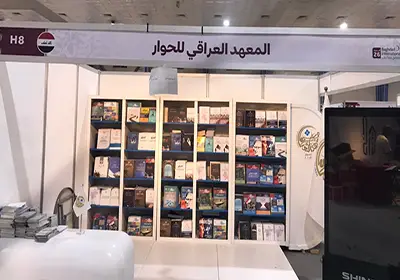
The Iraqi Institute for Dialogue, the logistical sponsor of the Baghdad International Book Fair, opens its own pavilion at the fair
Official agreement between Iraqi Institute for Dialogue and the Iraqi Media Network to sponsor The Seventh Annual International Conference of “Baghdad Dialogue” 2025
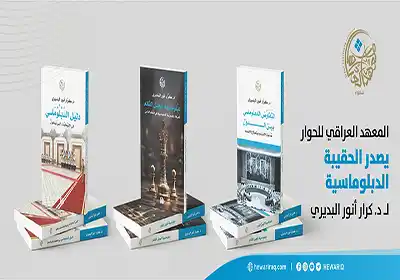
The Iraqi Institute for Dialogue publishes "The Diplomatic Portfolio" by Dr. Karrar Al-Badiri
Invitation to the 79th issue of Dialogue of Thought
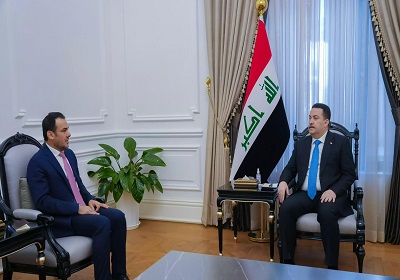
Prime Minister: The path of development will make Iraq a regional political and economic powerhouse
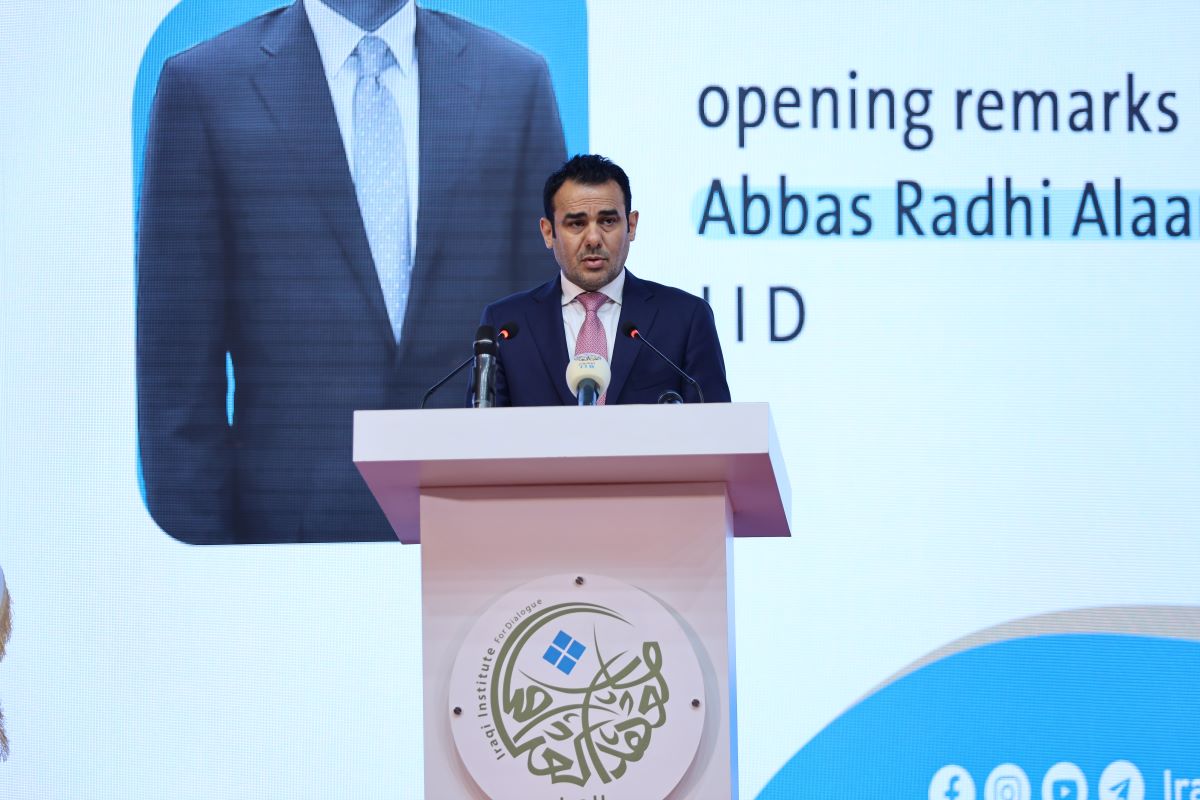
Speech of the Director of the Iraqi Institute for Dialog at the Sixth Baghdad International Dialog Conference
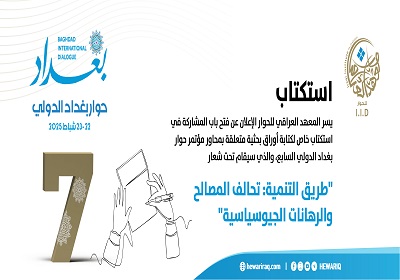
Seventh Baghdad International Dialogue Conference Call for Papers
Comments