


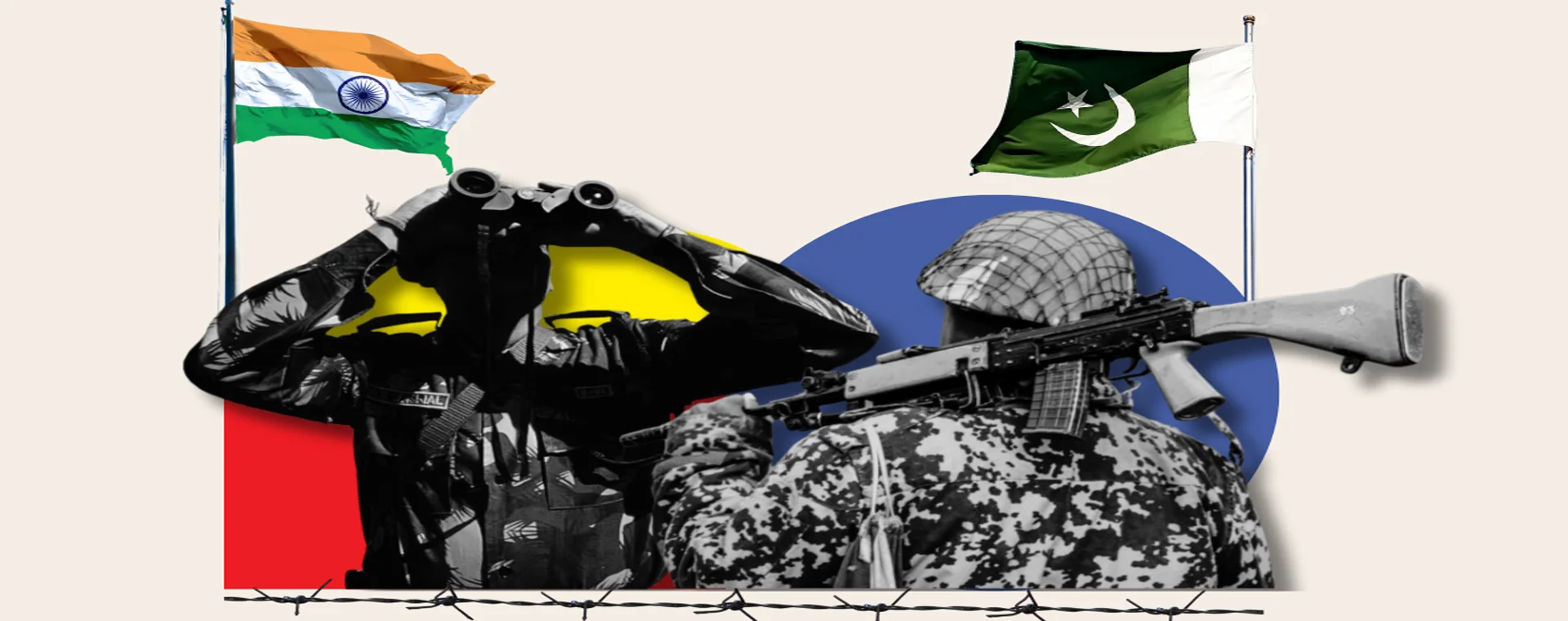
Rising tensions between India and Pakistan: Nuclear confrontation on the horizon?
As tensions between nuclear neighbors India and Pakistan escalate following the recent terrorist attack in Kashmir, fears are mounting that a military confrontation could escalate into a nuclear conflict that threatens the security of South Asia and could draw major international powers into the conflict.
As tensions between the two countries escalate, reports suggest that any potential conflict between the two countries could become a testing ground for Chinese and Western weapons, reflecting the broader geopolitical rivalry between China and the West.
According to a report in the South China Morning Post, Pakistan is increasingly relying on Chinese weapons, including JF-17 and J-10C fighter jets, as well as VT-4 tanks and advanced submarines. In contrast, India has a mix of Western weapons, such as France's Rafale fighters, Russia's S-400 air defense systems, and homegrown equipment.
Analysts warn that any potential military conflict between the two nuclear neighbors could turn into a testing ground for Chinese and Western weapons, with repercussions beyond South Asia.
An accelerating arms race
Pakistan's military arsenal relies heavily on Chinese weapons, including the JF-17 fighters developed in cooperation with China and, more recently, the more advanced J-10C fighters. Pakistan's naval and land forces also rely on a range of Chinese equipment, such as VT-4 tanks and Type-054A/P frigates.
In contrast, India relies on a mix of Western and Russian weapons, including French Rafale fighters, Russian S-400 air defense systems, as well as homegrown equipment. This disparity in weaponry makes any potential confrontation between the two countries an opportunity to observe how these different systems perform on the battlefield.
Regional and international repercussions
Any conflict between India and Pakistan will not only affect the region, but will also have implications for global military balances. The performance of Chinese weapons against Western systems could influence other countries' decisions on future arms deals, especially in areas of tension such as the South China Sea and Taiwan.
The success or failure of these systems on the battlefield could reshape military alliances and affect the defense strategies of many countries, especially those seeking to modernize their armed forces.
Calls for calm
In light of these concerns, many countries, including China and the United States, are calling for restraint and de-escalation. Any direct confrontation between India and Pakistan could lead to dire consequences, not only because of the nuclear arsenal the two countries possess, but also because of the geopolitical repercussions such a conflict could have.
In conclusion, the current tension between India and Pakistan is a reminder of the seriousness of regional conflicts in an era of overlapping interests and military technology among major powers.
Experts believe that any conflict between India and Pakistan would not only affect the region, but also have implications for global military balances. The performance of Chinese weapons against Western systems could influence other countries' decisions on future arms deals, especially in areas of tension such as the South China Sea and Taiwan.
Kashmir attack. A new spark to an old crisis
The tourist town of Pahalgam in Kashmir witnessed a deadly terrorist attack that killed 26 Hindu tourists, triggering mass panic among residents and tourists. In response, clashes escalated for consecutive nights along the "Line of Control" that has separated the two parts of Kashmir since 1947.
New Delhi has accused Pakistan of supporting militant groups involved in the attack, while Islamabad has denied any involvement and called for an international investigation. However, Indian Prime Minister Narendra Modi has promised a "harsh response", raising the possibility of military escalation.
Military Response Scenario
Observers believe that India may resort to limited military operations, such as those carried out in 2019 after the Pulwama attack, which almost led to a full-scale confrontation. On that day, Pakistan shot down an Indian airplane and captured its pilot.
Professor Srinath Raghavan of Ashoka University says: "There is internal pressure on the Indian government to respond, which makes the military option a possibility, albeit with limited calculations."
A proxy war between major powers?
Indo-Pakistani tensions have turned into an indirect confrontation between China and the United States. While Washington supports New Delhi militarily and technologically, Beijing insists on supporting Pakistan's sovereignty and security and enhancing security cooperation with it.
Reports suggest that China may be providing Pakistan with cyber and logistical support, while Turkish cargo planes have been spotted in Pakistan believed to be carrying combat equipment, reflecting the widening regional alignment.
Terrorism: The old tool, the new one
Since the 1970s, Pakistan has used militant groups as leverage against India, with the latter accusing them of involvement in terrorist operations inside and outside Kashmir. Although the Front Resistance has denied responsibility for the Pahalgam attack, it has been tentatively blamed.
New Delhi's calculations and the limits of escalation
The Modi government tries to justify any military escalation by having "clear evidence" of the involvement of Pakistani state agencies, not just non-governmental groups, to avoid international isolation or loss of credibility with the international community.
At the same time, the declaration of "ending terrorism in Kashmir" is contradicted by the presence of nearly one million Indian troops there, revealing the depth of the security and political dilemma.
The threat of all-out war
If a confrontation were to break out, it would be the first between two nuclear powers backed by rival international powers. In the absence of effective communication channels, a miscalculation could lead to a large-scale catastrophe.
Kashmir remains, once again, the world's most volatile flashpoint, and turning it into a testing ground between Chinese and Western weapons would be a catastrophic scenario for the entire world.

The Iraqi Institute for Dialogue, the logistical sponsor of the Baghdad International Book Fair, opens its own pavilion at the fair

The Iraqi Institute for Dialogue publishes "The Diplomatic Portfolio" by Dr. Karrar Al-Badiri
Official agreement between Iraqi Institute for Dialogue and the Iraqi Media Network to sponsor The Seventh Annual International Conference of “Baghdad Dialogue” 2025

Invitation to the 79th issue of Dialogue of Thought
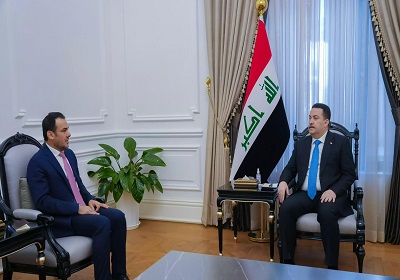
Prime Minister: The path of development will make Iraq a regional political and economic powerhouse
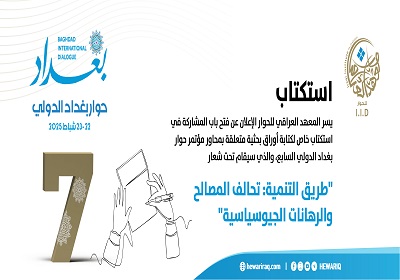
Seventh Baghdad International Dialogue Conference Call for Papers
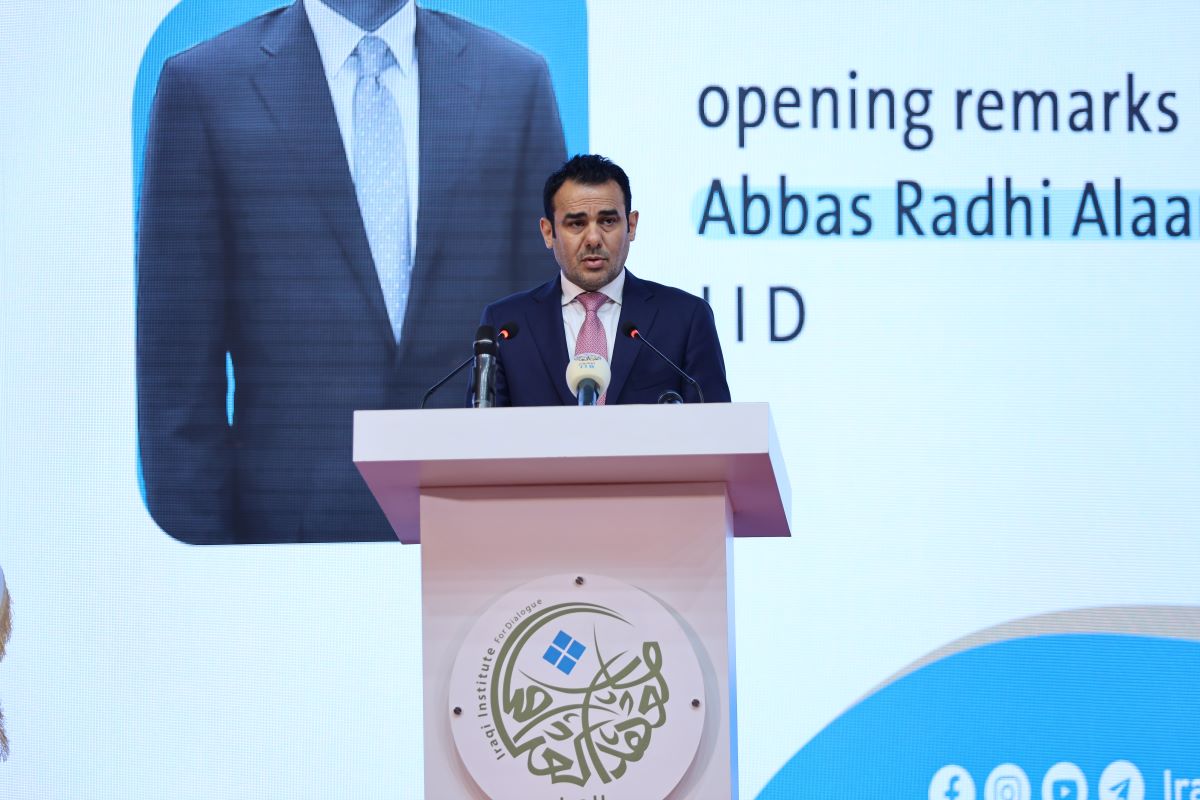
Praise for the Baghdad International Dialogue: Strengthening Iraq's pivotal role and a meeting point for visions
Comments