

Asa Boris-Burgess - Translation by the Iraqi Institute for Dialog
From Iraq to Syria: Testaments of a Difficult Transition
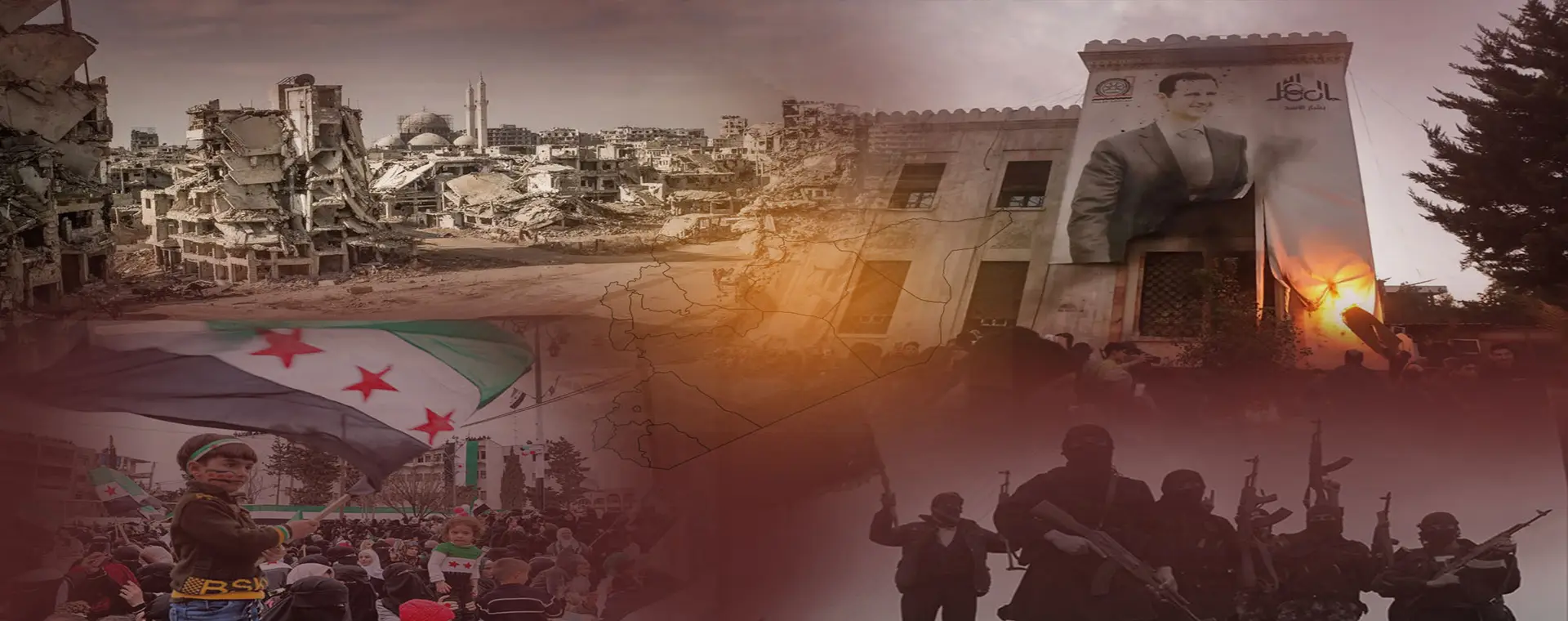
The sudden ouster of former Syrian President Bashar al-Assad in December 2024 put Syria at a pivotal moment. There appear to be echoes of similar seismic shifts that swept through Iraq following the 2003 US invasion. Even today, Iraq continues to suffer from chronic political instability, sectarian divisions, and a long legacy of violence and displacement.
Today, millions of displaced people live in both countries, and authorities in Baghdad and Damascus struggle to control powerful armed groups amid ongoing regional tensions. As Syria embarks on an unclear path toward political transition and regional and international reintegration, the similarities and differences with the Iraqi experience impose themselves on scholarly and policy debates.
To discuss what Syria can learn from Iraq's experience, political scientist Asa Preuss-Burgess interviewed Georgetown University history professor Joseph Sassoon, an Iraqi-born Iraqi who is one of the foremost specialists on the legacy of the Iraqi Baath.
Comparison of exponents:
In Professor Sasson's opinion, it is important to note that the fall of the Baath regime in Iraq was carried out by foreign forces led by the United States, while the fall of the Assad regime was carried out by an internal Syrian faction, Hayat Tahrir al-Sham.
"There is a fundamental difference between an invasion by a foreign power, as happened in Iraq, and Syrians, with Syrian soldiers, toppling the regime," he said.
Sassoon also emphasized that the political change in Baghdad empowered political elites who did not have a deep understanding of Iraq's internal dynamics.
"Iraqi exiles were directing the political scene in cooperation with the Americans, and decision-makers in Washington relied on them as local experts - even though some of them had not visited Iraq for ten, twenty, or even thirty years."
In Syria, current president Ahmad al-Sharaa and Hayat Tahrir al-Sham, which he led until its dissolution in January 2024, have accumulated experience in governing by running a quasi-state entity in northern Syria since 2017.
Sasson highlighted another point of comparison, saying that "de-Baathification of state institutions is something that Sharia has not yet addressed, and it was a disaster in Iraq." "The Baathists were not like the Nazis in Germany. According to the 2002 census in Iraq, only 5 to 8 percent of the Baath Party was actually active."
Prioritize the lifting of sanctions:
Regarding the current challenges facing the new Syrian administration, Sassoun noted that Sharaa's first priority should be to lift Western sanctions and revitalize the economy.
"Sharia needs one thing: Money. Money to provide jobs. Money to bring a sense of stability. Money to make people feel that there is progress," he said, emphasizing that "all of Sharaa's diplomatic efforts seem to be focused on lifting sanctions."
He explained that Iraq after the US invasion was not actually suffering from sanctions, but "the country was flooded with frozen Iraqi assets, in addition to US aid and economic input from other regional powers."
A serious push for the lifting of sanctions "could bring broad domestic support for the new authorities in Syria, which the Iraqi government has not succeeded in achieving," he said.
He also emphasized that sanctions relief is necessary for the implementation of any transitional justice measures, which are linked to an improvement in the living conditions of Syrians, along with effective government performance and security.
However, he acknowledged that achieving significant material improvement is difficult, especially with more than 90 percent of the population living in poverty and GDP per capita about 15 percent of what it was before the war.
On the possibility of transitional justice in Syria, Sassoon said: "I don't think it's possible now. In Iraq, transitional justice failed, and the anger is still there today. I don't see Syria being able to deal with this issue at this stage."
He added that this failure reflects a broader pattern of transitional justice failures in Arab Spring countries, noting that its implementation requires a strong system and the involvement of the middle sections of society.
As European and Gulf countries prepare to provide aid to Syria, Sassoon warned that foreign funding cannot be a panacea.
"Iraq was flooded with money after 2003. "In fact, too much money was an issue in itself. Everyone thought that money would solve everything," he said, noting that this model led to rampant corruption and an over-reliance on oil revenues in the Iraqi economy.
Security challenges:
If Sharia wants to avoid the fate of Iraq, his administration should hasten to monopolize arms. Since 2003, Iraq has suffered from sectarian conflicts, the rise of ISIS, and the dominance of armed groups in much of the political process, weakening the authority of the central government.
Sasson said: "If Syria wants to avoid the Iraqi experience, it needs to contain the armed groups from the beginning."
He added that Sharaa's military support base is relatively small, which is concerning: "If reports are true that he only controls 25,000 to 30,000 military personnel, that's too few. The Kurds have more fighters and are better trained and equipped. The same goes for the Turkish-backed factions."
Kurdish issue:
One of the similarities between the Iraqi and Syrian experiences is Washington's relationship with the Kurds. Sassoon said: "The Kurds in Iraq before the U.S. invasion were pro-American and supported the overthrow of Saddam. "The Kurds in Syria were also anti-Assad," Sassoon said.
As in Iraq, the fall of the Baath Party in Syria presents the Kurds with both opportunities and challenges. Al-Sharaa has shown diplomatic skill by reaching an agreement with the Syrian Democratic Forces (SDF) and quelling calls for federalism, but this understanding remains fragile.
Sassoon expressed skepticism, saying: "Federalism has not worked in Iraq. The majority of non-Kurds believe that Kurdistan is an integral part of Iraq and that Iraq should be for all Iraqis," he said, adding that "federalism only works when the central state is strong, not in times of weakness."
Regional dynamics:
Adding to the internal complexities are the regional dimensions. Sassoon said bluntly: "There is another difference between Syria and Iraq. "Saddam Hussein was in complete control, but Assad was not. He won the civil war not because of his troops, but because of Lebanese Hezbollah and Iranian support, nothing more."
He explained that Iran welcomed the toppling of Saddam as a Baathist rival, and that it is unclear how its allies will deal with the new Syrian regime.
He also pointed to the complex issue of Russia: "Syria owes Russia a lot. They still have a huge military base. Syria bought weapons from Russia, equipped the former regime's army, and possibly helped them develop heavy industries."
"There is a factor that didn't exist in Iraq, and that is Turkey. Turkey today has a direct military presence in Syria, whereas it took more than a decade for that to happen in Iraq."
Ankara sees the SDF as an extension of the Kurdistan Workers' Party (PKK), which is classified as a terrorist organization in Turkey and against which it has fought conflicts in Syria and Iraq. At the end of the interview, Sasson pointed to a major challenge facing Sharaa: Israel's occupation of the Golan Heights. "This file cannot be ignored forever," he said. "Over time, it will become a central issue that must be addressed.
Despite all these challenges, Sassoon expressed some cautious optimism: "If Sharaa can get the sanctions lifted, he will have a strong bargaining chip with Russia, and he can say to his people: We are not a closed Islamic state... I achieved the lifting of sanctions because I presented them with the image of an open country."
But at the same time, he warned: "If six months go by and he can't lift the sanctions, his more radical allies will say he hasn't accomplished anything - it's time for us to show our true colors."
Asa Bros: He is a researcher, writer and geopolitical risk analyst based in London. His work focuses on the intersection of energy, climate change, and power politics in Iraq and the Arabian Peninsula.
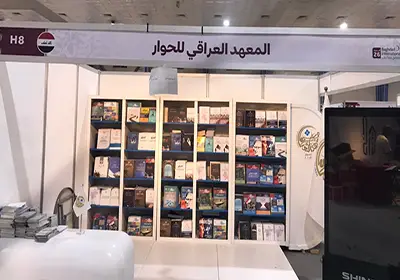
The Iraqi Institute for Dialogue, the logistical sponsor of the Baghdad International Book Fair, opens its own pavilion at the fair
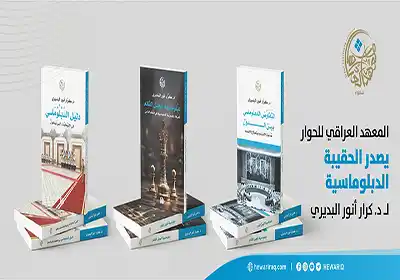
The Iraqi Institute for Dialogue publishes "The Diplomatic Portfolio" by Dr. Karrar Al-Badiri
Official agreement between Iraqi Institute for Dialogue and the Iraqi Media Network to sponsor The Seventh Annual International Conference of “Baghdad Dialogue” 2025
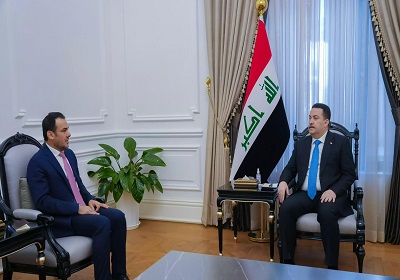
Prime Minister: The path of development will make Iraq a regional political and economic powerhouse
Invitation to the 79th issue of Dialogue of Thought
Seventh Baghdad International Dialogue Conference Call for Papers
Praise for the Baghdad International Dialogue: Strengthening Iraq's pivotal role and a meeting point for visions
Comments