


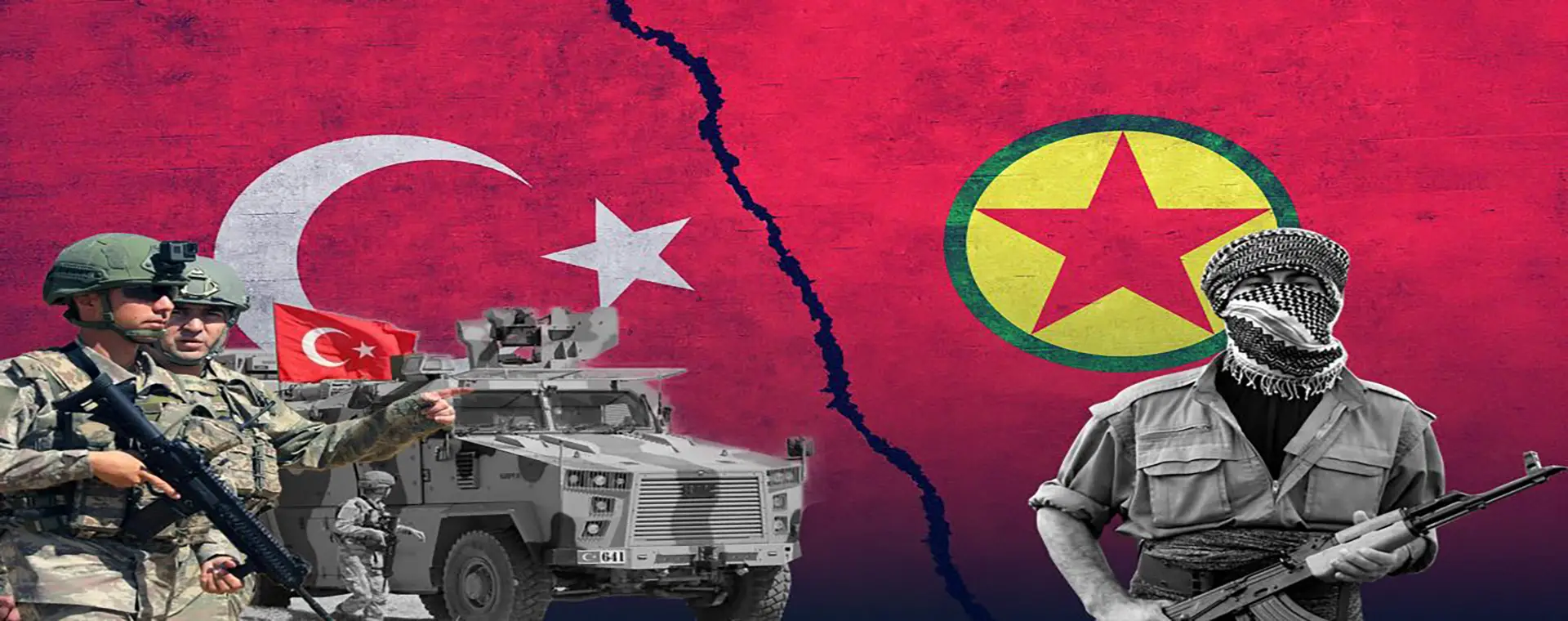
By: Mohammed Ali Destmali – Researcher and expert on Turkish and Kurdish affairs
From which window do we look at the dissolution of the PKK?
In a move that has been described as historic, Abdullah Ocalan, the leader of the Kurdistan Workers' Party (PKK), announced the dismantling of the organization and the disarming of its military wing. This decision, which came after nearly half a century of armed struggle against the Turkish state, raised wide questions about its motives, timing, and possible outcomes. Are we facing a comprehensive settlement between Ankara and the Kurds? Or is this just a repositioning within the framework of broader regional and international shifts? What about the fate of the Kurds in Turkey, Syria and Iraq? What impact will this have on other Kurdish groups and the future of Turkish politics?
The PKK was founded in 1978 by Ocalan and began its armed activity in 1984, after which Turkey entered into one of the longest and most violent guerrilla wars in the region. During that war, tens of thousands of soldiers and civilians were killed, and the Kurdish issue turned into an intractable knot in the geopolitics of Turkey and the Middle East.
Evidence suggests that some of the terms of the agreement between the Turkish government and Abdullah Öcalan are still behind the scenes, and details of potential political, legal, and social reforms are not currently being disclosed. So far, we are not sure whether we are looking at an "equal exchange" or a "give and take". Especially with regard to scenarios for the future of the Kurds in Syria, we do not have enough information to understand whether the dissolution of the PKK will be matched by an easing of Kurdish participation in the future government of Damascus.
An analytical look at the dissolution of the PKK:
To understand the reasons and backgrounds behind the dissolution of the PKK, we need to keep in mind several windows of historical transitions. The end of the PKK cannot be reduced to a mere issue between the Turkish state and an armed organization. From its founding in 1978 to the start of armed action in 1984, from Ocalan's arrest in Kenya in 1999 to truces and repeated clashes to its declared dissolution in 2025, there were five decades of conflict and mutual influence. It is worth recalling the post-Ottoman and post-Lausanne phases to understand the interconnectedness of events more precisely.
Today, in May 2025, the PKK issue is no longer an internal Turkish issue or a reflection of social demands on the streets of Kurds in Turkey and Syria, but is on the table of regional and international analysis. Gone are the days when the Kurdish masses in Turkey, Syria, and Europe answered Ocalan's call and took to the streets. The PKK has entered a cycle of repetition that has made its symbolism more important than its actual impact.
The PKK was operating as a slow mechanism or at the wrong time and place. Throughout its history, regional and international factors have influenced it far more than the internal dynamics of Kurdish society. It is therefore impossible to ignore that Ocalan's latest decision is clearly linked to the developments following Operation Al-Aqsa Flood, the fall of Assad, Russia's positioning, and Trump's return to the White House.
In addition, Turkey's military technological development, especially in the field of drones, has reduced the effectiveness of irregular warfare, which was Ocalan's first weapon.
It is a mistake to interpret the dissolution of the party as the result of an ideological shift or a change in Ocalan's rhetoric, but rather as a pragmatic response to changes on the ground.
A complex decision that cannot be reduced to "victory" or "defeat"
Analyzing the causes, backgrounds, and consequences of Hezbollah's dissolution and the demilitarization of its military wing requires a multidimensional approach. The issue cannot be viewed from an emotional or ideological angle only. It is not a question of whether the decision was a surrender or an inevitable development.
Just as the geography of Turkish Kurdistan is different from South Africa and India, Ocalan's political personality is different from Gandhi and Mandela. Portraying him as an absolute hero is not accurate, but neither is it worthless. Even if Erdogan's government does not make outright concessions, stopping the bloodshed is a win.
Ocalan boldly declared that the party's life had come to an end, that it had lost its meaning and should be dissolved. He went even further, declaring that he bears historical responsibility for this decision. From this angle, it is conceivable that if he were in the position of leading a movement like Hamas, he would likely be ready to release all the hostages and confront his critics by saying: "We have no choice. Let's at least show good faith."
Ocalan's personality: From Strict Marxist to Pragmatic Leftist
Perhaps the best way to understand Ocalan is through a dramatic-narrative approach: in his behavior he is a total pragmatist, and in his political vision he is not a traditional Kurdish leader, but a leftist leader. This leftist has softened his ideological stance as he has aged and times have changed, moving away from hard Marxism toward a more moderate leftism. On the surface, he appears to reject liberalism, but deep down he acts like a pragmatic democratic socialist who doesn't really believe in socialism or nationalism. He may not mind wearing a T-shirt with Che Guevara and Castro on it, but he realizes that it would be neither rational nor useful to engrave their images on his body.
So many unanswered questions:
We still don't know:
Will Selahattin Demirtaş and thousands of PKK-linked political prisoners be released?
Will Hezbollah in Iraqi Kurdistan be completely disarmed?
Will Ocalan in the future lead the PKK-affiliated Kurdish parties in the Turkish parliament, or will someone else take his place?
Will Article 66 of the Turkish constitution, which considers all citizens to be "Turks", be amended?
All we know so far is what's in the official statement: One of the oldest militant organizations in the Middle East has declared a cessation of armed action, disbanded its secret organization, and wants to become an openly political and legal entity.
The question remains:
Will this pivotal event lead to a relative improvement in the position of the Kurds in Syria and Turkey?
Or will the big winner be the "Erdogan-Bahçeli duo" and the continued dominance of the AKP?
Will this decision have an impact on the future of the rest of the Kurdish movements, or will each continue on its own path?
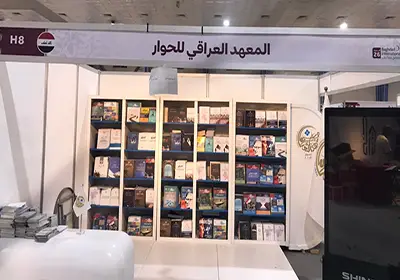
The Iraqi Institute for Dialogue, the logistical sponsor of the Baghdad International Book Fair, opens its own pavilion at the fair
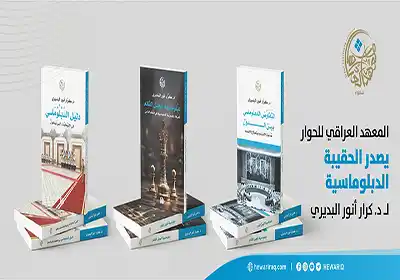
The Iraqi Institute for Dialogue publishes "The Diplomatic Portfolio" by Dr. Karrar Al-Badiri
Official agreement between Iraqi Institute for Dialogue and the Iraqi Media Network to sponsor The Seventh Annual International Conference of “Baghdad Dialogue” 2025
Prime Minister: The path of development will make Iraq a regional political and economic powerhouse
Invitation to the 79th issue of Dialogue of Thought
Seventh Baghdad International Dialogue Conference Call for Papers
Praise for the Baghdad International Dialogue: Strengthening Iraq's pivotal role and a meeting point for visions
Comments