

Translation: Iraqi Institute for Dialog
The dissolution of the PKK The impact of the decision on Syria and Iraq
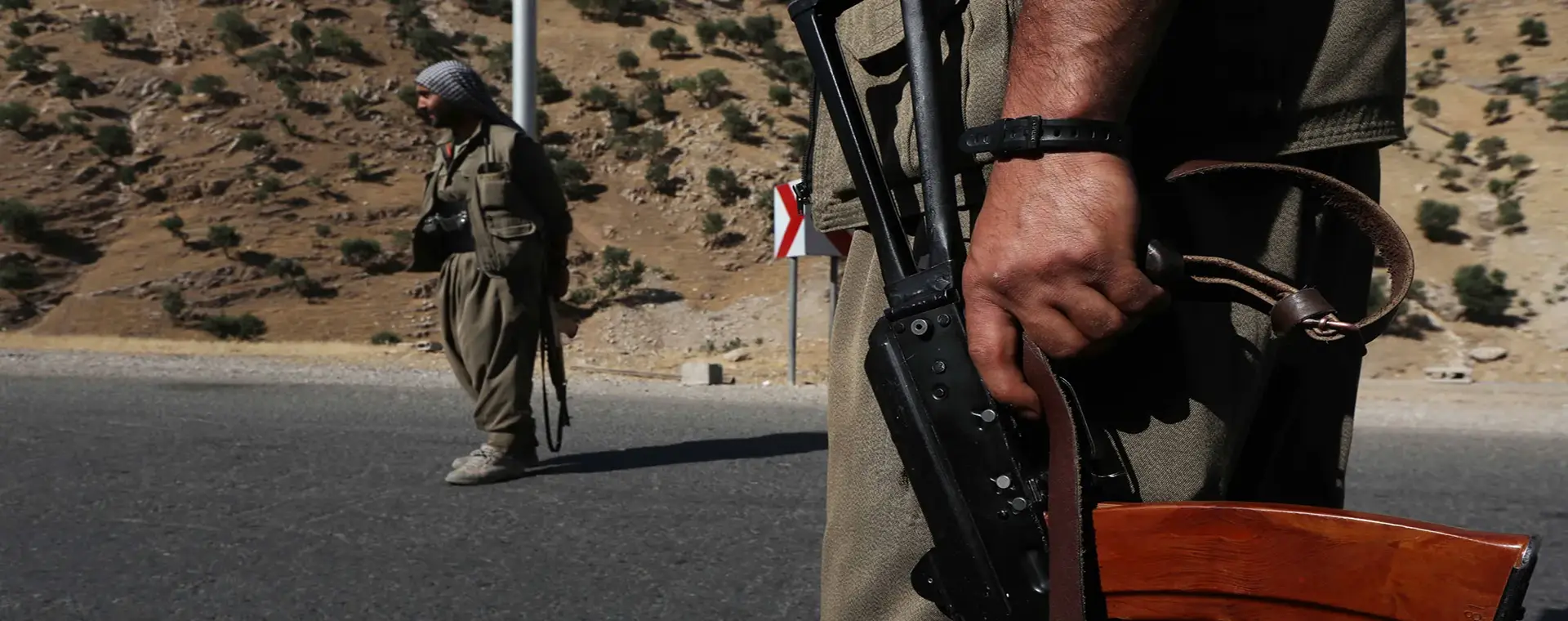
The Kurdistan Workers' Party (PKK) announced its dissolution and surrender of arms in response to the call of Abdullah Ocalan, the party's leader imprisoned in Turkey for 26 years, who called for the dissolution on February 27.
Turkey officially welcomed the decision. Turkish Foreign Minister Hakan Fidan described the party's statement as "a historic and promising stage." Justice and Development Party (AKP) spokesman Omer Çelik described the decision as an important step towards a "Turkey without terrorism," emphasizing that ending the violence will open the doors to a new era.
The Turkish Communications Presidency announced that it would take the necessary measures to dissolve the party in a calm and orderly manner, ensuring an end to a 40-year dispute.
Given the presence of Hezbollah-affiliated groups and a military presence in Syria and Iraq, the question arises: What impact will this decision have on other Kurdish armed groups in these two countries?
We tried to contact the Syrian Democratic Forces (SDF), but spokesperson Farhad Shami said, "We have no opinion on this topic at this time."
Political Experts' Interpretation
Rostam Mahmoud, a political researcher, told BBC Arabic that the dissolution decision came as part of the Turkish government's efforts to address the Kurdish issue "even in a limited way," especially after Dolat Bahçeli, the leader of Turkey's Nationalist Movement Party, predicted that radical changes will take place in the region in the coming years.
Mahmoud added that Turkey wants to shift the Kurdish-Turkish conflict from a military framework to political, parliamentary and legal tracks.
Months ago, after an unexpected appeal from Devlet Bahçeli in October 2024, Turkey began discussing the possible dissolution of the PKK, with Bahçeli demanding that Ocalan be allowed to appear in parliament to announce the dissolution.
Turkey and many Western countries consider the PKK a terrorist organization because of its attacks on civilians and suicides. Ankara has refused to negotiate with it, but has offered a limited amnesty to its members.
The conflict between the two sides has lasted 40 years and claimed more than 40,000 lives. Ocalan, 76, has been held in a solitary cell on the island of Imrali near Istanbul since 1999.
Kader Berri, a political analyst and director of Kurds Without Borders, agrees with Mahmoud and says the PKK was not opposed to giving up arms as long as an agreement was reached that recognized the Kurdish cause, their rights, and their representatives in Turkey.
She added that weapons were not the Kurds' goal, but rather a tool imposed by historical necessities that began a century ago.
Mahmoud believes that the decision came from the convergence of two desires: The Turkish government's desire to bypass the conflict militarily in anticipation of regional changes, and the PKK's desire to turn the issue into a political issue.
The regional changes began with the battle of Kobani and the defeat of ISIS, then extended to the defeat of ISIS in Syria and Iraq, followed by events in Gaza and strikes against Iran's arms in Lebanon, Syria and Yemen.
The Middle East is undergoing real strategic changes, with serious talk of a new Middle East emerging.
Mahmoud adds that the decision coincided with internal changes in the party and the Turkish government, that the fighters are tired, and that both sides realized that the other could not be eliminated.
Mahmoud notes that small steps such as recognizing the Kurdish language and establishing a Kurdish television channel have helped calm the atmosphere.
He says the PKK has moved beyond the idea of a "Kurdish nation-state" that would lead to the division of Turkey and is now moving in a more pragmatic direction.
According to Mahmoud, these factors, combined with new regional changes, led to the convening of the 12th Party Congress and the decision to end the armed struggle.
The impact of the decision in Syria and Iraq
Mahmoud believes that the impact of the decision extends to two levels: The first is ideological, through thousands of supporters in the region, and the second is military.
Bari says the party was an influential force in Kurdistan in four parts (Turkey, Syria, Iraq and Iran) on the military, cultural, media, political and diplomatic levels.
But militarily, experts agree that the impact of the decision in Syria will be limited.
Mahmoud points out that the SDF is a purely Syrian issue and is tied to the internal dynamics of trying to build a decentralized structure that recognizes the rights of the Kurds and other regions.
He believes the decision may help because Turkey may lessen the perception of the SDF as an offshoot of the PKK, which could mitigate military and political threats against it.
Barri believes that some are trying to distract the public opinion by saying that the SDF will dissolve or end, but it is linked to the Syria file and the 76-nation international coalition. The US-led coalition has been supporting the SDF since 2014.
She adds that the SDF and the Syrian Democratic Council seek a comprehensive solution for Syria through a decentralized or federal model that guarantees the interests of all regions and components, including the coast, the south, and Christians.
The situation in Iraq is more complicated
Mahmoud says that PKK forces in Iraq are not tied to an Iraqi cause but are part of the conflict with Turkey, and are stationed in border areas with Turkey within the Kurdistan Region of Iraq.
The Iranian army established military bases in these areas 25 years ago to counter these forces. "If PKK forces withdraw from these areas, dozens of Turkish military bases in the region should be closed."
Bari points out that there are more than one Turkish military base in the region, and that the withdrawal of Turkish troops from them could allow the return of some 900 villages whose residents were displaced by the war.
Mahmoud emphasizes the importance of studying the situation in the Sinjar region, which is controlled by groups close to the Hezbollah.
Iran and the Kurdistan Free Life Party (Bijak)
Beyond Syria and Iraq, experts point to two other issues. Mahmoud is talking about Iran, where the PKK-linked Free Kurdistan Life Party (Bijak) is active.
He believes that the future of the PKK is one of the most important geopolitical and security issues, and that Turkey's rapprochement with the PKK is part of the "ongoing consultations between Iran and America in the region."
He adds that the fate of this party is still unclear and may be one of the most complicated files in the next phase.
"The time has come to resolve the Kurdish issue by amending the Turkish constitution to reflect the country's ethnic diversity, and to turn Turkey into a homeland for all its components under their real names in their historical land," Berri said, emphasizing that Turkey should focus on its internal issues.
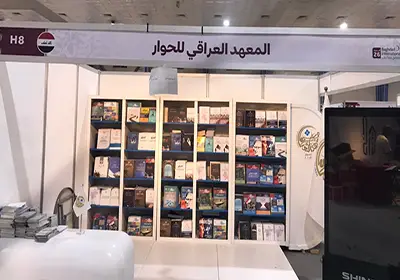
The Iraqi Institute for Dialogue, the logistical sponsor of the Baghdad International Book Fair, opens its own pavilion at the fair
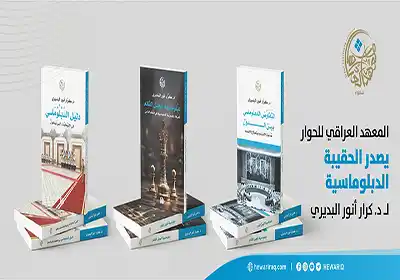
The Iraqi Institute for Dialogue publishes "The Diplomatic Portfolio" by Dr. Karrar Al-Badiri
Official agreement between Iraqi Institute for Dialogue and the Iraqi Media Network to sponsor The Seventh Annual International Conference of “Baghdad Dialogue” 2025
Invitation to the 79th issue of Dialogue of Thought
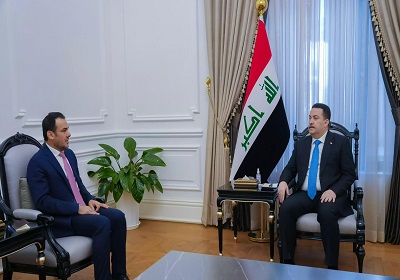
Prime Minister: The path of development will make Iraq a regional political and economic powerhouse
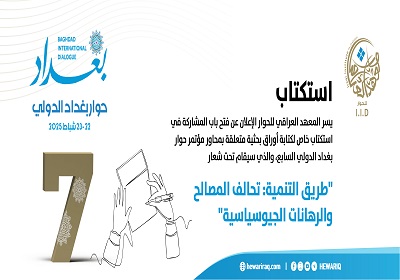
Seventh Baghdad International Dialogue Conference Call for Papers
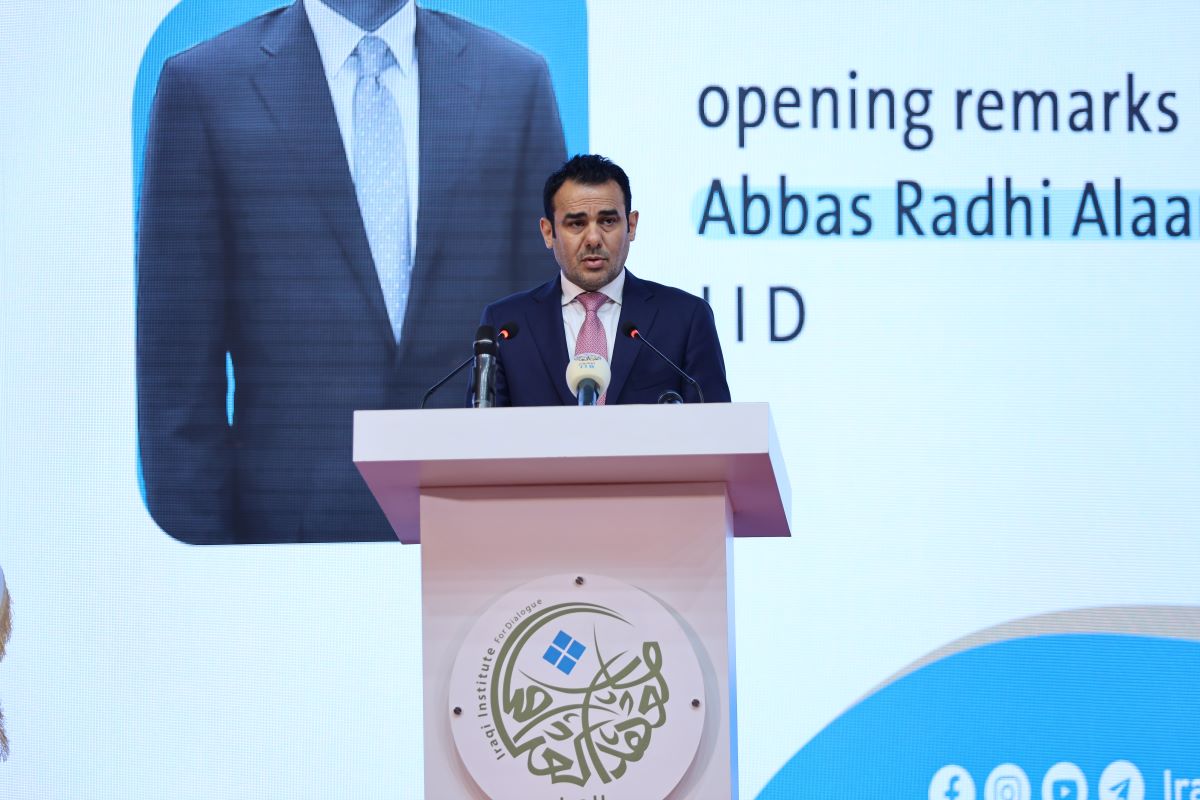
Speech of the Director of the Iraqi Institute for Dialog at the Sixth Baghdad International Dialog Conference
Comments