


Translation: Iraqi Institute for Dialog
Strategic blockade: A reading of India's decline in the face of China's expansion
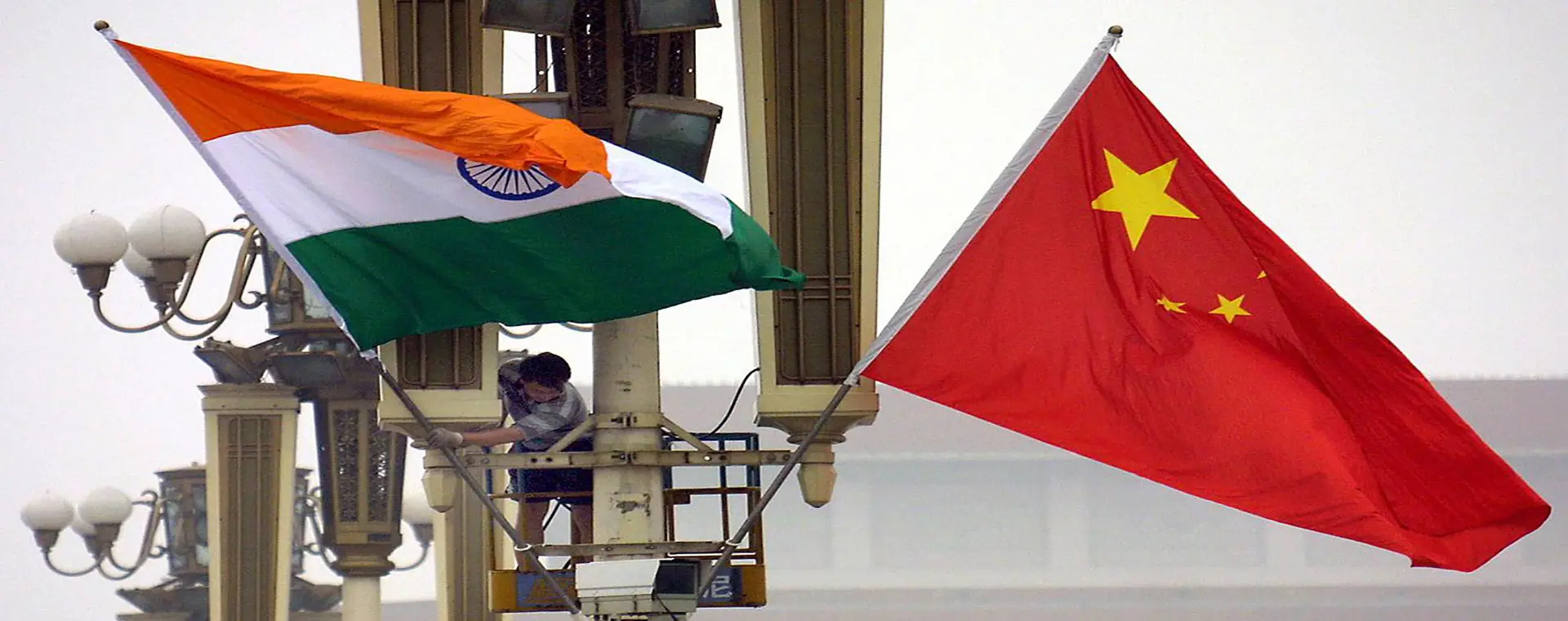
The 73-day military standoff between India and China in the Doklam region in 2017 was widely publicized as a temporary border crisis, but it was actually an early indicator of a broader Chinese strategy aimed at encircling India through deliberate infrastructure projects and expansionist moves.
Eight years on, the data on the ground shows that China has capitalized on this dispute to consolidate its strategic advantage, while India has settled for a limited tactical victory without addressing the broader context of Chinese expansion.
Strategic vulnerability: Siliguri Pass
The Siliguri corridor, known as the "chicken neck," is a vital artery connecting northeastern India to the rest of the country. The Doklam region is critically close to this corridor, making it a magnet for a calculated Chinese move, according to strategists. Recent indications suggest that the corridor is highly fragile, with an over-reliance on a single route and a lack of effective logistical alternatives.
Border infrastructure imbalance
From 2017 to 2024, China invested more than $8 billion annually in developing roads, military installations, and infrastructure along the border, completing more than 4,500 kilometers of roads and 150 permanent military installations. In contrast, India has only been able to complete half of the planned projects, with an overall completion rate of only 58 percent.
This infrastructure gap translates directly into an imbalance in military deployment capability. China can mobilize 50,000 troops within 72 hours on any border sector, while India can mobilize only 18,000 in the same period.
Deficiencies in monitoring and intelligence
The Doklam dossier revealed a significant lag in India's ability to monitor Chinese movements. China began building a military road in March 2017, but Indian intelligence did not detect it until 35 days later, followed by late diplomatic protests and a military intervention in June. In comparison, China responds within 12 to 18 hours to any Indian activity near the border and adjusts its military positions in less than 48 hours.
Economic and diplomatic losses
The repercussions have not been limited to the military sphere. India's dependence on Chinese imports has increased by 43% since the Doklam crisis, with Beijing out-investing in neighboring countries. For example, China has invested $24.5 billion in Bangladesh compared to only $8.1 billion from India. Beijing out-invested New Delhi 7:1 in Nepal and 11:1 in Myanmar.
Voting patterns at the UN for 2024 showed 67% of Asian countries siding with Chinese positions, while support for Indian positions dropped to just 34%.
Strategic bottleneck: Multiple axes
The 2024 figures showed that China effectively controls 38,000 square kilometers of disputed territory, and permanently builds installations in disputed areas at a 3-to-1 ratio compared to India. At sea, China has succeeded in establishing its presence across seven maritime sites in the Indian Ocean under the "Pearl Necklace" project, limiting India's freedom of maritime movement.
In Pakistan, China has completed 67% of its economic corridor projects, narrowing India's strategic margin in the Arabian Sea.
The Real Cost of Strategic Stalemate
According to advanced analysis, India incurred economic losses of $82 billion during 2017-2024 due to delays in infrastructure projects and lost investment opportunities. The military modernization gap in equipment and deployment has widened by 60% in favor of China.
Analysis of decision implementation speeds shows that Beijing implements its policies in 3-6 months, while India takes 18-36 months, creating a 6:1 implementation gap in favor of China.
Forecast of the future: The 2030 Crisis
If India continues at its current pace, China will overtake it by 400% in border infrastructure by 2030. India's regional economic influence could drop to 25% of its current level, with the threat level of the Siliguri Corridor escalating to 89%.
Last chance: Strategic revolution, not incremental reform
The author warns that India needs a strategic revolution, not just reforms. The top priorities are:
Raise the completion rate of border roads to 95% within two years.
Allocate $8.4 billion annually for infrastructure.
Reduce intelligence response time to less than 72 hours.
Reduce reliance on Chinese imports by 40%.
Investing $60 billion to modernize military deployment capabilities.
Building comprehensive economic, cultural and security partnerships with neighboring countries.
Calculations are unforgiving
The data clearly reveals that India is losing the battle for time, effectiveness, and strategic integration. If it continues to adopt a reactive rather than proactive approach, it risks becoming a mere strategic footnote in a regional equation that China is drawing according to meticulous and deliberate plans.
New Delhi's options are clear, but the time window is narrowing: Either revolutionize strategic thinking and planning, or risk total strategic regression.

The Iraqi Institute for Dialogue, the logistical sponsor of the Baghdad International Book Fair, opens its own pavilion at the fair

The Iraqi Institute for Dialogue publishes "The Diplomatic Portfolio" by Dr. Karrar Al-Badiri
Official agreement between Iraqi Institute for Dialogue and the Iraqi Media Network to sponsor The Seventh Annual International Conference of “Baghdad Dialogue” 2025

Prime Minister: The path of development will make Iraq a regional political and economic powerhouse

Invitation to the 79th issue of Dialogue of Thought
Seventh Baghdad International Dialogue Conference Call for Papers

Praise for the Baghdad International Dialogue: Strengthening Iraq's pivotal role and a meeting point for visions
Comments