


Translation: Iraqi Institute for Dialog
The United States and the Houthi Challenge: The End of the Illusion of Military Superiority?
In a remarkable strategic precedent, a limited war in the Red Sea revealed a deep flaw in the U.S. military power structure and cast doubt on Washington's ability to maintain military superiority in asymmetric conflicts.
In his article published on the British website "UnHerd," Swedish writer Malcolm Kiyoni explains the failure of the United States to rein in the Houthis in Yemen, despite the use of the most sophisticated air deterrent tools.
The article not only describes the US military predicament in the Red Sea, but goes further, warning that Washington, which has long built its prestige on the quick ability to resolve a conflict from the air, is no longer even capable of ending a conflict with an armed group in one of the world's poorest countries.
From 'Boom Ranger' to 'Rough Rider': Three Stages of Failure
From December 2023 to early 2025, the author reviewed the phases of the US response, explaining that each military operation was built on the illusion that air power alone was sufficient to curb the Houthis.
Operation Prosperity Guardian began as an international coalition to protect navigation, but it quickly disintegrated as Houthi attacks continued at an escalating pace.
Operation Poseidon Archer launched a U.S.-British aerial bombing campaign that failed to achieve any deterrent effect.
Under President Trump, Operation Rough Rider was a six-week campaign involving stealth fighters and long-range bombers, after which Washington announced that the Houthis had "surrendered" - while the agreement (brokered by Oman) only included a pledge not to target US ships, without ending the naval blockade or stopping support for Hamas.
A malfunction in the U.S. military structure: Air superiority is no longer enough
The article focuses on the structural dimensions of the U.S. military deterrence crisis, highlighting key vulnerabilities: Lack of operational readiness of aircraft carriers: Despite owning 11 nuclear carriers, only two to four can be operational at any one time due to maintenance and crewing issues.
Reliance on aging B-2 stealth bombers: They can't be remanufactured, and maintenance is done by dismantling other aircraft, making them a non-renewable asset.
Lack of long-range smart munitions such as JASSMs, which are difficult to replace, and Pentagon simulations indicate that they could be depleted within days in the event of a conflict with a major power like China.
Industrial reliance on China to import rare metals needed to make precision weapons, exposing America to severe supply chain vulnerabilities during wars.
Warning of the illusion of war against Iran
One of the article's most serious conclusions is that the United States is effectively incapable of conducting a successful air campaign against Iran, given: The depth of Iran's vital targets in the mountains, an extensive and effective air defense network, the difficulty of replicating the successful limited-attack model as seen in Iraq or Libya, and the logistical challenges of conducting sustained air operations in a hostile and complex environment such as Iran.
Beyond Military Dominance?
The US failure against the Houthis should not be read as a mere tactical failure, but rather as a sign of the beginning of the "American military bankruptcy phase," where the power that has always bet on the sky no longer has enough to dominate from the air.
This situation is likely to continue to worsen unless Washington reviews its military structure and redefines the concept of deterrence in light of geopolitical and technological changes. In this context, Yemen was not just a battlefield, but a "revealing mirror" of a crisis of supremacy that is beginning to fade away.

The Iraqi Institute for Dialogue, the logistical sponsor of the Baghdad International Book Fair, opens its own pavilion at the fair

The Iraqi Institute for Dialogue publishes "The Diplomatic Portfolio" by Dr. Karrar Al-Badiri
Official agreement between Iraqi Institute for Dialogue and the Iraqi Media Network to sponsor The Seventh Annual International Conference of “Baghdad Dialogue” 2025
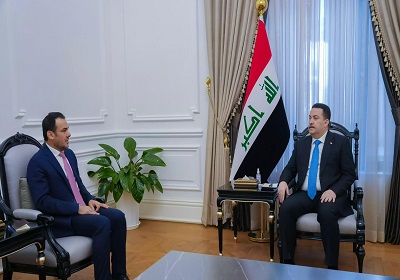
Prime Minister: The path of development will make Iraq a regional political and economic powerhouse

Invitation to the 79th issue of Dialogue of Thought
Seventh Baghdad International Dialogue Conference Call for Papers

Praise for the Baghdad International Dialogue: Strengthening Iraq's pivotal role and a meeting point for visions
Comments