
By Ali Al-Mawla Independent researcher and analyst specializing in Iraqi political economy Translation by the Iraqi Institute for Dialog
Will the localization of politics shape Iraq's parliamentary elections?
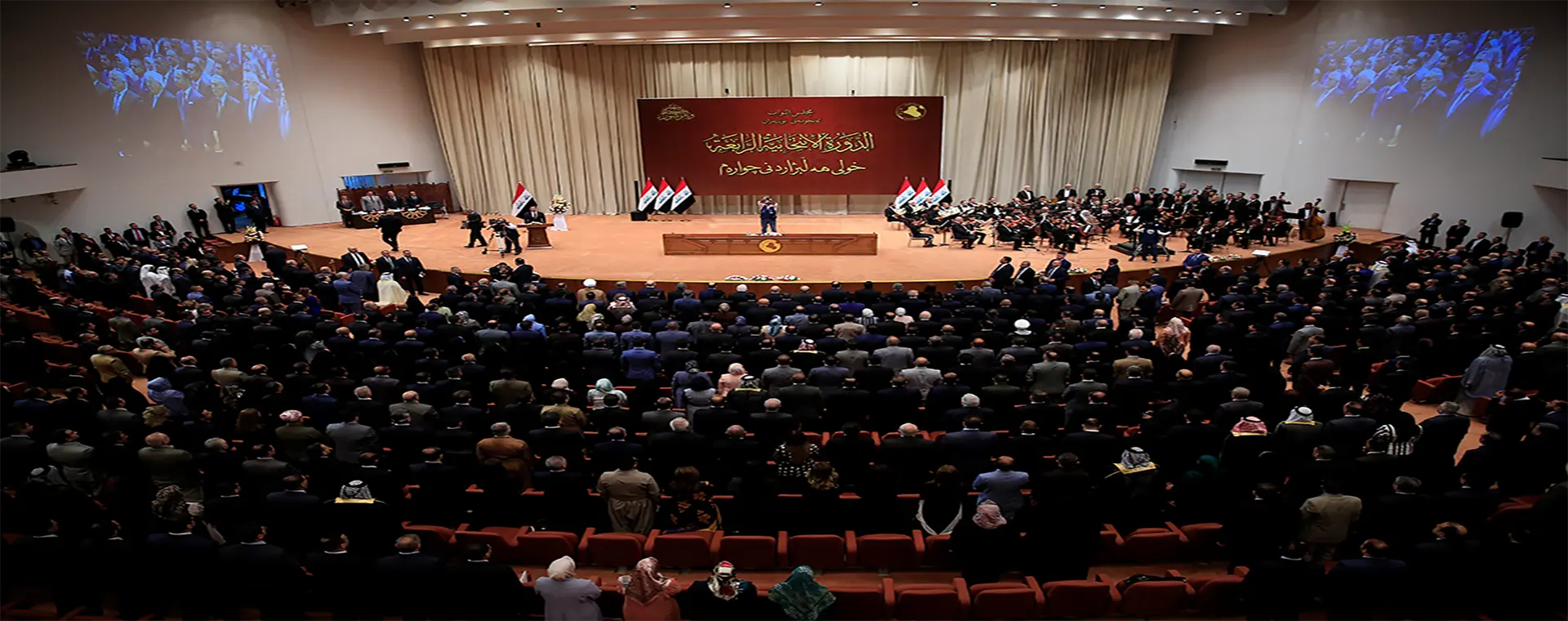
Iraq's December 2023 provincial council elections have seen major changes in the country's political landscape. In many ways, these changes provide critical insights into the shifting political forces that are likely to influence the upcoming parliamentary elections scheduled for November 11. Looking ahead, evolving dynamics that pit institutional figures against local politicians, within new coalitions of diverse political forces, are likely to be the most prominent features of Iraq's electoral environment going forward.
Voters.
The fundamental question in the Iraqi electoral scene is: To what extent will voters show up at the polls? The steady decline in turnout has become a serious concern for the ruling elite in Baghdad. Low turnout threatens to undermine the legitimacy of the electoral process itself, which in turn could weaken political elites' claims to legitimacy, both internally and in front of the international community.
Worryingly, Iraq's Independent High Electoral Commission appears to be contributing to a more optimistic picture than reality. In the 2021 parliamentary elections, the commission calculated turnout rates based on the number of people who updated their electoral data, not the total number of Iraqis eligible to vote.
Some observers say this change has inflated turnout figures. According to official data, the 9.6 million votes cast in the 2021 elections represented a 43.5 percent turnout out of 22.1 million registered voters. Had the number of unregistered Iraqi adults been counted, the percentage would have been much lower.
By a similar calculation, the commission's figures indicate that only 6.6 million of the 16.1 million registered voters participated in the 2023 provincial council elections, with an official participation rate of around 41 percent. However, estimates by election monitoring groups, which used a total number of approximately 23 million eligible voters, put the turnout at only 26 percent. This means that about three-quarters of Iraqis eligible to vote either abstained from participating or did not register at all.
The situation was exacerbated when previous election calculations were based on inaccurate population estimates. Now, data from the 2024 national census-the first since 1987-provides an opportunity for a more accurate assessment of potential turnout. An analysis of this data indicates that about 58 percent of Iraq's 46.1 million population is 18 years old or older, which equates to nearly 27 million eligible voters. With this new clarity, the key indicator of turnout in November remains the number of Iraqis who will update their biometric cards before the extended June 15 deadline.
Everyone is invited
Ultimately, the ability of both rising and dominant political forces will depend on their ability to galvanize an increasingly disengaged Iraqi electorate.
So far, the popular bases of the major national parties have remained relatively stable. But based on the commission's figures, it can be assumed that around 3.3 million voters voted for independents and small parties in the 2021 elections. If this trend continues, these votes may shift towards local lists led by local officials who do not have strong ties to the centers of power in Baghdad.
The uncertainty of future turnout is compounded by the ongoing electoral boycott led by Sadrist leader Muqtada al-Sadr. After his failed attempt to oust his opponents in the Shia Coordination Framework following the 2021 elections, Sadr announced his "final retirement" from Iraqi politics. Just weeks before the 2023 provincial council elections, he even called on his supporters to boycott the elections, accusing the ruling elite of endemic corruption.
However, in February 2025, Sadr called on his supporters to update their voter cards, sparking speculation about his true intentions. Some believe this move could pave the way for indirect participation via Sadrist-affiliated electoral lists, while others believe it is only meant to highlight the legitimacy crisis of the elections by highlighting the low turnout.
Change has become the norm
Notably, the upcoming parliamentary elections will be held under a different electoral system than the one adopted in 2021. In response to the demands of the October 2019 protest movement, parliament voted in 2020 to abolish the list-based proportional representation system, which was seen as favoring traditional parties, and replace it with the "non-transferable vote" (SNTV) system.
This system allowed for the rise of independents and small parties that were able to win through concentrated local support. Some 1.7 million voters voted for independents, while other small parties received 1.6 million votes and won no more than two seats, accounting for 34 percent of the total vote.
However, the parliament canceled this system before the 2023 elections and reinstated the proportional representation system based on the Saint-Lago method, justifying the move by saying that the SNTV system led to fragmentation of the parliament and made it difficult to form governments. However, according to observers, this change weakened the chances of independents and small parties and favored the traditional blocs.
While independents or single-seat parties won 60 seats (18%) in the 2021 parliament, this number dropped to just 19 out of 285 seats in the 2023 provincial elections (about 6%).
Return of the big ones
The proportional system in the November 2025 elections is expected to restore momentum to the major parties that performed poorly in 2021 due to tactical mistakes under the SNTV system. The ruling Coordination Framework forces ran multiple candidates in a single district, splitting their votes.
The Conquest Alliance - led by Hadi al-Amiri - has declined from 48 seats in 2018 to 16 in 2021. Haider al-Abadi's Nasr alliance with Ammar al-Hakim's Wisdom Movement also collapsed from 61 to 5 seats.
The proportional system addresses this issue by aggregating votes at the governorate level and distributing seats proportionally.
Not surprisingly, this system helped the Nabni Alliance, the expanded and revamped version of the Fatah Alliance, return as the biggest winner in the 2023 elections with 43 out of 285 seats, taking advantage of the Sadrist boycott.
Local turning
Perhaps the most notable feature of the 2023 elections was the success of a number of incumbent governors who established their own local parties and outperformed traditional nationalist forces. This shift has been interpreted as a signal of the increasing centrality of local dynamics in Iraqi politics.
Successes in Basra, Karbala, and Wasit have shown that local officials who deliver tangible improvements in services and infrastructure can become major political actors and break free from the grip of traditional parties.
The fiscal abundance resulting from higher oil revenues has helped boost the ability of local officials to deliver services. Investment spending allocated to governorates rose from 1.5 trillion dinars ($1.15 billion) in 2021 to 4.5 trillion dinars ($3.4 billion) in 2024.
In a further sign of the rising political role of locals, the new government coalition, the Coalition for Reconstruction and Development, headed by Prime Minister Muhammad Shi'a al-Sudani, included Karbala Governor Nasif al-Khatabi. Al-Khatabi's "Coalition of Creativity" for the 2023 elections came after he broke away from his previous relationship with Nouri al-Maliki's State of Law Coalition.
As parliamentary elections approach, other major political forces are likely to follow suit, seeking to attract prominent local figures to bolster their lists. While the potential for traditional parties to dominate parliament remains, the upcoming elections could see a more cohesive political landscape in which local forces exert more influence over national politics.
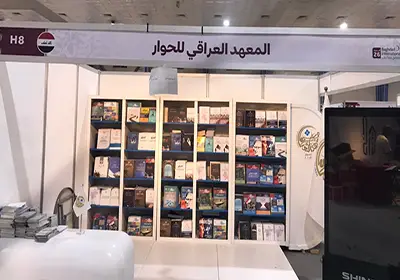
The Iraqi Institute for Dialogue, the logistical sponsor of the Baghdad International Book Fair, opens its own pavilion at the fair
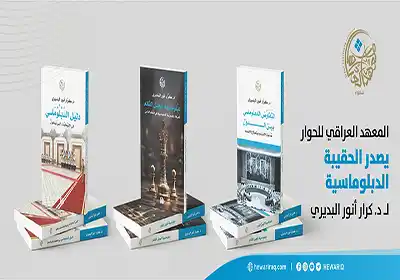
The Iraqi Institute for Dialogue publishes "The Diplomatic Portfolio" by Dr. Karrar Al-Badiri
Official agreement between Iraqi Institute for Dialogue and the Iraqi Media Network to sponsor The Seventh Annual International Conference of “Baghdad Dialogue” 2025
Invitation to the 79th issue of Dialogue of Thought
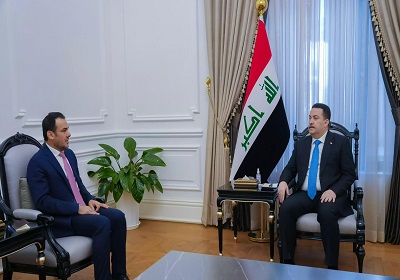
Prime Minister: The path of development will make Iraq a regional political and economic powerhouse
Seventh Baghdad International Dialogue Conference Call for Papers
Praise for the Baghdad International Dialogue: Strengthening Iraq's pivotal role and a meeting point for visions
Comments