



Benjamin Lemoyne - Researcher in Political Science and Social Economics - Translation of the Iraqi Institute for Dialog
Debt: A tool to crush democracy
The European Union has once again imposed strict limits on member states' budget deficits - but has exempted military spending. After years of claiming that austerity is over, we now see it being used selectively to restrict democratic choices.
French sociologist Benjamin Lemoine warns that the "debt regime" is back. In 2024, the European Commission officially reimposed fiscal deficit rules on EU countries, although important exemptions are being negotiated to finance the surge in military spending.
On both sides of the Atlantic, the growing political power of the radical libertarian right is leading to draconian spending cuts and tax breaks - threatening major disruptions to state finances and social welfare systems. What is being resurrected is the use of debt as a political "technology" to discipline society, buried in a "silent revolution" in monetary and fiscal policies during the coronavirus pandemic that allowed for deficit spending.
Returning to fiscal discipline
Since the 1980s, Lemoine explains, the debt capital market was considered the ultimate guarantor of social discipline, with monetary policy supposedly teaching governments to act as a "strict parent" by influencing the cost of borrowing. This dogma temporarily collapsed during the Covid-19 crisis, when the European Central Bank (ECB) began buying state bonds to support them, an implicit break with the neoliberal order established in the 1990s.
But since the recent inflation crisis, monetary policy has returned to its core mission: Fighting inflation and preserving the value of debt as a safe financial asset. New protocols have been issued by the ECB linking its intervention to the European Commission's assessments of countries' fiscal positions, meaning that debt purchases are now conditional on achieving "sound and sustainable macroeconomic policies," according to the neoliberal vision.
Imbalance of priorities: Security before services
Lemoine argues that exemptions for defense spending, especially in the case of Germany, clearly show that the debt system is used to establish a certain balance between state functions, where the "right hand" (military and police) is exempt from fiscal constraints, while the "left hand" (health, education, social services) is subjected to austerity.
The old idea that the state can finance its defense by mobilizing people's savings directly, without going through financial markets, is being reintroduced. But this mobilization is less about social inclusion and more about creating a false popular consensus around the priorities of the new fiscal-military order.
Religion as a political tool
According to Lemoine, sovereign debt is not a neutral financial instrument, but a site of perpetual class struggle. While debt is a way to raise money from the market, it is at the same time a lucrative financial asset for the wealthy, supposedly kept "safe" through austerity policies that guarantee investors stable returns.
He points out that central bank interventions to support markets are used as financial instruments to protect elite investments, not to achieve social or environmental goals. When a central bank intervenes, the goal is not to support the welfare state, but to preserve financial assets as "collateral" for markets.
The Power of New York Law and Western Hegemony
In his latest book, Lemoine discusses the legal power that New York state laws give "vulture funds" to sue poor countries if they default. This exemplifies the decline of national sovereignty in favor of the logic of markets and American law, a shift that began during the Cold War to counter nationalization movements in the Global South.
This has transformed "gun diplomacy" into "court diplomacy," with U.S. courts becoming the place to settle financial disputes, which in the long run threatens the dollar's status as a globally secure financial center.
Is Western Hegemony Shaking?
Lemoine explains that countries in the Global South have long tried to find collective alternatives to US financial hegemony, and that the rise of China has contributed to the revival of mechanisms such as the Paris Club for debt restructuring, but these mechanisms are still influenced by national financial sector interests.
Lemoine's political vision
Lemoine criticizes the idea put forward by German sociologist Wolfgang Streeck that debt only delays social conflicts, and argues that the financial system does not freeze class contradictions but constantly reproduces them. Every new debt issuance is conditioned by social concessions to ensure its market appeal.
He points out that the system always adapts to crises, not by collapsing, but by imposing more social discipline, as is evident in the shift in French political discourse toward migration and security while ignoring economic issues.
What about France today?
In the 2025 budget, the French government adopted temporary tax increases to reduce the deficit, but the cuts hit areas such as education, culture, and scientific research, while leaving the police and the judicial system untouched. These trade-offs once again show the biases of the "debt system."
Is the left losing the battle for austerity?
Lemoine criticizes the "reassurance" movement within the left, which tries to assuage fears about public debt instead of challenging the entire framework that makes debt a means of perpetuating the power of markets over democratic choices. He emphasizes that debt is not just a number, but a political tool that always favors the haves.
Benjamin Lemoine is a researcher in political science and social economy at the National Center for Scientific Research (CNRS). He has been working at Paris Dauphine University (IRISSO) since 2013

The Iraqi Institute for Dialogue, the logistical sponsor of the Baghdad International Book Fair, opens its own pavilion at the fair
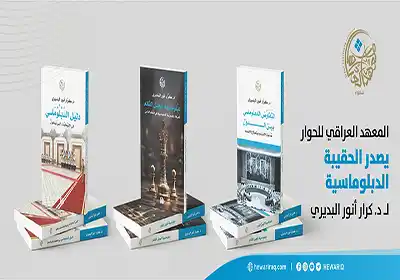
The Iraqi Institute for Dialogue publishes "The Diplomatic Portfolio" by Dr. Karrar Al-Badiri
Official agreement between Iraqi Institute for Dialogue and the Iraqi Media Network to sponsor The Seventh Annual International Conference of “Baghdad Dialogue” 2025
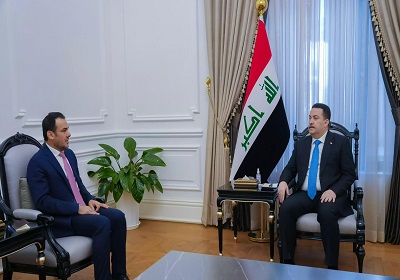
Prime Minister: The path of development will make Iraq a regional political and economic powerhouse
Invitation to the 79th issue of Dialogue of Thought
Seventh Baghdad International Dialogue Conference Call for Papers
Praise for the Baghdad International Dialogue: Strengthening Iraq's pivotal role and a meeting point for visions
Comments