


Julian McBride – Freelance journalist and former US Marine
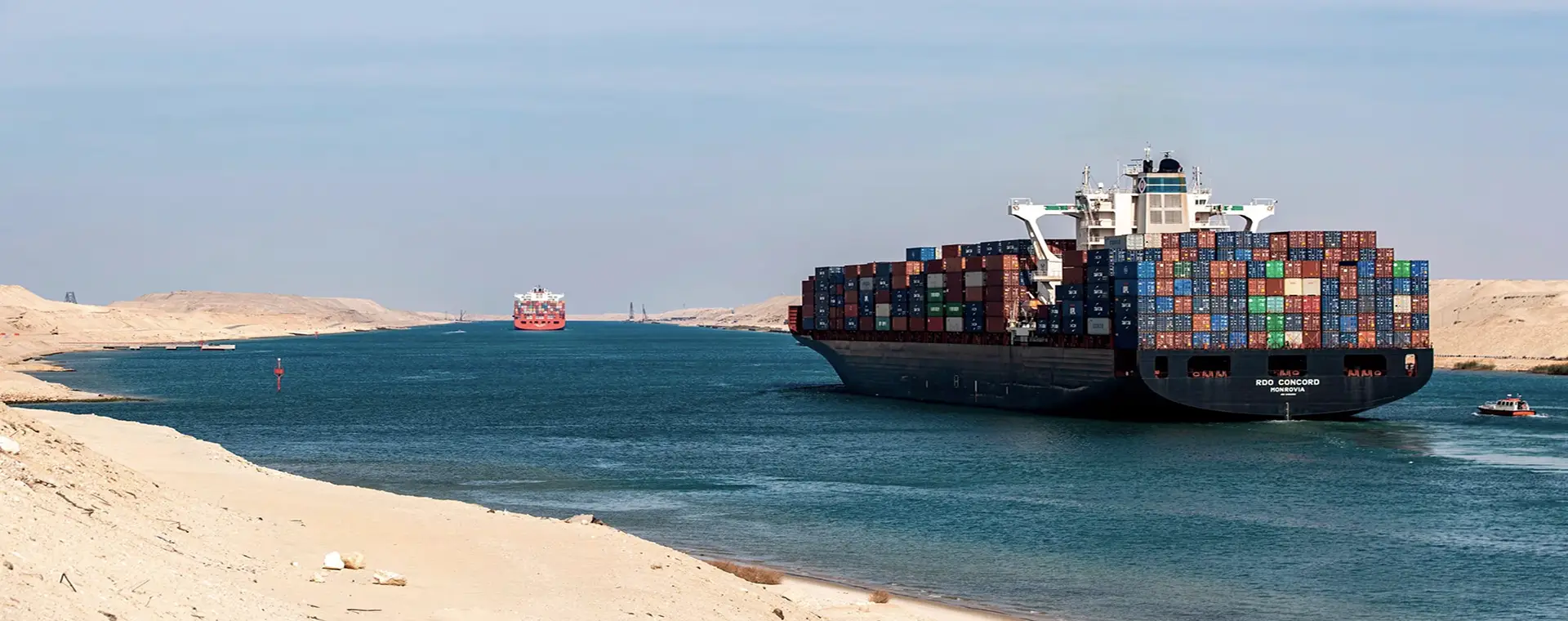
The Suez Canal Europe's Fissure in the Middle East
Amid strained relations between the United States and Europe over foreign policy and military realignment, U.S. President Donald Trump is calling on European countries to increase their defense contributions to the continent, while some members of his administration are calling for greater support for Washington-led military operations in the Middle East, particularly in Yemen.
Currently, U.S. forces are overextended and need support from allies to counter increasingly emboldened adversaries, such as Russia, China, North Korea, Iran, and their proxies. However, one of the main reasons for the lack of European support in Middle East operations is due to the fallout from the Suez Canal crisis, which limited Europe's ability to project military power in the region.
U.S.-EU dispute over anti-Houthi operations
Against the backdrop of the war between Israel and Hamas in late 2023, the Ansar Allah (Houthi) group intervened in the conflict by targeting commercial shipping and firing ballistic missiles at Israel, in an attempt to pressure the international community to force the Israeli government to stop the war.
But Israel continued its campaign in Gaza to eliminate Hamas, while the group, with Iranian support, continued to launch rocket and drone attacks in the Red Sea, significantly impacting global trade. In early 2024, the Biden administration launched Operation Guardian of Prosperity with an international coalition to deter the Houthis, with limited results.
In contrast to that limited deterrence campaign, the current Trump administration has launched a more aggressive campaign against the Houthis in Yemen. However, the campaign has faced significant hurdles, as the U.S. has used limited precision munitions, such as Tomahawk missiles, which are essential for any potential conflict with China.
According to documents leaked by Signalgate, the Trump administration was at odds over how to handle the military campaign in the Red Sea. Vice President G. D. Vice President J.D. Vance and former National Security Advisor Mike Waltz expressed dismay at what they saw as indirect support for Europe, which is as dependent on Red Sea shipping as the United States.
However, one of the root causes of the weakening European presence in the region dates back to the 1956 Suez Canal crisis.
How the U.S. response to the Suez crisis changed European foreign policy
In the aftermath of World War II, European colonial powers tried to maintain their imperial influence despite economic decline. In October 1956, Egyptian President Gamal Abdel Nasser announced the nationalization of the Suez Canal, which was jointly owned by France and the United Kingdom.
Fearing the loss of influence and economic interests, France and Britain secretly conspired with Israel to invade Egypt, retake the canal and overthrow Abdel Nasser, while the United States remained silent.
On October 29, 1956, Israeli, French, and British forces began operations, and within a week succeeded in crippling the Egyptian army and achieving most of their military objectives. However, the political fallout was deeper. US President Dwight Eisenhower and Soviet leader Nikita Khrushchev were quick to denounce the invasion and restrain the three powers.
Khrushchev threatened armed conflict with Britain and France, which would have led to World War III, while Eisenhower threatened to withdraw US bonds and IMF funding from the two countries, forcing them to accept the new fait accompli. Britain and France effectively became "vassals" of the United States, no longer able to carry out independent foreign policies without Washington's approval.
British Prime Minister Harold Macmillan recognized this fact in his famous "Winds of Change" speech, emphasizing that the old world was coming to an end and that the United States and the Soviet Union were the new superpowers.
The impact of the crisis continues to this day
The Suez crisis put Europe in a subordinate position, but it was also a double-edged sword for the United States. It gave the Arab states more independence from European influence, but at the same time, Europe focused on its own regional security and shied away from direct involvement in MENA affairs.
The United States, the Soviet Union, and later Russia have maintained influence in the Middle East. Today, U.S. forces are conducting the largest military operations in the region, leading to overstretch, especially as challenges from China and North Korea escalate.
The ongoing wars in Iraq and Afghanistan, as well as operations in Syria, Libya, and Somalia, have left significant security gaps that Washington has not been able to fill on its own, in the absence of an influential European power. With the exception of British bases in Cyprus and the French and British fleets, no European country has a real ability to conduct long-term operations in the Middle East.
Realizing the limited results of the campaign against the Houthis, the Trump administration reached a ceasefire brokered by the Sultanate of Oman.
The actions of the major powers during the Suez Crisis, and their political and military repercussions, still cast a shadow on today's reality. With America's overextension in the Middle East and North Africa and the absence of an active European role, there is an urgent need to rebuild European defense capabilities. At the same time, Washington should press regional states to assume their security responsibilities to avoid further chronic conflicts.

The Iraqi Institute for Dialogue, the logistical sponsor of the Baghdad International Book Fair, opens its own pavilion at the fair

The Iraqi Institute for Dialogue publishes "The Diplomatic Portfolio" by Dr. Karrar Al-Badiri
Official agreement between Iraqi Institute for Dialogue and the Iraqi Media Network to sponsor The Seventh Annual International Conference of “Baghdad Dialogue” 2025
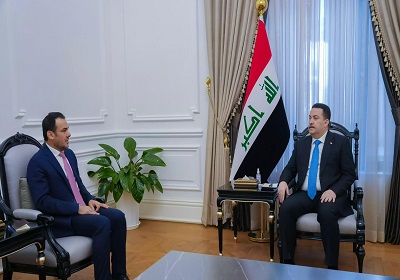
Prime Minister: The path of development will make Iraq a regional political and economic powerhouse

Invitation to the 79th issue of Dialogue of Thought
Seventh Baghdad International Dialogue Conference Call for Papers

Praise for the Baghdad International Dialogue: Strengthening Iraq's pivotal role and a meeting point for visions
Comments