


Translation: Iraqi Institute for Dialog
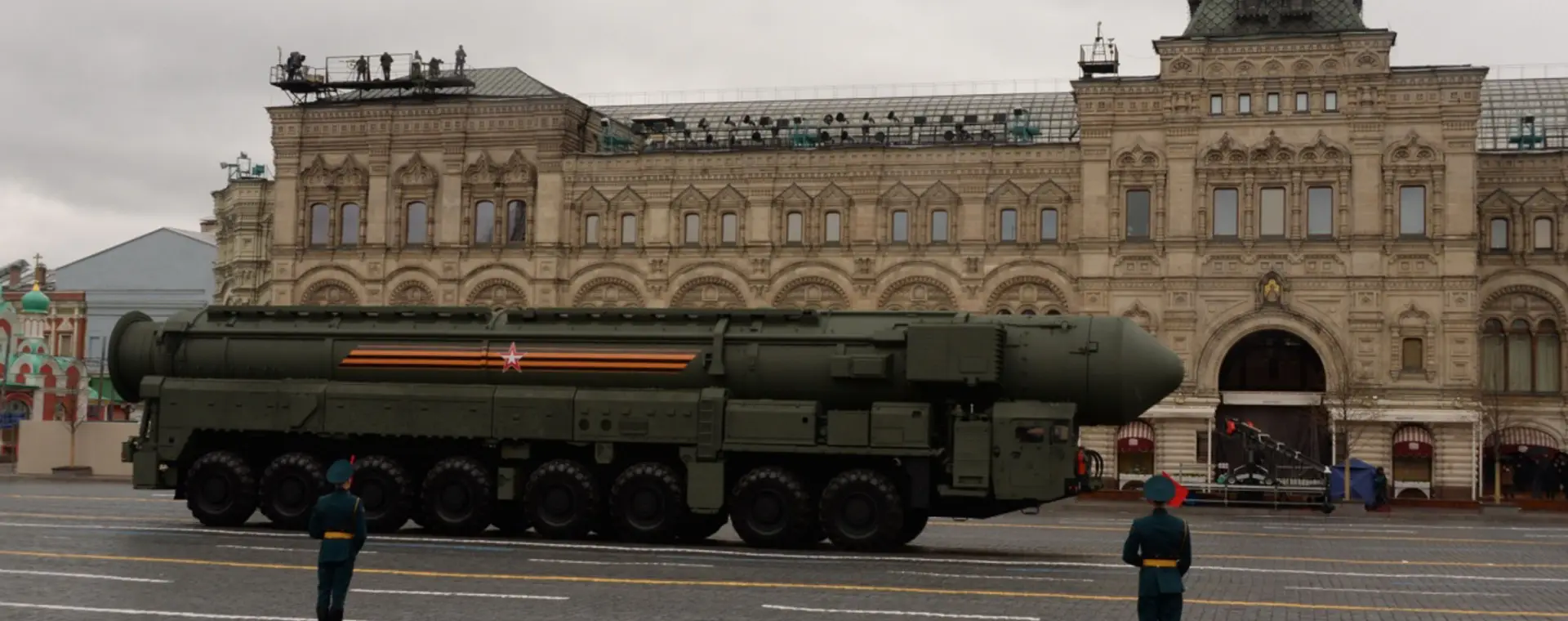
Terror trio: Is the nuclear arms race back?
While managing nuclear crises between the three major nuclear powers - the United States, Russia, and China - is still possible, curbing a new arms race has become more complicated given the ongoing shifts in the balance of strategic deterrence.
The rise of China as a strategic nuclear power presents an unprecedented challenge to the global arms control regime, reopening questions about the future of bilateral agreements, the limits of conventional deterrence, and the role of missile defense systems in the post-New START era.
First: The Fate of the New START Treaty in the Shadow of Russia's War on Ukraine
The New START treaty, signed in 2010 and extended until February 2026, represents the last legal bastion of arms control between Washington and Moscow, limiting the number of operational nuclear warheads to 1,550 each, spread across intercontinental ballistic missiles, naval missiles, and strategic bombers.
But Russia's withdrawal from the treaty's verification mechanisms, in protest of US support for Ukraine, has left the agreement paralyzed, despite Moscow's announcement that it intends to adhere to the treaty's numerical limits temporarily.
At the same time, both sides continue to modernize their "nuclear triad." Washington is developing launch systems, nuclear warheads, nuclear infrastructure, as well as a nuclear command and control system (NC3) backed by advanced space assets.
Russia is pushing ahead with the deployment of new ballistic missiles and hypersonic missiles, as well as more radical projects such as the Poseidon nuclear torpedo and the Borivestnik nuclear-powered missile.
The absence of on-site inspections for years and deteriorating political relations make the prospect of extending New START or reaching an alternative agreement questionable, opening the door to an unchecked arms race.
II: China's Nuclear Stockpile - A Triple Equilibrium?
China is moving toward a rapid expansion of its nuclear capabilities in an effort to equalize power with the United States and Russia, according to U.S. officials. The Pentagon estimates that Beijing will have more than 1,000 nuclear warheads by 2030, a large portion of which will be ready for immediate use, as part of a plan to complete the modernization of the People's Liberation Army by 2035, on the way to achieving Xi Jinping's goal of building a "world-class military" by 2049.
Adding to U.S. concerns is the lack of transparency in China's nuclear doctrine. Is China seeking "sufficient deterrence" through a second retaliatory capability only, or is it moving toward a multi-option deterrence system that includes political, economic, technological, and cultural targets?
The most likely scenario, according to experts, is that China treats nuclear deterrence as an insurance tool against defeat in any conventional conflict, especially over Taiwan, with no intention of using nuclear weapons except as a last resort.
But the more pressing question is: Will China accept transparent verification mechanisms if its arsenal approaches that of the US and Russia? Moving from "constructive ambiguity" to transparency will take time, but it is necessary to avoid an uncontrolled trilateral arms race.
III: Missile Defense - The Persistent Illusion
Since the Cold War, American and Russian policymakers have toyed with the idea of creating a missile umbrella capable of neutralizing the threat of a hostile nuclear strike. However, technological realities - until today - have proven that these ambitions remain closer to fantasy than to practical implementation.
Despite the George W. Bush administration's withdrawal from the Anti-Ballistic Missile Treaty in 2002, systems like Ground-based Midcourse Defense (GMD) are still limited in their effectiveness, relying on only 44 interceptors.
However, the Trump administration - in its second term - has revived this dream with America's "Golden Dome" project, inspired by Reagan's "Strategic Defense Initiative" in the 1980s. This proposal is based on the deployment of space-based interceptor systems, relying on artificial intelligence and directed energy, and "pre-launch" intervention to disable missiles at their initial stage.
Despite the project's revolutionary nature, its high cost, technical challenges, and potential adversary responses-such as the development of bypass techniques, cyberattacks, or coordinated drone attacks-make it more of a risky gamble than an effective deterrent.
Is there an end to the nuclear arms race?
The return to a trilateral nuclear arms race poses unprecedented challenges to the global security system. Although nuclear crisis management is still possible, strategic stability is elusive, especially in light of the complexity of the balances between three major nuclear powers and the tendency of each side to develop unconventional technologies such as artificial intelligence, quantum computing, and autonomous underwater weapons.
Arms control is no longer a bilateral agreement, but a triple equation that requires new thinking, comprehensive agreements, and global political will to reset the indicator before it is too late.
About the authors
Stephen Cymbala: Distinguished Professor of Political Science at Pennsylvania State University, specializing in international security issues.
Lawrence Korb: A retired naval officer, he has held national security positions at a number of think tanks and previously worked at the Pentagon during the Reagan administration.

The Iraqi Institute for Dialogue, the logistical sponsor of the Baghdad International Book Fair, opens its own pavilion at the fair

The Iraqi Institute for Dialogue publishes "The Diplomatic Portfolio" by Dr. Karrar Al-Badiri
Official agreement between Iraqi Institute for Dialogue and the Iraqi Media Network to sponsor The Seventh Annual International Conference of “Baghdad Dialogue” 2025
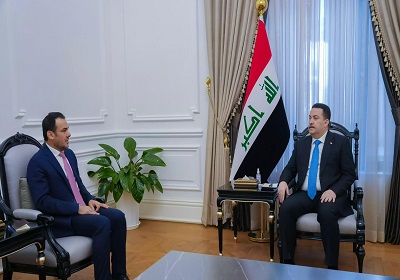
Prime Minister: The path of development will make Iraq a regional political and economic powerhouse

Invitation to the 79th issue of Dialogue of Thought
Seventh Baghdad International Dialogue Conference Call for Papers

Praise for the Baghdad International Dialogue: Strengthening Iraq's pivotal role and a meeting point for visions
Comments