



Jonathan Fenton-Harvey Translated by the Iraqi Institute for Dialog
Israeli War on Iran: A political lifeline for Netanyahu?
Just a day before Israeli air strikes on Iran began, Prime Minister Benjamin Netanyahu narrowly escaped a Knesset vote that would have toppled his government, as he is on trial for bribery and fraud charges. With his popularity plummeting due to corruption cases, the economic crisis and his failure to retrieve hostages from Gaza, the war was an opportunity he could not have dreamed of: A chance to restore his crumbling power.
Within days, Israeli strikes reportedly weakened Iran's nuclear and military infrastructure and killed hundreds of civilians, including senior figures in the Iranian military. Israeli Defense Minister Yisrael Katz wrote on the X platform that "Tehran's civilians will pay the price," revealing a clear destructive intent. As the Iranian response began with missiles on cities and infrastructure in Israel, the chances of resuming the diplomatic track on Iran's nuclear program faded.
Even if a ceasefire is achieved, the tension between Tel Aviv and Tehran has reached almost irreversible levels, as long as the current governments are in power. Israel justifies its aggression as aimed at preventing Iran from acquiring a nuclear weapon, an argument it has long repeated despite the lack of conclusive evidence that Tehran is close to producing a bomb. The reality is that the war is more about Netanyahu's political survival than it is about Israel's security.
Using war to mobilize at home
As in his ongoing war on Gaza, Netanyahu is using the war on Iran to boost domestic support, by portraying the external enemy as an existential threat. This pattern was repeated in Lebanon as well, where Israeli attacks weakened Hezbollah, Tehran's main ally, and coincided with a surge in popularity for Netanyahu's Likud party. As the political gains from the wars in Gaza and Lebanon have eroded, Iran has turned to a new front in the battle for political survival.
A fragile government and a divided society
In light of the deep divisions within Israeli society between secular and religious currents, between nationalists and technocrats, wars have served as a tool to unite ranks behind the "common enemy." But Netanyahu's government itself is fragile and suffers from cracks in its components. But Netanyahu's own government is fragile, with fissures between its components.
As international isolation over crimes in Gaza escalated, prompting the International Criminal Court to issue arrest warrants for Netanyahu and other officials, the war with Iran was a way to redirect attention. The G7 and the European Union declared their support for Israel, and the United States, Britain, Germany and France pledged to guarantee its security.
Despite mounting Western criticism in public opinion and within institutions, arms exports to Israel continue and are likely to increase. The media and political focus on Iran has helped cover up Israel's crimes in Gaza, where strikes and blockades continue to kill civilians.
Trump's Double Game
Despite this, U.S. President Donald Trump has shown signs of ambivalence: He has sought a truce with the Houthis in Yemen and has shown openness to resuming nuclear talks with Iran-a position that may not sit well with Netanyahu's government. Trump appears to be torn between pleasing a pro-Israel base and an America First nationalist base, which has previously led him to favor American economic interests over Israeli objections.
But in the event of a larger escalation, Netanyahu is counting on Trump to side with Israel. Trump's call for the Iranians to leave Tehran ahead of U.S. strikes may suggest that he is inclined to go along with Tel Aviv, while keeping the door of diplomacy open.
Israel's attrition ... and Netanyahu's persistence
On the other hand, the war has allowed Netanyahu to consolidate his power internally, after some moderate voices withdrew from the government coalition, allowing him to ally with extremist figures such as Bezalel Smotrich, Itamar Ben-Gvir, and Yisrael Katz. But this hard-right lineup deepens Israel's international isolation and increases the economic cost of the war.
Israel has lost about 10% of its GDP due to the Gaza aggression, and foreign investment has dried up, threatening a financial crisis in the near future.
Conclusion: A war of personal survival
From a historical perspective, internally besieged regimes often resort to external escalation. Netanyahu, who feels that his legitimacy is eroding as international scrutiny widens, may lead Israel into further involvement. If there is no real international pressure on him to cease operations, he will have no incentive to end the war - because ending it would mean a possible impeachment trial or loss of election in 2026.
Thus, unless the major powers, led by Trump, push for de-escalation and hold those responsible accountable, the region will head towards further chaos. Israel itself may not escape the repercussions of this long-term adventure.

The Iraqi Institute for Dialogue, the logistical sponsor of the Baghdad International Book Fair, opens its own pavilion at the fair

The Iraqi Institute for Dialogue publishes "The Diplomatic Portfolio" by Dr. Karrar Al-Badiri
Official agreement between Iraqi Institute for Dialogue and the Iraqi Media Network to sponsor The Seventh Annual International Conference of “Baghdad Dialogue” 2025
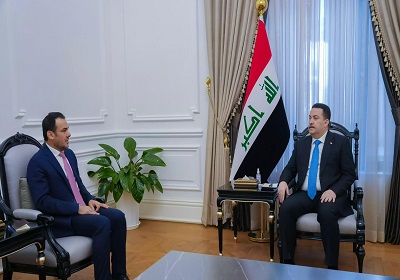
Prime Minister: The path of development will make Iraq a regional political and economic powerhouse
Invitation to the 79th issue of Dialogue of Thought
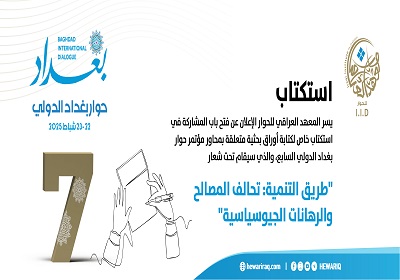
Seventh Baghdad International Dialogue Conference Call for Papers

Praise for the Baghdad International Dialogue: Strengthening Iraq's pivotal role and a meeting point for visions
Comments