


Intelligence assessment: U.S. strikes on Iran did not destroy its nuclear program
A preliminary intelligence report by the US Defense Intelligence Agency (DIA) has revealed that the US airstrikes on three Iranian nuclear facilities did not destroy Iran's nuclear program, but only delayed it by a few months. This previously undisclosed assessment contradicts official statements by President Donald Trump and Defense Secretary Pete Hegseth, who asserted that the strikes "annihilated" Iran's nuclear capabilities.
Details of the operation and targets
The strikes targeted three major nuclear sites: Fordow, Natanz, and Isfahan. The United States used more than a dozen Massive Ordnance Penetrator (MOP) bombs, each weighing 30,000 pounds. Despite the severity and precision of the strikes, the assessment indicated that Iran's centrifuges remained largely intact, and the stockpile of enriched uranium was not destroyed.
At the Isfahan site, Tomahawk missiles were used instead of super bombs, due to the deep fortification of the facility. Damage to all three sites was concentrated on surface infrastructure such as power systems and overhead facilities, with no access to the deeply buried nuclear facilities.
Conflicting statements between the White House and the CIA
White House spokeswoman Caroline Leavitt said the assessment was "completely wrong" and accused those who leaked it of trying to undermine the president and minimize the importance of the successful military operation, asserting that the bombs completely destroyed the targets.
Gen. Dan Cain, chairman of the Joint Chiefs of Staff, said the assessment is still ongoing and it is too early to say how much damage has been done to Iran's nuclear capabilities.
Mixed reactions in Congress
Some members of Congress did not support Trump's statements. Republican Representative Michael McCaul said the plan was not to completely destroy Iran's nuclear program, but to cause "significant and temporary damage." He emphasized that the idea of total annihilation was not part of the original goal.
Democratic Representative Pat Ryan criticized Trump's decision to cancel a classified congressional briefing on the strikes, arguing that the delay was due to the administration's inability to publicly back up its claims before lawmakers.
Independent analysis and satellite imagery
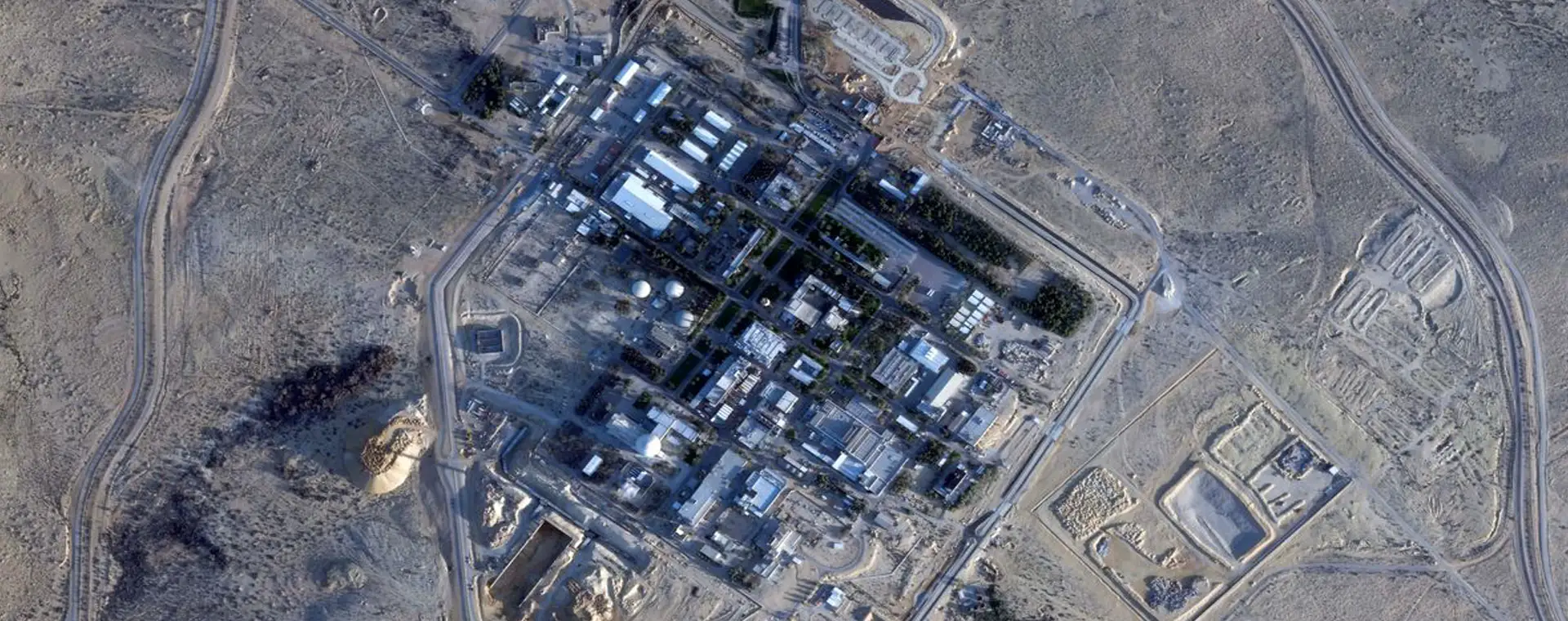
Nuclear expert Jeffrey Lewis of the Middlebury Institute said that satellite imagery showed that the strikes did not destroy deep facilities, and noted that facilities such as Parchin, near Tehran, were not targeted despite their importance. He added that these sites could later be used to quickly rebuild the nuclear program.
The Israeli role and the U.S. strike
Israel had carried out several initial strikes against Iranian positions, but asked the United States to complete the attack by using bunker-busting bombs, which it does not have.
According to sources, Israel and the US were unable to destroy the most heavily fortified underground facilities, making the strike only partially effective.
Secret Nuclear Facilities Were Not Targeted
Intelligence sources have indicated that Iran has secret nuclear facilities that were not targeted in the strike and are still operational. This reinforces the hypothesis that Iran still has the ability to resume its nuclear program if it so chooses.

The Iraqi Institute for Dialogue, the logistical sponsor of the Baghdad International Book Fair, opens its own pavilion at the fair

The Iraqi Institute for Dialogue publishes "The Diplomatic Portfolio" by Dr. Karrar Al-Badiri
Official agreement between Iraqi Institute for Dialogue and the Iraqi Media Network to sponsor The Seventh Annual International Conference of “Baghdad Dialogue” 2025
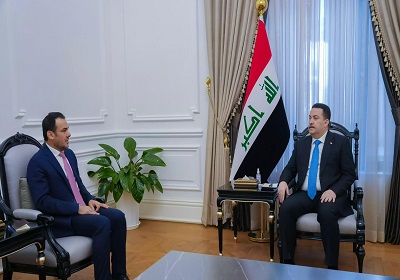
Prime Minister: The path of development will make Iraq a regional political and economic powerhouse

Invitation to the 79th issue of Dialogue of Thought
Seventh Baghdad International Dialogue Conference Call for Papers

Praise for the Baghdad International Dialogue: Strengthening Iraq's pivotal role and a meeting point for visions
Comments