


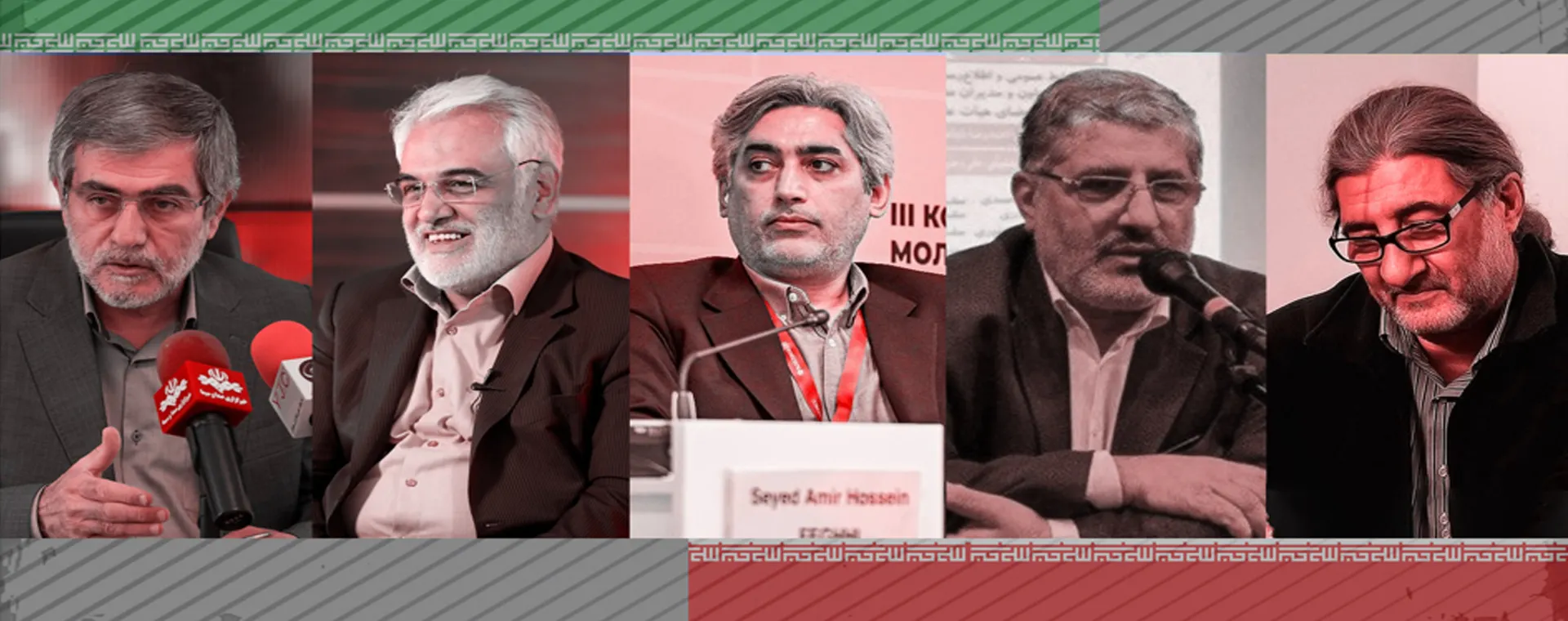
d. Jamal Al-Zaidawi
The position of international law on the assassination of Iranian scientists by the Israeli entity
The International Bill of Human Rights guarantees the human right to learn and participate in scientific progress; the Universal Declaration of Human Rights stipulates in Article 27 that: "Everyone has the right to participate freely in the cultural life of the community, to enjoy the arts, and to contribute to scientific progress and the benefits resulting therefrom."
Some other international instruments also emphasize the need to protect scientists and scientific research workers, including UNESCO's 2017 Recommendation on Science and Scientific Research Workers, which emphasizes the importance of providing the necessary protection for researchers and workers in the fields of scientific research and technology, and ensuring appropriate conditions for their work, including the preservation of their health and safety
In this context, what the world witnessed on June 13 when the Israeli entity assassinated a group of Iranian scientists working in the field of nuclear reactors is a flagrant violation of the provisions of international law and an international crime that requires the full accountability of the Israeli entity. We can define the legal frameworks of this crime through the following points:
1- Violating the principle of the prohibition of the use of force in international relations:
The principle of the prohibition of the use of force is one of the basic legal and ethical principles aimed at maintaining international peace and security. It is one of the foundations of the modern international system that emerged after World War II and the establishment of the United Nations Organization (UNO) in 1945. Article 2 of the UN Charter states: "All Members shall refrain in their international relations from the threat or use of force against the territorial integrity or political independence of any State, or in any manner inconsistent with the purposes of the United Nations."
Thus, the Israeli entity's use of armed force to assassinate Iranian scientists, under the pretext of threatening Iran's nuclear program, is a legally unacceptable justification, especially since no competent international body has issued any indication that Iran's nuclear program is not peaceful.
2- Violation of the 1966 International Covenant on Civil and Political Rights:
Article 6, paragraph 1, of the Covenant states: "The right to life is inherent in every human being. The law shall protect this right. No one shall be arbitrarily deprived of his life."
Accordingly, no one may violate this right except within the specific legal conditions recognized by international and national laws, and a fair trial must be guaranteed. Any act that violates these rules constitutes a grave violation that entails full responsibility, regardless of the perpetrator.
3) Assassination as extrajudicial killing:
The assassination can be categorized as an "extrajudicial killing," defined by the UN Special Rapporteur on extrajudicial, summary or arbitrary executions, Philip Alston, as "an intentional killing by the use of lethal force, carried out by an international legal actor - whether a state or its agent - outside the framework of justice, and without the targeted person being under the physical control of the aggressor."
The assassination of Iranian scientists falls within this internationally prohibited categorization.
4. Violation of the provisions of international humanitarian law:
International humanitarian law provides for the protection of civilians, especially those who are not taking part in hostilities. As the assassinations carried out on 6/13/2025 did not take place in the context of a direct armed conflict between Iran and the Israeli entity, the targeted scientists are considered civilians protected by the Geneva Conventions and other customary rules of international humanitarian law.
Nuclear scientists cannot be considered combatants or legitimate military targets, especially since the peaceful uses of nuclear energy include electricity generation and other civilian applications and are not exclusive to military uses.
5. The responsibility of the Security Council and the International Criminal Court:
The Security Council, as the body responsible for maintaining international peace and security, has the authority to take action against aggressor states. The International Criminal Court (ICC) can also impose its jurisdiction if it accepts jurisdiction over such crimes.
However, the international system, especially the collective security mechanism led by the Security Council, has failed on many occasions to hold the Israeli entity accountable for its violations, especially the crimes committed against civilians, including women and children in the Gaza Strip. It is difficult to imagine any real accountability for this entity, which pursues policies of destabilization and chaos in the region without regard for international law.
This raises fundamental questions about the effectiveness of the international system in enforcing the principles of justice and accountability, especially when it comes to violations practiced by states that enjoy widespread international political support.

The Iraqi Institute for Dialogue, the logistical sponsor of the Baghdad International Book Fair, opens its own pavilion at the fair
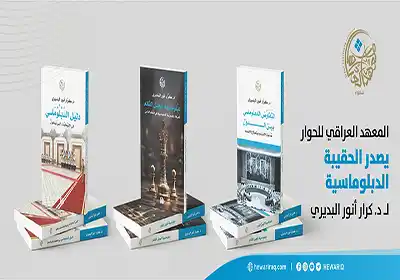
The Iraqi Institute for Dialogue publishes "The Diplomatic Portfolio" by Dr. Karrar Al-Badiri
Official agreement between Iraqi Institute for Dialogue and the Iraqi Media Network to sponsor The Seventh Annual International Conference of “Baghdad Dialogue” 2025
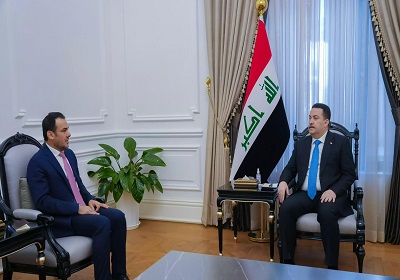
Prime Minister: The path of development will make Iraq a regional political and economic powerhouse
Invitation to the 79th issue of Dialogue of Thought
Seventh Baghdad International Dialogue Conference Call for Papers
Praise for the Baghdad International Dialogue: Strengthening Iraq's pivotal role and a meeting point for visions
Comments