


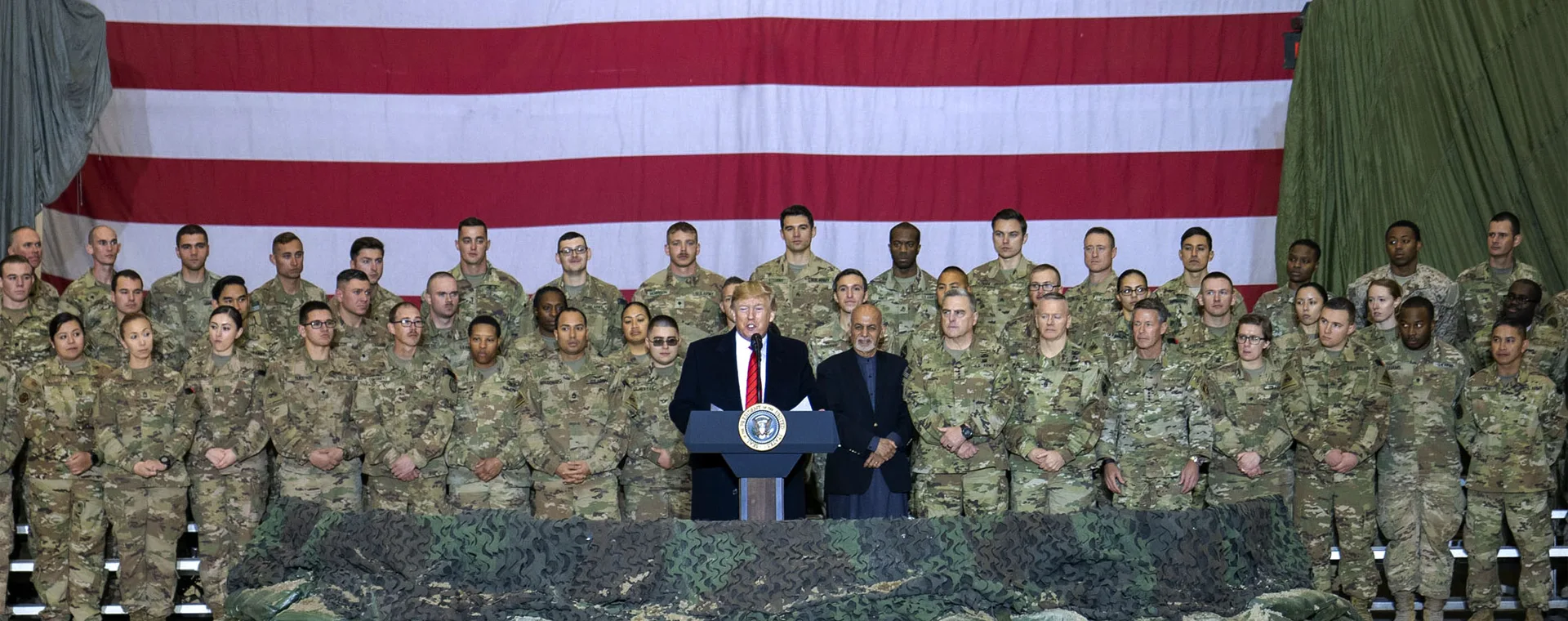
Trump bypasses Iraq: A shift in U.S. doctrine toward Iran
US President Donald Trump seems to have succeeded in making a fundamental shift in US foreign policy, breaking with the legacy of costly military intervention in Iraq and Afghanistan, without falling into the trap of total isolation. In an op-ed published in the Washington Examiner, American writer David Harsanyi concludes that Washington's recent attack against Iran's nuclear facilities in Natanz, Isfahan, and Verdu represents a watershed moment in American defense doctrine.
Beyond Iraq: Overcoming the Fear of Intervention
According to Harsanyi, since the Iraq War, the United States has been "strategically paralyzed" for fear of being drawn into protracted conflicts, which Iran has exploited to pass its nuclear and expansionist agenda without real deterrence. Trump, unlike his predecessors, dealt with Iran from the perspective of "smart deterrence" rather than "democratic engineering," with a clear goal of preventing the Iranian regime from acquiring a nuclear weapon, without engaging in costly ground adventures or comprehensive "regime change" projects.
Rejection of the two schools: No isolation. And no adventure
Interestingly, the article characterizes Trump's position as a dual rejection of both the naivety of neoconservatives who sought to spread democracy by force and the closed-mindedness of isolationists who advocate non-intervention. Trump, according to the article, faced the reality that diplomacy with a "theocratic Islamic regime" is futile without clear red lines protected by force.
The End of the Nuclear Deal's Illusions
Harsanyi questions the seriousness of the arguments that have promoted the possibility of a permanent nuclear deal with Tehran, noting that Iranian leader Ali Khamenei has refused to give up his nuclear project even after Israeli attacks weakened his military capabilities.
The author claims there is a long history of Iran deceiving U.S. presidents, going back to Bill Clinton, regarding nuclear commitments.
A shift in military doctrine: "We deter. But don't invade"
Despite the controversy sparked by Trump's tweet hinting at the possibility of "regime change" in Tehran, there are no indications that Washington intends to engage in a full-scale field confrontation. On the contrary, the president's rhetoric suggests that he is using the language of escalation as a means of pressure to force Tehran to comply, without the need for a direct military cost.
The Alliance with Israel and the Balance of Terror
The article discusses Israel's role in weakening Iran's military structure, arguing that Tel Aviv did the "heavy lifting," while Washington intervened in the decisive phase. The author describes this coordination as a redefinition of the deterrence equation in the region, based on an effective tactical alliance without direct ground intervention.
Realism without abandoning values
Trump has not abandoned Western principles in confronting regimes he believes to be "authoritarian," but he has also not sought to impose them by force. Should an organized popular movement emerge in Iran demanding change, U.S. policy, according to this perspective, should not stand in the way.
Conclusion: A strong America is fearless
Harsanyi concludes his article by emphasizing that the United States, after years of indecision, has regained confidence in its power. The recent Iranian attack on a base in Qatar was a symbolic internal face-saving maneuver, while the truth is that Iran has lost its ability to impose its terms and has missed the opportunity to acquire the nuclear bomb.
"What we don't know is how this conflict will play out in the future, but what we do know is that America is no longer hostage to the failures of the past."

The Iraqi Institute for Dialogue, the logistical sponsor of the Baghdad International Book Fair, opens its own pavilion at the fair
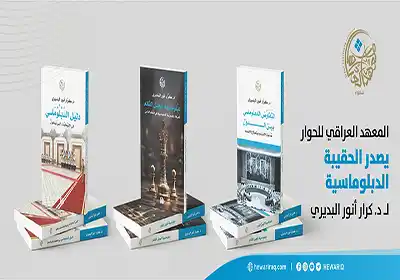
The Iraqi Institute for Dialogue publishes "The Diplomatic Portfolio" by Dr. Karrar Al-Badiri
Official agreement between Iraqi Institute for Dialogue and the Iraqi Media Network to sponsor The Seventh Annual International Conference of “Baghdad Dialogue” 2025
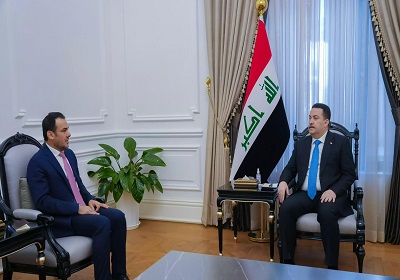
Prime Minister: The path of development will make Iraq a regional political and economic powerhouse

Invitation to the 79th issue of Dialogue of Thought
Seventh Baghdad International Dialogue Conference Call for Papers
Praise for the Baghdad International Dialogue: Strengthening Iraq's pivotal role and a meeting point for visions
Comments