



Iraqi National Security Advisor Qassim al-Araji for Thought Dialogue: Iraq has demonstrated an ability to mediate and facilitate dialog between Middle Eastern countries
The Iraqi National Security Advisory is one of the most important decision-making institutions in Iraq because it is the institution that seeks through the National Security Council, which is chaired by the Prime Minister and whose members include the Ministers of Defense, Interior, Foreign Affairs, Justice, Finance and the National Security Advisor, to be the most prominent civil institution that sets Iraqi national security policies to achieve comprehensive national security in its new concept to include all sectors such as security, military, internal and external security, food, health and education by studying the challenges and how to face them and issue appropriate decisions through the National Security Council and the National Security Advisory.
The National Security Advisor has a pivotal role in advisory security decision-making and providing important assessments in building the comprehensive security system, especially at the stage of massive waves of serious and strategic challenges that affect the country's supreme interests.Dialogue of thought"A pause with the Iraqi National Security Advisor, Mr. Qassim Al-Araji, who previously served as Minister of Interior during difficult times and great challenges and has an active and influential role in the Iraqi political and social arena, and to highlight the most important roles of the chancellery.
The Iraqi National Security Advisory was established to be the institution that seeks through the National Security Council, which is chaired by the Prime Minister and whose members include the Ministers of Defense, Interior, Foreign Affairs, Justice, Finance and the National Security Advisor, to ensure that the National Security Council is the civil institution that sets national security policies to achieve comprehensive national security in its new concept to include all sectors such as security, military, internal and external security, food, health and education by studying the challenges and how to face them and issue appropriate decisions through the National Security Council.
The National Security Advisory, which was established in accordance with Order 68 of 2004, provides consultations and specialized studies in the field of national security, which are provided by consultants working in the National Security Advisory and the specialized centers and departments in the Advisory to be submitted to the Council of National Security Agents and the National Security Council, which is managed by secretaries through highly experienced and efficient specialists to be ready for study and appropriate decisions to be taken by the National Security Council.
This institution also seeks to coordinate national security policies between security ministries and intelligence agencies in order to achieve unity of policies and a comprehensive national security strategy to achieve stability and prosperity for Iraq and its people.
Dialogue of thought: It is known that the formation of the National Security Advisory came based on Order No. 68 of 2004, can you review the role of the National Security Advisory in the Iraqi decision-making structure?
Mr. Qasim Al-Araji:As you know, the National Security Advisory is a relatively new institution, which is one of the institutions of the Prime Minister's Office and takes on many tasks, and its role is supportive of the National Security Council, the National Intelligence Council and the Council of National Security Agents, and it is the most important coordinating institution in the country and contributes to building national policies and strategies while entering all national security files and sharing this with a wide range of ministries and state institutions, and its role is great in the performance of the state and supporting the decisions of the Prime Minister, and the Advisory plays a vital role in improving the ability to address security challenges and maintain the country's stability, as it provides text
Dialogue of thought: Does the chancellery have a role in international relations?
Mr. Qasim Al-Araji:Yes, national security advisors can contribute to strengthening Iraq's international relations through cooperation with other countries in the field of security and exchange of information and expertise, and there are distinguished relations within this framework. The Iraqi National Security Advisory can also play a role in strengthening regional security through cooperation with neighboring countries and sharing joint efforts in combating common threats.
Dialogue of thought: In the world of high-level strategies All national security strategies are subject to a process of revision and renewal, so what do you think of the construction and renewal of the Iraqi national security strategy?
Mr. Qasim Al-Araji:There are a number of points that must be considered when building and renewing Iraq's national security strategy, as the process of building the strategy must enjoy broad participation, including various sectors and political spectrums and civil society, this ensures a balanced representation of different opinions and interests in order to achieve this, an accurate and objective analysis of the security threats facing Iraq, including terrorist threats, organized crime and regional challenges should be provided, this helps in setting priorities and directing efforts effectively, attention must be paid to strengthening and developing the security capabilities of the relevant authorities, including the army, police and the face of the
The strategy must also include aspects of enhancing human security such as improving social and economic services and providing job opportunities, as this can contribute to reducing the causes of polarization and violence. I would like to point out an important point that the strategy must be committed to protecting human rights and the principles of the rule of law in all aspects related to security and combating crime, thus building a national security strategy is a vital process that requires careful strategic guidance and thinking to deal with the current security challenges and ensure the country's stability.
Dialogue of thought: You have emphasized in more than one statement that Al-Hol camp is a ticking time bomb. What is Iraq's vision for resolving the crisis in the camp, which poses a threat to Iraq's national security?
Mr. Qasim Al-Araji:Iraq's vision for resolving the crisis in al-Hol camp, which houses thousands of displaced persons and former ISIS detainees, includes some important aspects, as Iraq seeks to actively work to strengthen international cooperation with countries and international organizations to seek a solution to the crisis in al-Hol camp, and of course this includes cooperation with the United Nations, neighboring countries and the concerned. Iraq is also working to create safe and dignified conditions for the return of displaced persons to their areas of origin under cooperation between the Iraqi government and international humanitarian organizations, with the need to prosecute those involved in crimes, as individuals who joined ISIS and committed crimes under the law are dealt with in accordance with international laws and standards, while respecting human rights. Iraq is also working to implement rehabilitation and reconciliation programs for individuals who can be safely returned to society, while providing psychological and social support to them and host communities, and an integrated program has been prepared for
The Iraqi government also takes into account the country's security and stability while implementing any measures related to Al-Hol camp. Therefore, addressing the Al-Hol camp crisis requires careful coordination and large-scale international efforts to deal with these complex challenges and ensure that there are no future threats emanating from this camp.
Dialogue of thought: Where are the security agreements that Iraq has signed with neighboring countries?
After the victory over ISIS and the acquisition of field experience by the Iraqi security forces of all types in confronting terrorism, many brotherly and friendly countries requested the conclusion of security and intelligence memoranda of understanding to exchange information and expertise, and indeed many memoranda were concluded after a series of due diligence procedures to ensure the common interest of the parties to the memoranda.
Dialogue of thought: The national security strategy is certainly not limited to security issues but includes water, food and environmental security. What is your strategy towards these crucial and urgent issues, especially the water crisis?
As you know, the national security strategy of any country deals with a variety of challenges and issues that go beyond military security and also include environmental security, water and food security, and there are some aspects that can form part of the national security strategy related to such issues, as the strategy includes a framework for preserving national water resources and ensuring their equitable and sustainable distribution, including efforts to protect rivers, lakes and groundwater sources from pollution and unsustainable depletion, and the strategy also focuses on maintaining environmental balance and sustainable development. The strategy also focuses on maintaining environmental balance and sustainable development, including addressing climate change, preserving biodiversity and natural resources, and enhancing food security by developing sustainable agriculture and providing food security for citizens. The strategy also encourages cooperation with neighboring countries and the international community in the fields of environment, water and food. The strategy also includes efforts to raise awareness and education about the importance of protecting water and the environment and achieving food security, including the development of educational and training programs.
I would also like to point out an important point, as the strategy includes plans to deal with potential crises in these issues such as drought and environmental disasters, including preparedness and rapid response, as environmental, water and food issues play a crucial role in the country's security and stability, and therefore the national security strategy must be comprehensive and multidimensional to deal with these pressing challenges. This is what we recommended to the strategy writing team.
Dialogue of thought: What is the position of the Iraqi National Security Advisory Council on the House of Representatives' decision to withdraw US and foreign troops from the country after the airport incident?
Mr. Qasim Al-Araji:The chancellery's position represents the government's position and is committed to the parliament's vote on the exit of foreign troops, which is what has been done, as there are currently no combat troops, but rather consultants with the government's approval.
Dialogue of thought: Do you have endeavors to arrange meetings and negotiations between Iran, Jordan and Egypt after the success of Iraq's mediation in restoring relations between Iran and Saudi Arabia?
Of course, Iraq can play an important role in facilitating meetings and negotiations between countries in the region
Historically, Iraq has shown an ability to mediate and facilitate dialogue between Middle Eastern countries, and the success of Iraq's mediation in restoring relations between Iran and Saudi Arabia is an example of this. If there is a desire by the countries of the region (Iran, Jordan and Egypt) to hold meetings and negotiations on certain issues, Iraq can play an important role in facilitating these efforts and providing the appropriate environment for dialogue, and it is important that this is done based on the will of all concerned parties and in coordination with them, however, we must note that the success of any diplomatic effort requires the existence of a real will from all parties and a willingness to dialogue and understanding.
Dialogue of thought: What is your position on the presence of Turkish forces in Iraq, and has the government submitted a proposal for Turkish withdrawal in exchange for Baghdad limiting PKK movements?
Mr. Qasim Al-Araji: Iraq's clear position is to reject the presence of any foreign forces on its territory from any party, and the Iraqi government is working hard to address the presence of armed groups using Iraqi territory to attack neighboring countries, and the government is more determined than ever to address this illegal and illegitimate presence.

The Iraqi Institute for Dialogue, the logistical sponsor of the Baghdad International Book Fair, opens its own pavilion at the fair
Official agreement between Iraqi Institute for Dialogue and the Iraqi Media Network to sponsor The Seventh Annual International Conference of “Baghdad Dialogue” 2025
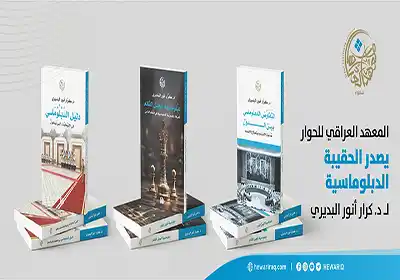
The Iraqi Institute for Dialogue publishes "The Diplomatic Portfolio" by Dr. Karrar Al-Badiri

Invitation to the 79th issue of Dialogue of Thought
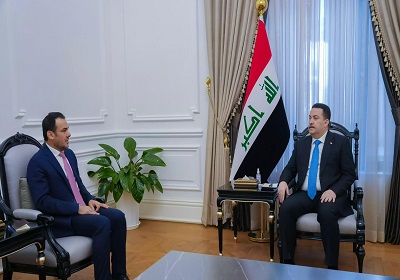
Prime Minister: The path of development will make Iraq a regional political and economic powerhouse
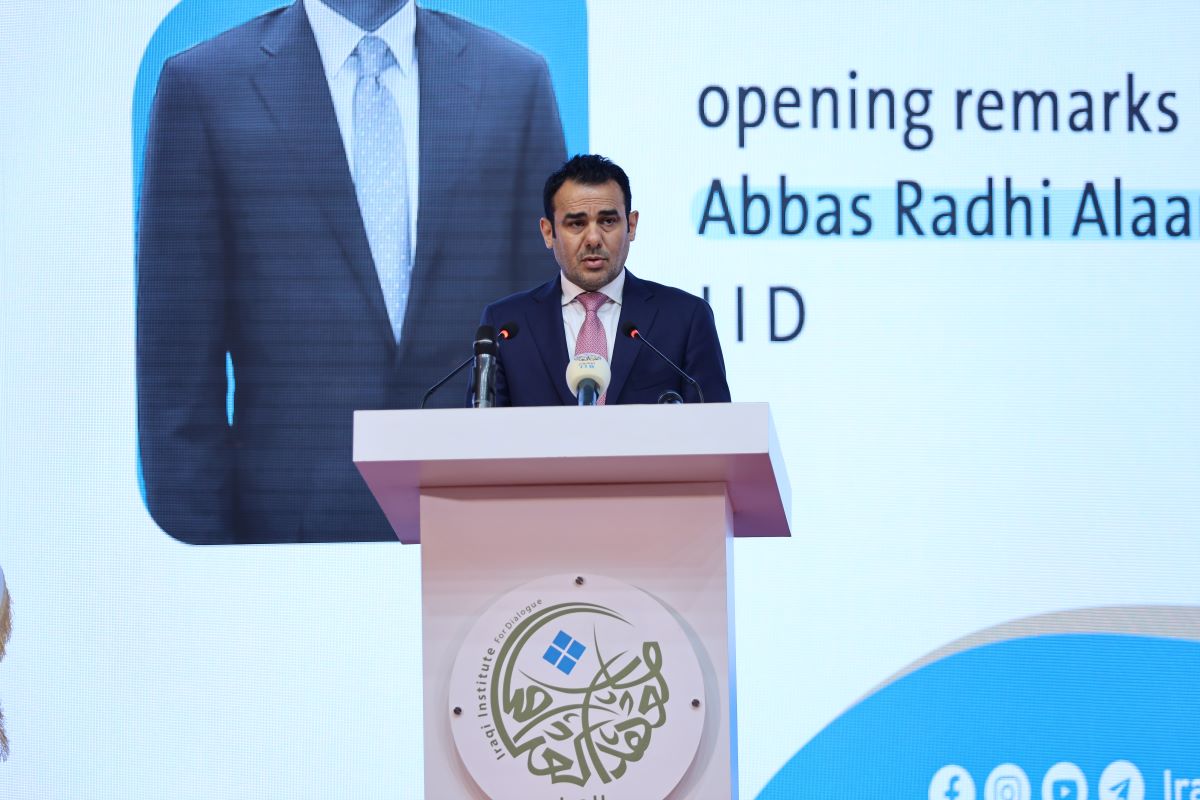
Speech of the Director of the Iraqi Institute for Dialog at the Sixth Baghdad International Dialog Conference
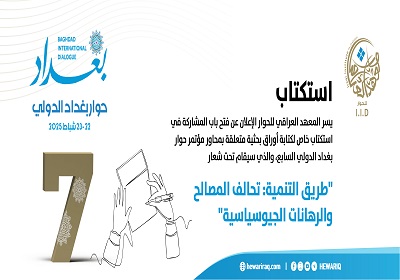
Seventh Baghdad International Dialogue Conference Call for Papers
Comments