



Dr. Turhan al-Mufti for Dialogue of Thought: The Decentralization Debate in Iraq: Success at a slower pace
Thought Dialogue magazine conducted an interview with Advisor to the Prime Minister Dr. Turhan Mufti, which was published in the double issue (79-80) issued in June 2025.
Dr. Mufti, the former minister of provincial affairs and water, stressed that the decentralization project in Iraq has been subject to repeated abortions since the establishment of the state, despite intensive efforts after 2003 to enshrine it on the ground. In an extensive interview with Hewar al-Fikr, he said that the experience of transferring powers to the governorates proved successful, especially in the health sector, but later faced setbacks due to the "reluctance of state institutions to change" and the lack of a precise understanding of the difference between decentralization and deconcentration.
Al-Mufti noted that the current government is making good efforts to support decentralization by activating the meetings of the coordination body between governorates, calling for the reactivation of Article 44 of Law 21, which grants governorates independent local budgets, and expanding the role of planning and development councils as professional bodies not subject to political polarization.
On the water file, Mufti revealed significant progress in negotiations with Turkey through the "Memorandum of Water and Economic Framework Agreement," pointing to similar endeavors with Iran. He also emphasized the importance of moving to modern and smart irrigation systems to face water scarcity and climate change.
Who is Dr. Turhan Mufti?
He was a member of the Kirkuk Provincial Council for the years 2005-2010, Minister of State for Provincial Affairs and Acting Minister of Communications 2010-2014, Head of the Secretariat of the Higher Commission for Coordination between the provinces 2015-2020, Government Representative in the House of Representatives during the same years, Advisor to the Speaker of the House of Representatives 2022-2024, Advisor to the Prime Minister 2024 until today.
The following is a transcript of the interview
Dialogue of thought: Mr. Minister, we welcome you to Thought Dialogue magazine, and we are grateful to you for devoting part of your time in light of your great responsibilities to conduct this interview. The fact is that you have moved between multiple positions, government positions, provincial councils and minister of parliamentary affairs, but what I am very interested in discussing with you is related to the era in which you worked. I would like to ask you about the issues that existed at that time, do you think they have changed or complicated, or have new issues been added to them? Strictly speaking, we are talking about the issue of centralization and decentralization in Iraq.
Dr.. Turhan Mufti: There is an important point, that the issue of centralization in Iraq is a new old topic, I mean it was mentioned in the speech of the late King Faisal I, it is a speech that talks about decentralization, he says that there are groups that will not work with Baghdad, and we will not be able to bring everyone together on the same level, therefore it is necessary to go towards decentralization, and the term is mentioned, for some reason, for the purpose that whoever cannot come to us has his state there and can participate in the administration of the state So it is an old topic, in Iraq in 1936 there was a municipal law, there was also a kind of trend towards decentralization, and the topic was aborted, in Law 159 for municipalities, there was also talk about deconcentration and large powers towards centralization, and it was also aborted, at the end of the 1970s there was a ministry of state for this topic also aborted and turned into a ministry of local government as a kind of centralization.
And later, the governors became military in the nineties, more than facilities and here is the summit of centralization in the discourse, we after 2003 we worked on the issue of decentralization in the Iraqi state, I list this history because the decentralization project in Iraq is always aborted, and there are always incorrect comparisons, meaning, for example, the Ministry of Health, the Ministries of Health and Education were within decentralization, then when the health insurance law was enacted, in the end, a paragraph was put to cancel the decentralization of health, which is not permissible, meaning health insurance what is its relationship with decentralization? The idea is that anyone who comes against decentralization compares, for example, the experience of decentralization, which is ten years old, with the experience of centralization, which is a hundred years old, and then comes back and says, "No, centralization is better, okay, centralization has had a hundred years to reach what it has reached, how many stumbling blocks it faced? How many disappointments it had, how many mistakes it made, until we reached the situation that crystallized for centralization, so it is not correct to compare a ten-year-old experience with a hundred-year-old experience, and this is what happens to us in decentralization.
This is first, secondly, resistance to change in state institutions, meaning I met governors who are not convinced of decentralization, a governor who is not convinced of decentralization, the process of change and resistance to change in the style of management is very difficult, at the time, in 2010 when I received this file, I made an effort to the extent of 2024 - 2025 2025 to avoid the concentration of centralization in Iraq in the previous years, for fifteen years, so in the first four years during the government of Mr. Maliki, we walked towards what is called sculpting the term, we were taking decisions, some of the decisions would go into effect, and some would not, we had no issue, neither I nor Mr. Prime Minister, just we were walking towards sculpting the term, meaning people understand that there is a decentralized system, during the days of Mr. Abadi, another four years, we actually started transferring powers in application, during the days of Mr. Adel Abdul Mahdi, if Mr. Adel Abdul Mahdi was able to continue or the government in general, if the government in general was able to continue From 2018 to 2022, it would have become a phase of stability, four years for decentralization, we will not add tasks to it, nor will we take away tasks from it, 2023 was according to the plan that the evaluation process would begin, in such a case it was possible to add, and it was possible to withdraw powers, what happened is that we had a glitch in this period, meaning especially in the government of Mr. Mustafa Al-Kazemi, we got the health insurance law, after which the centralization of health and later education returned, and there were requests from the Ministry of Sports and Youth, and I imagine from the Ministry of Labor, then he established departments parallel to the departments in the governorate, in the end this process of abortion of decentralization.
In our time, we analyzed about one thousand eight hundred powers, which we were supposed to work on from these 1800 powers, it was agreed to transfer 850 powers from the ministries concerned with Article 45 of Law 21 to the governorates, and this was applied in about 350 meetings, meaning we did not proceed in the manner of our book and your book, no, sometimes for one power, we held five meetings, and in the end a record was signed, and the powers were sent or given to the governorate. Some ministries, as a result of a personal vision, jumped on the powers, meaning the powers that were supposed to be granted were monopolized by the ministry and the powers that were supposed to remain in the ministry were sent to the governorates, so we had an issue in this regard, but in the end, decentralization was working at a high level Decentralization was working at a very high level, frankly, I mean, we gave an example of health, yes, the stage when we completely transferred the health directorates to the governorates, during Dr. Adila Hammoud's tenure at the Ministry of Health, and during the government of Mr. Adel Abdul Mahdi, there was no fire in any hospital, there was no symptom in any hospital, there was no shortage in the provision of medicines, as I was given the authority to purchase medicines, as the authority to purchase medicines was given to the governorates according to special unified specifications according to the standards of the Ministry of Health, there was no need for medicines, you remember during the government of Dr. Abadi there was a shortage of financial resources, so powers were given to the governorates for certain medicines or certain treatments for certain medical supplies, to be purchased by the governorates, so in front of this authority given - Of course, it was a temporary authority because medicines are a federal authority - but at that time there were no financial resources, so this temporary authority was granted to the governorates, this authority to bring medical supplies and medicines did not cause any shortage in the governorates, so decentralization is successful in all its details, now, I mean, as we said
There are powers returned to the ministries, so we have discouraged some of the extensions of decentralization, the distinctive and good thing in this government is that the meetings of the coordination committee between the provinces are monthly, and this can be an excellent indicator of the crystallization of the idea of decentralization, in our time the committee used to meet every two months, in the government of Mr. Adel Abdul Mahdi and Dr. Abadi Mr. Kadhimi, and before that it was more than two months in Mr. Maliki's government because as I said the days of Mr. Maliki is the process of sculpting the term, and getting the governors used to returning to the center and sitting with the ministers, now the meetings are monthly and their decisions crystallized, I see currently Ako crystallized an act.
Dialogue of thought: In other words, you see a positive development and not a regression from what decentralization used to be.
Dr.. Turhan Mufti: One of the points that we worked on in the government of Dr. Abadi was the abolition of some ministries, for example, construction, housing and municipalities, it was part of the idea to abolish these ministries, but the Prime Minister at the time merged these ministries, and so far this is how things are going. Because 95% of the activities of the Ministry of Municipalities are local activities, meaning that even in centralized or decentralized countries, local councils are called municipal councils, so these ministries, if not abolished, are supposed to turn into policy-making ministries, not a ministry that owns the decision, draws a policy and the governorate that comes out with the drawn policy takes the right to decide. In general, decentralization, even in the most established decentralization countries, such as Canada, which has a decentralization that is about 120 years old until now, there is a conflict of powers, so decentralization, even if it is stabilized and established, there will always remain a conflict of powers, which is the nature of administrative work.
Dialogue of thought: Doctor, you referred to the issue of conflicts between ministries and governorates, meaning that these disputes that occur revolve around the legislative flaccidity in Iraq, we have legislative flaccidity and multiple conflicting laws, in your estimation this conflict of powers that sometimes occurs between ministries and governorates is purely political or political using laws as a pretext and an outlet, or is it the nature of the interpretation of laws that leads to these conflicts.
Dr.. Turhan Mufti: No, the general issue in Iraq is that we have a very large number of laws, and the state is legally framed, and framing everything by law is not healthy, it may not be wrong but it is not right either, meaning don't always frame everything by law, I mean at the end of the day there is supposed to be room and flexibility in movement, i.e. discretionary power, another thing is that if we want to go completely to decentralization, we have to amend and re-enact about 200,000 legal paragraphs, which at the time was called the legislative guillotine at the time.
Dialogue of thought: Yes, Iraq signed a memorandum of cooperation with USID in 2008 to implement the guillotine.
Dr.. Turhan Mufti: Yes, in the face of such conflicts, we were clinging to the fact that the private restricts the public, and that it is Law No. 21 of the laws that have the highest authority, so we work in this regard, but always the strength of the law is linked to the strength of the legal person on the opposite side, and the legal argument, so in the face of such matters, there is a real issue, but as I told you, the conflict of powers is not bad in every country there is a conflict of powers, conflict is always present at different levels, in Iraq the issue that exists in general is that we not only have a conflict of powers, we have conflict in the concept of state administration This is the issue along the line, for example, a prime minister comes who is for the application of the constitution.
Dialogue of thought: Your Excellency, within this context, I would like to ask you about a specific topic, the personality of the governor always affects the extent of the breadth or narrowness of the ability to enjoy this decentralization, I mean the legal text is the same, but you find a bold governor who is able to take responsibility, I know that some governors were taking decisions on their responsibility in implementing work and signing decisions despite the fact that some of them turned into cases raised against them in integrity, while others are reluctant to take the decision, and this is reflected in the issue of allocating budgets to the governorate if I am not mistaken.
Dr.. Turhan Mufti: I mean, not quite, partly on the personality of the governor himself, and partly on how well he assimilates
In decentralization, the governor is a deputy minister of any ministry for each ministry, in decentralization, the governor is higher, a local authority, the subject is completely different, so when the governor understands this point, he starts working, but the fear in general is that in Iraq, political practices are in some parts based on lurking, so when sometimes the governor or any official, not necessarily the governor, when he feels lurking, he hesitates to work, another issue that exists we may get off our topic that in criminal procedure - if memory serves me - I imagine in Article (136b) or something like that this paragraph in the origins of marathas
On this basis, we set up a high investigative committee, with regard to the governorates and with regard to the administration in local governments before going to the judicial authorities, just to give support to the work and not to protect it when things are against the law, but to give it support, this issue depends on these three points that we said, and on the extent of the governor's achievement, and along the line there were real governors who were very bold and worked and produced and there are governors who were not able to work and there are governors who were unable to work.
Dialogue of thought: A while ago, I attended a seminar attended by a former governor and a financial advisor to the government many years ago, and the gist of their talk was that the financial allocation to the governorate is based on the percentages of spending and achievement from the previous budget. I asked them that in this way, the issue depends on the governor, and the rights of citizens in the governorate are related to this issue, as the bold governor is able to bring allocations to the governorate, and the reluctant governor is unable, how can we solve it, Your Excellency? Is it a legal or political complexity to solve this method of evaluating allocations?
Dr.. Turhan Mufti: The most important point in this context is the activation of Article 44 of the governorate law that we worked on, where we allocated a local budget for each governorate, meaning that the governorate has a federal budget for ministries for federal sectors, and he has another budget for local governments, and he has a regional development budget and he has a local budget according to Article 44, this we worked on, and we developed draft budgets, and we put At the beginning, we put a budget to open an account and we said even if you put one dinar in the account, in order for there to be legitimacy to open the account This was done by a group of governorates, including Wasta I think, they were able to collect in one year one hundred and fifty billion dinars, an amount equivalent to that year the regional development budget allocated to the governorate, so there is work in the governorate This paragraph is currently not activated In all governorates, once they said fees federal taxes, and we did not go towards the tax, we put in the instructions to go towards fees, the messenger on the condition that these fees do not intersect with any federal fee or tax, and they were three categories, meaning for example (5000, 10000, 15000) These materials exist as fees, we set guiding levels and not legal, meaning we set an example, because each governorate has its own peculiarity, and the governorate is full of The governorate has its own peculiarities, and the governorate may fill the fees according to these peculiarities, so also be within decentralization, so we do not impose that he collect a fee from a specific thing, this topic in such an atmosphere, if it is fully implemented, there will be a very bold action in the governorates, first he will have an additional financial resource, and secondly, this financial resource is a local financial resource, so the local government is empowered. He was giving boldness and giving a decision, for example, where and how to spend it.
Dialogue of thought: I mean, Doctor, I think this also clarifies your vision of what should be the case for development, because I was going to ask Your Excellency what we need for development, the experience that Your Excellency finds that it is going well.
Dr.. Turhan Mufti: The planning and development councils that we established at the time, which even exists today in Mosul and works perfectly, were approved at the time to be composed of fixed parties and mobile parties, the fixed parties being, for example, the governor and the director of local planning.
In addition to the director of the local administrative and financial department of the council that we established, the director of supply, the local accounting unit, in addition to other parties, he is matched on the other hand according to the ministries covered by decentralization, meaning, for example, nine members in the field of agriculture, nine in the field of let's say health and environment, nine in the field of sports and youth, nine in the field of health and education, in the field of labor and social affairs, and then nine others, three from civil society, three professors and experts, three investors and those interested in this field, so for example, when you want a discussion on sports and youth you will bring these nine with the fixed ones, if you want to have a discussion on sports and youth.
Dialogue of thought: I am very grateful, Dr., or to conclude the conversation with Your Excellency as the head of water affairs, with your work in the Council of Ministers at the present time on water affairs and bilateral water relations with Turkey and Iran.
Dr.. Turhan Mufti: The issue of water - and this is something I've talked about in more than one meeting - is one of Iraq's first issues. One of Iraq's first issues is that in Iraq's modern history there is no agreement on water between Iraq on the one hand and Turkey or Iran on the other, there is an agreement on good neighborliness with Turkey in 1946 that went unnoticed on water, because that time was a time of floods, and neither country thought about what would happen in a drought, and the 1964 Algerian agreement with Iran that time was also a time of floods, so They only went through five rivers, so now after 1990 when the drought issue started and currently it is a leap with drought and climate change, there are no agreements, there are understandings related to the proportions of releases, and for the first time Iraq agreed with Turkey in this regard in a serious way, which is the memorandum of the Water Framework Agreement, which is a memorandum of water and economic agreement, and we started seven months ago already with it, and it is excellent We are now trying to conclude the same memorandum with the Iranian side, noting that the Iranian water participation with Iraq is about 12% on the whole of Iraq and the majority is about 60% with Turkey, but nevertheless this 12% is in a certain part of the Tigris basin that starts from the bottom of Diyala province to the Karun border, and it is very important If we can also make a memorandum, and if, God willing, we hope that the memorandum goes according to our signature, we will not have an actual issue, this does not mean that there is no issue because the whole region is under climate change, the whole region is suffering from drought, whether even the Turkish dams this period is not full, the whole region is under drought pressure, but with these memorandums we can pass this period, God willing.
Dialogue of thought: I am also very interested in the topic of water. I have reviewed the unpublished Iraq Water and Land Management Strategy for the years 2015-2035, and my understanding is that part of the issue that the Turks have been raising with the Iraqi government is the lack of operationalization of this strategy, meaning local irrigation methods, local consumption with traditional irrigation issues, is there any work in this direction?
Dr.. Turhan Mufti: Yes exactly, we have very old means of irrigation, like 4000 years ago, i.e. a small stream, a canal that draws water and the like, but now the situation has changed, I mean even the previous governments were always calling for the use of modern techniques of irrigation, the situation has changed, we are now in a drought period, meaning before they say a cubic meter of water is enough to water one dunum of land, currently a cubic meter within modern irrigation, currently a cubic meter within modern irrigation With the implementation of modern technology, it irrigates seven dunums, while smart irrigation, the cubic meter irrigates 21 dunums, so if we are able to go to smart irrigation, the water we have will definitely be enough, and agricultural lands will also increase, because we doubled the amount of irrigation from one to 21, but if we stay on the old irrigation, which is one cubic meter per dunum, and if we schedule 3-4 or 5 load sprinklers per dunum, the water will definitely not be enough.
Dialogue of thought: That's not to mention crops that already require flooding, such as rice, which needs to be submerged.
Dr.. Turhan Mufti: There is something called biotonic, a type of watering that you submerge but do not plant the plant, but rather suspend it in the water, the plant is in the water but the water will not be lost because it is not in the soil, and now some people are raising fish in this water.
Dialogue of thought: Dr. means investment partnerships in the subject of agriculture, if you open the door for investment partnerships for agriculture, for example with Turkey or Iran.
Dr.. Turhan Mufti: Yes, we have about 29 million dunums reclaimed, and the use is now about 16 million, and these partnerships, if met with a water quota, are very successful, meaning, for example, in the Tigris River basin below Diyala, but in return, water is released, knowing that Iran is suffering from drought, I visited some of them and found that they have become history and forgotten because there is no rain, whether in Turkey or in Iran.
Dialogue of thought: Yes, Dr., my point is that even with Turkey, I mean Turkey is now going to reclaim and build agricultural partnerships with Sudan and others, I think the Turks would prefer even emotionally, not just economically, to deal with Iraq.
Dr.. Turhan Mufti: This is part of one of the parts of the framework memorandum, I said earlier that the theme of the memorandum is water economy, this could also be within the agricultural partnership.
Dialogue of thought: Thank you very much, Dr. Turhan Mufti, for taking time out of your valuable time.

The Iraqi Institute for Dialogue, the logistical sponsor of the Baghdad International Book Fair, opens its own pavilion at the fair
Official agreement between Iraqi Institute for Dialogue and the Iraqi Media Network to sponsor The Seventh Annual International Conference of “Baghdad Dialogue” 2025
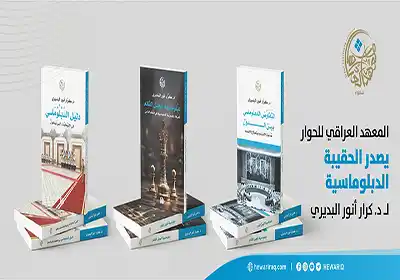
The Iraqi Institute for Dialogue publishes "The Diplomatic Portfolio" by Dr. Karrar Al-Badiri
Invitation to the 79th issue of Dialogue of Thought
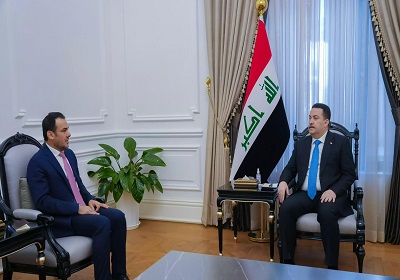
Prime Minister: The path of development will make Iraq a regional political and economic powerhouse
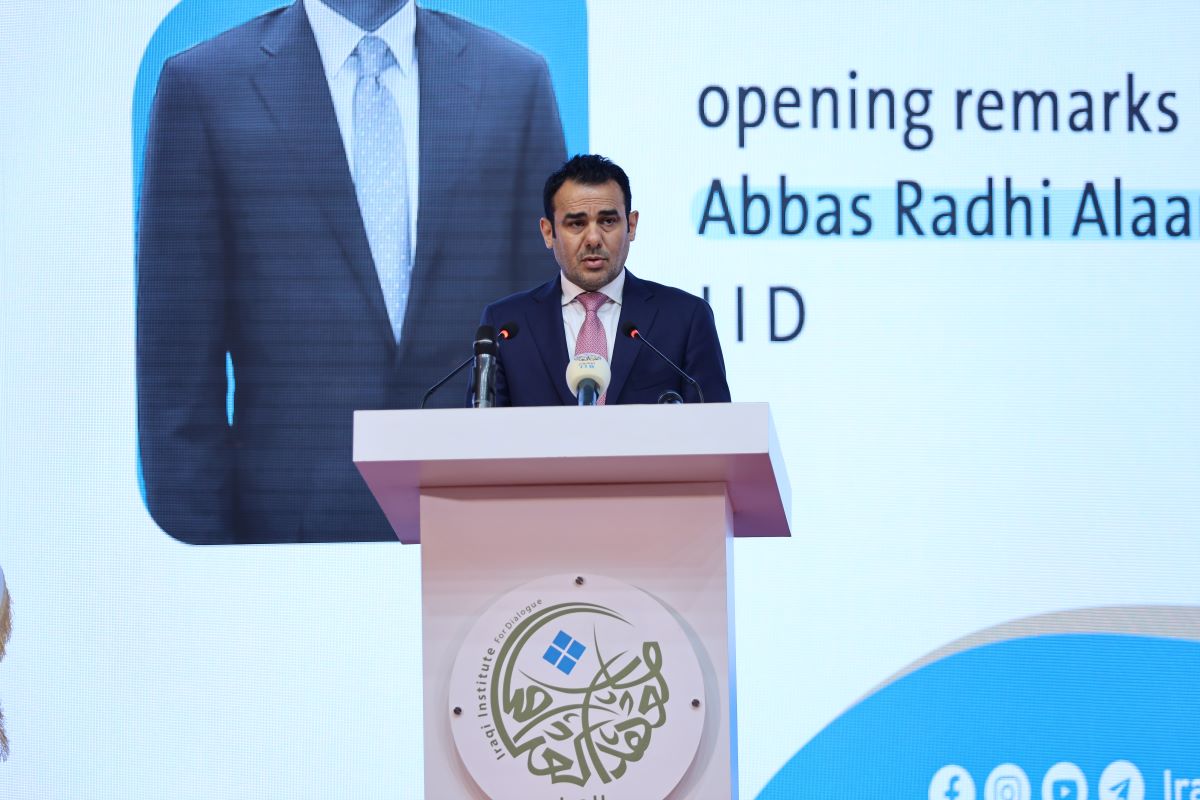
Speech of the Director of the Iraqi Institute for Dialog at the Sixth Baghdad International Dialog Conference
Seventh Baghdad International Dialogue Conference Call for Papers
Comments