



Interior Minister Abdul Amir al-Shammari in an interview with Dialogue of Thought: Climate incentivizes crime and displaces families
In light of the severe environmental shifts that Iraq is witnessing, Interior Minister Lt. Gen. Abdul Amir al-Shammari has linked climate change to escalating crime rates and displacement in a number of provinces, noting that the migration of people from the marsh areas due to drought has contributed to exacerbating security challenges in central cities.
Mr. Al-Shammari acknowledged in an interview with the magazine Dialogue of Thought (71) issued on March 2024, revealed that there was a previous lack of coordination between his ministry and the Ministry of Environment, revealing the launch of a national afforestation initiative as part of efforts to address the effects of the climate crisis.
In a related context, he defended the measures taken by the security forces to bulldoze some orchards during the battles with ISIS, stressing that they were field necessities to dry up the sources of the terrorist threat.
The following is a transcript of the interview
After 2003, the security issue posed a major challenge to successive Iraqi governments due to the risks resulting from the confrontation with terrorism, as well as uncontrolled weapons and tribal conflicts that pose a real threat to societal peace.
In light of the multiplicity of security and intelligence agencies in the country and the overlapping of tasks, the Ministry of Interior is expected to fully take over the security file in the governorates, which would contribute to stabilizing the country and ending the phenomenon of a heavy military presence.
The phenomenon of climate change in the country has also posed another security crisis as families are increasingly displaced from one area to another, making it imperative for the competent security authorities to track and monitor these families.
These and other topics related to the security situation were put on the table of the Minister of Interior, Lieutenant General Abdul Amir Al-Shammari, to answer them.
Dialogue of thought: Mr. Minister of Interior, how do you see the quantitative and qualitative difference from one region to another with climate change and the difference of crimes in Iraq with climate change?
Minister of Internal Affairs: Thanks and appreciation to those in charge of the Dialogue of Thought magazine, and the truth regarding the level of criminal or terrorist crimes, it is no secret to everyone that climate change has aspects that lead to repercussions on food security, reduced job opportunities, and migration from some areas to other areas, as a result of climate change in Iraq in the past three years has been greatly affected, specifically in the areas of Dhi Qar, Maysan, Basra, Muthanna and Diwaniyah governorate. This climate change affected and caused a decrease in the water level in rivers, marshes and the Jabayish marsh areas in Dhi Qar province and the eastern marshes in Maysan province, and this effect caused the migration of entire villages towards specific governorates, such as Najaf, Karbala and Baghdad, as these governorates are attractive and have job opportunities, and the other effect is the low water level, which called on the Ministry of Water Resources to drain or fill fish breeding lakes that are not officially authorized, as there are large numbers of these lakes after 2003, Especially in the areas of northern Iraq, Al-Mada'in, southern Baghdad and near rivers, as well as Salah al-Din governorate, after a number of citizens took many areas, left agriculture and started working in fish farming, and of course the reasons are immigration, lack of job opportunities and migration to other places, for example in the holy province of Karbala and Najaf, as proven in the Ministry of Planning, and is different from the current reality; the areas are random areas as a result of migration to Karbala and Najaf, as well as in Baghdad.
This migration has left young people unemployed, and some of them are working on day labor or taxi cases, and some criminal offenses have started to appear in these areas.
Dialogue of thought: Mr. Minister, how do you relate the type and number of crimes to displacement, migration or changing areas from one region to another, and is the security presence an indicator for you in more dangerous areas?
Minister of Internal Affairs: We cannot say that these villages are the cause of crimes, for example, in the marsh areas of southern Iraq, most of the young people lived on fishing and labor issues, and when they go to the city, they do not find job opportunities, but rather look for employment, even if as a contract or daily worker, and as a result this creates an atmosphere not only with drug issues, as the most crime-ridden areas are informal areas and new housing areas, and we need to build police stations that strengthen the security forces, and certainly we have a monthly criminal situation for areas where criminal crimes escalate, and there must be a procedure or a criminal analysis that identifies, and may
Dialogue of thought: Regarding coordination with relevant ministries because in previous years there has been little interest by the Ministry of Interior in the environment and climate. This is something we have seen in previous governments since 2003. Until now, Ministry of Environment employees have complained about the lack of response from Ministry of Interior personnel regarding environmental violations. Does he have a plan for this issue in the future or now?
Minister of Internal Affairs: We have environmental police affiliated with the Civil Defense Directorate. As for encroachments, these encroachments always occur on the rivers, and we deal with the Ministry of Water Resources to remove these encroachments, and they always occur during the agricultural seasons, especially during the cultivation period of wheat, barley and pulp, and coordination is done with the Ministry of Water Resources, and for the Ministry of Environment we have coordination, as well as by the Environment Police, and we have an afforestation initiative as the Prime Minister's directive was for all ministries to have initiatives in afforesting areas so that open areas can be afforested.
Dialogue of thought: The battles with ISIS have caused us to lose a lot, including the loss of green spaces in all liberated areas, as well as the bulldozing of orchards. Is the Ministry of Interior working to curb this phenomenon, especially as we witness the conversion of agricultural land into residential areas, what is the role of your ministry?
Minister of Internal Affairs: It is clear to everyone that in guerrilla warfare, ISIS has taken advantage of wooded areas and areas where the geography prevents security forces from reaching them, and many of the most heavily wooded islands were forced to be bulldozed.
These areas provide shelter for terrorist elements and affect the population in this area in Salahuddin and Nineveh, and these islands were definitely protected. We then asked the governor of Salahuddin and the governor of Nineveh that these areas should be distributed to citizens for the purpose of farming and agricultural crops, and there was a response by the governors in this regard, but there are some areas that were not bulldozed, for example in Kirkuk province, the Wadi al-Sham area because of the presence of natural trees despite the large number of ISIS in this area, and it was addressed through specific air strikes without the need for bulldozing.
Dialogue of thought: In a previous interview we had with National Security Advisor Qassim al-Araji, on the issue of handing over security from the Ministry of Defense to the Ministry of Interior, he said that the Minister of Interior is brilliant, and the ministry should be as brilliant as him, where has this file reached?
Minister of Internal Affairs: Thank you, Mr. National Security Advisor, for this confidence and testimony, which we are proud of. As you know that the issue of internal security in the government program, one of the priorities is the assumption of security responsibility by the Ministry of Interior, and the assumption of this responsibility has many criteria that must be taken by the Ministry of Interior, in many governorates who leads security are the security leaders, and I was an operations commander for long periods of time.
Therefore, the operations management by the Ministry of Defense is a military-security command, and we are in the Ministry of Interior, and the citizen asks what is the change from the Ministry of Defense to the Ministry of Interior? Certainly, the Ministry of Interior, when it takes over, must have procedures that are felt by the citizen through the deployment of help, as well as through cameras and modern technologies, and through the handling of police stations, which are responsible for the security file. We as a ministry have taken over the security responsibility in Wasit, Diwaniyah, Muthanna, Najaf, Babylon, and the last phase this year is the city centers in Dhi Qar, and this year we will take over the city centers in Nineveh, Salahuddin, and Anbar, and Baghdad will take precedence, as well as Diyala. In these areas, police commands are in charge, and exercises were conducted in the five governorates, and according to the vision of the National Security Advisory and Joint Operations, this indicated a decrease in crime, and that the Ministry of Interior worked to reinforce these governorates with modern vehicles and officers, as well as affiliates.
We also automated police stations at the end of last year to end the reliance on the paper-based system, and there is a network connection with the police, the judiciary, and police stations, so that the Minister of Interior can see the investigative papers.
Dialogue of thought: Are you seeing improved security in the areas that the Ministry of Interior took over from the Defense Ministry?
Minister of Internal Affairs: There is a monthly assessment that is submitted to the Prime Minister, and these governorates are witnessing remarkable security stability during the past period, and as a result, to be fair, these governorates are basically stable, but we managed the security file in isolation during the Arbaeen visit, as well as during the events that passed in the past period there was a stable security situation, which was positively reflected, as well as the governors, construction, projects that have been implemented and attracting investment, and these governorates are considered the lowest level in terms of criminal offenses.
Dialogue of thought: This is a great experience, and we hope that this experience will be transferred to the rest of the governorates, and even to the liberated governorates. Is there a vision in this regard?
Minister of Internal Affairs: We saw in Baghdad province, and when I was commander of Baghdad operations in 2013, the threat was different, and there were neighboring areas such as Fallujah and al-Garma that threatened the capital with car bombs, and the terrorist organization ISIS was present there.
Now the threat is different, and the National Security Agency and the security services are imposing their power on these cities through security and information, not militarily.
In addition, we have expanded the network of cameras in Baghdad, and this year we added 1000 cameras, and these cameras are smart, and we worked on the smart traffic light project, and it will be on the Rusafa side, five intersections will be completed in the coming days. This is a smart signal with a camera that captures, for example, those who do not wear seat belts and other violations, and this does not require the presence of a traffic policeman, but the camera captures the image.
Dialogue of thought: The decisions you make in favor of the traffic police indicate that your Excellency may sometimes go too far with this concern?
Minister of Internal Affairs: As you know, we cannot tolerate stopping for five to ten minutes while a traffic policeman organizes traffic at intersections, while the same policeman stands for long hours, under the sun or cold weather, and is therefore a human being and under psychological pressure. I appreciate the traffic policemen despite the circumstances. They exercise their role well, and all the intersections where they are always present witness a smooth flow of traffic, and as I mentioned that smart signals will have a big role in solving this issue, and there will be no need for the presence of traffic policemen in intersections and streets.
Also, these smart signals will ease the phenomenon of congestion, and the government of Mr. Prime Minister has started a project to break traffic jams, and as you know the process of implementing projects is carried out quickly, and this requires the presence of traffic men, and our role as a ministry is to protect them, and we do not allow anyone to attack them, and I do not exaggerate this, and I do not exaggerate.
Dialogue of thought: How do you deal with the phenomenon of uncontrolled weapons throughout Iraq? Especially in light of the war on Gaza today, this issue is considered a threat to diplomatic missions by the Islamic Resistance?
Minister of Internal Affairs: There is a higher committee headed by the deputy minister and under my personal supervision, and from all state agencies, and this committee works according to a strategy, and this strategy was approved by the National Security Council, and in this strategy there are aspects, including citizens' weapons and tribal weapons, which must be fully under the control of the state.
This strategy includes the coding of weapons, even those held by the security services, as well as the registration of weapons held by citizens, the closure of firearms shops, and the issuance of instructions regarding the identification of weapons and the possession of weapons. At the same time, we encourage citizens to surrender weapons, either by purchasing them or in other ways, and we have a final session with a number of proposals that will be presented to the Council of Ministers, such as the allocation of financial sums to encourage the surrender of weapons and the provision of job opportunities or appointment if the weapon is surrendered.
As for diplomatic missions, we as a government are responsible for ensuring the security of all diplomatic missions, and this is our duty, and we will not allow any person or party to threaten the security of diplomatic missions, which are under the protection of the government.
Dialogue of thought: Regarding disputed areas within the Kurdistan Region's borders. Makhmour district in particular, which is 70 kilometers from Erbil, may be disputed to the north by the KRG and to the south by the Baghdad government. The change of climate in this district led to the displacement of some people from it, and caused many complaints by citizens and an increase in crimes. Do you coordinate security work with the KRG in these disputed areas, or do you bear sole responsibility in this matter?
Minister: Makhmour district is completely under the control of the federal government, but there is a mountain range in Kargog district, which separates Erbil from Makhmour, and with the presence of Kurdish refugees, but the majority of the district's population are farmers. Recently, there is a police station and army units in this district. Coordination is in the Iraqi Army's 14th Command Division, and there is coordination with officers from the Peshmerga forces and the Iraqi army and police.
There is a vision of the Joint Operations Command in the disputed areas, and there are two joint brigades, the 20th brigade from the Peshmerga, and the 60th brigade from the Iraqi army has been named. The mission of these brigades is to protect the border between the region and the federal government, specifically these areas because there are gaps of 10 or 20 kilometers.
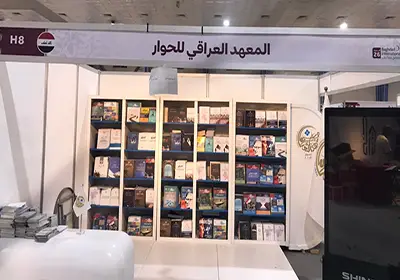
The Iraqi Institute for Dialogue, the logistical sponsor of the Baghdad International Book Fair, opens its own pavilion at the fair
Official agreement between Iraqi Institute for Dialogue and the Iraqi Media Network to sponsor The Seventh Annual International Conference of “Baghdad Dialogue” 2025
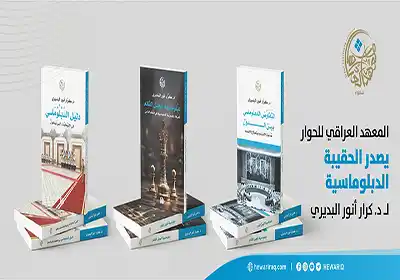
The Iraqi Institute for Dialogue publishes "The Diplomatic Portfolio" by Dr. Karrar Al-Badiri
Invitation to the 79th issue of Dialogue of Thought
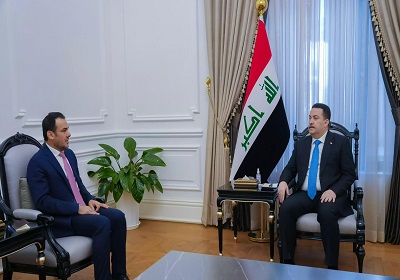
Prime Minister: The path of development will make Iraq a regional political and economic powerhouse
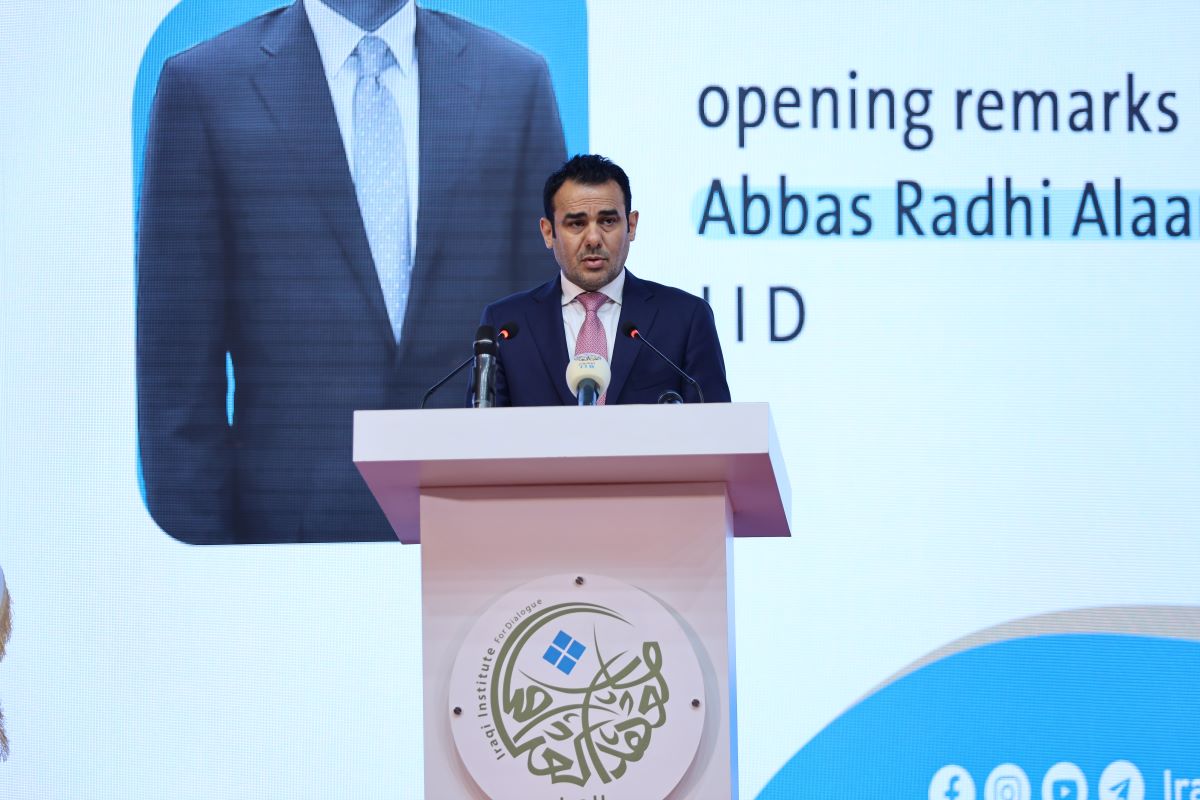
Speech of the Director of the Iraqi Institute for Dialog at the Sixth Baghdad International Dialog Conference
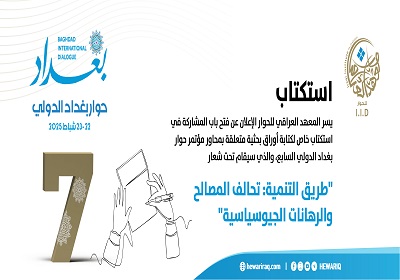
Seventh Baghdad International Dialogue Conference Call for Papers
Comments