



Minister of Higher Education and Scientific Research Dr. Naim al-Abboudi for "Dialogue of Thought" magazine: There is no issue in Iraq that the ministry does not have a vision to solve and we aim to open up to society
Emphasizing the role of higher education as a key lever for development and stability, Minister of Higher Education and Scientific Research Dr. Naim Al-Aboudi, in an exclusive interview with the magazine "Dialogue of Thought" published in the double issue (69 - 70) issued in January 2024, emphasizing that his ministry has a clear vision to address the various challenges facing Iraq.
Al-Aboudi added that the ministry seeks to enhance openness to society and expand the roles of universities to be effective in solving crises and meeting the needs of the state and the citizen alike.
The following is a transcript of the interview
The Ministry of Higher Education and Scientific Research has many questions on its mind, including the issue of accommodating students in universities due to the great pressure in the coming years, in addition to the inappropriate perception of universities and community colleges, as well as the employment crisis for graduates.
Other questions related to "providing ideal infrastructure requirements for universities, issues related to community colleges, affairs of scientific laboratories and providing ideal libraries." We also addressed a number of questions that were related to the role of the Ministry of Higher Education in combating crucial and important issues, including the "climate change crisis" on Iraq.
To answer these and other questions, on the sidelines of the international climate conference organized by the Iraqi Institute for Dialogue and the Faculty of Political Science at Baghdad University, Dialogue of Thought magazine interviewed the Minister of Higher Education and Scientific Research, Dr. Naim Al-Abboudi, who was interviewed by Dr. Youssef Khalaf.
Dialogue of thought: First of all, we thank you for accepting the invitation to the dialogue, and we will touch on some axes that focus on the input of education in revitalizing and proposing some solutions to various state issues in general. If we start with the general question, what are the plans of higher education and its proposal to face the important risks coming to Iraq, as all international reports indicate that Iraq is one of the very affected by the upcoming climate changes?
Mr. Minister:
Praise be to Allah, Lord of the Worlds, and peace and blessings be upon the most honorable of all creation, Muhammad, and his good and pure household, and upon his beloved companions, and upon all the prophets and messengers, first of all thanks and appreciation to the "Iraqi Institute for Dialogue" and its magazine Dialogue of Thought for this opportunity.
Frankly, this is a very important positive signal, that some study centers and institutes have this step, which is to identify issues and develop solutions and openness. On more than one occasion, I have said that there is no issue in Iraq that higher education does not have a vision in its case, as there can be no sustainability and stability even at the level of the political situation, if universities are not open to society and develop solutions.
Therefore, from the beginning, when we took over the ministry, we focused on a basic and fundamental point, which is the issue of supporting scientific research. Of course, participation is not only in the internal decisions of the Ministry of Higher Education, but we involved in the vision of many important Iraqi professors outside Iraq and even inside Iraq from retired people, who have a vision in the subject of scientific research.
In addition, we allocated funds from the Higher Education Fund and gave our universities the authority to disburse these funds for scientific research.
So there is a vision for the Ministry of Higher Education and Scientific Research, but this vision remains incomplete if there is no integration with state institutions, so what is the point when the Ministry of Higher Education and Scientific Research develops a vision or scientific research in solving these issues, but there is no strategic vision.
So far, the Iraqi government is in favor of supporting scientific research, but the Ministry of Higher Education and Scientific Research faces challenges, and one of these challenges is the red tape and bureaucratic aspect that we must overcome, this is the first.
Secondly, there must be a very clear strategy and a real will that shows that there is support for higher education and support for our universities in order to open up to the community, so the first steps we took were first the financial aspect where scientific research was supported in this area.
We established the Industrial Advisory Council, and I believe that this is a qualitative step taken by the Ministry of Higher Education and Research to open up to the private sector, and that the outputs of the Ministry of Higher Education and Scientific Research should be included in the labor market, and our youth should not only aim for employment, but should have skills, all this with the support of the program we have put forward for the Bologna track that feeds into the labor market.
Therefore, at the international climate conference held by the Iraqi Institute for Dialogue and the Faculty of Political Science, we launched a competition to develop solutions to climate change. Frankly, this issue does not only threaten Iraq, but the entire region, and I believe that the solutions will be in these papers that will be written by specialized professors, especially graduate students and professors in universities, in order to develop solutions, in addition to that there must also be a real will to apply these scientific researches in practice.
Dialogue of thought: The Ministry of Higher Education is one of the most stable and dynamic ministries, as it revealed at the International Climate Conference the level of boldness of education in raising issues that may change the education system in Iraq, but the most important question is for the researchers themselves, why do these studies not take their way to implementation? Is there a state of integration with which Your Excellency is satisfied with state institutions by adopting these studies?
Mr. Minister:
We have an issue and I said frankly the bureaucratic aspect is one, and secondly we also have an issue at the level of laws and legislation; because the challenges for the Ministry of Higher Education are very big challenges, and if we talk about the steps we took during the past year in the face of the challenges, you may see a kind of miracle, but to be objective there are very big chances of success.
We have competent university professors, we have advisory boards, expertise, and important academic figures, and if we can make all these people in decision-making, we will achieve success, and for us, even at the level of postgraduate studies, we will set out, God willing, to develop a plan for studies, whether at the master's and doctoral levels.
Frankly, there is a severe shortage of some specializations, such as project management and business management, so for us as the Ministry of Higher Education and Scientific Research, we go along with our demands in the cabinet and push for integration between government units so that scientific research is not just a topic in libraries, but must find its way to practical application.
We addressed all ministries, including the Ministry of Planning, Finance, Industry, and others, and the ministries that have issues to raise the issues that these ministries have, and what rare specialties they need, so we will develop a plan for postgraduate studies for the year 2024.
But as you know this cannot succeed if there is no interdependence between these state institutions, and we have talked with the Prime Minister in this aspect, and now we want to develop a plan for these ministries to benefit from the Ministry of Higher Education and Scientific Research, and during this period I visited some countries and found that there is a very great openness of the university to society and also to the private sector, they have a special budget, they have a budget in partnership with the private sector, and there are state institutions that depend entirely on higher education and scientific research from these researches.
For us, we will be ready and able to put these solutions and put the first step, and the second step remains, so that we do not remain helpless, and we must lobby and talk with other state institutions in order to put the first real building block for the draft laws that we are now working on.
In addition, we make these institutions and ministries trust the Ministry of Higher Education and Scientific Research that it has a vision, and this is what we are working on during this period, God willing.
Dialogue of thought: This is a positive action and we are optimistic, but today your colleagues who are teachers, researchers and your students, especially graduate students, have a general concern, why doesn't the ministry in general open studies according to specialization, in other words, in a clearer sense, is it possible to set a path for choosing topics in graduate studies, because as you know today the choice of topics in graduate studies in all departments is subject to the experience of the teacher? Is there an intention to put forward important topics to urge researchers and commit them in completing these files?
Mr. Minister:
We will work on this issue in two tracks, the first is the competitions that we have proposed that every researcher who has research in this aspect and in this field, especially in climate change, will have prizes, and we have tried these competitions and they have had results, for example the "Iqraa" competition launched by the Ministry of Higher Education and Scientific Research, which achieved great results in opening the university to society and students.
When we launched this initiative (the competition), we found that there was a very large interaction of students with this initiative, in which about 40,000 students registered on the platform, and about 22,000 students participated in the exams to read a book, and there was a passport and some students won, so now is also an opportunity for professors and postgraduate studies to do this aspect in addition to what you have mentioned. They took the exams to read a book, and there were prizes that were won by some students, so now there is also an opportunity for professors and postgraduate studies to do this aspect in addition to what you mentioned, we discussed it at the Ministry of Higher Education and Scientific Research, and we must focus on some topics that have something to do with solving a certain issue.
Otherwise, what is the value of scientific research and what is the value of the Ministry of Higher Education and Scientific Research if it does not identify the real issues that society suffers from and then develop solutions for them, so we start from reality and identify these issues and then develop our research and competitions to solve this issue, and I affirm that the existing issues, whether political, economic or social, every aspect of these aspects, our youth in universities have a vision to solve them, whether they are young students or at the level of postgraduate studies.
Therefore, we proceed first from our absolute belief that the Iraqi mind is a successful and strategic mind that develops solutions, and then we have the capabilities, and there is no excuse for delay, even the Ministry of Higher Education and Scientific Research, despite the challenges, but there are opportunities for success, any delay is frankly no excuse, so the plan exists, but there must be integration with other institutions, and this is what we emphasize.
For example, when the Ministry of Higher Education and Scientific Research partners with the private sector, the revenues from this project will go to the general budget, so there is no incentive and motivation for our universities to have a business with the private sector so that the Ministry of Higher Education has financial liquidity.
What we are working on outside the budget, of course, our budget is not encouraging, because inside the budget we have a deficit of one trillion dinars in the operating budget, and what helped the Ministry of Higher Education and Scientific Research is the issue of the Education Fund, which allowed the ministry to work.
So we have a plan during this period to establish a research center for which a sum of money has been allocated and land has been allocated, and this will be the largest research center in Iraq and the Middle East.
There is contact with engineering and science faculties, in order to know their basic needs and requirements, to establish this center, and until now there is no specialized scientific research center that graduate students and universities rely on.
So the idea was to establish a specialized scientific research center that would benefit graduate students, universities and all researchers, and be the first in the Middle East, and if not the first, then at least not a specialized research center higher than it.
We have started the practical steps, and I am personally following up on the project, and God willing, it will be a qualitative addition to the Ministry of Higher Education and Scientific Research.
Dialogue of thought: Your Excellency, a year has passed since you took over the Ministry of Higher Education, and some in the academic community, whether at the level of graduate studies, professors, or even students, view the ministry during the past year as "the ministry of initiatives and competitions" and this is a happy thing, whether it is the IQRA competition or the real quality artificial intelligence competition, or even the climate initiative that was announced in cooperation with the Iraqi Institute for Dialogue, my important question is how will these research projects be funded?
Mr. Minister:
With regard to the climate competition that was announced late last year, the Iraqi Institute for Dialogue is the adopter of this competition, and this is something to be thankful for, as it supports the competition, and as for the Iqraa competition, private universities adopted this project and provided the prize, which is about one hundred million Iraqis.
And now the Iraqi Institute for Dialogue has said we are co-supporting this competition. We must not stand idly by, and I continue what I told him about initiatives, a while ago we had discussions about the Atomic Energy Commission and found that we have very smart students in the subject of nuclear engineering, but we have a gap between the young generation and our scientists, most of whom are now retired and do not have a very large capacity to provide something in light of the developments in this field, we launched an initiative and there were discussions with the International Atomic Energy Agency, and we traveled more than once about this, and the Iraqi government supported the establishment of a nuclear reactor for our colleges and universities in Baghdad, and the approval was given by the International Atomic Energy Agency and the Iraqi government also strongly supported it, and to be fair, a nuclear power plant was issued in the Security Ministerial Council And the Iraqi government also strongly supported the establishment of a nuclear zero reactor for our colleges and universities in Baghdad, and the approval was obtained from the International Atomic Energy Agency and the Iraqi government also strongly supported, and to be fair, it was done in the Security Ministerial Council and the approval was issued by the Iraqi government, and we also allocated funds from the Education Fund, and Chinese and Russian companies were addressed, but I believe that Chinese companies will come to Iraq to submit proposals as we have received an official invitation from Russia, and they will give us presentations on implementing the zero nuclear reactor project and this project for universities for the first time in the history of higher education and scientific research.
Even before the previous regime, there was no nuclear zero reactor for students, because the student was studying theoretical issues and there was no practical nuclear reactor to work on, so this will be a gift to our youth and students that will frankly create educated scientists in this nuclear reactor. God willing, we are racing against time so that the work will be doubled in order to establish the zero nuclear reactor next to the scientific research center, which will also be a qualitative addition to the Ministry of Higher Education and Scientific Research.
Dialogue of thought: What are the main challenges facing the Ministry of Higher Education?
Mr. Minister:
The challenges are great, but I don't care about those challenges, I look at the opportunities I have, and certainly every business that has opportunities in any stable country will have challenges, but we are how we overcome those challenges and create those opportunities.
I am completely dependent on the mindsets present in the Ministry of Higher Education and Scientific Research, and we must do something for Iraq, and I believe that everyone who has jealousy for our people and our country that he can offer something must offer it, and I found during my visit to the universities I visited, there are many opportunities and we have aspiring and conscious students who are present in the issues of their nation, in addition to the presence of professors who are scientists in all disciplines.
But the question is why we do not involve all these people in the decision-making of the Ministry of Higher Education and Scientific Research, to listen to their proposals, so the doors of the ministry are open to any proposal, and the proposal is studied and discussed from the advanced staff of the ministry, and the ministry's efforts were very clear, not necessarily the leader or official is familiar with all specialties, but the most important thing is that he is surrounded by specialists and has the will and vision to walk in this ministry.
Therefore, the Ministry of Higher Education and Scientific Research has very big challenges, but there are opportunities because it deals with the mindsets and plans of professors and students, and we were able to put the first step in the right direction, and our basic work until this moment is institutionalized work within an integrated and joint team, so that whoever comes after us does not start from scratch but continues the journey to what we finished so that the Ministry of Higher Education is the first ministry.
In addition, I believe that there can be no development in any country, which is the reality of course, if there is no real and successful higher education, and there are some countries such as Singapore and others, whose capital is education and scientific research, when there is a focus on scientific research and universities, there will be a very clear development that reflects positively on all facilities of life in higher education.
I remember an incident reported in books that in 1957, the first space launch was from the Soviet Union, followed by another launch in 1961, and the Cold War between the Soviet Union and the United States of America was at its height at that time, so a government meeting in the United States of America was about what is the reason why the Soviet Union beat us to space, and when the person started asking Ministers of Industry, Agriculture and Commerce, the person concerned with education (the minister) answered him, and he said that the issue is with me, because we have backward curricula and we need to modernize, and the Soviet Union is developed in this aspect, so the curricula were changed from primary to universities, and after about seven to eight years, the United States reached space and developed more and more; because the focus is on the aspect of scientific research and studies.
So why don't we have this strategic goal? Especially since I believe that the mentality of Iraqi youth is not the first in the region, but the first in the world, because we find our youth abroad creative, and we have Iraqi youth in European universities who are scientists and have innovations at the level of other students.
Therefore, the opportunity is available and a very big chance to succeed, and God willing, the steps we are taking come from a firm belief and conviction that there can be no stability, even political stability, if there is no scientific research and openness to universities.
Dialogue of thought: Today, the Ministry of Higher Education is a policy maker and directs the academic, educational and research sector as well as state institutions through the general vision, but the implementation tools are the important pillars in the leadership of universities, whether deans, university presidents and all the cadres that manage universities, of course the levels between deans and university presidents are different.
Mr. Minister:
Yes, we notice the level of scientific research from one university to another is different, as well as openness to society and interaction with students, so it is not possible to be one level, even at the level of middle leaders in the Ministry of Higher Education and Scientific Research and that is the case in the deans, and we are now developing a plan to infuse new blood.
Some of them have the ability, but they need to be motivated and encouraged, so some universities are starting to move, and I say it to be fair, there are some universities that are effective universities that are open to society, whose leaders are real and realistic leaders, and most university presidents have been very successful, but they are constrained by the laws that I mentioned, and we opened our doors with universities for proposals, encouragement and others, and this was not in effect in the Ministry of Higher Education and Scientific Research.
These steps cannot be taken if there is no interaction of university leaders with the Ministry of Higher Education and with the advanced staff, not just with the minister, and we have no options other than optimism and success, God willing.
Dialogue of thought: We have two axes at the heart of higher education, one of them is that there are statistics published by various state institutions about the increase in the youth population, this increase will be reflected in higher education, how do you deal with these issues and what are the absorptive capacities at the level of public and private education?
Mr. Minister:
This is an important question. In 2030, statistics say that the Ministry of Higher Education and Scientific Research must receive a million students. Yes, according to studies, we have a very large delay in establishing universities, and there are plans, whether at the level of establishing governmental or private universities, we opened one university in 2023 with a number of colleges.
This question opens up many questions, what is the need for public and government education to private education, we have private issues, of course now 500,000 students are in private colleges, private education solved an issue for us, but at the same time there are cumulative issues with private education, and now we started taking steps to make public and private education a joint process without differentiating between them in the vision, and my vision is that we must elevate private universities to a large level, and most universities in the world now are private universities, but specialized in scientific research and some issues.
We have taken steps to suspend some universities or suspend some departments, and we will never hesitate to do so, because the main goal is the success of education.
The good news is that some private universities are starting to compete with public universities, especially on the subject of scientific research, but as you know, the potential of public universities at the level of professors is perhaps more than that of private universities.
Some universities are now starting to support some study centers and research centers in their universities, which is also a very big benefit for our public universities, and this is all in the interest of education in general.
We have a plan during this year, God willing, on the subject of private universities, the goal must be a strategic goal at the level of entering the Bologna path that will be applied to public and private universities, which is a transition from the subjects to the student himself, and the student must be an essential part of this system and our outputs within it in the labor market, all these, God willing, will reach in this area that I mentioned.
Dialogue of thought: Why are postgraduate studies in private education not yet operational despite the existence of a paragraph in the law authorizing them?
Mr. Minister:
We have a decision in the Ministry of Higher Education and Scientific Research to open postgraduate studies in private universities with conditions, and as you know that some private universities at the level of professors and capabilities may lag behind public universities, but at the same time the logistical aspect is present in private universities.
Therefore, this year we will open postgraduate studies to private universities, but on the condition that first there must be twinning with government universities, and during this period the professors supervising these theses and dissertations must be from the government universities themselves; because we emphasize scientific sobriety, which is a red line for us, by the way, the twinning between private universities with the government has been welcomed.
This year, postgraduate studies will be launched in private universities with the conditions I mentioned, the topics we want and the specializations needed by the country and the labor market, and the important thing is that we have introduced artificial intelligence in universities and it will make a leap in the labor market, and some private universities have opened specialization in artificial intelligence.
So the benefit of private universities is that they look at the private sector and work according to the needs of the street and the market and then give us ideas, so we also benefited from this experience and this experience from private universities, and we have a vision to establish a college or university specialized in the subject of artificial intelligence, and this is the goal and integration between the government and the private sector.
We will find a name that does not differentiate between public and private universities, God willing, while preserving all the elements and features of universities.
Dialogue of thought: An important and pressing question for graduate student applicants this year is, can the plan be expanded without the need for additional expansion?
Mr. Minister:
We accepted 22,000 students in postgraduate studies, what are the specializations, what is the plan for these studies and what are the capabilities of the universities, and even the universities when they developed this plan is not a realistic plan frankly, but because of the great pressure on these universities, we agreed to this plan, which is to accept 22,000 students, and develop a real and realistic plan for postgraduate studies in Iraq.
Therefore, a conversation was held with the parliamentary committee and some specialists with the Ministry of Higher Education and Scientific Research to develop a real realistic plan for these studies, and private universities will participate with us, so there will definitely be more and wider seats, but in subjects that the country and the labor market need, such as project management, we have an acute shortage, and the subject of artificial intelligence, IT, banking and banking, and we have an acute shortage in these specializations.
Dialogue of thought: There is a discussion that the Ministry of Education is producing cohorts of unemployed, is the ministry interested in education and employment, and will some specializations be reconsidered and their numbers reduced in light of the lack of need?
Mr. Minister:
Thank you for this important question, the Ministry of Education is tasked with providing education and not employment, and this is guaranteed by the constitution, so not every graduate is necessarily hired, there may be opportunities for the private sector, so this question is directed to the Ministry of Higher Education.
There are institutions that are supposed to deal with the outputs of the Ministry of Higher Education, whether at the level of employment or at the level of the private sector, we help our outputs to be close to the labor market so that the student benefits in skills, and most countries of the world now at the level of studies began to reduce a lot, and began to rely on institutes, because this student gains the subject of skill and we have an issue in this aspect.
Most of our students want to go to the medical group, and we as the Ministry of Higher Education and Scientific Research deal with the outputs of the Ministry of Education, so the important question that is asked by some brothers and raised in the media without information, that those who obtain an average of 97 are not accepted in the Faculty of Medicine, this is not our responsibility as the Ministry of Higher Education, but we deal with the outputs of the Ministry of Education, we have from 90 to 100 average more than fifty thousand students. Previously, in the seventies in the eighties, whoever gets an average of 90 goes to medical school, the triangle that we adopt is inverted, the rates of fifty and sixty are many high rates and ninety are few, but we are exactly the opposite, the high rates are from ninety and above are very large and the fifties and sixties are few, and this is a real issue, some countries of the world went to institutes, while we now have a migration from these institutes.
We have a plan on how to create incentives for students to enter these institutes so that they can enter the labor market, so the Ministry of Higher Education has issues, so we are creating solutions and providing incentives.
My message through this dialogue to our brothers and some young people is that there are very important specializations that are entering the labor market, and we should not set the primary goal of employment, but there are very large opportunities that may be available through the private sector.
I repeat, unfortunately, our young people, even those who obtain a 90 average, do not have the primary goal of going to the medical group only, although there are some specializations that are strategic and important.
Yes, there is no doubt that the medical group is important and the country needs it, but the country does not only need the medical group, but the country needs the engineer, the geography and history specialist and some important specialties, and the institutes, so we must upgrade this very important category and we believe it is important and strategic not only for the Ministry of Higher Education, but for the country.
Finally, I thank the Iraqi Institute for Dialogue and its journal Dialogue of Thought for this opportunity to discuss these important issues.
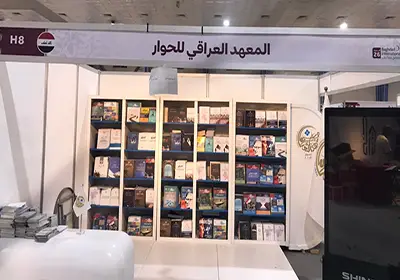
The Iraqi Institute for Dialogue, the logistical sponsor of the Baghdad International Book Fair, opens its own pavilion at the fair
Official agreement between Iraqi Institute for Dialogue and the Iraqi Media Network to sponsor The Seventh Annual International Conference of “Baghdad Dialogue” 2025
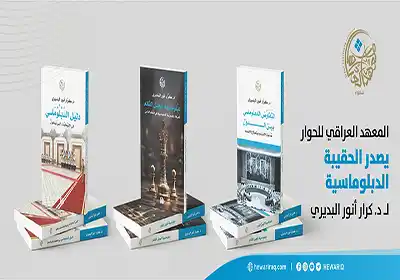
The Iraqi Institute for Dialogue publishes "The Diplomatic Portfolio" by Dr. Karrar Al-Badiri

Invitation to the 79th issue of Dialogue of Thought
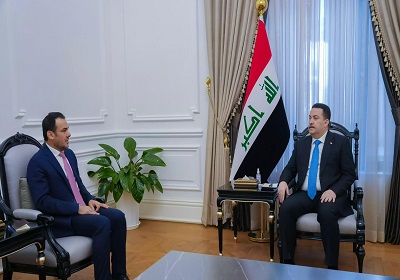
Prime Minister: The path of development will make Iraq a regional political and economic powerhouse
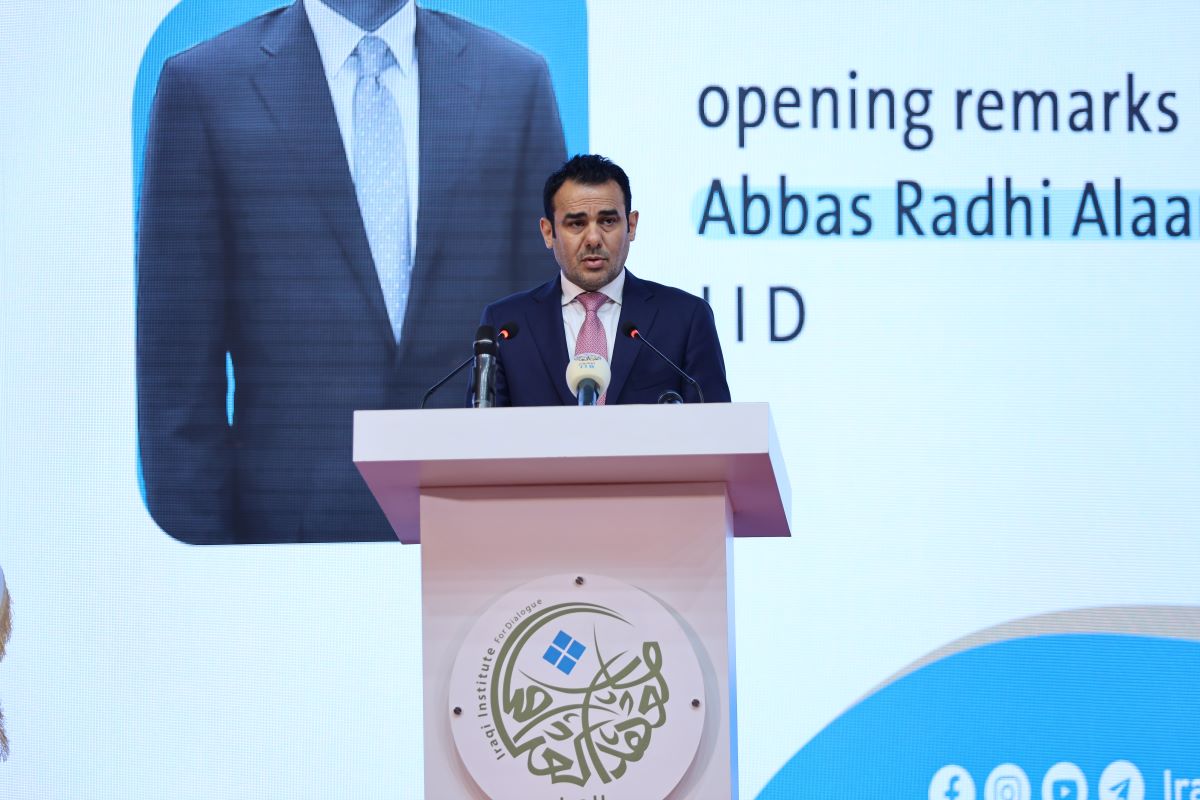
Speech of the Director of the Iraqi Institute for Dialog at the Sixth Baghdad International Dialog Conference
Seventh Baghdad International Dialogue Conference Call for Papers
Comments