



Farid Yassin in an interview with Dialogue of Thought: The climate crisis is not only environmental but also a comprehensive threat to Iraq's development
In light of the escalating environmental threats caused by climate change and the growing catastrophic repercussions on Iraq, Thought Dialogue conducted a special interview with Ambassador Dr. Farid Yassin, one of the most prominent Iraqi figures who was early involved in climate action at both the international and local levels, from the 1990s until he assumed the role of Iraqi climate envoy in recent years.
Dr. Yassin has moved between the worlds of scientific research and international diplomacy, representing Iraq in major forums, from Paris to New York, from the Earth Summit to the Conferences of the Parties to the Climate Convention, combining political experience with scientific expertise.
In this interview, Yassin gives us the full picture of Iraq's climate predicament: Institutional delays, diplomatic isolation, fragile institutional structures, and existential challenges that threaten agricultural cities and coastal areas. But at the same time, he outlines a way out: From climate adaptation to emissions mitigation, from international scientific engagement to national energy policy reform.
Yassin emphasizes that climate change in Iraq is no longer just an environmental issue, but a comprehensive developmental issue that affects the economy, food security, population shift, and even the survival of entire cities on the map. He believes that despite its delay, Iraq still has an opportunity to engage in the global process, provided there is political will, effective institutional coordination, and long-term strategic planning.
In the following, we publish the full text of this in-depth interview, which reveals the subtleties of the obstacles Iraq has faced on the climate file and provides an accurate and frank vision of what needs to be done before it is too late.
Dialogue of thought: Mr. Ambassador, we welcome your presence, and we are grateful to you for taking the time out of your day to talk to us. Let me ask you directly, what is the nature of the climate challenges facing Iraq? You have had direct responsibilities at various levels on the subject since the 1990s.
Dr. Farid Yassin: In fact, talking about the issue of climate change and its effects in Iraq requires us to go back a little bit to get to the root of the issue, because the accumulation of issues without solutions leads to their complexity and increased harmful effects.
Climate change is mainly related to rising levels of carbon dioxide in the atmosphere, and the most important indicator of this rise is by measuring the change in its levels across seasons and years, and it has been observed that the level of the gas accumulates over the years, and its density increases in an accelerated manner.
This rise is termed the rise in the proportion of greenhouse gases in the atmosphere, and what is mainly caused by human intervention through the burning of fossil fuels, and what must be noted here is that greenhouse gases are not a bad element in the earth's atmosphere itself, as without greenhouse gases, the earth's temperature would drop to (-16 degrees Celsius, which is not suitable for living. Greenhouse gases in their natural state maintain the habitable temperature of +16 degrees Celsius, but the danger lies in the rise in the level of greenhouse gases above the natural limit and due to human activity, and this rise began to disturb the delicate balance in the atmosphere that prevailed during long periods.
Dialogue of thought: Are greenhouse gases rising at the same level in different regions?
Dr. Farid Yassin: These gases spread around the earth in the atmosphere, but there is a difference in the effects of their increase between one region of the earth and another, so we see drought in one region or floods in another, and among the first to predict the effect of the rise of carbon dioxide in the atmosphere on the rise in temperatures was a Swedish scientist named (Svante Arrhenius) at the end of the nineteenth century, and in short in the 1970s and 1980s, until the Earth Summit in Rio 1992 and the three agreements (climate, biodiversity, combating desertification) that resulted from it, which is too long to explain here.
Iraq was represented at the Earth Summit held in Rio de Janeiro in 1992, which was opened by former United Nations Secretary-General Kofi Annan, and the distinguished Iraqi diplomat Ismat Kittani was represented by a delegation headed by Tariq Aziz, and all Iraq's neighboring countries signed the agreement at the time, except for Iraq, which did not sign for a reason that I personally could not ascertain.
What I heard is that the Iraqi delegation was reluctant at the time to follow the work of the Earth Summit (which led to three important international agreements on climate change, biodiversity and combating desertification). Fearing reactions to activities carried out by human rights activists against the dictatorial regime at the summit, it would be nice if one of the graduate students investigated the issue to confirm the authenticity of the story, but what I can confirm is that an official of the Secretariat General of one of these conventions (combating desertification), an Algerian national, wrote to the Ministry of Foreign Affairs inquiring about Iraq's lack of participation and emphasizing that participation would bring aid to Iraq and would not cost it anything, according to what the file official told me at that time, who submitted the letter with the recommendation to join the minister, who confirmed it and in turn submitted it to the higher authority at that time, that the higher authority decision came to them in the line of No desertification in Iraq, as a result of all this, we are nearly twenty years behind our neighboring countries.
Dialogue of thought: When did Iraq join the Convention?
Dr. Farid Yassin: The Republican administration of the United States in 2003 was reluctant with regard to climate change affairs, but in 2003, under the supervision of the occupation, it sent a delegation from Iraq to participate in the annual conference, and after the return of power to Iraq in 2004, we continued to participate, but as observers, as I headed the Iraqi delegation to the climate conference in 2004, what allowed us to move forward in terms of belonging to these agreements is the international pact with Iraq, which is a United Nations project overseen by Dr. Barham Salih, then Deputy Prime Minister, and Ibrahim Kambari, Assistant Secretary General of the United Nations, whose goal is to complete a developmental action plan for Iraq, Mr. Adel Abdul Mahdi asked me to devote myself to this project and as
Dialogue of thought: The agreement includes two main strategies to address climate change, can you please, Mr. Ambassador, elaborate on these two strategies? Noting Iraq's late accession to the agreement.
Dr. Farid Yassin: Despite Iraq's late accession to the Climate Convention, we have no choice but to take urgent action within the framework of the two strategies included in the Convention:
I: Adaptation This strategy is based on the recognition of the coming change and its catastrophic effects, which means that humanity has no choice but to adapt to the coming climate changes and to prepare and work proactively to minimize the negative effects of this climate change, as is the case in human affairs, adapting to the surrounding conditions.
II: Mitigation: The strategy aims to mitigate greenhouse gas emissions through various measures, which are developed and added to them at the ongoing climate summits, and during COP 21 in 2015, the Paris Agreement was announced, which is considered the constitution for implementing the provisions of the Climate Change Convention. The agreement includes a number of provisions related to mitigation of emissions to reach one and a half degrees, adaptation to the upcoming climate change and minimizing its effects, international financing mechanisms, calculating losses and insistence resulting from climate change, and other related topics.
Who is responsible for the rise in greenhouse gases? How did we get to this critical point?
Okay, regarding Iraq and its share of greenhouse gases, it is mentioned that the share of Iraq and the oil countries combined is not even close to the share of the Western world and other industrialized countries and their responsibility towards emissions, China today occupies the highest percentage of emissions, but there is a formula for measuring the emission rate based on population, it is understood that China occupies this advanced rank in emissions due to its large population, but a small country like Qatar is the highest percentage of high emissions in relation to its small population, according to the same formula, the emissions from Switzerland with its small population exceed the United States in relation to the population.
The main point here is that developed countries got to where they are through the use of fossil fuels, which led them to have the lion's share of the cumulative level of greenhouse gases, and the debate here is about the right of developing countries to economic progress. Developing countries believe that they have the right to economic progress and should not be prevented from using the means that industrialized countries relied on to develop (meaning fossil fuels) without an alternative or fair compensation.
On this basis, negotiations to mitigate greenhouse gas emissions should take into account justice in this matter, on the basis of responsibility for emissions. Iraq, which is required to reduce emissions through multiple policies, must receive fair compensation in exchange for the obstruction of multiple sectors, the cessation of which will lead to adverse economic effects on Iraq, which should be taken into account in this process.
In fact, this important observation is in harmony with the precise provisions of the Convention, which contains a clause that considers the special circumstances of each individual country in implementing the requirements of the Convention. There is consideration for the special circumstances of countries facing desertification, countries that have coasts that may be inundated by water as a result of warming, in general, countries that will be directly affected by climate change and the measures taken for adaptation and mitigation, and Iraq is at the forefront of them, as it faces desertification on the one hand and the threat of rising water levels on its coastal cities on the other hand.
I would say that the agreement is good, but its implementation mechanisms are complicated by the fact that decisions are taken by consensus, as is the case with the Paris Climate Agreement (goals and targets).
Dialogue of thought: How much heat does the Paris Agreement aim to maintain?
Dr. Farid Yassin: The Convention sets a figure that we should be cautious about, which is 1.5 degrees, meaning that the global average temperature should not exceed one and a half degrees above what was recorded in 1880, and the danger in the matter with regard to Iraq is that there is a large variation from the average according to geographical location. With regard to our region, expectations indicate that the increase will be much more than one and a half degrees Celsius, as the world has currently reached a rise of (1.4), noting that Iraq has reached an alarming stage in the rise in temperature, which has increased in particular due to other matters that have a direct impact on the atmosphere in the region - not related to the use of fossil fuels - or due to the low levels of water coming into Iraq recently, there is an accumulation and acceleration of the issue, and we see this clearly in desertification and shrinking arable areas in Iraq, which is catastrophic, and in order to control it and adjust its course we need greater efforts and better work on the ground.
Dialogue of thought: So, Mr. Ambassador, frankly, where does Iraq stand on the effects of change?
Dr. Farid Yassin: With regard to Iraq, the horizon is not reassuring. There are studies that include predictions that may come true, and some of them have already been realized. These studies tend to anticipate the worst, and in public policies we tend to anticipate the worst option to be prepared to face and treat it, and on this basis, the more time passes without urgent measures, these bad predictions may come true.
To give you a living example, (Al-Fatih Al-Tahir) is a professor of climate at the Massachusetts Institute of Technology (MIT), the most important scientific institution in the world, as is known, in 2019 Al-Fatih Al-Tahir predicted the effects of the greenhouse effect on the pilgrims of the Holy House of Allah, and his predictions actually began to materialize, this year a large number of deaths among pilgrims were recorded due to warming and the greenhouse phenomenon of global warming, and he has another article dealing with the visit in the fortieth anniversary of Imam Hussein, peace be upon him, and the impact of warming on visitors, which is no less dangerous than his predictions regarding the pilgrims in Makkah.
Dialogue of thought: How does the greenhouse effect affect the human body, Mr. Ambassador?
Dr. Farid Yassin: An important concept to define is the humid temperature, the humid temperature is the temperature that the human body can reach in a given environment through evaporative cooling, it is a measure of the body's ability to cool itself through sweating, if the humid temperature is too high, it may become difficult for the body to cool effectively, which may lead to heat stress or even death, the upper limit of the humid temperature that humans can tolerate is about 35 degrees Celsius, but this can vary from person to person. The researchers predict that the humid temperature in the coastal areas of the Gulf may exceed this limit for periods that may exceed hundreds of hours per year on a horizon measured in decades, meaning that a person cannot safely be in an open space in those areas in the middle of the day for several months every year without protective devices, and this, of course, concerns the Iraqi areas near the Gulf, including the city of Basra.
For example, Saudi Arabia has banned municipal workers from working between 11:00 am and 4:00 pm during the summer, and Iraq will be affected by this degree of high humidity levels in areas that share the same climate with the Gulf countries and in the city of Basra specifically.
As for Basra itself, global studies indicate that some areas of the city will gradually be covered by rising Gulf waters, as will nearby coastal cities such as Alexandria, Shanghai, New York and others.
As for the remaining areas in Iraq, for example, the north and northwest, there will be a dry climate, in a dry climate, humans can tolerate temperatures reaching 50 degrees Celsius, but at the same time these areas will suffer from a decrease in rainfall, on this basis, Iraq faces an urgent entitlement from now to adapt to this change, and this means that we must take measures in building long-term institutions, for example, if we want to build a new large hospital in Basra, it should not be on the beach.
Adaptation takes many forms, such as reconsidering building methods and materials, taking into account thermal insulation, and adopting modern techniques in agriculture, irrigation, and the like.
Iraq should make a strong scientific effort to share with the world and contribute to the studies that lead the way in combating climate change by enhancing its participation in the scientific activities of international institutions concerned with this issue, especially the IPCC, and Iraqi participation in IPCC activities is currently held below the required level and in the absence of representatives of key institutions in this work, such as Iraqi university institutions.
Dialogue of thought: Mr. Ambassador, since you touched on our involvement in the climate crisis with the Gulf countries, how can you evaluate the experiences of these countries and how can we benefit from them?
Dr. Farid Yassin: Before we mention this experience, more precisely, how these countries have developed their policies in this regard, let me recall the heated debate on adaptation at the recent Dubai Climate Conference. In the final text, there was a paragraph that talked about getting rid of fossil fuels once and for all. Saudi Arabia objected, and the paragraph was changed to add words that take into account the legitimate needs of developing countries.
Regarding your question, of course, Iraq has started adaptation measures, but slowly, but if we look at the experiences around us, we find that Saudi Arabia is the advanced Arab country in this field (Morocco is an advanced Arab country in the field of climate, but its conditions are different and it is not in our neighborhood).
At the beginning of the talk about climate change and at the first summits held on this issue, Saudi Arabia, as an oil country, was afraid of this talk and took a position of continuous opposition, but as the position on global warming continued to evolve and the scientific evidence that points to it grew stronger, the Saudi position evolved, to the point that at the Paris conference in 2015, I noticed that Saudi Arabia was the negotiating country on behalf of the Arab group regarding climate change and its effects.
Saudi Arabia has merged all of its energy-related institutions into one ministry, the Ministry of Energy, and with the support of Aramco, these institutions have been directed to address fossil fuels. Saudi Arabia, for example, stopped burning gas associated with oil extraction in the 1970s by utilizing associated gas for electricity generation and exporting the surplus oil previously used in generation, which means a double benefit. This led to the availability of a large surplus of gas in Saudi Arabia, so it opened the door for investment to establish industrial cities or industries that rely on associated gas, and provided these investments with free gas for a certain number of years. On this basis, Yanbu Industrial City was established, and there are other projects to exploit carbon itself, such as injecting carbon after its conversion into gas into oil production reservoirs instead of water.
I refer here to measuring the carbon footprint of economic activities, and setting taxes on this footprint, and carbon taxes may be imposed on companies, after allowing them to produce carbon up to a certain limit, meaning that they allow companies a certain limit of emissions, and when they exceed this limit, a tax is added, and there are also taxes on the use of cars, on the other hand, Iraq subsidizes fuel and electricity, and does not impose taxes on them, these taxes collected are supposed to be used within adaptation measures by developing technology and others, but most countries add these taxes to their budgets, including the European Union countries.
Dialogue of thought: Well, where is Iraq in these measures, Mr. Ambassador?
Dr. Farid Yassin: As far as Iraq is concerned, we are far behind, our policies were focused on the immediate and not on the future, Iraq is still burning gas, but thank God the decision has finally been made to end gas flaring on the near horizon (2028). After joining the Zero Gas Initiative and the International Methane Compact, it is sad to say that Iraq has neglected 20 years of work on adaptation and mitigation measures, but to be fair, the Ministry of Oil has started to think about the issue seriously, and there is a plan for Iraq to completely stop burning gas in 2028.
Dialogue of thought: Mr. Ambassador, this whole introduction was to explain why Iraq created the position of climate envoy, how do we answer this question?
Dr. Farid Yassin: In fact, climate change is not only an issue related to the environment, but it concerns all human activities and does not stop at the Ministry of Environment, climate change is the story of sustainable development in general, and the first person who took this position in Iraq was Undersecretary Jassim al-Falahi, who was the former climate envoy before I was assigned to the position, and the truth is that the idea was my proposal, because the breadth of issues related to climate change as I mentioned to you makes it impossible to be associated with the Ministry of Environment only, climate change is a developmental issue, followed by demographic, economic and social changes, changes in living patterns and others that do not fall within the capabilities or powers of the Ministry of Environment.
On this basis, we found that the best place for the climate envoy to be associated with either the Presidency of the Council of Ministers or the Ministry of Foreign Affairs to give him the ability to participate in all sectors that will be affected by the effects of climate change, and to reach all other concerned ministries without any sensitivities that may be generated by giving responsibility to a specific ministry without another, and the necessary centralization is available for the work of the climate envoy, but the work of the envoy requires that he be within an effective higher committee managed by the Prime Minister's Office to be effective and capable of making decisions and coordinating between the various ministries.
Dialogue of thought: Thank you very much Mr. Ambassador for your valuable time, can we have a final word on what you find to be the most pressing challenges you face as advice to your successors following your request to end your mission.
Dr. Farid Yassin: The truth is that, as I said, I felt sad when I participated in the second, third and fourth climate summits as an official in the UN system concerned with organizing these meetings because of Iraq's total absence from them, but thank God it is different now, there is a wide popular and governmental understanding and awareness of the importance of this topic, and we refer to this, including national strategies and action plans and projects aimed at achieving sustainable development and climate action, as well as the permanent negotiating delegation and the Iraqi pavilion that was established at the 28th Climate Summit in Dubai and will be re-established at the 29th Summit this year in Azerbaijan.

The Iraqi Institute for Dialogue, the logistical sponsor of the Baghdad International Book Fair, opens its own pavilion at the fair
Official agreement between Iraqi Institute for Dialogue and the Iraqi Media Network to sponsor The Seventh Annual International Conference of “Baghdad Dialogue” 2025
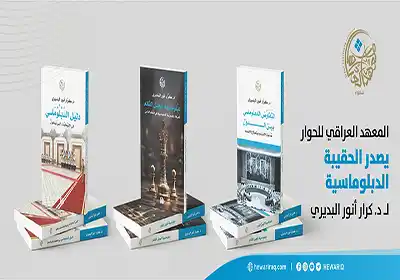
The Iraqi Institute for Dialogue publishes "The Diplomatic Portfolio" by Dr. Karrar Al-Badiri
Invitation to the 79th issue of Dialogue of Thought
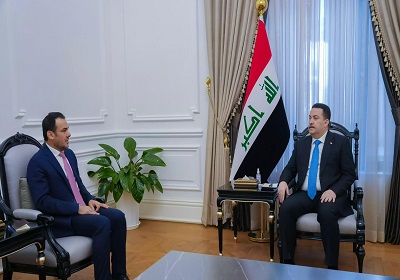
Prime Minister: The path of development will make Iraq a regional political and economic powerhouse
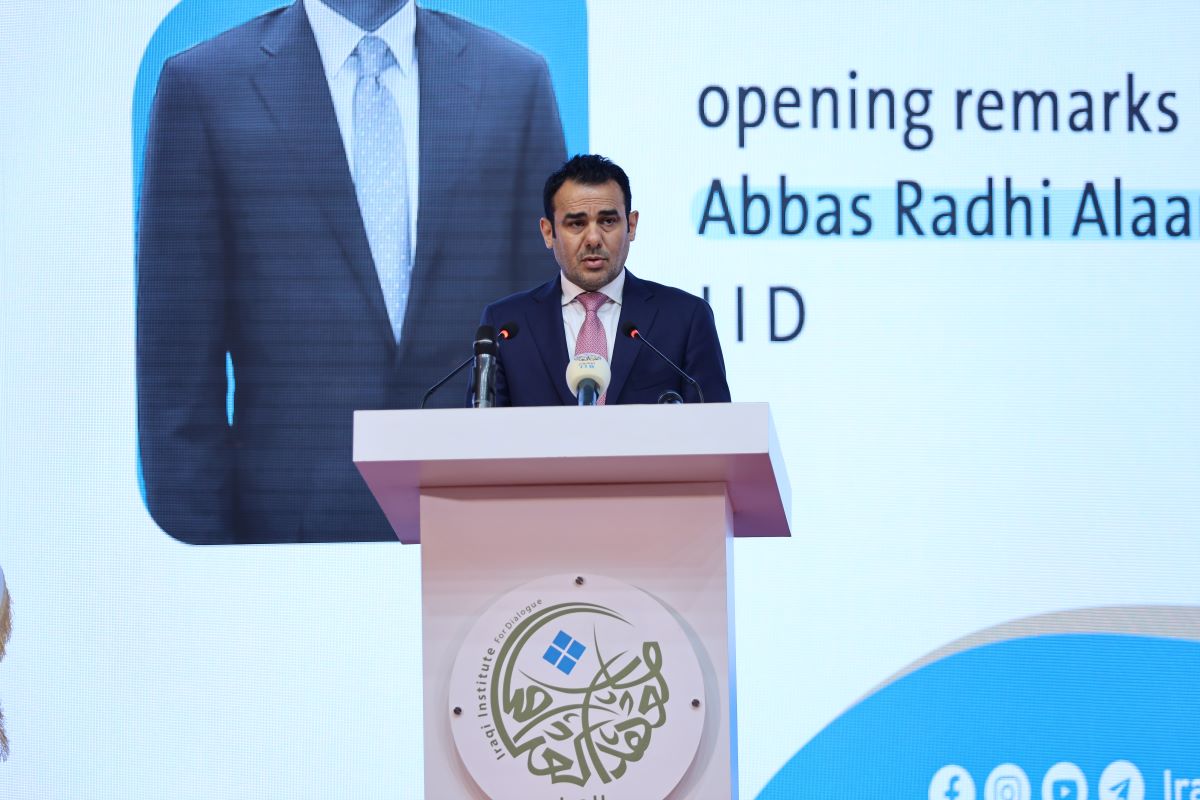
Speech of the Director of the Iraqi Institute for Dialog at the Sixth Baghdad International Dialog Conference
Seventh Baghdad International Dialogue Conference Call for Papers
Comments