


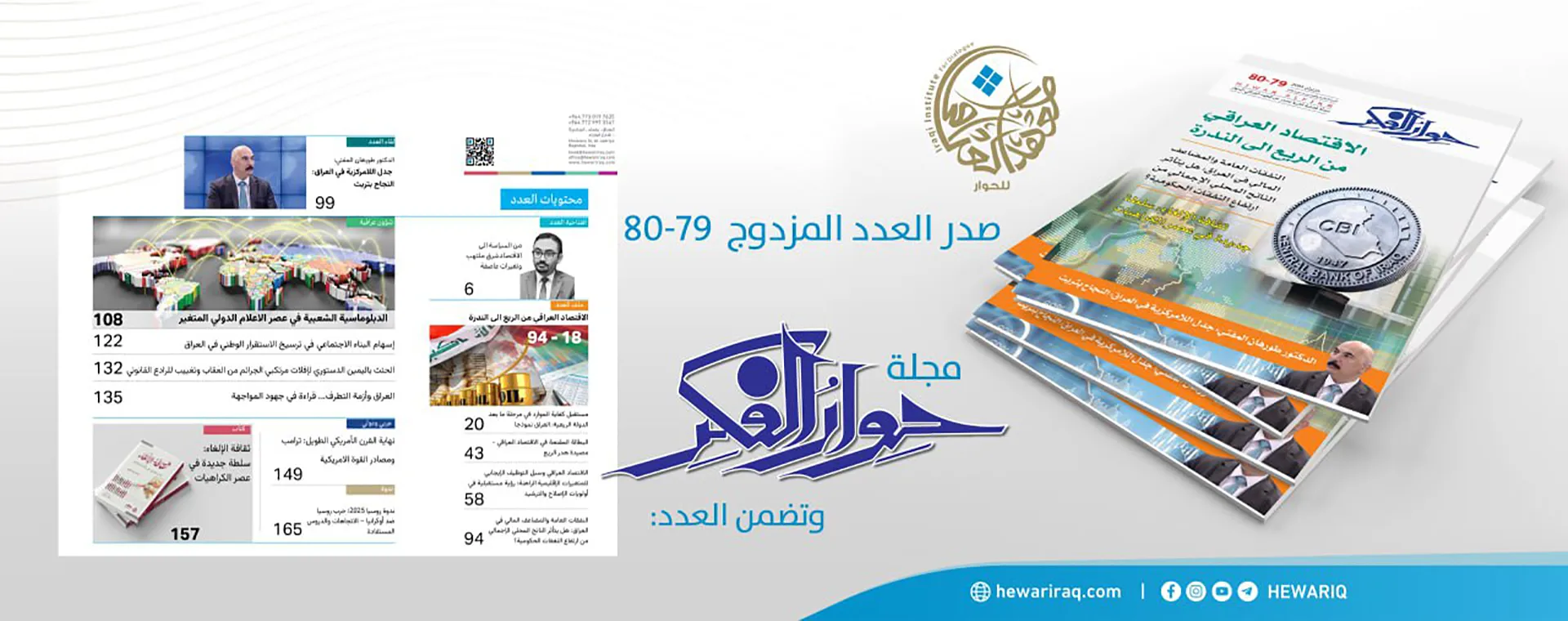
Abstracts of the double issue (79-80) of Dialogue of Thought
1. "The Future of Resource Adequacy in the Post-Revenue State: Iraq as a Model". Dr. Ahmed Adnan Kazim al-Kanani:
The paper addresses the issue of the future of resources in the rentier state, especially in Iraq, in light of the declining ability to rely on oil as the sole source of income. The author highlights the structural risks associated with the rentier economy, including the lack of diversification, low investment in productive sectors, lack of institutional incentives for innovation and creativity, and the vulnerability of state institutions to oil price fluctuations.
The research focuses on the challenges facing rentier states, particularly Iraq, which include weak administration, a bloated bureaucracy, rampant corruption, and declining productive efficiency. These challenges are exacerbated by the absence of a strategic vision, especially in times of crisis, such as the decline in oil prices or the outbreak of conflicts. He emphasizes that overcoming this stage requires a shift from a rentier economy to a diversified productive economy.
The researcher discusses the concept of "innovative management" as an urgent necessity to achieve the adequacy of non-oil resources through the development of human capital, diversification of investment partnerships, development of infrastructure, and transformation towards a knowledge economy. He also points out the importance of good governance and transparency, and the need to involve the private sector and civil society in the sustainable development process.
The research proposes a set of policies and initiatives that can contribute to the desired economic transformation, such as:
- Reducing reliance on oil to finance the budget.
- Promote investment in agriculture, industry, and knowledge services.
- Launching renewable energy and green economy projects.
- Supporting entrepreneurship and SMEs.
- Strengthening education and vocational training systems to suit market needs.
- Establishing sovereign wealth funds to preserve the wealth of future generations.
The researcher highlights that Iraq's economic future depends on the extent of its success in managing and developing its non-oil resources, with the importance of activating the role of oversight institutions to curb corruption and direct spending towards development rather than consumption. He emphasizes that the Iraqi state has the geographical, human and material potential to be a regional investment center, especially with government initiatives such as the "Development Road" and the 2024-2028 plans to diversify the economy.
The research also explores future scenarios for sustainable development in Iraq, including:
- Achieving multi-domain economic security through sovereign investment funds.
- Creating quality job opportunities based on the digital economy and artificial intelligence.
- Promoting innovation and raising Iraq's ranking in transparency and efficiency indicators.
- Developing the private sector and strengthening partnerships with civil society.
The researcher concludes with practical recommendations, including: Using artificial intelligence in resource management, establishing specialized research centers, developing vocational education, and applying the concepts of smart governance. He emphasizes that sustainability can only be achieved by leaving the rentier model and laying the foundations of a diversified economy capable of withstanding crises.
2. "Disguised Unemployment in the Iraqi Economy - The Trap of Wasteful Rent" by Maitham Al-Aibi Ismail:
The research addresses the issue of disguised unemployment in Iraq as a structural phenomenon rooted in the rentier economy, as it is one of the biggest manifestations of waste in human and financial resources. Disguised unemployment is defined as the presence of individuals in the labor market who receive wages without having an actual productive contribution, or whose productivity is marginal or non-existent, so that dispensing with them does not affect public output, and may even be beneficial.
The researcher emphasizes that this phenomenon is exacerbated in rentier countries, including Iraq, as a result of excessive employment in the public sector for political or social purposes, rather than based on actual need or efficiency. This has led to inflation in the government apparatus and an increase in operational expenditures, without a positive reflection on production or development. He also points out that disguised unemployment weakens the private sector because the state competes with it for labor and encourages a culture of reliance on public employment.
The research deals with the different definitions of disguised unemployment and shows that it differs from outright unemployment, where a person is actually working but without real return, or working in a job that is below his/her educational or skill level. It reviews the other types of unemployment (cyclical, frictional, seasonal) to place disguised unemployment in its position in terms of characteristics and effects.
In a special section, the researcher presents the relationship between disguised unemployment and the rentier economy, and argues that Iraq - as a result of its almost complete dependence on oil - has turned into a state that expands government employment without real production. This is shown by comparing the number of public sector workers and the contribution of this sector to GDP, as the large gap is evident, reflecting the lack of productivity.
The research provides a quantitative analysis of the magnitude of disguised unemployment in Iraq between 2003 and 2020 using two methodologies:
1. Proportion of low-paid workers (approximately 30% of workers).
2. The gap between the sectors' contribution to employment and their contribution to GDP.
The results indicate a serious increase in disguised unemployment rates, from 24% in 2003 to more than 57% in 2020. It is clear that the government service sector is the most absorbent of this unemployment, while capitalist sectors such as oil do not suffer from it significantly.
The researcher concludes that this phenomenon has led to poor efficiency of public spending, as most of the budget goes towards salaries instead of investing in education, health, and infrastructure. Disguised unemployment also leads to poor social justice, the entrenchment of rent-seeking concepts, and the erosion of productive values in society.
In conclusion, the researcher recommends radical reforms, including: Restricting government employment, stimulating the private sector, developing the labor market, adopting fair tax policies, and diverting resources towards productive projects. He believes that tackling disguised unemployment begins with breaking the rentier cycle and diversifying the Iraqi economy to rely on a real productive base.
3."The Iraqi Economy and Ways of Positively Utilizing the Current Regional Changes: A Future Vision on Reform and Rationalization Priorities" by Mohsen Hassan:
In light of the challenges of the global economy, the research addresses the future of the Iraqi economy, focusing on how to employ regional variables in favor of development and economic reform. It begins by diagnosing the accumulated structural crises in Iraq since 2003, such as corruption, oil dependency, centralization of decision-making, and conflicting policies, arguing that the Iraqi economy has been a victim of internal political equations and regional conflicts that have harmed its institutions and opportunities for reform.
The researcher emphasizes that Iraq has a rare historical opportunity to restructure its economy thanks to a set of positive regional variables, including: Iranian-Saudi rapprochement, Gulf reconciliation, improved Turkish-Iraqi relations, and the relative withdrawal of American interest from the Middle East, offset by the rise of the Chinese and Russian roles. These shifts allow Iraq to engage in new regional partnerships and take advantage of the geopolitical balance to solidify its economic reforms.
The research indicates that the government of Mohammed Shi'a Al Sudani appears to be more capable of reacting to these changes, giving it an opportunity to take advantage of the relatively calm political climate to launch real economic reforms. The researcher emphasizes the need to move from a pattern of fragmented and intermittent reforms to a comprehensive and coherent reform aimed at reforming the political and security environment in parallel with economic reform.
The reform priorities - as proposed by the research - include five main axes:
1. Achieving a stable political environment by breaking the quota equation, reforming the party system, and restoring trust between society and the state, especially from the youth.
2. Control the security environment by reforming the security sector, ending informal armed manifestations, and combating resource smuggling, thus providing a safe ground for investment and development.
3. Dismantling political sectarianism through a national media discourse, and employing societal diversity in the service of national unity, not division.
4. Liberalizing the sovereign decision from regional and international interference, thus restoring Iraq's independence in its economic and foreign decisions.
5. Activating regional economic partnerships, especially with Saudi Arabia and the Gulf, in the fields of energy, electrical interconnection, tourism, trade, and industrial integration, taking advantage of Gulf expertise in developing non-oil sectors.
The researcher believes that these reforms are achievable if they are accompanied by a unified national vision and a rational economic openness, away from dependency, taking advantage of Iraq's geopolitical weight and its strategic location as an energy and trade corridor.
He warns that wasting this opportunity will return Iraq to the cycle of rentier deficits, political division, and the loss of what remains of society's trust in the state. Therefore, a comprehensive, gradual, realistic national reform plan that integrates society into its project and puts the Iraqi economy on the path from an economy of crisis to an economy of stability and sustainable growth is needed.
4. Public expenditures and the fiscal multiplier in Iraq: Is GDP affected by rising government expenditures, A. Dr. Salam Jabbar Shihab
This research, prepared by Prof. Salam Jabbar Shihab, aims to study the impact of government expenditures on GDP in Iraq by analyzing the fiscal multiplier. The fiscal multiplier is defined as the ratio of the change in GDP to the change in tax revenue or government spending, and is an important factor for understanding how government spending policies can be directed to achieve economic recovery and development goals.
The idea of a fiscal multiplier is based on the concept of the "marginal propensity to consume" (MPC) introduced by economist John Maynard Keynes. The MPC measures the increase in consumer spending relative to saving, as a result of an increase in the income of an individual, household, or community. Economic facts indicate that low-income households tend to have a higher MPC, spending most of their income on basic needs such as food, education, and health, while this ratio is lower for high-income households. The fiscal multiplier theory assumes that if a country's marginal propensity to consume is greater than zero, any increase in government spending will lead to a larger increase in national income, albeit unevenly due to income inequalities.
The fiscal multiplier is calculated using a formula that includes the marginal propensity to consume, the tax rate, and the marginal propensity to import. However, in the case of Iraq, due to the paucity of accurate and disaggregated data on taxes and import propensities, simpler formulas are used to calculate the fiscal multiplier, such as 1/(1-MPC). Note that Iraq as a mono-return country with high external exposure (import-dependent trade balance, weak export products, and a weak productive base) requires high precision in these calculations. Although some have tried to calculate multiple functions and variables to reach the true value of the multiplier, the weakness of available data and the difficulty of converting indicators into numerical data hinders this process. The research relies on official government data from the Statistics Authority, the Central Bank of Iraq, and the Ministry of Finance.
Available data on government public expenditures and GDP for the period from 2003 to 2023 indicate that Iraq's fiscal multiplier until 2012 was close to 1%, meaning that every $100 spent by the government generated a multiplier of $1. But after 2014, the multiplier began to slow down, registering 0.5 and then -0.5, indicating that public expenditures were no longer able to generate any fiscal multipliers. This situation continued until 2023, when the fiscal multiplier ranged between 0.2 and 1.15% of total general government expenditures.
The fiscal multiplier plays a role in estimating the overall impact of changes in government spending or taxes on the economy. In Iraq, because taxes are a small source of government funding, the focus is on the fiscal multiplier resulting from increased government spending. High proportions of imports and informal savings suggest that the multiplier is likely to be small. This means that increased government spending in Iraq fades quickly as money leaves the country for imports or goes into savings, significantly limiting the effectiveness of fiscal policy in stabilizing the business cycle. In advanced economies, under normal circumstances, government expenditures can create a multiplier that equals or exceeds expenditures, indicating economic efficiency. If the multiplier is less than 1, it indicates a weak effect of government spending, which is the case in the Iraqi economy.
To improve Iraq's fiscal multiplier, the research suggests several important actions:
1. Improve data quality and transparency: This allows for sound analysis and increases the effectiveness of plans and budgets.
2. Improved government management and institutional efficiency: This contributes to more effective planning and budgeting.
3. Reduce reliance on rentier resources: These resources have often led to a decline in the fiscal multiplier.
4. Prepare a strategic plan to reduce dependence on imports: Imports increase economic exposure and hinder the domestic income cycle, leading to hard currency leakage and the inability to create efficient domestic economic cycles.
5. Provide a flexible, cohesive and efficient production base: It must be able to compete with imports and stimulate local demand for labor and inputs, helping to keep money local.
6. Creating an efficient banking system: Encourages citizens to keep their money in banks instead of hoarding or informal savings, and provides financing to strengthen the productive base and the domestic income cycle, instead of the current roles of private banks in providing liquidity for foreign trade activities and covering imports.
5. Popular Diplomacy in the Age of Changing International Media, Dr. Ali Hassan Huwaidi
This research sheds light on the importance of diplomacy, as it is the art of negotiation and political representation of a state in its foreign affairs with other countries. Popular diplomacy is a form of modern diplomacy that crystallized in the United States in 1965. Since then, many foreign ministries around the world have adopted the term to describe their activities directed towards foreign peoples.
Popular diplomacy is a product of the evolution of diplomatic thought and international relations, and its importance has emerged in the last two decades as countries realize their need to improve their external image and convince foreign public opinion of their values and policies. Factors such as the spread of transparency and democracy, the communication and information revolutions, and the emergence of new players in international relations such as non-governmental organizations (NGOs) have contributed to its emergence. Popular diplomacy aims to correct negative stereotypes and build lasting and direct relationships with other peoples and influential forces.
Unlike traditional diplomacy, which focuses on formal relations between governments, popular diplomacy aims to influence foreign peoples and public opinion through direct communication, in which non-governmental actors emerge to achieve the foreign policy goals of states. Popular diplomacy is characterized by being public, addressing the public to share knowledge and build mental images, and its activities are available to the media and the Internet. It does not aim to conclude secret agreements or treaties.
The research indicates that popular diplomacy means the art of negotiation, political representation, and conducting foreign affairs with foreign countries. It is considered a historically continuous process of communication between countries to exchange knowledge and enrich cultures. It is also defined as the process of addressing audiences directly or indirectly outside territorial boundaries through new means such as the media, conferences, international and professional organizations, and men of science, culture and religion, with the aim of shaping international public opinion. Popular diplomacy focuses on convincing opinion leaders or specific segments of government officials in other countries of the merits of a particular idea or political position, in order to influence the behavior and decisions of political circles. It also seeks to exchange views, clarify or modify wording in negotiations, revise political positions, and build bilateral relations or alliances.
The research adopts a descriptive and analytical approach to study the concept and objectives of popular diplomacy by analyzing and interpreting published arguments and opinions. It points out that the practice of popular diplomacy predates the term by many years, as humans are naturally inclined to transmit their culture and beliefs to influence others. Historical examples include the interaction of early Muslim traders in Southeast Asia, the emergence of international federations in the 19th century, and the impact of printing in spreading ideas and culture as Napoleon Bonaparte did.
Popular diplomacy consists of five main elements: Listening to understand the target peoples, international broadcasting through various media, individual exchanges to create dialogue and understanding, cultural diplomacy to attract attention by highlighting the country's culture, and advocacy to gain support for the country's causes by explaining its policies and interests to foreign peoples.
Popular diplomacy does not replace traditional diplomacy, but rather complements it and aims to "create the right environment" to achieve the goals of traditional diplomacy. It is an attempt to manage the international environment by dealing with foreign peoples, and relies on human activity to change perceptions and social functions and achieve its goals. Popular diplomacy supports official diplomacy and supports the higher interests of the state, and seeks to change the convictions of other peoples and societies towards the positive, and to establish moral commonalities that serve communication between peoples.
International media is a key tool for enhancing the soft power of nations. According to Joseph Nye, soft power focuses on the ability to influence through attraction rather than coercion. Popular diplomacy is a tool of soft power through which countries seek to spread their values, systems, and culture and attract the people of the world through persuasive methods. Nye identified three dimensions of popular diplomacy: Daily communication to explain political decisions, strategic communication to develop campaigns linked to government policy, and developing lasting relationships with key individuals through scholarships and exchanges. The tools of popular diplomacy include the media, non-governmental entities (such as organizations and unions), overseas envoys with different specialties, international organizations, and cultural outlets.
6. The contribution of social construction in consolidating national stability in Iraq, Dr. Ali Murad Al-Nasrawi
7. This research addresses the importance of social construction in consolidating national stability in Iraq, and emphasizes that Iraq's social, religious, and cultural diversity is an advantage that can be used positively. The researcher believes that the issue lies in the improper use of this diversity, such as political and religious exploitation, which calls for a balanced Iraqi leadership that works to unify the population and preserve the strong social fabric. Just as the country of Sumer transformed from conflicting states into a great empire thanks to unity, Iraq's strength lies in the unity of its people and directing their energies towards construction and creativity, while their weakness lies in division and conflict.
8. Social construction is one of the main pillars in strengthening the unity and stability of societies, as it carries cultural and value dimensions that reflect the identity of individuals and groups within the homeland. In the Iraqi context, the importance of social construction as a pivotal factor in consolidating national stability stands out, especially in light of the political, security, and social challenges that Iraq has witnessed. The strength inherent in social cohesion, with its common bonds and agreed upon values, is a key driver for the advancement of society and overcoming crises.
9. The research focuses on the role of social construction in enhancing national stability through several aspects. It strengthens national belonging by developing individuals' awareness of their responsibility towards the country, which pushes them to actively participate in building and protecting the state. It also strengthens the national identity through shared values and cultural legacies that unite members of society above sub-differences and emphasize the importance of tolerance and coexistence. Social construction contributes to supporting comprehensive development, as it provides the appropriate environment for economic and social growth, enhances trust between individuals and institutions, and encourages investment in areas such as education and health, which leads to increased job opportunities and improved quality of life. In addition, it contributes to building social peace and minimizing conflicts by establishing the principles of understanding, dialogue and cooperation between the various components of society, addressing the causes of conflicts and affirming the principle of equal citizenship.
10. The research addresses the mechanisms through which social construction can be strengthened in Iraq, noting that this requires multifaceted efforts from the government, civil society, and individuals. These mechanisms include Strengthening education and promoting an inclusive national culture. Educational curricula and the media play a crucial role in instilling values of citizenship and belonging, as well as explaining the dangers of divisions. Supporting dialogue and community reconciliation contributes to addressing the effects of past conflicts and building trust. Empowering civil society organizations and strengthening their role in mediation and the provision of social services contributes to social cohesion.
11. Research indicates that religious and family institutions play a pivotal role in shaping values and directing the behavior of individuals towards the common good. Religious institutions can contribute to promoting tolerance and moderation, while the family is the first nucleus of society that instills basic values. It also emphasizes the need to build a good governance system that is characterized by justice and transparency, guarantees the rights of citizens and fights corruption.
12. In conclusion, the research emphasizes that strengthening the social structure is not just an option, but a strategic necessity to ensure a more secure and stable future for the Iraqi state. The research recommends promoting an inclusive national culture through educational curricula and the media, supporting community reconciliation initiatives, empowering civil society organizations, developing economic institutions to achieve sustainable development, and activating health institutions to address issues and improve health care.
7. Constitutional Perjury, Dr. Mohammed Al-Abdali
8. This paper discusses the decision of the Presidency of the Iraqi Council of Representatives on January 21, 2025 to approve the amendment to the General Amnesty Law No. (27) of 2016. This amendment was approved as part of a political agreement that accompanied the formation of the current government. To achieve this, the presidency of the parliament devised a new method of legislating laws, adopting a single vote to pass three controversial laws: the General Amnesty Law, the Personal Status Law, and the Personal Status Law: The General Amnesty Law, the Personal Status Law, and the Real Estate Restitution Law. This method, a modernization of the "one-basket" method of passing legislation, has raised the objection of some MPs.
9. These MPs appealed to the Federal Supreme Court, arguing that this method violated the provisions of the 2005 Constitution and the Rules of Procedure of the House of Representatives No. 1 of 2022. They also asked the court to issue a mandatory order suspending the implementation of these laws until the Constitutional Court issues a final decision on their validity. The court responded to this request and issued the state order No. (3, Unit 4, 18, 19, 21, Federal/State Order/2025) on 4/2/2025. The court's final ruling on the fate of these challenged laws is now awaited.
10 The research indicates that this position of the Federal Court has disrupted the political consensus that accompanied the formation of the federal government, which was conditional on the passage of some of these laws. The previous Amnesty Law No. 2 of 2016 excluded drug trafficking offenses in general from amnesty, while the latest amendment included them if the quantity of the seized narcotic substance does not exceed 50 grams, regardless of the purpose for which it was possessed. The previous amnesty law also granted a committee formed by the Supreme Judicial Council discretionary authority to re-investigate or retry convicted criminals
8. Iraq and the Crisis of Radicalization A Reading of the Efforts to Counter Extremism, A. Dr. Muthana Faiq Marei
This research, prepared by Prof. Dr. Muthana Fa'iq Marei, aims to read the efforts to confront the phenomenon of extremism in Iraq, focusing on the seriousness of this phenomenon and its negative effects on societies and countries. The research emphasizes that confronting extremism requires comprehensive approaches that are not limited to the security aspect only, but extend to include intellectual, cultural and cognitive dialogue, with a focus on spreading the ideas of tolerance, non-violence, and the values of justice, equality, brotherhood and solidarity among the components of society, and respecting sub-identities without overshadowing the collective identity. Achieving peace and peaceful coexistence is a fundamental goal, the success of which depends on the awareness of society and institutions that possess the mechanisms to renounce violence and build peace, and their success in moving from fragile peace to sustainable peace, comprehensive integration of society, and the building of a sound national state.
The phenomenon of extremism is defined as exaggeration and extremism in opinion, belief, or behavior, and departure from moderation and balance. It can be manifested in political, religious, economic, or social spheres, and appears in the extreme exaggeration and belief in certain opinions, and adherence to them to the point of intolerance and denial of any other opinions. The research indicates that the concept of extremism is relative, as it depends on the reference of the values, principles, and norms on which society is based. Nevertheless, there are attempts to identify controls for extremism, such as departure from moderation, extreme intolerance of opinion, elimination of the other, and use of violence.
The reasons that led to the emergence of the extremism crisis in Iraq are numerous and include political, economic, social, social, and security factors. Some of the most prominent of these factors are:
- Political factors: Political marginalization, weak participation of some components in the political process, sectarian quotas, widespread corruption, and the continued struggle for power.
- Economic factors: Unemployment, high levels of poverty, poor basic services, and underdevelopment provide a fertile environment for the growth of extremism.
- Social factors: Social disintegration, lack of social justice, sectarian conflicts, and the decline in the role of social institutions such as the family and school.
- Security factors: The weakness of the security services in some stages, the proliferation of unlicensed weapons, and the lack of full control over the borders.
- Religious factors: the exploitation of religion for political purposes, extremist interpretation of religious texts, and the spread of hate speech.
The extremism crisis in Iraq has had major negative repercussions and effects on society and the state. Its most serious forms were manifested in two waves of violence and terrorism. The first wave between 2006-2007, which was characterized by sectarian conflict and fighting, led to the killing of thousands of innocent people, the displacement of thousands of families, changing the demographic composition of many areas, and a major disruption in security, political, and social stability. The most serious wave was when ISIS seized large areas and parts of the country, and the repercussions of extremism and terrorism affected all components of Iraqi society.
The Iraqi government and the international community have taken steps to combat extremism, including military and security aspects, as well as efforts to combat extremist ideology. Some of the most notable counter-extremism efforts include:
- The security approach: Large-scale military operations to eliminate terrorist organizations and strengthen the capabilities of security and intelligence agencies.
- The intellectual and cultural approach: Attempts to confront extremist ideology through religious and educational institutions and the media, spreading the values of tolerance and moderation.
- The socio-economic approach: Programs to rehabilitate liberated areas, support displaced people, provide job opportunities, and address the causes of poverty and unemployment that fuel extremism.
- The legal approach: Enacting laws to combat terrorism and dry up its funding sources.
The research proposes a number of remedies to confront extremism, including: Developing a national policy to combat extremism; activating the role of educational, religious and media institutions; adopting security policies based on legal and professional principles; and dealing with communities and individuals on the basis of identifying who is at fault, rather than punishing entire families or groups. The research concludes that the extremism crisis in Iraq arose as a result of multiple and intertwined factors and required comprehensive and concerted efforts to confront it, while emphasizing that the path to lasting stability requires a comprehensive treatment of these roots.
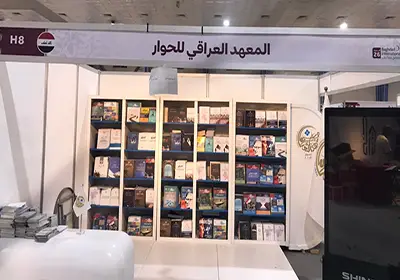
The Iraqi Institute for Dialogue, the logistical sponsor of the Baghdad International Book Fair, opens its own pavilion at the fair
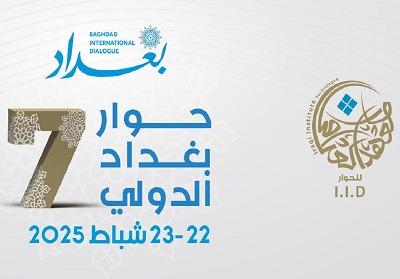
Official agreement between Iraqi Institute for Dialogue and the Iraqi Media Network to sponsor The Seventh Annual International Conference of “Baghdad Dialogue” 2025
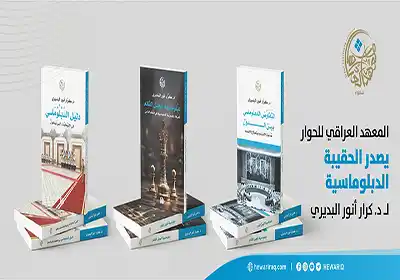
The Iraqi Institute for Dialogue publishes "The Diplomatic Portfolio" by Dr. Karrar Al-Badiri
Invitation to the 79th issue of Dialogue of Thought
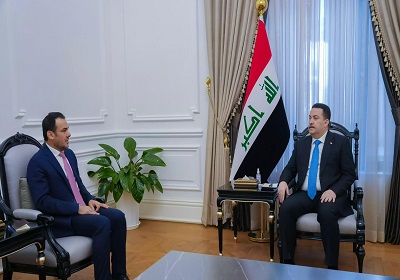
Prime Minister: The path of development will make Iraq a regional political and economic powerhouse
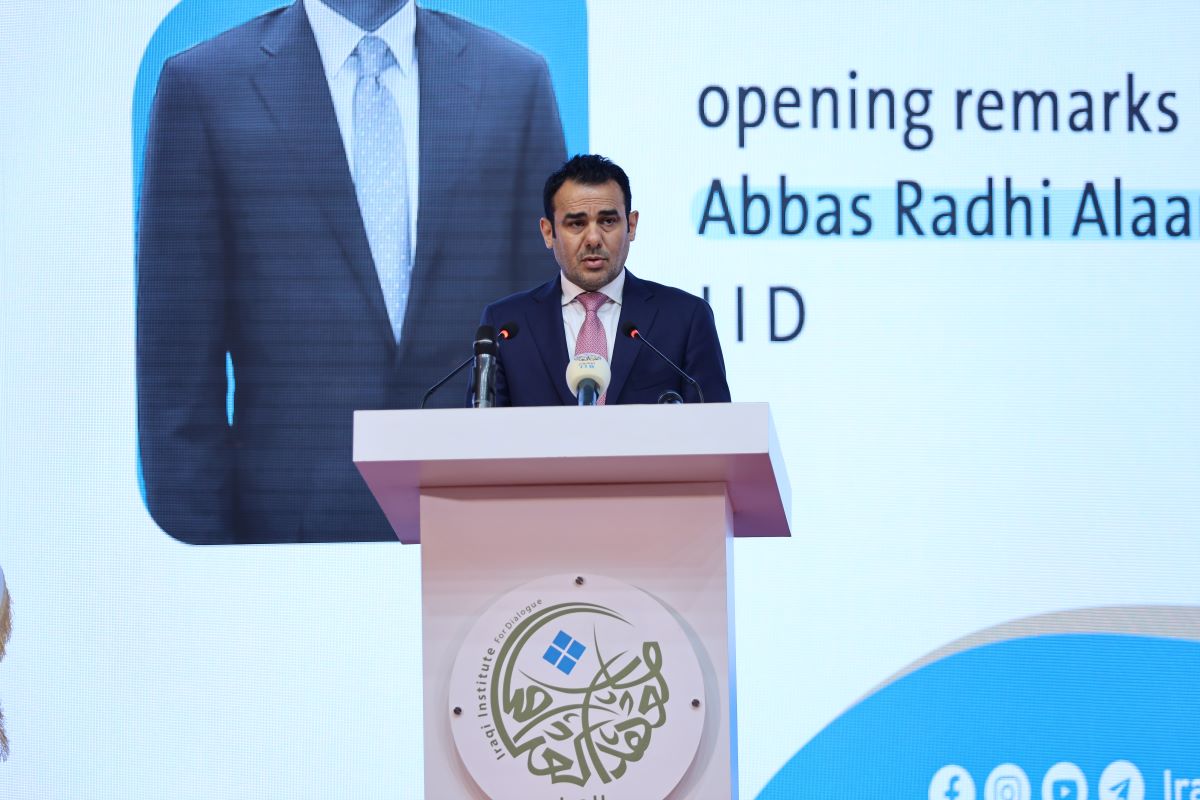
Speech of the Director of the Iraqi Institute for Dialog at the Sixth Baghdad International Dialog Conference
Seventh Baghdad International Dialogue Conference Call for Papers
Comments