


Translation: Iraqi Institute for Dialog
The clean energy revolution is accelerating globally, according to a new UN report
In a new special report, the United Nations reviewed the significant progress the world has made in transitioning to renewable energy sources since the Paris Climate Agreement was signed in 2015, launching a clean energy revolution.
The report, released by UN Secretary-General António Guterres, indicates that the world is closer than ever to weaning itself off fossil fuels and shows significant progress in the transition to clean energy in terms of production capacity, economic growth, and jobs.
Renewable energy is approaching the fossil fuel equation
Speaking at the launch of the report, Guterres said: "Renewable energy is approaching fossil fuels in terms of installed capacity globally, and this is only the beginning. "Last year, almost all of the new electricity generation capacity added came from renewable sources.
Every continent in the world has seen more renewable energy capacity added than fossil fuels. Renewables now provide nearly one-third of all electricity produced globally."
The report adds that in 2023 alone, clean energy-related sectors contributed 10% of global GDP growth. For example, they contributed 5% of growth in India, 6% in the United States, 20% in China, which is leading the energy transition, and 33% in the European Union.
Business opportunities: Clean energy trumps fossil fuels
Some 35 million people are employed in clean energy sectors worldwide, surpassing the number of people employed in fossil fuel sectors, a development that reflects the growing economic and social impact of the energy transition. Guterres said in his speech: "Why this transition? Because it simply makes economic sense. It is a moment of opportunity: Accelerating the era of clean energy," Guterres said.
The World Meteorological Organization and its role in supporting the energy transition
The World Meteorological Organization (WMO) plays a pivotal role in supporting the global transition to clean energy, by helping national meteorological and hydrological services produce and apply weather, water and climate information to accelerate clean energy development at the national level.
"As the global race to move away from fossil fuels accelerates, we must also transition to smart systems that rely on accurate climate and weather information to adapt and evolve in a rapidly changing climate," said Roberta Boscolo, FAO's Climate and Energy Program Leader. "Weather, climate and water services are vital to ensure a clean, reliable and equitable energy future.
The importance of climate, water and weather services in supporting renewable energy
Clean energy systems - especially solar, wind and hydropower - are directly dependent on climatic and environmental factors, making them more vulnerable to climate variability and extreme events. As these challenges are exacerbated by climate change, integrating climate data into energy planning is critical to ensure energy security, resilience and sustainability.
Highlights of the World Meteorological Organization's initiatives to support clean energy
1. Annual Climate and Energy Assessment
In partnership with the International Renewable Energy Agency (IRENA), WMO produces an annual assessment that monitors climate change and its impact on renewable energy potential and demand. The 2024 report covers the performance of wind, solar and water energies against a climate baseline for the period 1991-2020. This report is scheduled to be published in August 2025.
2. Building renewable energy atlases
As many developing countries lack accurate local data to support energy planning, WMO is developing customized, high-resolution atlases for wind, solar, and hydropower, using a combination of ERA5 data, satellite imagery, ground observations, and numerical weather prediction models.
These atlases help bridge the gap between global data and local business needs, enhancing the effectiveness of clean energy plans and strengthening global energy security.
Additional WMO resources and initiatives
A guide to moving towards carbon neutrality:A technical guide showing how to integrate climate and weather services into renewable energy projects.
Online courses for energy and climate professionals:Flexible and self-designed courses that allow participants to learn practical tools and techniques, supported by real-life case studies for using climate data in energy decision-making.
Energy and Meteorology Portal:An online platform that supports international collaboration and knowledge sharing, with three main sections:
Share knowledge: Includes resources for outreach and capacity building.
Practical tools: Such as the Global Energy Resilience Atlas, which integrates water and climate risk indicators, with solar and wind indicators to be added later.
Networking and networking: Highlight countries and organizations that are implementing climate-informed energy projects.
Conclusion
The findings of the UN report show that the world is making significant progress on clean energy, and that this transformation is not only protecting the environment, but is also a major economic opportunity and job creator. As climate threats escalate, it seems that the employment of weather, climate and water services will become one of the pillars of the energy future in the coming decades.

The Iraqi Institute for Dialogue, the logistical sponsor of the Baghdad International Book Fair, opens its own pavilion at the fair
Official agreement between Iraqi Institute for Dialogue and the Iraqi Media Network to sponsor The Seventh Annual International Conference of “Baghdad Dialogue” 2025

The Iraqi Institute for Dialogue publishes "The Diplomatic Portfolio" by Dr. Karrar Al-Badiri

Invitation to the 79th issue of Dialogue of Thought
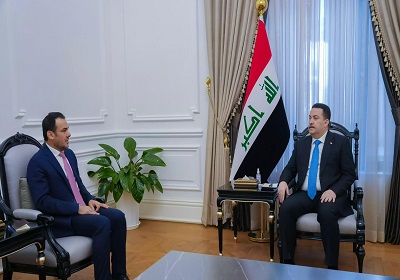
Prime Minister: The path of development will make Iraq a regional political and economic powerhouse
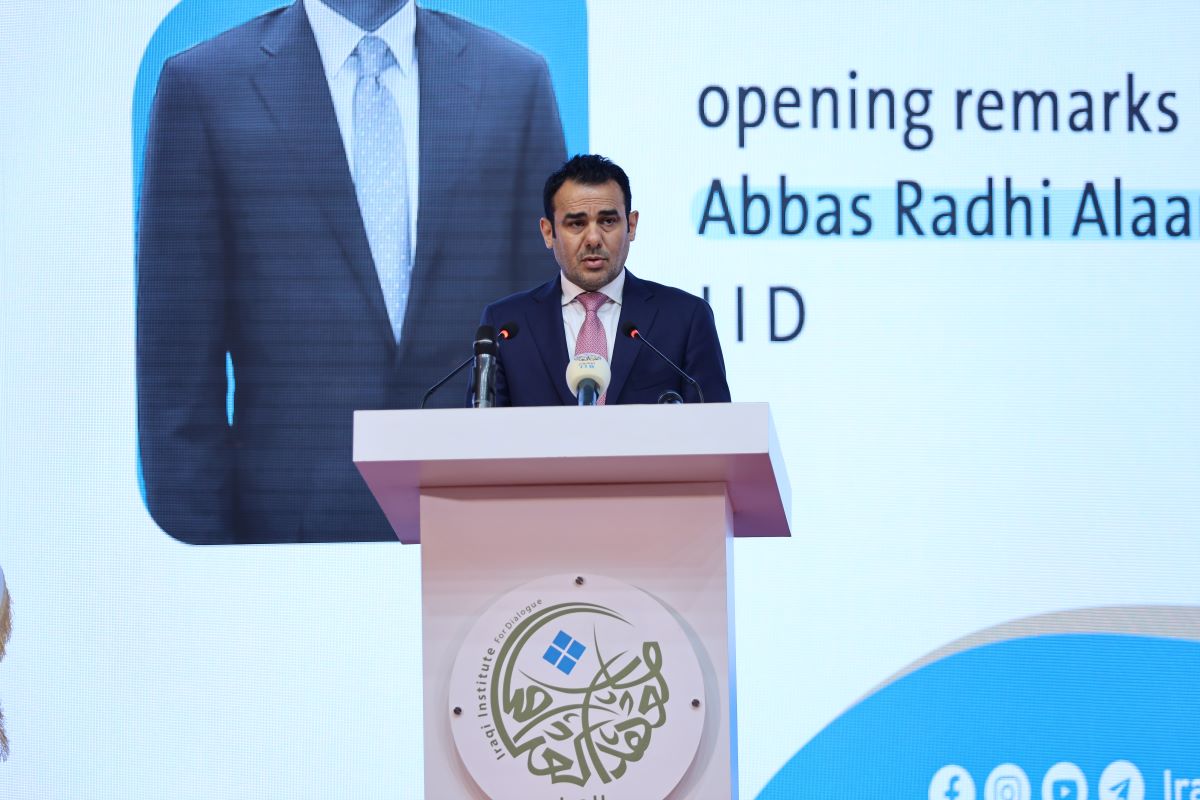
Speech of the Director of the Iraqi Institute for Dialog at the Sixth Baghdad International Dialog Conference
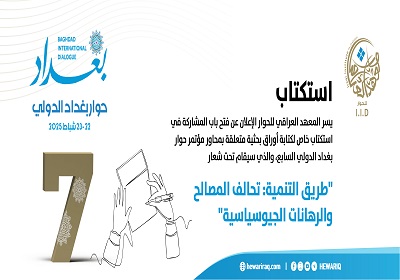
Seventh Baghdad International Dialogue Conference Call for Papers
Comments