


By Rafael B. Dawson - Translation by the Iraqi Institute for Dialog
The end of history and a return to geopolitics
Francis Fukuyama's optimistic theory of the "end of history" reads today as a cautionary tale, as we reach the limits of neoliberal democracy and face the return of geopolitics in an increasingly unstable multipolar world.
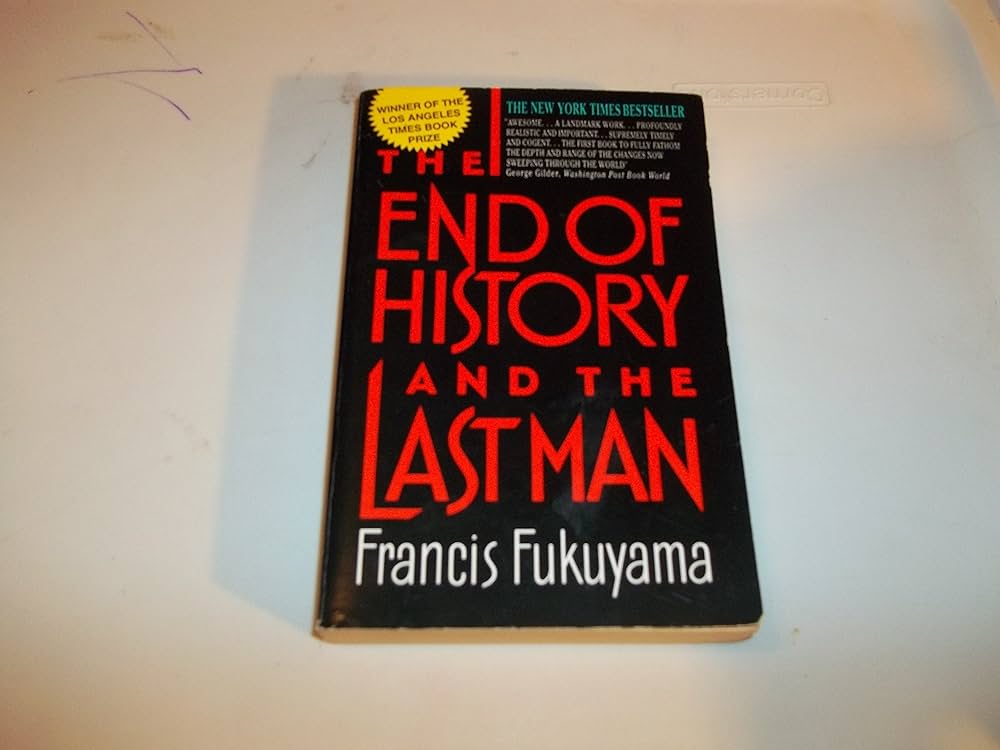
In his 1992 book The End of History and the Last Man, Francis Fukuyama put forward one of the most challenging and enduring hypotheses in the field of international relations. It was a seemingly naïve and optimistic conundrum in the face of a strict realist tradition-influenced by three major conflicts in the twentieth century-and yet sharply observable, as the sudden fall of the Soviet Union and the rise of the Western liberal democratic order seemed to herald a natural "long peace" after humanity's most violent moment.
When the post-Cold War "end of accumulated chaos" came with a new certainty about the end of perpetual human conflict, it also sowed the expectation that this conflict would return.
For proponents of Fukuyama's hypothesis, this supposedly unipolar moment was a vision of sustained linear progress through the triangle of democracy, trade, and economic interdependence. For others, it was a reminder of our captivity in history and a prelude to the end of the current world order. But the return of history does not mean a strict repetition of history. While optimistic theories deny the possibility of new threats and believe that international relations are paving the way for peace, pessimistic theories point to a return to a period similar to Europe between the two world wars.
Today's so-called "return of power politics" does not resemble a German rise to systemic confrontation, but rather a shift from the U.S.-led Western status quo. The international order established after World War II is now almost unrecognizable, due to the rise of emerging powers, the shift of wealth and economic influence from the West to the East, increasing globalization, transnational forces, and a convergence of differences between states.
The failure of the "end of history" hypothesis stems from two key assumptions:
1. The need for global democratization.
2. The universal acceptance of liberalism as the basis for the moral evaluation of human beings.
Failure of the democratic system
For Fukuyama's hypothesis to hold up, democracy and liberalism had to spread to all countries. But this convergence has not happened. Some countries, such as China, have adopted aspects of economic liberalism without adopting democratic governance, proving that the correlation between liberalism and democracy is neither natural nor inevitable.
Even in places where liberal democracy has spread, it has not always shown its superiority. In recent decades, some authoritarian regimes have outperformed democracies in the areas of economic development, social cohesion, and crisis management, calling into question the premise that liberal democracy is the most effective or desirable model. This difference was especially evident during social crises; for example, the COVID-19 pandemic revealed that some authoritarian regimes were better able to take decisive and effective action in times of global emergencies. As cross-border crises escalate - global warming, competition for resources, pandemics, cyber threats, and migration - resilience and adaptability may be more important than the type of political system.
The Failure of the Liberal Ideal
The "end of history" theory assumes the existence of a common ground for determining good and evil - a kind of global moral calendar. First, regarding the liberal democratic order, the theory assumes that "democracies do not fight each other," which means that relations between states should always be between two democratic states. But evidence shows that democracies often enter into conflicts with non-democratic states. U.S. interventions in Iraq, Kuwait, and elsewhere show that democracy does not guarantee peace. This means that unless all states are democratized, the conditions for preventing war remain unfulfilled.
Second, the idea of "political correctness" - the belief that liberalism represents a universally accepted moral end - assumes a consensus that transcends fundamental political disagreements. But it overlooks that political governance is always shaped by contexts, trade-offs, and power struggles that differ from one society to another. Envisioning a politics free of conflict or power is as unrealistic as envisioning a global unity under a single religion or moral code.
The Failure of Western Neoliberal Democracy
The export of democracy and regime change in authoritarian states has increased nationalism and fueled resentment of Western intervention. For example, although promoted as democracy promotion, the US invasion of Iraq in 2003 and the NATO intervention in Libya in 2011 fueled anti-Western sentiment, destabilized regions, and reinforced the principles of self-determination and national sovereignty. In response, Russia and China are increasingly advocating non-interventionism while emphasizing national sovereignty. Russia's seizure of Crimea in 2014 and the rise of global nationalist movements highlight this rejection of foreign intervention.
At the same time, transnational organizations that were pillars of peacekeeping have declined in stature, with their membership expanding but their ability to intervene and resolve conflicts eroding with the rise of the global South, shaking their legitimacy. These institutions now often play symbolic roles in conflict management, with a loss of adherence to the law and the collapse of the principles they once defended. In the North, the increasing powers of these institutions over national governments have sparked political and social unrest, as in the case of the European Union, reinforcing nationalism and sovereignty as central political and social values. Growing radicalization of political systems and increasing political instability further disintegrated the international system, complicating the role of far-right and far-left parties for domestic stability and international cooperation.
Economic and strategic dimensions
Economically, while global wealth continues to grow, excessive globalization has weakened the economic stability of liberal states. As capital moves to Asia and the Pacific and supply chains disintegrate, Western economies face increasing cycles of unemployment, worsening inequality, and erosion of the middle class, fueling domestic discontent and disillusionment with globalization and populist backlash.
Strategically, the liberal ideal of a borderless, financially, technologically, and politically interconnected world has redefined spaces and distances in global affairs. Where once distance prevented conflict, globalization has "brought the world closer," making borders, ideas, and peoples closer and more vulnerable. This interconnectedness, despite its promises of openness, has revealed new internal and external threats. With the assertion of sovereignty and national identity in the face of progressive neoliberal ideals, disputes over borders and independence have re-emerged as major flashpoints in international conflict.
Deteriorating international security frameworks
Traditional security frameworks have deteriorated. Pragmatic alliances and strategic maneuvers are replacing traditional alliances such as NATO and the UN, which were the backbone of collective security. This reflects a growing distrust of traditional balancing mechanisms. At the same time, nuclear arms races have resurfaced, with China and Russia advancing vertical proliferation strategies, often in non-transparent ways, while new technologies (such as high-speed weapons and missile defense systems) undermine transparency and deterrence. The formerly stable security architecture has become a sign of volatility and fragmentation.
The escalating clash of civilizations
These dynamics heightened Samuel Huntington's prediction of a "clash of civilizations." Ideological and structural divisions between North and South, West and East, center and periphery have deepened. Migration, climate change, and the widening economic gap between rich and poor have increased cultural and geopolitical fault lines. Instead of uniting humanity under a global cosmopolitan order, globalization has increased the disintegration of civilizations.
The collapse of the foundations of the Western international order
The foundations that were thought to guarantee peace and progress are crumbling under the weight of their own contradictions. These interlocking crises not only mean the decline of the post-Cold War neoliberal order, but also the emergence of a new conceptualization of geopolitics: At the intersection of "geography" (climate change, resource scarcity, environmental degradation) and "politics" (demographic shifts, declining democracy, renewed conflict), a more conflicted, multipolar, and unstable global reality is taking shape.
The Failure of Western Neoliberal Ideology
The ideologies promoted by the Western system seem to be lagging behind the ongoing systemic shifts.
The temporary "end of history" enabled by US hegemony has encouraged a retreat from traditional power politics and the emergence of theoretical frameworks that emphasize social and ideological elements in international society, leading to theories that reflect a focus on the "what" of international relations: Their structures, identities, and meanings.
But the absence of war was taken as evidence of peace, and peace was taken for granted. This longest period of peace without direct confrontation between major powers fed the illusion that global resources and interests could be managed like chess pieces. The post-World War II peace was built on the hopeful premise that the new rules of the international system would protect humanity from its violent past - an illusion that is now disintegrating.
New challenges require radical rethinking
The failure of international relations theory to anticipate the fall of the Soviet Union is one of its biggest gaps. Just as the fall of the Soviet Union necessitated a rethinking of international relations, today we face a new radical transformation that requires an urgent and serious shift in how we approach this field to avoid another analytical failure.
This moment calls for vigilance against the illusion of lasting peace and the recognition that the "return of history" could easily turn into the "end of history" if we fail to reclaim the essence of politics and adapt to the return of multipolar geopolitics. This requires a thorough relearning of how to study and practice international relations. The simple binaries of good and evil, justice and injustice, have become a hollow and unproductive framework, especially when the most economically successful state is an authoritarian socialist regime, when authoritarian regimes enjoy high popular support, and when differences between regimes become less influential on the outcome of international relations.
Practical and flexible logic
Imagine a world in which China can build relationships and cooperation with ideologically disparate countries like Iran and Saudi Arabia, while at the same time partnering with its adversaries. Modern international relations are increasingly shaped by a pragmatic and reciprocal logic, driven by strategic interests that mitigate deep tensions and reflect a growing trend: Former enemies are forming new partnerships in which interests trump ideology and strategy trumps values.
The escalating geopolitical landscape
As Huntington's vision of global democracy fades and wars in Europe and the Middle East return, strategic regions such as Taiwan, the South China Sea, the Strait of Hormuz, the Arctic Circle, and maritime choke points such as the Strait of Malacca and Panama become more secure and complicated by security crises. Taken together, these developments reveal the invalidity of the "end of history" hypothesis and emphasize the urgent need for new theoretical frameworks. The transition-which may occur through war-is no longer a question of "if" but "when." The failure of Fukuyama's hypothesis reveals that peace is often circumstantial and temporary - a fragile pause in the continuous cycle of violence to which international relations seem bound.
Conclusion
Just as the conditions of peace create the conditions of war, and just as the illusion of the "end of history" paved the way for its return, we must be free from the trap of oscillating expectations between peace and war. Churchill's warning that those who do not learn from history are doomed to repeat it misses a deeper truth: Humanity may be doomed to repeat history whether it learns it or not.
Learning alone is not enough; proactive theory and dynamic, context-sensitive understanding can effectively intervene in the complex forces shaping the balance of the international system. International relations cannot escape history entirely, but it must move beyond the triumphalist pride of the post-World War II order and focus on global changes in the next fifty to seventy-five years - upheavals, emergence, and realignment. If international relations is to remain relevant to politics and not just a theoretical interest, it needs to help us deal with multiple possible futures, not just hypothesize one.
Rafael PP. Dawson
A postgraduate researcher at the Panthéon-Sorbonne University in Paris, he holds a Master's degree from Groningen University and a Bachelor's degree in Political Science from Concordia University. He specializes in international security and Southeast Asian studies, and his research focuses on power dynamics, great power rivalry, and nuclear strategy. He has worked as a research assistant at the Partnership for Global Security (PGS) in Washington, D.C., and the Graduate Studies Department at the French Military School (DEMS). He is currently a doctoral student in political science, studying global power shifts in an increasingly multipolar world.

The Iraqi Institute for Dialogue, the logistical sponsor of the Baghdad International Book Fair, opens its own pavilion at the fair
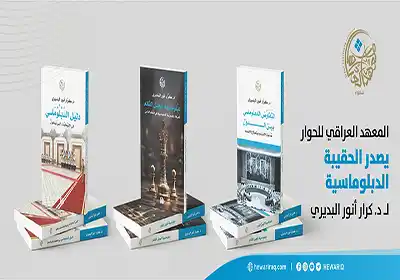
The Iraqi Institute for Dialogue publishes "The Diplomatic Portfolio" by Dr. Karrar Al-Badiri
Official agreement between Iraqi Institute for Dialogue and the Iraqi Media Network to sponsor The Seventh Annual International Conference of “Baghdad Dialogue” 2025
Prime Minister: The path of development will make Iraq a regional political and economic powerhouse

Invitation to the 79th issue of Dialogue of Thought
Seventh Baghdad International Dialogue Conference Call for Papers
Praise for the Baghdad International Dialogue: Strengthening Iraq's pivotal role and a meeting point for visions
Comments