


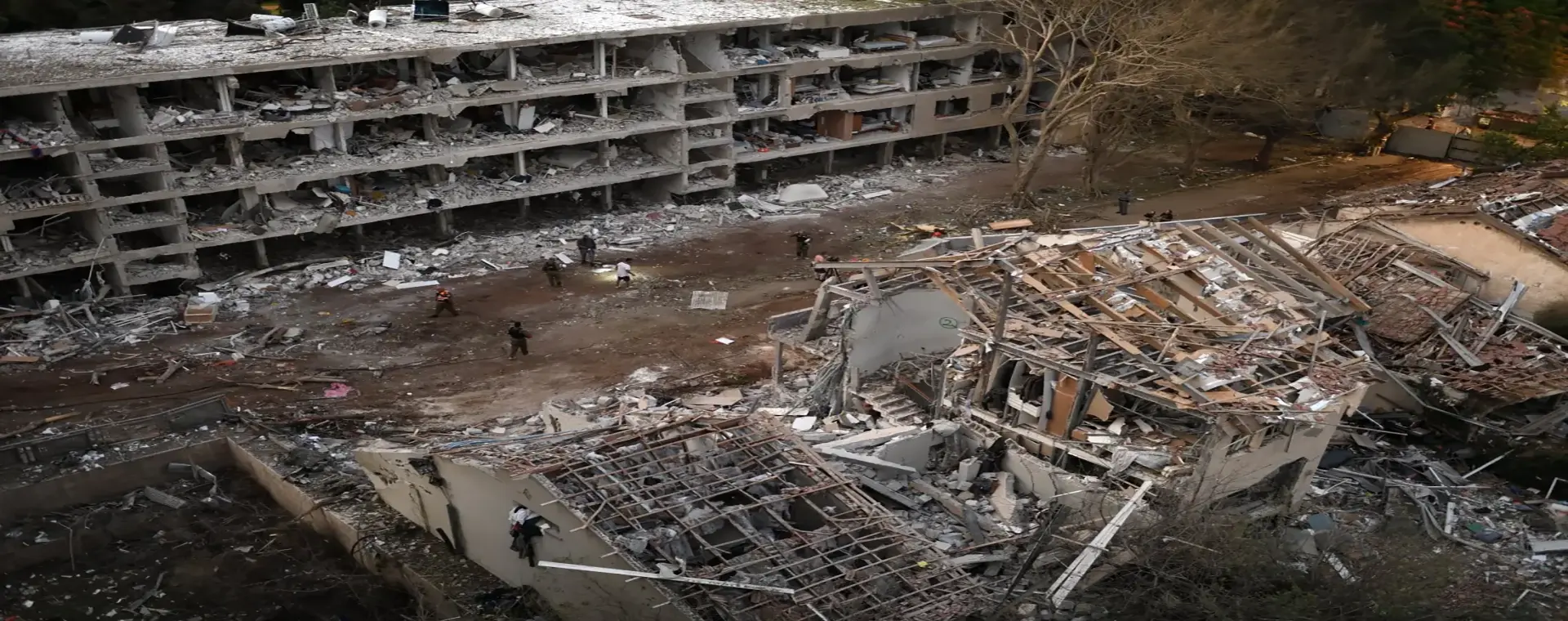
Israel is haunted by the aftershocks of a war on Iran
A month after the United States' "Operation Midnight Hammer" to target Iran's nuclear infrastructure, Israel finds itself at the center of a complex web of regional interactions that go beyond traditional security calculations.
Although the operation succeeded in disabling Iran's centrifuges, it triggered a series of nonlinear systemic effects across the Middle East, where reactions are no longer measured in the classic "action-reaction" logic, but rather in "network feedback" that creates simultaneous changes in multiple arenas.
Indirect escalation and an adaptive network of adversaries
Iran has not yet responded with a direct strike, but it has activated its regional "network" of partners and proxies. Hezbollah has raised the state of alert on Israel's northern border, while Iraqi factions such as Kata'ib Hezbollah and Harakat al-Nujaba have stepped up their rhetoric against the U.S. and Israeli presence. In Yemen, the Houthis have stepped up their rhetoric against what they call the "Zionist-American axis of aggression."
This gradual and interconnected escalation is not a series of isolated events, but rather a systemic response within an "emerging strategic field," as described by Israeli scholar Dr. Ofer Israeli, who warns that Israel is operating in an environment of "adaptive complexity" rather than traditional deterrence equations.
Israel Between Strategic Ambiguity and Multiple Exposures
Although Israel has remained silent about its role in the US strike, this has not immunized it from its consequences. Strategic ambiguity is no longer sufficient to deter or minimize risks. Tel Aviv now faces a triple dilemma: Containing Hezbollah in the north, controlling Gaza's escalation in the south, and preparing for an Iranian response that could be cyber, diplomatic, or even financial.
In the Gaza Strip, prisoner swap negotiations with Hamas, which has reclassified itself as part of the "resistance axis" and has begun to coordinate its media messages with Iranian rhetoric.
Backlash on the Normalization Axis
Operation Midnight Hammer It also destabilized the geometry of normalization in the region. Although none of the signatories to the Abraham Accords withdrew, the political atmosphere has cooled. The UAE called for "restraint," Saudi Arabia froze normalization talks, and Bahrain downgraded its diplomatic outreach to Israel.
Outside the Arab periphery, Turkey and Qatar witnessed an escalation in their media and political rhetoric, indicating a "self-reorganization" in the regional scene, according to Dr. Israeli's analysis.
A call for a new kind of security thinking
Dr. Ofer Israeli argues that confronting this reality requires "modeling complexity" rather than clinging to rigid deterrence frameworks. He proposes a multidimensional approach that includes:
Reshaping Israeli military doctrine to be more resilient through tools such as cyberwarfare and psychological operations.
Develop an adaptive strategic discourse that minimizes tensions without showing weakness.
The introduction of "non-linear escalation" scenarios into the calculations of decision makers.
Expanding international alliances outside the U.S. mantle, with a focus on India, Asia, and Europe.
Conclusion: The next conflict is not defined by power but by understanding complexity
The article notes that Israel's success in the next phase will depend not only on military readiness or alliances, but also on its ability to understand a complex system of actors and feedback loops.
The Iranian response may not come in the form of missiles, but rather in the form of cyber hacks, financial moves, or even media shifts. Despite its tactical success, the US strike revealed a long-term strategic failure in the management of the Iranian nuclear file.
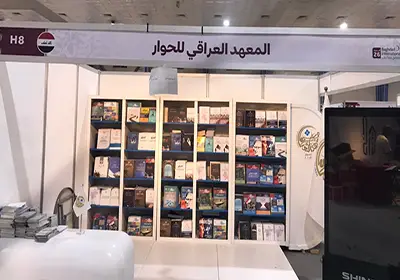
The Iraqi Institute for Dialogue, the logistical sponsor of the Baghdad International Book Fair, opens its own pavilion at the fair
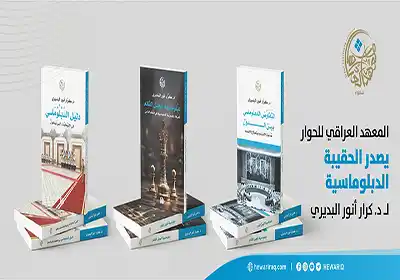
The Iraqi Institute for Dialogue publishes "The Diplomatic Portfolio" by Dr. Karrar Al-Badiri
Official agreement between Iraqi Institute for Dialogue and the Iraqi Media Network to sponsor The Seventh Annual International Conference of “Baghdad Dialogue” 2025
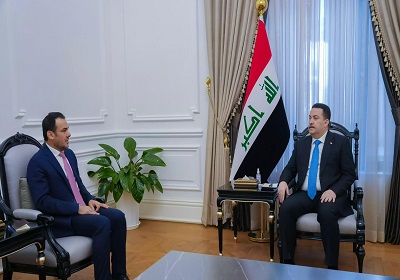
Prime Minister: The path of development will make Iraq a regional political and economic powerhouse
Invitation to the 79th issue of Dialogue of Thought
Seventh Baghdad International Dialogue Conference Call for Papers
Praise for the Baghdad International Dialogue: Strengthening Iraq's pivotal role and a meeting point for visions
Comments