

Translation: Iraqi Institute for Dialog
Religion and Identity in the Balance of International Politics
With conflicts raging in Eastern Europe and the Middle East, observers are noticing a stark difference in the application of sanctions by Western countries and international organizations, raising fundamental questions about double standards in international politics and the extent to which religion and cultural identity play a role.
Human casualties and violations
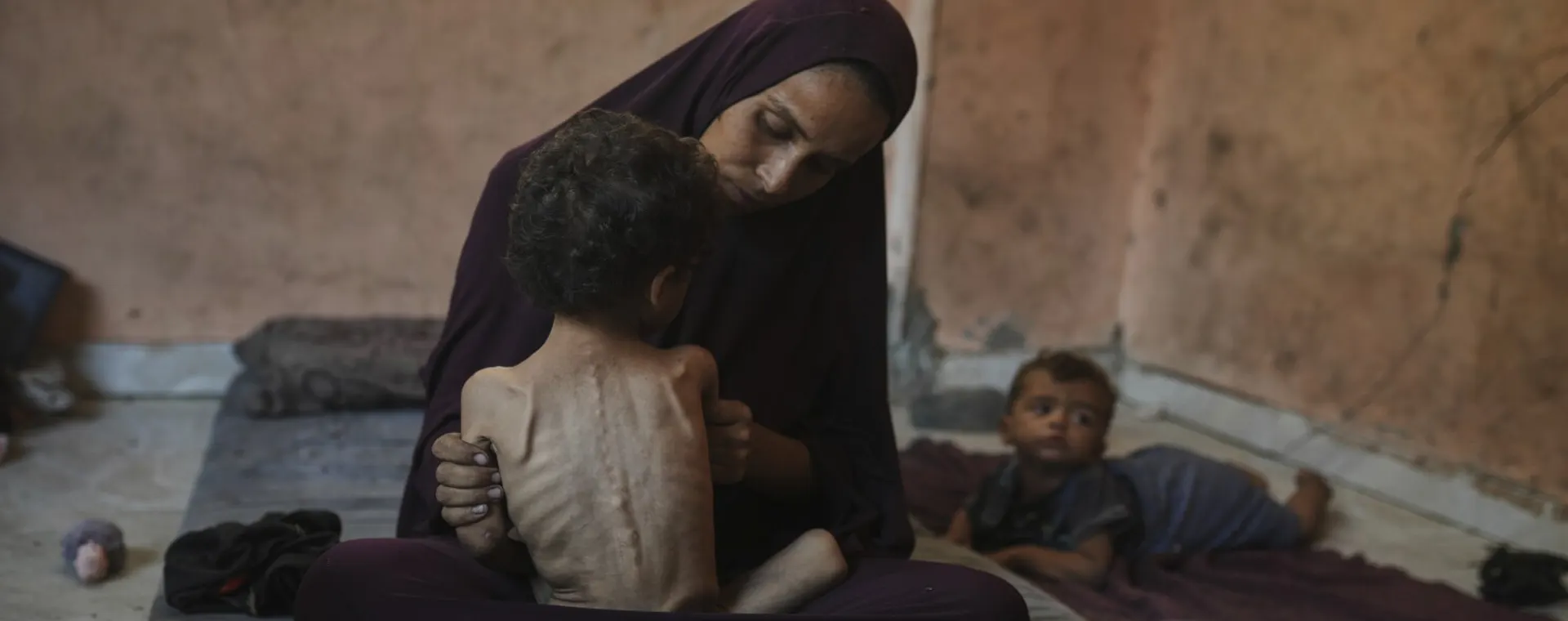
UN data indicates that more than 30,000 civilians have been killed and injured in Ukraine since 2022, while the Ministry of Health in Gaza has announced more than 58,000 deaths as of July 20, 2025. Despite the disparate backgrounds of the two conflicts, both have resulted in human tragedies that include violence, sexual assaults, destruction of infrastructure, and mass displacement, in direct violation of the 1949 Geneva Conventions.
Sanctions. Tough on Russia, Lax on Israel
The European Union and the United States have imposed a package of tough sanctions on Russia, including a ban on oil imports and a freeze on bank assets. In contrast, sanctions on Israel did not go beyond the suspension of arms shipments from limited European countries, while Washington agreed to a $20 billion arms deal in August 2024.
While the General Assembly passed resolutions demanding a full Russian withdrawal (ES-11/1 and ES-11/6), similar resolutions on Gaza (ES-10/25 and 2720) were not effectively implemented. While hundreds of food trucks arrived daily in Ukraine, the average daily aid to Gaza was only 146, and on some days as few as 29.
Strategic considerations and cultural identity
Analysts point out that the West views Ukraine as a "democratic bulwark" against Russian expansionism, while Israel is seen as an irreplaceable strategic ally in the Middle East. This reality partly explains the double standard, but the religious and cultural dimension also plays a role.
European Commission President Ursula von der Leyen's statement in February 2022, "They are part of us," added a civilizational dimension to the attitude towards Ukraine as part of the "European Christian family." In contrast, the Hamas attack on October 7, 2023, which killed 1,200 Israelis, was used as an excuse to ignore the roots of the conflict dating back to 1948, amid the constant feeding of Islamophobic narratives in Western politics.
"Hierarchy of Victims" and Selective Empathy
(Mayaleh et al., 2024) examined the concept of "victim hierarchy," where the suffering of Europeans is seen as an unprecedented catastrophe, while the suffering of Arabs and Muslims is treated as routine. This paradox reveals a moral ambivalence rooted in cultural and religious colonization.
Intersection of interests and identity
The study argues that double standards do not stem from a single factor, but rather from the intersection of four axes of power:
Cultural and religious identity.
Strategic, military and economic interests.
The infrastructure of international policies and laws.
Digital and media production systems.
This complex intersection of identity, religion, and interests makes the criteria for sanctions, aid, and international media coverage selective and used to reinforce geopolitical alignments.
Conclusion: Religion is an influential element, but it does not operate in isolation from other structures. Understanding double standards requires an intersectional analysis that integrates religion and identity with economics, technology, international law, and digital hegemony. It is not just a moral flaw, but the result of an organized entanglement of global power tools.
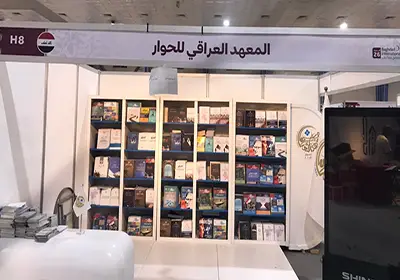
The Iraqi Institute for Dialogue, the logistical sponsor of the Baghdad International Book Fair, opens its own pavilion at the fair
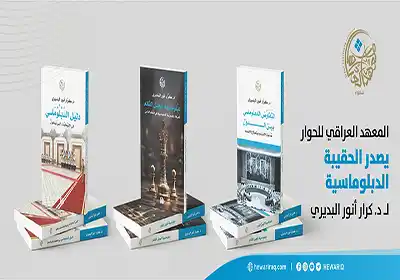
The Iraqi Institute for Dialogue publishes "The Diplomatic Portfolio" by Dr. Karrar Al-Badiri
Official agreement between Iraqi Institute for Dialogue and the Iraqi Media Network to sponsor The Seventh Annual International Conference of “Baghdad Dialogue” 2025
Invitation to the 79th issue of Dialogue of Thought
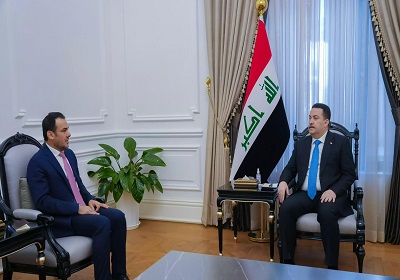
Prime Minister: The path of development will make Iraq a regional political and economic powerhouse
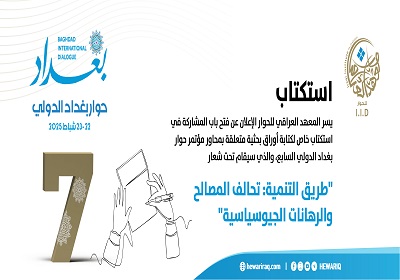
Seventh Baghdad International Dialogue Conference Call for Papers
Praise for the Baghdad International Dialogue: Strengthening Iraq's pivotal role and a meeting point for visions
Comments