


Translation: Iraqi Institute for Dialog
Regional diplomacy in the face of the militarization of sea lanes
Since late 2023, the Bab al-Mandab Strait in the Red Sea has become one of the most dangerous sea lanes in the world as a result of Houthi attacks on commercial vessels. These attacks, which disrupt global trade and force ships to sail around the African continent, have contributed to rising maritime insurance costs and regional tension. Despite the seemingly localized nature of the conflict, these events reflect a growing global pattern: The militarization of sea lanes and their use as tools of political pressure by state and non-state actors.
Compound danger: Maritime Infrastructure in the Crosshairs of Hybrid Conflicts
The Scowcroft Center for Strategic Studies' Global Foresight 2025 study warns that critical infrastructure - such as sea lanes and submarine cables - will become central targets in hybrid conflicts. Hybrid conflicts are those that use unconventional means, such as sabotage and denial, to exert pressure without all-out war. The Houthi model in the Red Sea is a prime example of this pattern: Low cost of attacks, high global economic impact, and limited and ineffective military responses.
Economic and Geopolitical Consequences
Since the dispute began in October 2023, major shipping companies such as Maersk, MSC, and CMA CGM have diverted their routes away from the Red Sea, adding weeks of travel and millions in costs. Suez Canal traffic dropped by more than 40 percent in early 2024, directly impacting Egypt's revenues. In response to the escalation, U.S. and British forces launched strikes on Houthi positions as part of Operation Prosperity Guardian, without achieving effective deterrence.
The threat extends: Repeatability in other strategic corridors
What is worrisome about the Yemeni case is its replicability. If the Houthis succeed in disrupting global trade by these means, groups such as Somali pirates or armed factions in the South China Sea may emulate the same tactic. Thus, trade chokepoints become new instruments of pressure, threatening the global economy and exposing gaps in the international security architecture.
The Failure of Western Deterrence and the Need for a Regional Diplomatic Framework
Western strikes have proven to have limited impact. According to the Scowcroft Center survey, less than a quarter of experts expect U.S. diplomatic influence to continue through 2035. This decline in Western legitimacy calls for regional powers-Egypt, Saudi Arabia, and the UAE-to take the lead in launching a comprehensive diplomatic process to protect the vital sea lane.
A Roadmap for Sustainable Maritime Diplomacy
A diplomatic initiative can be structured as follows:
The Red Sea Maritime Security Forum has been formed: Egypt, Saudi Arabia, UAE, Sudan, Djibouti, Ethiopia.
With the participation of observers from: African Union, Arab League, and United Nations.
Tasks of the forum: Coordinate threat assessments, organize joint maritime patrols, and develop a rapid response mechanism.
Opening indirect channels with the Houthis through intermediaries such as Oman or Iraq.
Economic and humanitarian incentives: Rehabilitation of Yemeni ports, humanitarian corridors, and aid in exchange for cessation of attacks.
The role of international organizations: Such as the International Maritime Organization (IMO) and the World Trade Organization (WTO) to provide legal frameworks to protect maritime trade.
Potential Obstacles Diplomacy as a flexible tool
To be sure, there are major challenges: Ideological parties such as the Houthis may reject any dialog, and regional rivalries may hinder coordination. But diplomacy - while complex - offers effective tools to build trust and de-escalation across multiple tracks. Past experiences, such as the 2015 nuclear deal with Iran, can be used to demonstrate that even adversaries can be contained within complex negotiating frameworks.
Corridors as tools of conflict or gateways to stability
The crisis in the Red Sea underscores the shifting nature of international conflict, from classical wars to undeclared wars through trade and infrastructure. Straits and ports are no longer just transit points but tools of geopolitical pressure. Without a strong regional initiative, this model could be exported to other straits such as Hormuz and Taiwan, threatening the entire global economic system.
The choice today is not between a military response or silence, but between militarization and preventive diplomacy. In this context, Egypt, Saudi Arabia, and the UAE can lead a new diplomatic model that turns weaknesses into pillars of stability, in coordination with international institutions and regional cooperation frameworks.

The Iraqi Institute for Dialogue, the logistical sponsor of the Baghdad International Book Fair, opens its own pavilion at the fair
Official agreement between Iraqi Institute for Dialogue and the Iraqi Media Network to sponsor The Seventh Annual International Conference of “Baghdad Dialogue” 2025

The Iraqi Institute for Dialogue publishes "The Diplomatic Portfolio" by Dr. Karrar Al-Badiri

Invitation to the 79th issue of Dialogue of Thought
Prime Minister: The path of development will make Iraq a regional political and economic powerhouse
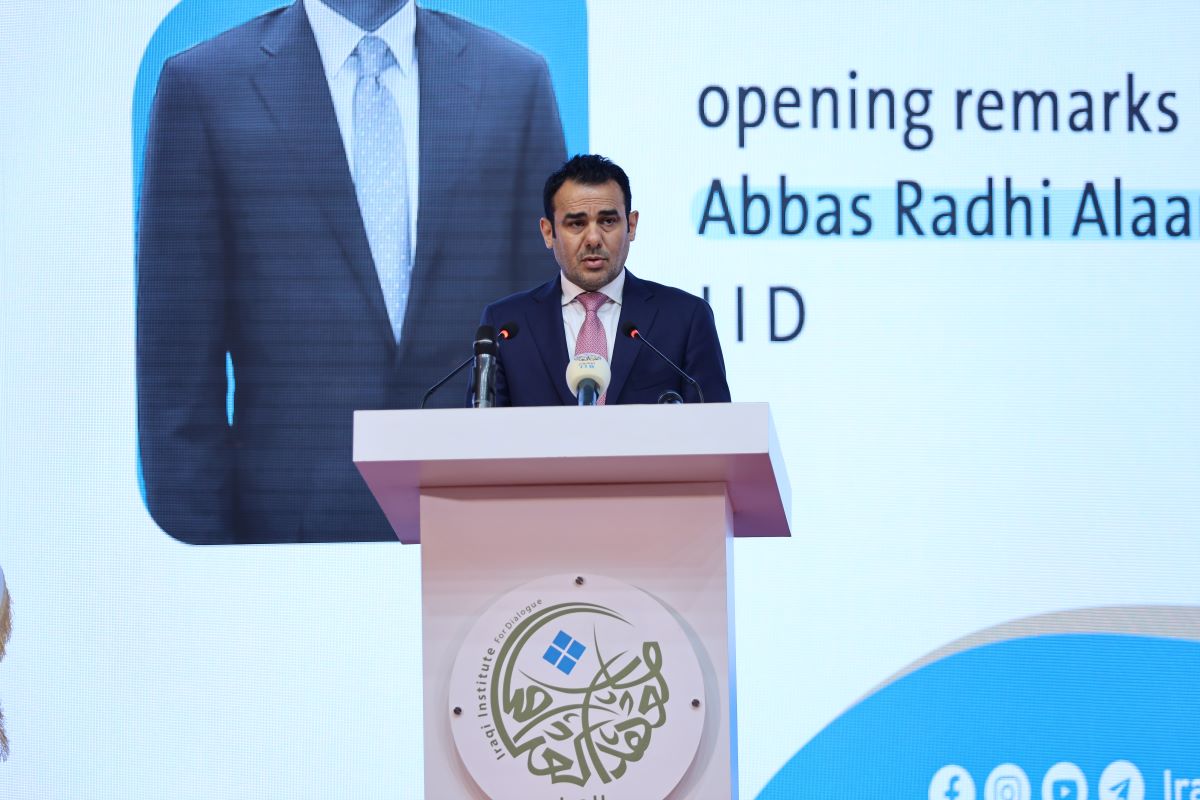
Speech of the Director of the Iraqi Institute for Dialog at the Sixth Baghdad International Dialog Conference
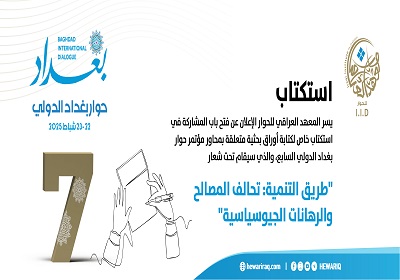
Seventh Baghdad International Dialogue Conference Call for Papers

Comments