


Al Faw Port and the road to development: Iraq redraws international trade maps
At a watershed moment in Iraq's modern economic history, the "Development Road" project, integrated with the "Great Faw Port," stands out as a strategic shift that redraws Iraq's position on the global trade map and gives it for the first time in decades a pivotal role in linking Gulf, Asian, and European markets.
From the port of Fao to the heart of Europe
The Faw Port, which is more than 90 percent complete as of mid-2025, is the starting point for a road and rail corridor with a length of more than 1,200 kilometers stretching from Basra in the south to the Turkish border in the north.
The corridor is expected to cut shipping time from Asia to Europe from 33 days to around 15 days, reducing logistics costs by up to 40%, according to initial estimates.
The project also includes a 22-kilometer-long navigation channel and a marine tunnel, the longest in the Middle East, with an estimated initial operating capacity of 3.5 million containers, with gradual expansion plans to reach 25 million containers per year.
A qualitative regional agreement: From Intentions to Partnership
In April 2024, Iraq, Turkey, Qatar, and the UAE signed a quadripartite agreement to jointly implement and finance the Development Road, marking a paradigm shift from traditional investment in oil and real estate to a focus on cross-border infrastructure.
This shift represents a growing recognition that security of supply and supply chains are no longer guaranteed in light of increasing threats to sea lanes, especially in the Red Sea and the Gulf. As such, Iraq has come to be seen as an alternative and secure corridor that can alleviate geopolitical tensions for the Gulf states and enhance their interaction with the European market.
Expected economic impact
A preliminary analysis suggests that the project may produce:
More than $4 billion per year in non-oil revenues by 2040.
More than 100,000 jobs in the transportation, logistics, manufacturing, and warehousing sectors.
A cumulative increase in non-oil GDP of 15-18% over the next decade.
Regional and strategic dimensions
The project is an economic bridge between the Gulf, Turkey and Europe:
Gives the Gulf states a secure land outlet for exporting energy and non-oil industries.
It enhances Turkey's economic security as a major transportation corridor to Europe.
It opens wide horizons for GCC investment in Iraq's free economic zones and logistics sectors.
It provides Europe with a strategic option as traditional maritime routes become more fragile.
Real Challenges and Historic Opportunities
Despite its promising potential, the project is not without its challenges, most notably:
The security situation in some parts of Iraq.
Regional political risks that may affect the stability of the project and the sustainability of its financing.
The need for institutional and administrative reforms to ensure attracting investment and protecting the investment environment.
But more importantly, the current Iraqi political will, backed by a clear Gulf vision, represents a historic opportunity to transform Iraq from a rentier, oil-dependent country into a pivotal transit country in international trade.
The New Iraq on the Global Economic Map
The success of the project is not only measured by the speed of completion or the number of containers, but also by its ability to reposition Iraq in the geo-economic equation of the region and the world. Iraq is no longer just an "oil reservoir" or an arena for conflicts, but for the first time a platform for the integration of interests between Asia and Europe through the Gulf and Turkey.
The Faw Port and Development Road project is more than just infrastructure: It is a strategic opportunity to redefine Iraq as a regional and international economic actor, and to achieve a paradigm shift from rent dependence to a diversified and sustainable economy.
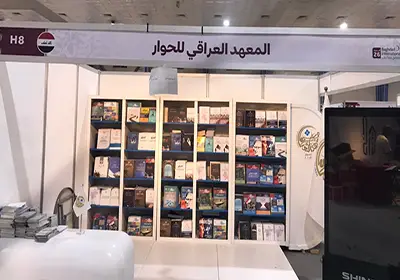
The Iraqi Institute for Dialogue, the logistical sponsor of the Baghdad International Book Fair, opens its own pavilion at the fair
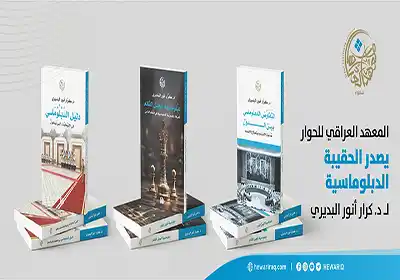
The Iraqi Institute for Dialogue publishes "The Diplomatic Portfolio" by Dr. Karrar Al-Badiri
Official agreement between Iraqi Institute for Dialogue and the Iraqi Media Network to sponsor The Seventh Annual International Conference of “Baghdad Dialogue” 2025
Invitation to the 79th issue of Dialogue of Thought
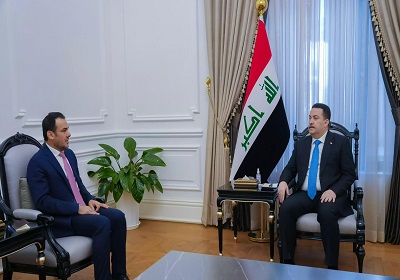
Prime Minister: The path of development will make Iraq a regional political and economic powerhouse
Seventh Baghdad International Dialogue Conference Call for Papers
Praise for the Baghdad International Dialogue: Strengthening Iraq's pivotal role and a meeting point for visions
Comments