


By Nico Kalbakiani, Iran analyst Translation: Iraqi Institute for Dialog
Has Iran lost the bet? An assessment of the geopolitical implications of the Armenia-Azerbaijan peace deal
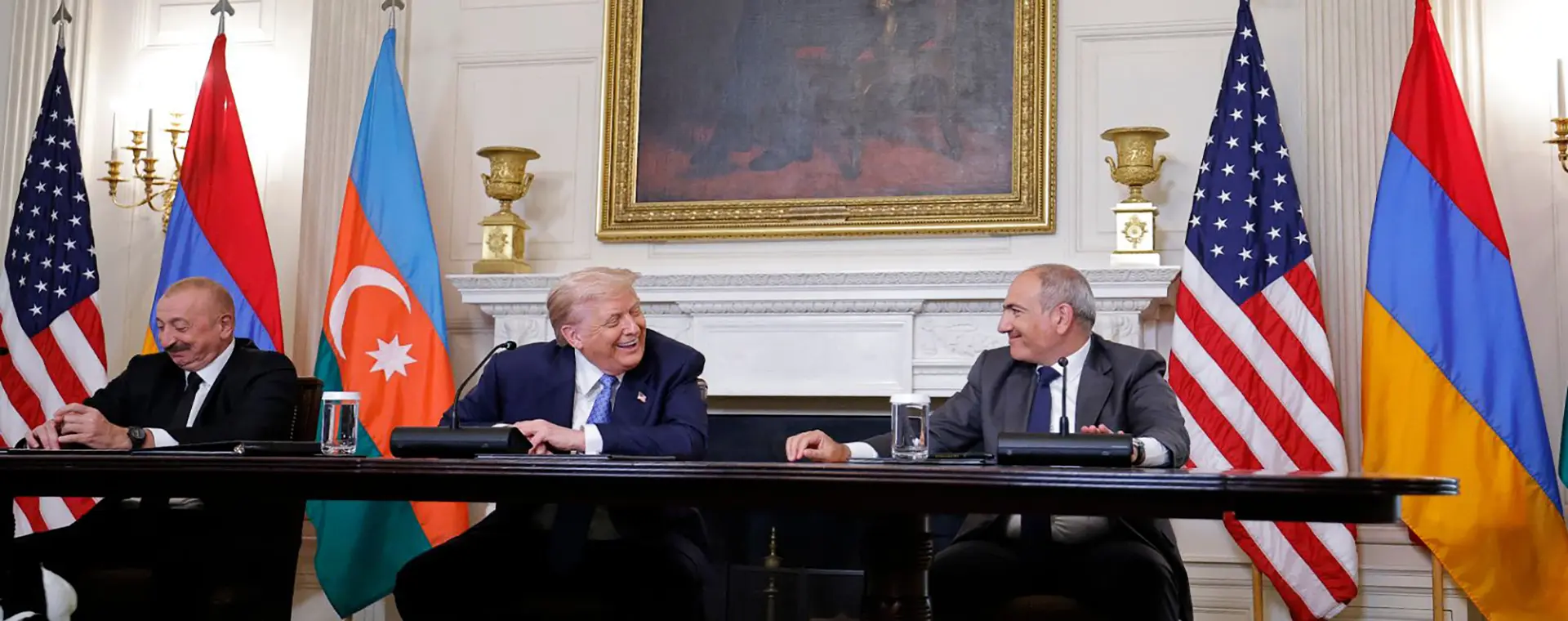
On August 8, Azerbaijan's President Ilham Aliyev and Armenia's Prime Minister Nikol Pashinyan, in the presence of US President Donald Trump, signed a historic peace agreement in Washington. The agreement sparked widespread expectations that Russia, which considers the Caucasus one of its traditional spheres of influence, would respond with a strong reaction, but the sharpest criticism came from Iran.
The criticism follows reports that the United States may gain the right to develop a transit corridor in southern Armenia for 99 years, which has been dubbed the "Trump Track for International Peace and Prosperity" (TRIPP).
The proposed corridor, often known as the Zangzur Corridor, would connect Azerbaijan through Armenia's southern Syunik province to Nagorno-Karabakh and Nakhchivan, running along the Ars River, which forms the border between Armenia and Iran.
Why Iran Opposes the Zangzur Corridor
Iran has expressed concern from the outset that the corridor, if not kept under Yerevan's control, could cut off its land access to Armenia and its north. Tehran also fears a "Pan-Turkic corridor" on its northern border linking Turkey to its ally Azerbaijan. Moreover, its concerns are linked to Azerbaijan and Turkey's geopolitical dependence on powers Iran considers adversaries, such as Turkey's membership in NATO and Azerbaijan's close ties to Israel.
Iran has repeatedly called for the withdrawal of foreign forces from the region and warned Yerevan and Baku not to allow any "foreign interference" in the Caucasus.
The terms of the deal and its impact on Iran
Some of the agreement's provisions meet Iran's needs, such as ensuring Armenia's control over the corridor and border with Iran, but at the same time it brings the United States back to Iran's border areas, which is a strategic challenge for Tehran.
Iran's official response
The Iranian government officially welcomed the deal on August 9, while expressing concern about any outside interference. But the most strident positions came from senior officials, such as Ali Akbar Velayati, advisor to the leader of the Islamic Republic, who emphasized Iran's determination to prevent the creation of the US track "with or without Russia."
Yadollah Javani, deputy for political affairs in the IRGC, also criticized Pashinyan and Aliyev's decision, saying they are "repeating Zelensky's path in Ukraine" by bringing NATO into the Caucasus, while ignoring the interests of Russia, Iran, India, and China.
In contrast, the Iranian government has worked to assuage domestic concerns, with President Masoud Bazhkian emphasizing that the deal preserves Iran's sovereignty and access to Europe and its northern border, and that the only remaining concern is U.S. participation in the construction of the corridor.
Iran's Diplomatic Movement
After the agreement, Tehran engaged in active diplomacy with Yerevan. Pazeshkian held phone conversations with Pashinyan and warned that the new corridor "should not cut off Iranian access to other communication routes." Iran hosted Armenia's Deputy Foreign Minister Vahan Kostanian to discuss the issue, and Pazhkian is expected to visit Armenia between August 18 and 21.
Media Reactions
Iranian media outlets have sharply attacked the agreement, calling the corridor "the devil's path." Some Tandoori newspapers argued that the current government is responsible for the agreement due to the government's "negligence." Others recounted historical events related to territorial concessions in the past to reinforce the idea of "Iran's retreat" and turning the Caucasus into a "game" between America and NATO.
However, government spokesperson Fatemeh Mohajerani tried to present the corridor as "only a small part" of the Iranian border, aiming to allay fears, although this contributed to further social media controversy.
Scenarios for preserving Iranian interests
The downplaying of official concerns indicates Tehran's limited ability to influence events, especially in the absence of an effective response from Russia, which is embroiled in the Ukraine war.
The Iranian government can pursue several strategies, including:
Obtain assurances from Yerevan that any future U.S. presence will be civilian or non-military.
Maintain full control over all borders.
Continued active diplomacy to prevent the corridor from being implemented in its final form without Tehran's approval.
Ultimately, the Armenia-Azerbaijan peace deal is a litmus test for Iran's strategic position in the Caucasus. While some provisions meet Tehran's interests, the involvement of the United States in the region and the presence of a corridor linking Turkey to Azerbaijan pose significant geopolitical challenges. These events have demonstrated Iran's limited capacity for direct influence, but have opened the door for new diplomatic strategies to protect its vital interests.

The Iraqi Institute for Dialogue, the logistical sponsor of the Baghdad International Book Fair, opens its own pavilion at the fair
The Iraqi Institute for Dialogue publishes "The Diplomatic Portfolio" by Dr. Karrar Al-Badiri
Official agreement between Iraqi Institute for Dialogue and the Iraqi Media Network to sponsor The Seventh Annual International Conference of “Baghdad Dialogue” 2025

Invitation to the 79th issue of Dialogue of Thought
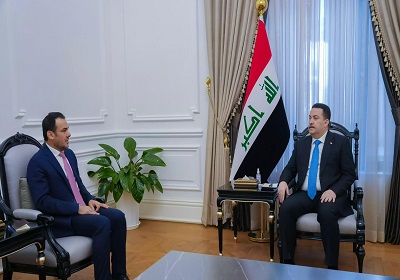
Prime Minister: The path of development will make Iraq a regional political and economic powerhouse
Seventh Baghdad International Dialogue Conference Call for Papers
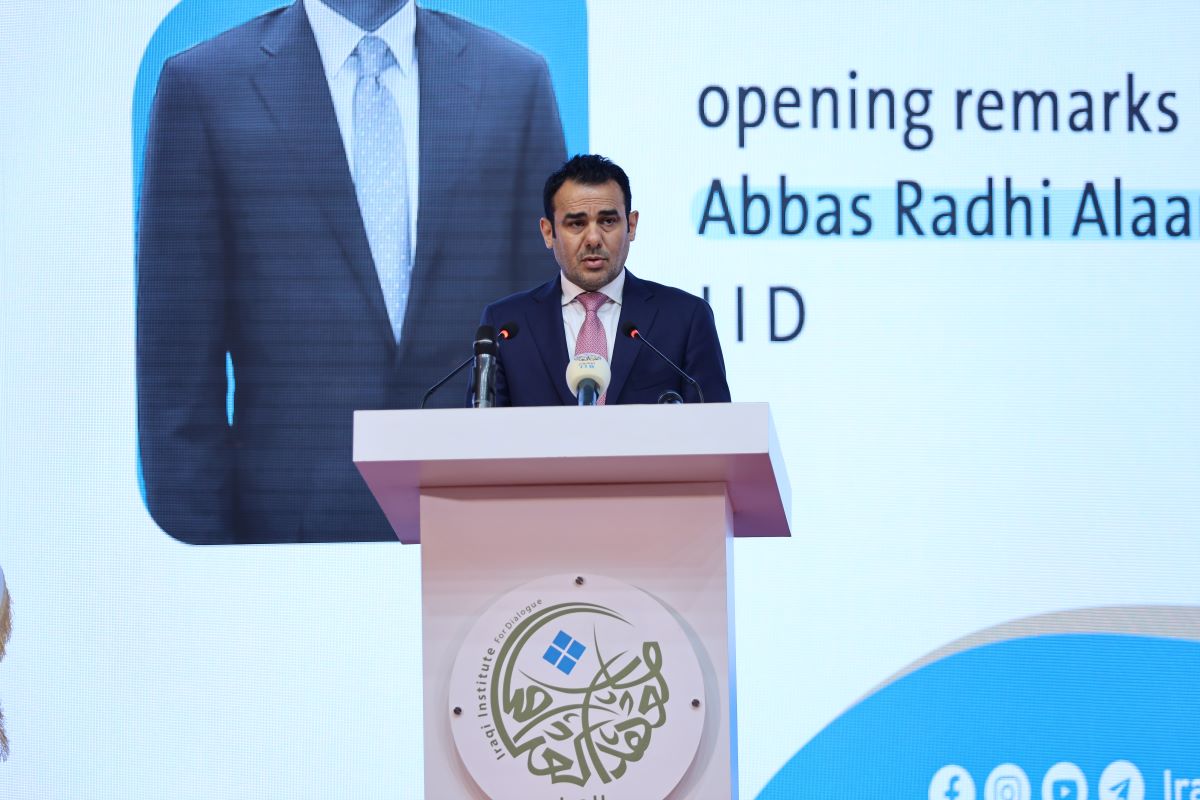
Speech of the Director of the Iraqi Institute for Dialog at the Sixth Baghdad International Dialog Conference
Comments