

d. Nadia Helmy - Translation by the Iraqi Institute for Dialog
The importance of the Shanghai Cooperation Organization summit for developing countries in the Global South and the Third World
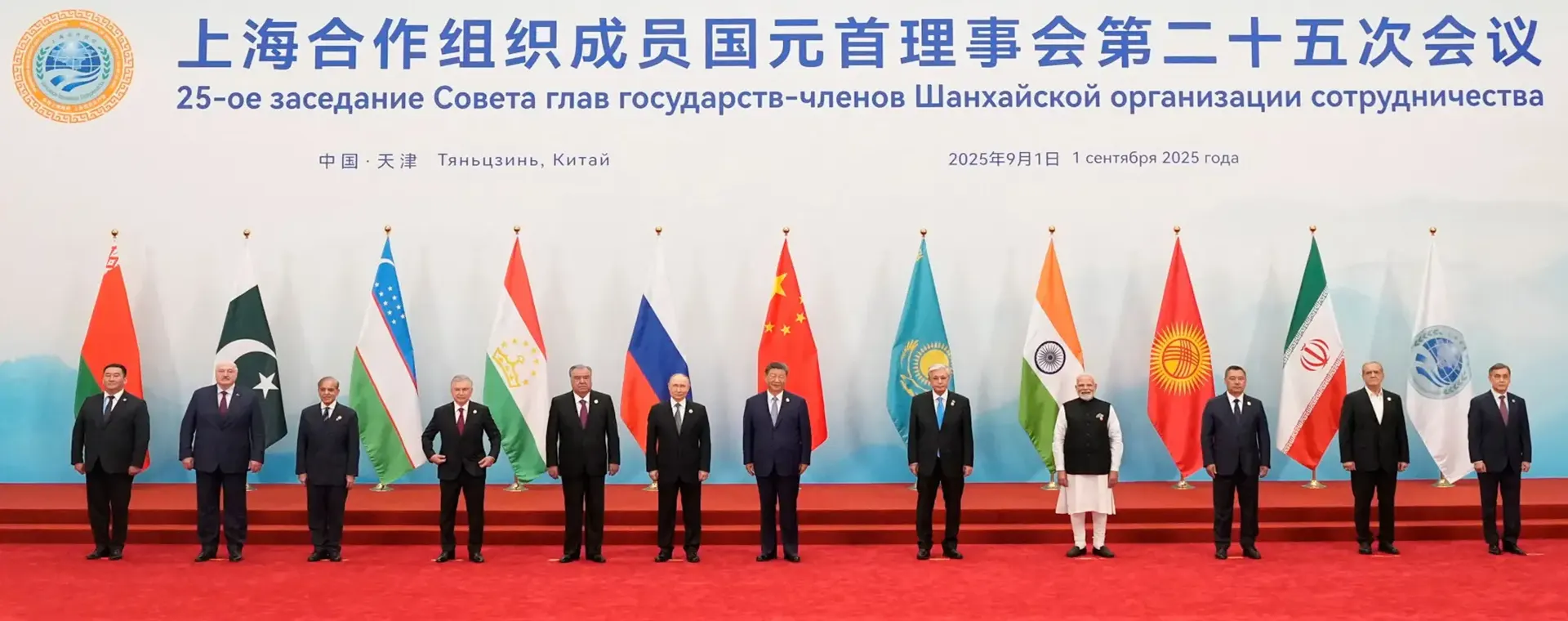
The 2025 summit of the Shanghai Cooperation Organization (SCO) in Tianjin, China, is a remarkable display of solidarity among the Global South in the face of U.S. and Western hegemony.
Chinese President Xi Jinping called on leaders of the Shanghai Cooperation Organization (SCO) member states participating in the summit to play a greater role in safeguarding regional and global peace and stability, describing his country as a stable global power that will support the developing world.
In his inaugural speech, President Xi urged all members of the organization to capitalize on the vast market they possess, and revealed his ambition to establish a new global security and economic order that will directly challenge the United States.
The Chinese president's remarks come as Beijing seeks to present itself as a key leader of the developing world, and the summit in Tianjin is an opportunity to strengthen solidarity with the Global South. The international community, especially the Global South, has high hopes for the SCO to play a pivotal role in global security and economic governance in the face of hegemonic US policies and dictates.
In his inaugural speech, President Xi Jinping emphasized that "the Shanghai Organization is a model for a new pattern of international relations, and that we should advocate for fair and orderly multipolarity, inclusive economic globalization, and work to build a more just and equitable system of global governance."
Many developing country leaders agreed with and supported the Chinese president's speech, including Recep Tayyip Erdogan (Turkey), Min Aung Hlaing (Myanmar), K.P. Sharma Oli (Nepal), Prabowo Subianto (Indonesia), Anwar Ibrahim (Malaysia), and Mohamed Maazoo (Maldives), as well as UN Secretary-General António Guterres and ASEAN Secretary-General Kao Kim-horn.
The 2025 summit in China is the most important in the history of the Shanghai Organization since its establishment in 2001, as it is being held in light of multiple crises that directly affect its members, from the trade confrontation between the United States, China and India, through the Russian war on Ukraine, the Iranian nuclear issue, the US and Israeli military strikes on Tehran, the Gaza war, the Taiwan issue, and other inflammatory international issues.
Armored vehicles have been deployed on several streets and large areas of the Chinese city of Tianjin have been sealed off, while banners in Chinese and Russian praising the "Tianjin Spirit" and the mutual trust between Moscow and Beijing have been hung in both Chinese and Russian.
It is important to recognize China's commitment this year at the summit to work on three major tracks to help the Global South and the Third World. On the political front, the "Tianjin Declaration" and the "Ten-Year Development Strategy" will be adopted to set a long-term vision for cooperation.
On the security front, joint arrangements to combat terrorism and support regional stability will be strengthened. On the economic front, cooperation in digital economy, green development, and smart cities, as well as trade and investment promotion, will be advanced as key pillars for the cohesion of the "Shanghai Family."
Chinese Assistant Foreign Minister Liu Bing noted that the Tianjin summit will be the largest in the organization's history, stressing that rapid developments in the international situation require strengthening solidarity and cooperation. In an indirect reference to the United States, he said, "Old hegemonic mindsets and power politics are still influential, with some countries trying to advance their own interests at the expense of others, threatening global peace and stability."
President Xi Jinping's speech won the approval of all participating leaders, especially with his growing call at the Tianjin summit for all SCO partners to reject the Cold War mentality and bloc-based confrontations and emphasize the need to support multilateral trade systems.
This message is a clear reference to US President Donald Trump's tariff war on China, which has disproportionately affected the economies of developing countries, including Washington's new ally India. UN Secretary-General António Guterres has emphasized that "China plays a key role in upholding global multilateralism."
While Russia has succeeded in attracting a majority of members to its positions, India is trying to strike a balance between calling for peace and maintaining ties with Kiev, while buying large amounts of Russian oil. Ukraine has called on the organization's members to take a clear stand against "Russian aggression".
During the summit, Russian President Vladimir Putin described Indian Prime Minister Narendra Modi as a "dear friend" and said that relations between the two countries are developing in a dynamic and unprecedented way. All of this reflects a high level of solidarity between the politics of the Global South led by China and its close ally Russia.
For its part, the United States considered the SCO summit in Tianjin an "unwelcome" event, in light of US President Trump's repeated attacks on global South blocs, his threats to cripple BRICS through punitive tariffs, and his characterization of their policies as "anti-American."
The 2025 SCO summit in Tianjin represents a multilateral model forged by China that is different from models dominated by Western powers and the United States. The wide participation in the summit reflects the growing Chinese influence and the SCO's ability to attract non-Western countries capable of confronting Washington, its policies, and the West's monopoly.
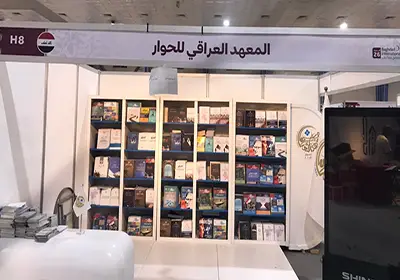
The Iraqi Institute for Dialogue, the logistical sponsor of the Baghdad International Book Fair, opens its own pavilion at the fair
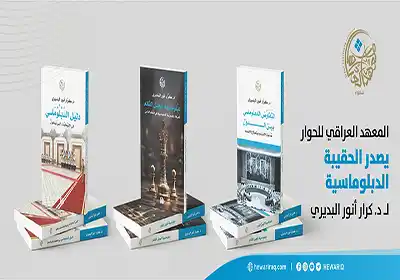
The Iraqi Institute for Dialogue publishes "The Diplomatic Portfolio" by Dr. Karrar Al-Badiri
Official agreement between Iraqi Institute for Dialogue and the Iraqi Media Network to sponsor The Seventh Annual International Conference of “Baghdad Dialogue” 2025
Invitation to the 79th issue of Dialogue of Thought
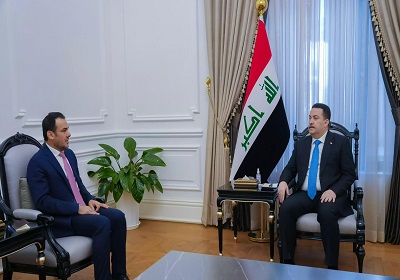
Prime Minister: The path of development will make Iraq a regional political and economic powerhouse
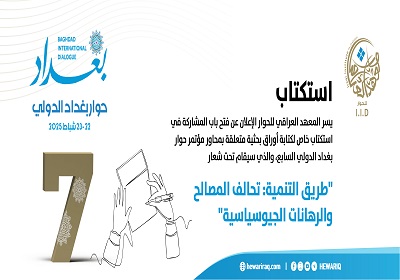
Seventh Baghdad International Dialogue Conference Call for Papers
Praise for the Baghdad International Dialogue: Strengthening Iraq's pivotal role and a meeting point for visions
Comments