


By Charles W. Dunn Non-Resident Senior Fellow, Arab Center – Washington, DC
U.S.-Egypt relationship may face reassessment
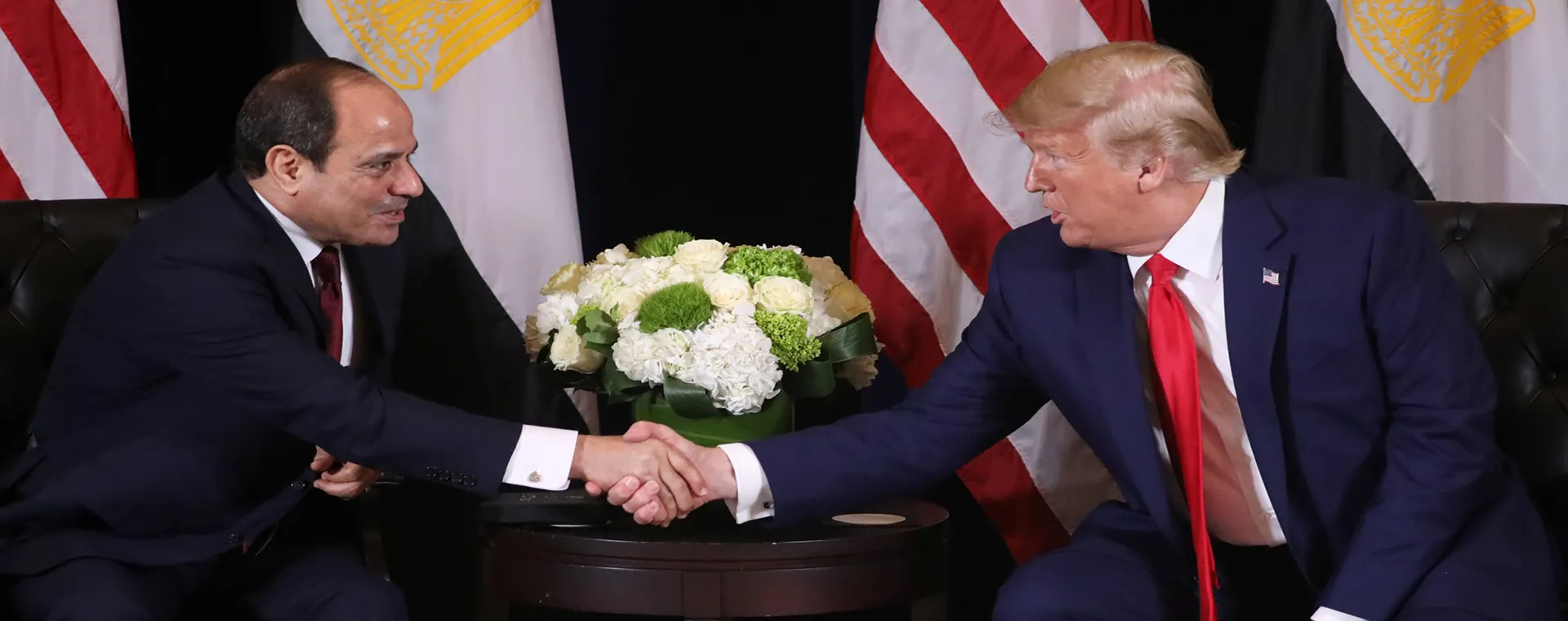
The U.S.-Egypt relationship has seen many ups and downs over the decades. Under the administrations of Presidents Donald Trump, Joe Biden, and now Trump again, Cairo has had it both ways. The bilateral relationship has ranged from Trump's high praise of Egyptian President Abdel Fattah al-Sisi during the 2019 G7 summit, calling him "my favorite dictator," to Biden's 2020 campaign promise to "not give blank checks" to Egypt. Today, under Trump 2.0, the relationship seems to have morphed into a kind of U.S. pressure on Egypt over Suez Canal transit fees.
Fluctuating bilateral relations
The relationship between Washington and Cairo used to be strong, but today it faces some fragility. These fluctuations are no stranger to other long-term US allies, such as Canada, Mexico and NATO members, who have seen volatile US policies under Trump. However, this situation is worrisome for Egypt, which, since its 1979 peace treaty with Israel, has been an important ally of the United States, assisting Washington in military operations through the Suez Canal and aviation operations, joining the U.S. coalition to liberate Kuwait from the Iraqi invasion in 1990, brokering diplomatic deals, mediating between Israel and Hamas, and cooperating with six U.S. administrations on counterterrorism and other security issues.
Today, especially compared to the Gulf states, Egypt's status as a prominent regional ally has declined, becoming more vulnerable to the transactional and punitive U.S. policy that characterizes Trump's approach to foreign policy.
Historical Shifts and Erosion of Influence
Egypt has historically relied on projecting itself as an indispensable power in the Middle East in order to gain the attention of U.S. presidents. This role has been based on Egypt's military strength, backed by $1.3 billion in annual U.S. aid, and its hosting of numerous international meetings, including those attended by U.S. presidents, to mediate the Israeli-Palestinian conflict.
But much of this prestige has eroded over the past 25 years, from the Clinton administration's Middle East peace efforts to the regional havoc caused by the current Gaza war. The end of U.S. combat operations in Iraq and Afghanistan has diminished the importance of Egypt's transit facilities for quick access to military zones, and Qatar's rising role as a key mediator between Israel, the United States, and Hamas has diminished Egypt's diplomatic clout.
The Gaza War and an existential crisis
The Israeli war on Gaza has put Egypt in a very difficult position, especially with fears that Israel intends to transfer the Palestinian population from Gaza to other countries, which has been of concern to Cairo since October 2023. Egypt has criticized the Israeli seizure of the Philadelphi Corridor between Gaza and North Sinai as a violation of peace treaty obligations, and has stepped up security measures on the border in anticipation of possible Israeli moves.
Suez Canal blackmail
Egypt is also feeling the impact of Trump's direct pressure policies, such as demanding that the U.S. transit its ships through the Suez Canal without tolls. The canal, considered Egyptian sovereignty, is a major source of revenue of about $234 million annually, and imposing a U.S. exemption would undermine sovereignty and set a dangerous precedent.
Egypt and Ethiopia's dispute over the Renaissance Dam
The issue of Grand Ethiopian Renaissance Dam Cairo accuses Ethiopia of reducing Egypt's share of Nile water, threatening agriculture and the economy. Trump's statements urging military action against the dam in his first term, as well as his recent comments in 2025, have increased tensions between Cairo and Addis Ababa, although the US administration has not identified a clear mediating role in the crisis.
Continuity of military ties
Despite these challenges, the U.S.-Egypt military relationship continues unchanged. Annual military aid of $1.3 billion remains in place, a $4.67 billion surface-to-air missile deal was recently approved, and the Bright Star joint military exercise was launched with the participation of the United States, Egypt, and international allies.
Egypt's Options and Balance of Power
In light of these tensions, Egypt is looking for alternative options to enhance its capabilities and strategic independence, including military cooperation with China through the "Eagles of Civilization 2025" exercise and strengthening economic and military ties with Russia. This move reflects Cairo's endeavor to adopt a policy of Balance of power Not relying entirely on the United States, as the late Egyptian President Gamal Abdel Nasser did in the 1950s and 1960s.
Conclusion
In the short term, Trump's deference may yield some gains for Egypt, but in the long term, satisfying his every whim could lead to disastrous results. U.S.-Egyptian relations continue to face significant volatility as a result of volatile U.S. policy, regional challenges, and attempts by Russia and China to exploit the lack of U.S. political stability to enhance their influence in the region.

The Iraqi Institute for Dialogue, the logistical sponsor of the Baghdad International Book Fair, opens its own pavilion at the fair

The Iraqi Institute for Dialogue publishes "The Diplomatic Portfolio" by Dr. Karrar Al-Badiri
Official agreement between Iraqi Institute for Dialogue and the Iraqi Media Network to sponsor The Seventh Annual International Conference of “Baghdad Dialogue” 2025

Invitation to the 79th issue of Dialogue of Thought
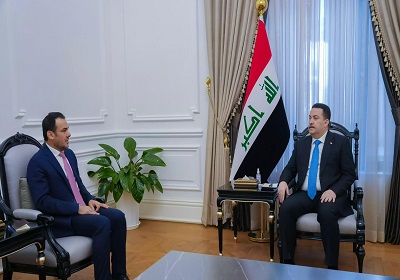
Prime Minister: The path of development will make Iraq a regional political and economic powerhouse
Seventh Baghdad International Dialogue Conference Call for Papers
Praise for the Baghdad International Dialogue: Strengthening Iraq's pivotal role and a meeting point for visions
Comments